Choosing among China’s top Aluminum Door suppliers requires more than comparing online prices. Factory capability, verified testing, material consistency, and export experience matter equally. The best supplier should show clear production records, not only polished product photographs.
The International Aluminium Institute identifies China as the world’s largest aluminum producer. Its reports also underline aluminum’s expanding role in energy-efficient construction. Grand View Research describes rising demand for aluminum doors and windows, driven by urban development, thermal performance, and modern architectural design. These findings support China’s strong position, but they do not prove that every supplier offers the same quality.
Heidi Brock, President and CEO of The Aluminum Association, has stated, “Aluminum is infinitely recyclable.” That principle matters when evaluating door manufacturers. Recycled content, coating durability, thermal-break design, and responsible sourcing should be checked through documents and factory audits. Reliable suppliers can provide alloy specifications, surface-treatment standards, laboratory results, and project references.
A practical shortlist should include manufacturers with proven extrusion capacity, CNC processing, insulated glass experience, and dependable packaging. Ask for samples. Inspect corner joints, hinges, drainage paths, and powder-coat coverage. Small details reveal large differences.
No ranking is perfect. Supplier performance can change with staffing, raw-material costs, and order volume. This guide therefore examines leading Chinese Aluminum Door suppliers through evidence, technical capability, customization, certifications, delivery performance, and after-sales support. The goal is not to promote the loudest factory, but to identify the most dependable partner for each project.
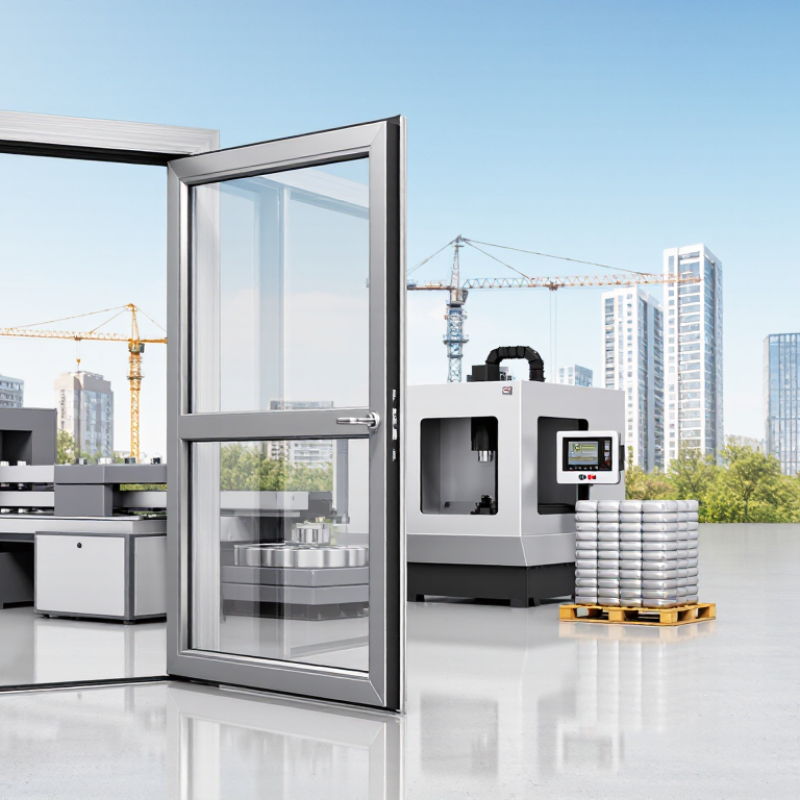
What Are the Top Aluminum Door Suppliers in China?
China’s aluminum door manufacturing landscape is broad, technical, and highly regional. Major production clusters operate in Guangdong, Jiangsu, Zhejiang, and Shandong. The International Aluminium Institute reported that China produced about 41.6 million tonnes of primary aluminum in 2023. That represented roughly 59% of global output. This material depth supports competitive extrusion, powder coating, glass processing, and hardware integration.
The strongest suppliers usually control several stages. They may design profiles, operate extrusion lines, install thermal breaks, and test finished doors. This structure reduces coordination problems for overseas buyers. Look for suppliers with documented air-permeability, water-tightness, wind-load, and thermal-performance testing. ISO 9001 certification helps, but it does not replace factory audits. A certificate alone proves little.
China’s construction market is also moving toward better energy performance. Reports from the China Academy of Building Research emphasize tighter building-envelope requirements and improved insulation performance. Therefore, reliable suppliers should explain profile wall thickness, polyamide strip specifications, glass configuration, and drainage design. Ask for recent project evidence, not only showroom photographs.
A catalogue can still mislead.
I would compare three factories using identical drawings and specifications. Check sample corner joints, coating consistency, packing methods, and replacement procedures. The International Energy Agency has repeatedly identified buildings as a major source of global energy demand, making thermal performance commercially important. However, buyers sometimes overfocus on low unit prices. That mistake can appear later through warped frames, leaking thresholds, or inconsistent color batches. Supplier capability matters more than polished sales language.
When evaluating aluminum door suppliers in China, start with measurable production evidence. Ask for alloy grades, extrusion tolerances, coating specifications, and recent inspection records. A serious factory should explain its thermal-break design, drainage channels, hardware loads, and glass compatibility. Request samples showing corners, seals, hinges, and surface finishes. Do not judge quality from a polished showroom door alone. The cutaway matters more.
Supplier experience becomes clearer during factory communication. Can engineers answer technical questions without vague promises? Check whether drawings include dimensions, opening direction, reinforcement, and installation gaps. Reliable teams confirm changes in writing and identify risks before production. I have seen attractive quotations become expensive after missing accessories and unclear packaging. That mistake is easy to repeat. Compare complete landed costs, not unit prices.
Verification should continue beyond the first order. Review independent test reports, quality-control procedures, export records, and warranty terms. If possible, inspect the factory or use a qualified third-party auditor. Look for batch traceability. Ask how defects are logged, corrected, and prevented. A dependable supplier can state lead times based on capacity, not optimism. Still, no evaluation is perfect. Weather, site conditions, and installer skill can change results. Choose suppliers willing to discuss those limits openly.
China’s leading aluminum door suppliers serve residential, commercial, and hospitality projects worldwide. Their strength often comes from integrated production, from aluminum extrusion to cutting, assembly, and surface finishing. This structure can shorten lead times and improve production consistency.
Experienced buyers inspect more than showroom samples. They review alloy grades, profile thickness, thermal-break design, glass options, and hardware quality. A strong supplier should provide clear drawings, installation guidance, and traceable quality records. Factory audits can reveal practical details, such as organized storage, calibrated equipment, and trained assembly workers. Samples reveal weaknesses. Check corner joints, drainage holes, locking points, and coating uniformity under natural light.
Reliable suppliers also explain testing requirements for the destination market. Buyers should verify fire performance, air permeability, water resistance, wind-load results, and applicable product certifications independently. Documents may look complete but still require confirmation from accredited laboratories. Communication deserves equal attention. Delayed replies, unclear quotations, or frequent drawing changes can create expensive problems later. In my view, many projects focus too heavily on unit price. That is a mistake. A cheaper door may need thicker packaging, more site adjustments, or earlier replacement. Suppliers should discuss mold charges, minimum order quantities, spare parts, warranty terms, and container loading before production begins. No supplier is perfect. Even a capable factory can miss a detail when specifications remain vague. A signed approval sample and regular inspection can reduce that risk.
Profile wall thickness is a practical benchmark when evaluating aluminum door suppliers. Common architectural aluminum systems typically use thicker profiles for exterior, commercial, and high-traffic applications, providing greater strength and durability.
When comparing aluminum door suppliers in China, examine the product system, not only the catalog image. Thermal-break doors usually provide better insulation than standard aluminum frames. Check profile thickness, alloy grade, glazing options, drainage design, hinges, locks, and surface treatment. Ask for section drawings and a physical corner sample. Small details matter.
Certifications should match the destination market. Reliable suppliers can provide ISO 9001 records, material reports, coating test results, and performance reports from recognized laboratories. For European projects, request relevant EN documentation. For North American projects, ask for applicable ASTM or AAMA test evidence. Verify certificate numbers, issuing laboratories, and validity dates. Documents should be current.
Price comparisons require identical specifications. Include glass thickness, hardware, packaging, tooling, delivery terms, and replacement parts. A low quotation may exclude essential items. I have seen budgets change after hardware and export packaging were added. Service quality also deserves measurement. Assess sample speed, shop-drawing accuracy, production updates, inspection support, and warranty wording. Ask how defects are recorded and corrected. Communication may seem smooth before payment, but response times during production reveal more. A factory visit or independent inspection can expose uneven coating, poor seals, and weak packaging. No supplier is perfect; even a capable manufacturer may struggle with custom sizes or urgent schedules.
| Supplier Profile | Main Product Range | Typical Product Specifications | Certification and Test Evidence | Indicative Export Price | Typical MOQ and Lead Time | Customization and Services |
|---|---|---|---|---|---|---|
| Profile 1 High-volume residential manufacturer |
Sliding doors, hinged entrance doors, balcony doors, standard windows | Thermal-break aluminum; double or triple glazing; powder-coated or anodized finishes; common wall thickness approximately 1.4–2.0 mm | ISO 9001 may be available; product test reports commonly include air permeability, water tightness, wind resistance, and thermal performance; project-specific European test documentation should be requested | Approximately US$120–320 per m² for standard residential systems, excluding glass upgrades, hardware, packing, and freight | Usually 20–50 units or a small container order; approximately 20–35 working days after drawing approval and deposit | Color matching, common hardware options, shop drawings, glass selection, export packing, and installation guidance |
| Profile 2 Premium energy-efficiency specialist |
Lift-and-slide doors, large glazed openings, passive-house-oriented doors, thermally improved entrance doors | Multi-chamber thermal breaks; low-emissivity insulating glass; concealed drainage options; upgraded gaskets and multi-point locking systems | U-value calculations and laboratory reports may be available; request test results to EN 14351-1 or the applicable local standard, plus documented glazing and spacer specifications | Approximately US$280–650 per m², depending on opening size, glazing, hardware, and thermal requirements | Usually 10–30 units; approximately 30–50 working days because of engineering and production requirements | Thermal calculations, structural review, custom profiles, oversized-panel engineering, color samples, and pre-shipment quality inspection |
| Profile 3 Commercial and project-door manufacturer |
Office-building entrances, shopfront doors, curtain-wall doors, hotel and commercial partitions | Heavy-duty frames; toughened or laminated safety glass; high-cycle hinges and closers; narrow-stile and medium-stile systems | Project documentation may include safety-glazing reports, hardware load data, wind-load calculations, and fire-rating evidence where applicable; fire performance must be verified for the complete tested assembly | Approximately US$180–480 per m² for standard commercial doors; rated or highly customized assemblies cost more | Often 10–50 complete door sets; approximately 25–45 working days after approved technical drawings | BIM or CAD drawings, door schedules, hardware coordination, sample assemblies, project packaging, and technical submittals |
| Profile 4 Entrance and security-door specialist |
Residential main doors, villa entrance doors, reinforced aluminum doors, access-controlled doors | Thicker profiles; reinforced lock areas; laminated or insulated glass; multi-point locks; optional smart-access preparation | Request burglary-resistance, air/water/wind, acoustic, and thermal test reports for the exact door configuration; electronic components require separate electrical and compatibility documentation | Approximately US$220–700 per door set, depending on dimensions, lock system, glass, finish, and automation | Usually 10–30 sets; approximately 25–45 working days, with longer schedules for electronic access systems | Door-size customization, lock-cylinder options, access-control preparation, color samples, replacement parts, and installation manuals |
| Profile 5 OEM and private-label fabricator |
Custom aluminum doors, retailer-specific product lines, knock-down or fully assembled units | Customer-selected profiles, glazing, hardware, packaging, labels, and finish; specifications vary by approved technical drawing | Quality-management certification may be available; certification and test reports must be checked against the buyer's destination market and the final supplied configuration | Approximately US$100–420 per m² for customized non-rated products, depending on order volume and specification | Often 50–200 units for customized orders; approximately 30–60 working days including sampling and packaging approval | OEM drawings, packaging design, barcode or label application, sample approval, container loading plans, and production photographs |
| Profile 6 Small-batch and renovation supplier |
Replacement doors, renovation-size sliding doors, terrace doors, made-to-measure residential units | Standard and thermal-break options; flexible dimensions; double glazing; basic powder coating or anodized finishes | Basic material and factory inspection records may be available; buyers should request glass safety documentation, profile specifications, and performance reports before ordering | Approximately US$140–360 per m², excluding special shapes, premium hardware, crating, and delivery | Sometimes 5–15 units; approximately 15–30 working days for standard designs and 25–40 working days for non-standard sizes | Measurement support, small-order flexibility, color selection, replacement hardware, export crating, and video-based installation support |
Choosing an aluminum door supplier requires more than comparing online prices. In project work, I have learned that a low quotation can hide weaker profiles, unclear hardware specifications, or limited after-sales support. Request the aluminum alloy grade, wall thickness, thermal-break details, glass options, and surface treatment in writing. Ask for recent project photos and a sample corner. A real sample reveals joint quality better than polished catalog images.
Check the factory’s production capacity, quality-control process, and export experience. A reliable supplier should explain how profiles are cut, assembled, sealed, and inspected. Review test reports for air leakage, water resistance, wind pressure, and energy performance when these properties matter. Verify whether the reports match the proposed door system, not another product. Small details matter. Confirm packaging, replacement parts, lead times, payment stages, and inspection responsibilities before ordering.
Communication is another practical test. Send one detailed drawing and observe the response. Does the supplier identify missing dimensions, drainage concerns, or installation risks? That response shows professional judgment. My own mistake was trusting attractive samples without checking tolerances across several units. The finished doors looked good, but installation took longer than planned. No checklist is perfect. Keep written records, approve a production sample, and use independent inspection for larger orders. A supplier who welcomes questions is usually safer than one who promises everything immediately.
Request alloy grade, profile thickness, thermal-break details, glazing options, and surface treatment in writing. Small details matter. Also review drawings, installation guidance, and quality records.
Integrated factories may handle extrusion, cutting, assembly, and finishing internally. This can shorten lead times and improve consistency. However, production control still requires inspection.
Inspect corner joints, drainage holes, locking points, seals, and coating uniformity. View the finish under natural light. A polished catalog image is not enough.
Review storage areas, equipment calibration, worker training, and inspection procedures. A factory visit can reveal weak packaging or uneven coating. Independent inspection may be wiser for larger orders.
Ask for material reports, coating results, and applicable performance reports. Check air permeability, water resistance, wind pressure, fire performance, and energy performance when required. Documents can mislead. Verify laboratory details, certificate validity, and product-system matching independently.
Compare identical specifications, including glass, hardware, packaging, tooling, delivery, and spare parts. A low quotation may exclude export packaging or stronger hardware. Not just price. I once underestimated these additions and watched the budget change.
Send one detailed drawing and observe the response. A capable supplier should identify missing dimensions, drainage concerns, and installation risks. Delayed replies or repeated drawing changes can create expensive problems.
Confirm minimum order quantities, mold charges, payment stages, lead times, warranty terms, spare parts, and inspection responsibilities. Approve a signed production sample. Keep written records. No checklist is perfect.
Check tolerances across several units, not only one attractive sample. Review hardware specifications and installation guidance before shipment. Regular inspection can catch weak seals, poor joints, and damaged packaging earlier.
China has developed a broad and competitive manufacturing landscape for Aluminum Door products, serving residential, commercial, and architectural projects worldwide. This summary explains how to assess suppliers by examining production capacity, material quality, engineering expertise, customization capabilities, quality control systems, and communication efficiency. It also outlines the main types of suppliers, from large-scale manufacturers with integrated production facilities to specialized factories focused on custom designs or specific project requirements.
A useful comparison should consider product performance, available finishes, hardware options, testing reports, certifications, lead times, minimum order quantities, pricing structures, packaging, installation guidance, and after-sales support. The lowest quotation is not always the best choice, since long-term reliability, dimensional accuracy, service responsiveness, and total project cost are equally important. To select the right Chinese supplier, buyers should clearly define technical specifications, request samples and detailed quotations, verify manufacturing capabilities, discuss quality standards, and establish transparent agreements covering delivery, inspection, warranty, and communication.