Choosing the right Aluminum Window manufacturer can shape a project’s comfort, durability, and long-term cost. Global buyers face a crowded market, with suppliers offering different profiles, coatings, thermal breaks, hardware, and testing standards. A polished catalogue is not enough.
Dr. Joseph Lstiburek, a respected building-science expert, has said, “Water is the most important load on a building.” His warning applies directly to window selection. A frame may look strong in a showroom, yet fail through poor drainage, weak seals, or careless installation. Small details matter. A corner joint. A pressure-equalized chamber. The gasket’s fit.
This guide examines 10 leading Aluminum Window manufacturers for international buyers. It considers product quality, engineering experience, customization, certifications, production capacity, export support, and after-sales reliability. We also look at practical issues, including salt-air corrosion, thermal performance, lead times, packaging, and communication across time zones.
No ranking can suit every building. A coastal villa needs different protection than a high-rise office in a cold climate. Budget also changes the answer. Sometimes the most expensive system is unnecessary. Sometimes a cheaper frame creates costly repairs later. That is where buyers should pause and verify claims.
The selected manufacturers are not presented as universally perfect. Supplier performance can vary by factory, market, and project team. Independent testing and reference checks remain essential. Use this list as a research starting point, not a substitute for technical review.
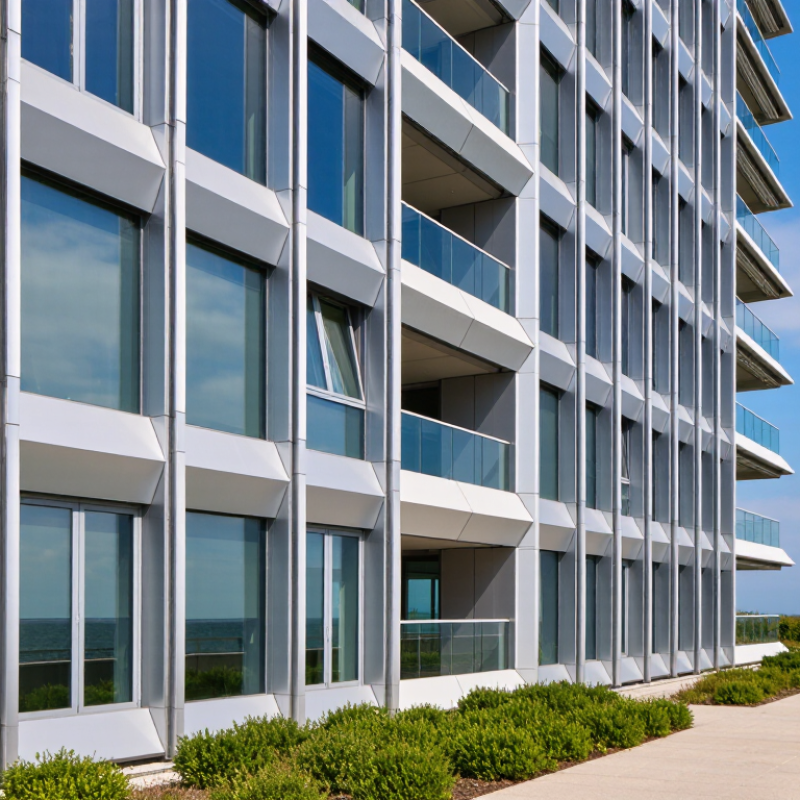
Aluminum window manufacturers serving global buyers must design for documented performance, not appearance alone. International projects often require testing for air leakage, water penetration, wind resistance, thermal transmission, and acoustic control. Requirements differ by climate and building code. A coastal project may need stronger corrosion protection, while a cold region needs better thermal breaks.
Experienced manufacturers should identify the target market before production begins. They may work with EN, ASTM, AAMA, ISO, or local standards, depending on the destination. ISO 9001 can support consistent quality management, but it does not replace product testing. Buyers should request alloy details, temper information, profile drawings, glass specifications, and finish reports. Powder coating or anodizing must suit humidity, salt exposure, sunlight, and cleaning methods. Small details matter.
Reliable suppliers provide test reports from competent laboratories, traceable batch records, installation guidance, and clear warranty conditions. They should also confirm tolerances, drainage paths, gasket materials, and hardware compatibility. A technically strong product can still fail when installers ignore shims, sealant joints, or frame alignment. Manufacturers should admit this risk instead of promising universal performance. No factory gets every detail right. Designs sometimes need revision after field feedback, especially on oversized sashes or unusual façades. Careful sampling, prototype installation, and third-party inspection can expose weaknesses before shipment. Clear communication remains a practical manufacturing standard for international trade.
Choosing the ten leading aluminum window manufacturers requires more than comparing catalog photographs. Global buyers should examine thermal performance, air tightness, water resistance, wind-load ratings, and corrosion protection. These details reveal whether a product suits coastal housing, high-rise buildings, or colder climates.
A reliable manufacturer should provide independently verified test reports, material specifications, and traceable quality records. Ask about alloy grades, coating thickness, glass options, drainage design, and hardware durability. Factory capacity also matters. Visitors should observe production lines, inspection points, packaging methods, and sample approval procedures. Clean records help, but direct evidence matters more.
Experience often exposes hidden risks. I have seen attractive samples fail because corner joints leaked during heavy rain. Check installation guidance, replacement-part availability, warranty terms, and response times before signing a contract. Leading suppliers usually explain limitations instead of promising universal performance. That is important. References from comparable projects can confirm delivery reliability, communication quality, and technical support. Buyers should also compare lead times, export documentation, container loading, and after-sales procedures. No shortlist is perfect. A manufacturer may offer excellent engineering but weak customization, or competitive pricing with inconsistent finishing. Careful audits, realistic specifications, and independent testing remain essential when selecting the final ten.
10 Best Aluminum Window Manufacturers for Global Buyers
Profiles of Ten Notable Aluminum Window Manufacturers
Global buyers should compare evidence, not polished brochures. The International Energy Agency reports that buildings consume about 30% of global final energy. Window performance therefore deserves careful review. These ten manufacturer profiles represent useful sourcing models, not a fixed ranking.
Profile 1 focuses on thermally broken frames for cold climates. Profile 2 supplies slim-profile systems for high-rise projects. Profile 3 specializes in impact-resistant windows for coastal regions. Profile 4 combines aluminum frames with low-emissivity glazing. Profile 5 serves large commercial projects with tested curtain-wall assemblies. Profile 6 offers modular windows for faster installation. Profile 7 develops recycled-aluminum options with traceable material records. Profile 8 targets tropical markets with strong drainage and ventilation details. Profile 9 produces custom colors and unusual opening styles. Profile 10 supports replacement projects with measured-to-order frames.
The International Organization for Standardization links reliable product evaluation with documented testing and consistent procedures. Buyers should request air, water, wind, thermal, and acoustic test results. Certification alone is not enough. Installation quality can weaken excellent laboratory performance. I have seen specifications look convincing while delivery tolerances remained vague. That deserves scrutiny. Check alloy grade, coating warranty, hardware availability, spare-part timing, and local code compliance. Also compare whole-life value, because a cheaper frame may demand earlier repairs. These profiles are practical starting points, but they are not substitutes for site testing, engineer review, and verified production records.
Typical specification benchmarks commonly reviewed when comparing international aluminum window suppliers
The chart summarizes commonly published technical ranges for aluminum window systems. Values vary by frame design, glazing configuration, testing standard, climate zone, and project requirements. U-factor is shown in Btu/h·ft²·°F, acoustic performance in Rw, frame depth in millimeters, and coating durability in years.
Certifications reveal process maturity, not automatic product quality. Look for ISO 9001 quality systems and ISO 14001 environmental management. For European projects, request EN 14351-1 performance evidence and CE-related documentation. For North American projects, ask for tested air leakage, water penetration, structural resistance, and thermal values under relevant standards. Independent laboratory reports are stronger than factory claims. Small detail. Check the report’s model number.
Export capability deserves equal weight. UNCTAD reports that maritime transport carries over 80% of world merchandise trade by volume. Reliable suppliers should explain container loading, corner protection, moisture control, HS classification, and Incoterms clearly. Ask for production lead times, spare-hardware policies, replacement procedures, and multilingual technical drawings. I have seen attractive quotations fail because packaging ignored humid ports. No ranking is perfect. Even a certified manufacturer may struggle with custom glazing, local code interpretation, or after-sales response. A practical comparison should score documented performance, communication speed, sample accuracy, and delivery history—not price alone.
Selecting an aluminum window manufacturer starts with the project, not the catalog. Define opening sizes, climate exposure, glass specification, thermal targets, and installation method. A supplier experienced in coastal housing may not understand high-altitude temperature swings. Ask for extrusion alloy details, thermal-break design, drainage paths, and hardware load ratings. Request drawings with tolerances, not attractive renderings alone. Small gaps matter.
During supplier evaluation, inspect evidence rather than promises. Review recent test reports for air infiltration, water resistance, wind pressure, sound reduction, and thermal performance. Confirm the laboratory, test configuration, and product dimensions. A report for one window size cannot automatically represent every configuration. Ask how incoming aluminum, powder coating, gaskets, and glass are checked. Photos of gauges, corner crimping, and packaging reveal more than polished brochures. Where possible, arrange a video audit or independent factory inspection. I have seen excellent samples fail because production teams lacked clear work instructions. That detail is easy to miss.
Reliability appears in the commercial details. Compare sample approval procedures, mold ownership, minimum order quantities, production capacity, spare-part support, and realistic shipping schedules. Require a written quality plan with inspection points before loading. Clarify who handles damaged units and replacement hardware. Communication also deserves testing: send a technical question with conflicting dimensions and observe the response. A capable team will ask for clarification instead of guessing. Do not choose only by the lowest quote. A cheaper frame can create higher installation labor, callbacks, and energy loss. Still, no evaluation is perfect. Leave room for pilot orders, field feedback, and design changes before scaling.
A practical, brand-neutral comparison framework based on internationally recognized performance standards and common export requirements.
| Rank | Manufacturer Profile | Best-Fit Project Type | Primary Product Range | Thermal Break | Typical Air Leakage Target | Water Penetration Target | Structural Performance Target | Relevant Standards to Request | Export Capability Indicators | Buyer Verification Priority |
|---|---|---|---|---|---|---|---|---|---|---|
| 1 | Profile A — High-Performance Commercial | Office towers, hospitals, schools and public buildings | Thermally broken curtain walls, fixed windows, projected windows and doors | Polyamide thermal barrier | ≤ 0.30 L/s·m² at 75 Pa, where tested to ASTM E283 | ≥ 300 Pa, where tested to ASTM E331 or EN 1027 | Project-specific structural calculation; commonly designed around wind loads of 1.5–2.5 kPa | ASTM E283, E330, E331; EN 13830; EN 14351-1; ISO 9001 | Shop drawings, test reports, batch traceability and container-loading procedures | Confirm complete system test results rather than component-only data |
| 2 | Profile B — Energy-Efficient Residential | Cold and mixed climates, apartments and detached homes | Thermally broken casement, tilt-and-turn, sliding windows and balcony doors | Polyamide or reinforced insulating strip | ≤ 0.30 L/s·m² at 75 Pa, where tested to ASTM E283 | ≥ 250 Pa, where tested to ASTM E331 | Designed to applicable regional wind-load requirements | NFRC documentation where applicable; EN 14351-1; ASTM E283/E330/E331; ISO 9001 | Uw calculation support, glazing compatibility data and spare-hardware planning | Check whole-window U-value, not only the center-of-glass value |
| 3 | Profile C — Large-Format Sliding Systems | Luxury residences, hotels and panoramic façades | Lift-and-slide doors, multi-track sliders and large fixed panels | Thermally improved frame options | ≤ 0.75 L/s·m² at 75 Pa, depending on configuration | ≥ 250 Pa for tested assemblies | Verify sash size, glass weight, roller capacity and deflection limits | EN 14351-1; EN 12207; EN 12208; EN 12210; ASTM E283/E330/E331 | Maximum sash dimensions, hardware load tables and reinforced packaging | Request a written limit for panel size, weight and operating cycles |
| 4 | Profile D — Coastal and High-Humidity Specialist | Marine environments, resorts and high-humidity regions | Powder-coated windows, doors, curtain walls and corrosion-resistant hardware packages | Available on selected systems | Performance depends on the tested configuration | ≥ 300 Pa recommended for exposed façades | Wind-load design must reflect local exposure category | ISO 9227; AAMA 2604 or AAMA 2605; ASTM E331; EN 12208; ISO 9001 | Coating pretreatment records, salt-spray reports and stainless-hardware options | Verify coating class, drainage design and compatibility of dissimilar metals |
| 5 | Profile E — Premium Architectural Systems | Custom villas, landmark buildings and design-led developments | Slimline windows, concealed vents, pivot doors and bespoke façades | Thermally broken premium profiles | ≤ 0.30 L/s·m² at 75 Pa when fully tested | ≥ 300 Pa, subject to size and configuration | Project-engineered calculations and mock-up testing recommended | EN 14351-1; EN 13830; ASTM E330/E331; ISO 9001; ISO 14001 | Engineering support, BIM files, color samples and prototype approval process | Check whether custom dimensions require a project-specific performance test |
| 6 | Profile F — Cost-Controlled Volume Supplier | Large residential developments and standardized projects | Standard casement, sliding windows, entrance doors and balcony enclosures | Basic thermal-break options | Target should be stated for each window series | Target should be stated for each window series | Use project wind-load calculations before final purchase | EN 14351-1 or applicable national standard; ASTM E283/E330/E331; ISO 9001 | Stable monthly capacity, production schedule, palletization and replacement policy | Compare total landed cost, not factory price alone |
| 7 | Profile G — Passive-Building-Oriented | Low-energy homes, net-zero projects and stringent building envelopes | High-insulation windows, insulated doors and triple-glazing-compatible systems | Deep thermal break | ≤ 0.20 L/s·m² at 75 Pa is a useful project target | ≥ 300 Pa where required by the project specification | Must be checked against the project’s wind and deflection criteria | EN 14351-1; EN 12207; EN 12208; EN 12210; ISO 10077; ISO 9001 | Whole-window Uw calculations, spacer options and triple-glazing support | Require independently supported thermal and airtightness calculations |
| 8 | Profile H — High-Wind and Impact-Ready | High-rise buildings, storm-prone zones and exposed locations | Reinforced windows, curtain walls, impact-rated doors and pressure-resistant systems | Thermal break available | System-specific; obtain tested values for the selected size | ≥ 300 Pa or project-specified pressure | Project-specific structural testing; impact testing may be required | ASTM E330; ASTM E331; ASTM E1886/E1996 where applicable; EN 12210 | Structural calculations, test-size limitations and certified glass options | Confirm test pressure, specimen dimensions and glass build-up |
| 9 | Profile I — Custom Export and OEM Partner | Distributors, fabricators and private-label construction programs | Cut-to-size profiles, finished windows, doors and project-specific assemblies | Configuration-dependent | Must be agreed in the technical schedule | Must be agreed in the technical schedule | Design responsibility should be defined contractually | ISO 9001; applicable ASTM, EN, CSA or local standards; factory inspection records | CAD/BIM support, neutral packaging, labeling control and documentation in English | Clarify tooling ownership, approved drawings and change-control procedures |
| 10 | Profile J — Sustainable and Recycled-Aluminum Focus | Green-certified buildings and environmentally specified projects | Windows, doors and façades using recycled-content aluminum options | Available by system | System-specific; request verified test data | System-specific; request verified test data | Must satisfy the same project structural requirements as standard alloys | ISO 14001; ISO 14025 or EPD documentation where available; EN 14351-1; ASTM E283/E330/E331 | Recycled-content declarations, environmental product data and supply-chain records | Verify whether environmental claims are independently assessed |
Buyer note: The performance figures above are procurement benchmarks and verification points, not universal claims for every factory or product series. Request current, third-party test reports for the exact frame, glass, hardware, dimensions and configuration before placing an order.
Request test results for air leakage, water penetration, wind resistance, thermal transfer, and acoustic control. Appearance is not enough.
Coastal projects need strong corrosion protection against salt air. Cold regions need effective thermal breaks. Tropical areas need drainage and ventilation details.
Ask for alloy details, temper information, profile drawings, glass specifications, finish reports, and traceable batch records. Check the evidence.
Powder coating or anodizing must suit humidity, sunlight, salt exposure, and cleaning methods. A bright finish can still fail early.
Visit production lines, inspection points, packaging areas, and sample approval stations. Observe actual processes, not only polished catalog pages.
Poor shimming, weak sealant joints, and incorrect frame alignment can cause leaks. Installation guidance matters. Laboratory results cannot fix careless fitting.
Compare lead times, tolerances, warranty conditions, spare-part timing, export documents, and after-sales response. Ask for references from similar projects.
Not necessarily. A lower-priced frame may require earlier repairs or replacement. Compare whole-life value, but remember that no shortlist is perfect.
This guide explores the essential considerations for global buyers evaluating Aluminum Window manufacturers. It explains the international standards that influence product quality, including material performance, energy efficiency, structural durability, weather resistance, safety, and environmental responsibility. The article also presents the key criteria used to identify leading manufacturers, such as production capacity, quality control systems, technical expertise, customization options, certifications, delivery reliability, and experience serving overseas markets.
Readers will find profiles of ten notable manufacturers, presented without brand promotion, along with a practical comparison of their product ranges, certifications, export capabilities, and after-sales support. The final section provides a clear framework for selecting the most suitable supplier based on project requirements, regional regulations, budget, installation conditions, lead times, and long-term service expectations. By using these evaluation methods, buyers can reduce sourcing risks and establish reliable partnerships for residential, commercial, and architectural projects.