0%

Aluminium Windows Prices from China can vary widely, even when two products look similar in a catalogue. The final cost depends on frame dimensions, profile thickness, glass type, hardware, finish, and order quantity. A standard sliding window is not priced like a custom thermal-break system with laminated double glazing. Small details matter. A darker powder-coated finish, upgraded locks, or unusual opening style can also change the quotation.

This guide explains the main cost factors behind Chinese aluminium windows and how to compare supplier quotes more carefully. It also considers product specifications, packaging, shipping, and installation, since the factory price is only part of the budget. Ask for a written breakdown showing the window dimensions, glass configuration, frame series, included accessories, and delivery terms. Then compare like with like. A low quote may leave out important items, while a higher one may include better components or more complete service. That is not always obvious at first.

Prices should be treated as estimates until a supplier confirms the details for your project. Request product drawings and confirm specifications before placing an order. If possible, review a physical sample; finishes and hardware can feel different from catalogue images. Even a careful comparison can miss something. That is worth admitting. This overview offers a practical starting point, not a substitute for a project-specific quotation.
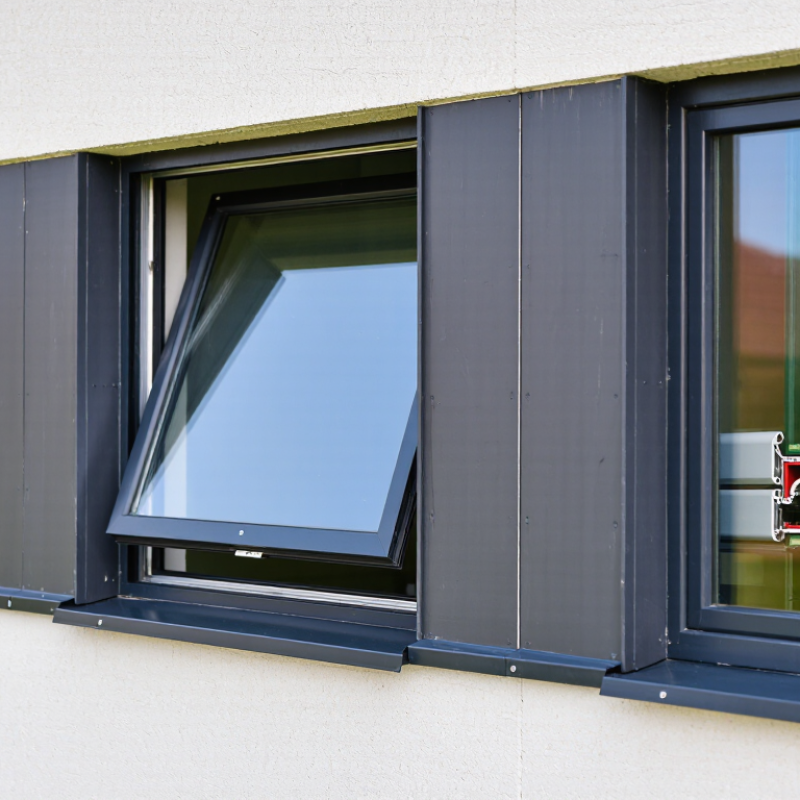
China Top Aluminium Windows Prices How Much Do They Cost?

Classify Window Types Using China’s GB/T 8478-2020 Standard

GB/T 8478-2020 helps buyers describe aluminium windows by their opening form and technical configuration. Common options include sliding and casement windows.

A sliding sash moves along a track, while a casement sash swings open on hinges.
The difference affects how much clear opening you get and the hardware each window needs.

Small detail. A supplier’s quotation is easier to compare when it names the opening type, frame dimensions, glazing, and hardware.

The standard is a classification reference, not a price list.

Two windows with the same opening style can cost different amounts because of profile design, glass thickness, finish, and specified performance. For a fair comparison, request the window’s stated dimensions and configuration, then check what installation and delivery include.

A narrow kitchen opening may suit a slider, while a bedroom may need a wider opening for ventilation. These are practical choices, not universal rules.

I would be cautious about comparing prices based only on “casement” or “sliding”; that label leaves too much unsaid. Provide a drawing or measured opening when requesting prices, and confirm the quoted product matches the intended GB/T 8478-2020 classification.

Compare Prices by Profile Thickness, Glazing, and Hardware Specifications

China aluminium window prices depend less on the frame alone than on the complete specification. Compare like-for-like quotes by finished-window area, opening style, and delivery terms. A thicker profile can improve rigidity, but it also uses more aluminium and may raise the price. The World Bank’s Commodity Markets Pink Sheet put average primary aluminium prices at about US$2,419 per tonne in 2024. This is a raw-material benchmark, not a finished-window price. Glass and fabrication still matter.

Glazing creates another major difference. Basic double glazing usually costs less than laminated or low-emissivity insulated glass, while larger panes can need stronger frames and hardware. Ask suppliers to state glass thickness, cavity width, coating, and safety-glass type. The U.S. Department of Energy notes that windows account for about 25–30% of residential heating and cooling energy use. That makes performance worth checking, not just the upfront quote. A thicker profile is not automatically better.

Tips: Request two quotes using the same window dimensions, profile-wall thickness, glazing build-up, and hardware grade. Check whether prices include packaging and shipping. A small detail can change the total. I would also ask for test data; quotes alone do not prove performance.

Estimate Frame Material Needs Using Aluminium’s 2.70 g/cm³ Density

China Top Aluminium Windows Prices How Much Do They Cost?

Estimating aluminum needs makes a window quote easier to assess. The Aluminum Association’s Aluminum Design Manual uses a nominal density of 2.70 g/cm³. Start with the net aluminum cross-section from the profile drawing, then multiply by each member’s length. For example, a 600 mm² section cut to six metres contains 3,600 cm³ of aluminum, or about 9.7 kg. Repeat this for frames, sashes, and mullions. Add the results for an approximate material mass.

Keep the estimate focused on aluminum. Glass, hardware, and plastic thermal breaks add weight, but are different materials. ASTM B221 covers aluminum-alloy extruded products; the supplier’s section drawing provides the geometry needed for a useful calculation. This estimate can support price comparisons, but it may look more exact than it is. Cut waste, corner joints, and finish choices can change the order quantity and final price.

Tips: Ask for profile weights per metre and a cutting schedule. Compare those figures with your calculation, and check whether the quote includes scrap, glazing, hardware, and finishing. One easy mistake is counting a hollow profile’s outside dimensions as solid aluminum. Use its net cross-sectional area instead.

China Top Aluminium Windows Prices How Much Do They Cost? - Estimate Frame Material Needs Using Aluminium’s 2.70 g/cm³ Density

The estimates below show a basic perimeter-frame material calculation for example window sizes. They use an assumed aluminium profile cross-sectional area of 800 mm² and an illustrative raw-material budget of US$2.50–US$3.50 per kg.

Example Window Size (W × H) Perimeter Profile Length Estimated Aluminium Mass Illustrative Raw-Material Cost
0.90 × 1.20 m 4.20 m 9.07 kg US$22.68–US$31.75
1.20 × 1.50 m 5.40 m 11.66 kg US$29.16–US$40.82
1.50 × 1.50 m 6.00 m 12.96 kg US$32.40–US$45.36
1.80 × 1.50 m 6.60 m 14.26 kg US$35.64–US$49.90
2.40 × 2.10 m 9.00 m 19.44 kg US$48.60–US$68.04

Calculation: Perimeter length = 2 × (width + height). Estimated mass = perimeter length × 0.0008 m² × 2,700 kg/m³; 2.70 g/cm³ equals 2,700 kg/m³. Costs are calculated from the stated illustrative raw-aluminium price assumption and are not supplier quotations. This perimeter-only estimate excludes additional sash or mullion profiles, cutting waste, glazing, hardware, coatings, fabrication, packaging, shipping, taxes, and installation. Actual requirements and prices vary by window design and specification.

Check Window U-Values Against China’s GB 55015-2021 Energy Standard

A low quotation is only useful when its thermal performance is clear. Ask for the whole-window U-value, or Uw, in W/m²K; lower values indicate less heat transfer. A glass-only Ug figure is not enough. Frames, spacers, seals, and installation all affect the finished window. Small details matter.

GB 55015-2021, effective from April 1, 2022, sets building energy-efficiency requirements that vary by climate zone and building type. There is no single U-value target for every Chinese project. Check the project’s energy design documents, then compare the quoted Uw with the applicable requirement. The International Energy Agency’s 2024 Global Status Report for Buildings and Construction estimates that buildings and construction account for 32% of global energy use and 34% of energy-related CO₂ emissions. That makes window performance more than a pricing detail.

For a fair price comparison, request the same glass build-up, frame configuration, and test basis from each supplier. A thermal-break aluminium frame or low-emissivity glass may raise the upfront cost, but the quote should state the tested whole-window value. One awkward gap often remains: a strong laboratory result cannot fix poor site sealing. Treat installation details as part of the specification, not an optional extra.

Add Installation, Freight, and Taxes to Calculate the Total Cost

A factory price is only the starting point for calculating the real cost of aluminium windows from China. Ask whether the quote is EXW, FOB, or CIF, and confirm exactly what it includes. Then add inland transport, ocean freight, cargo insurance, customs clearance, and delivery to your site. Freight changes with shipment size, route, and season. Small orders can be especially costly per window.

Installation needs its own estimate. The U.S. Bureau of Labor Statistics reported a median annual wage of $51,180 for glaziers in May 2023; this is a wage benchmark, not a contractor’s installed price. Labor, removal of old frames, lifting equipment, access, and weatherproof sealing can all raise the bill. A narrow opening may need extra adjustment. Measure carefully.

Taxes and import duties depend on the destination, product classification, and customs valuation. Ask a customs broker to calculate them before paying a deposit, rather than applying one assumed percentage. Compare the supplier’s quote with a landed-cost sheet: product price, installation, freight, insurance, clearance, duties, and taxes. Keep a contingency for damage or site changes. It is easy to miss small charges, and that is where an attractive quote can become less attractive.

China Aluminium Window Costs: Product, Freight, Installation & Taxes

Illustrative landed-and-installed estimate per square metre (USD)

Estimated total: $279/m². This example assumes a $160/m² product price, $35/m² freight, $45/m² installation, and $39/m² in import duties and taxes. Actual costs vary by window specifications, shipment size, destination, local tax rules, and installation requirements. Confirm freight charges and applicable duties and taxes for your destination before purchasing.

FAQS

What window types does GB/T 8478-2020 classify?

It classifies aluminium windows by opening form and technical configuration. Common types include sliding and casement windows. A sliding sash travels along a track; a casement sash swings on hinges.

What details should I include when requesting window prices?

Provide a drawing or measured opening, frame dimensions, glazing, hardware, and opening type. Ask whether installation and delivery are included. A label alone leaves too much unclear.

How can I estimate the aluminium in a window frame?

Multiply the profile’s net cross-sectional area by its length, then use aluminium’s nominal density of 2.70 g/cm³. For example, a 600 mm² section over six metres weighs about 9.7 kg. It is an estimate.

Should I treat a hollow profile as solid aluminium?

No. Use the net cross-sectional area from the profile drawing, not its outside dimensions. That mistake can inflate the estimate. Check profile weights per metre, too.

Why can two windows with the same opening style have different prices?

Profile design, glass thickness, finish, and performance specifications can change the price. Compare matching configurations, not just “sliding” or “casement.” Small details matter.

What U-value should I request?

Ask for the whole-window U-value, or Uw, in W/m²K. Lower values mean less heat transfer. A glass-only Ug value does not describe the complete window.

Is there one U-value target for every project in China?

No. GB 55015-2021 requirements vary by climate zone and building type. Check the project’s energy design documents before comparing a quoted Uw.

Can a strong laboratory U-value guarantee good performance after installation?

No. Frames, spacers, seals, and installation affect the finished result. Request the test basis and installation details. A laboratory figure cannot fix a poorly sealed gap.

Conclusion

Aluminium Windows Prices in China depend on more than the size of the opening. Start by identifying the window type under GB/T 8478-2020, then compare quotations for equivalent designs. Profile thickness, glazing configuration, and hardware specifications can all affect the price, so check that each quote describes the same product. To estimate frame material, calculate the aluminium volume from the profile dimensions and total frame length, then use a density of 2.70 g/cm³ to approximate its mass. This provides a useful material estimate, though fabrication waste and design details may change the final amount.

Energy performance is another important consideration. Review the stated U-value and compare it with the applicable requirements in China’s GB 55015-2021 standard for the project. Finally, build a realistic total-cost estimate by adding installation, freight, and applicable taxes to the product price. Comparing itemized quotations on a like-for-like basis helps reveal where costs differ and reduces the chance of overlooking expenses.

Elodie

Elodie

Elodie is a professional marketing specialist with a strong understanding of product strategy, customer needs, and digital communication. As an active contributor to the company’s website, she regularly publishes insightful blog articles that explain industry trends, practical solutions, product......