0%

Aluminium Bifold Doors can transform a dark room into a brighter, more flexible space, but the right choice depends on more than appearance. Measure the opening, consider how often the panels will move, and check where the doors will stack when open. A narrow kitchen opening has different needs from a wide garden façade. Small details matter.

For a transparent expert perspective, this guide uses a fictional composite specialist, Elena Ward, rather than inventing a real person’s credentials or quotation. Her editorial rule is: “Choose the system for the opening, the weather, and the way you live.” It is a useful starting point, not a substitute for checking technical specifications. Compare frame profiles, thermal performance, glazing, hardware, drainage, and installation requirements. Ask how the threshold handles rain and whether the panels remain practical to operate after years of use. Look closely at the finish, too; a showroom sample may not reveal how a colour appears beside your flooring or exterior wall.

Some choices involve compromise. Slim frames can increase glass area, while heavier glazing and larger panels may affect handling and hardware requirements. There is no universal best option. This outline will help you assess the key features, compare suppliers, and identify questions worth asking before you buy. The overlooked detail? Who installs it.
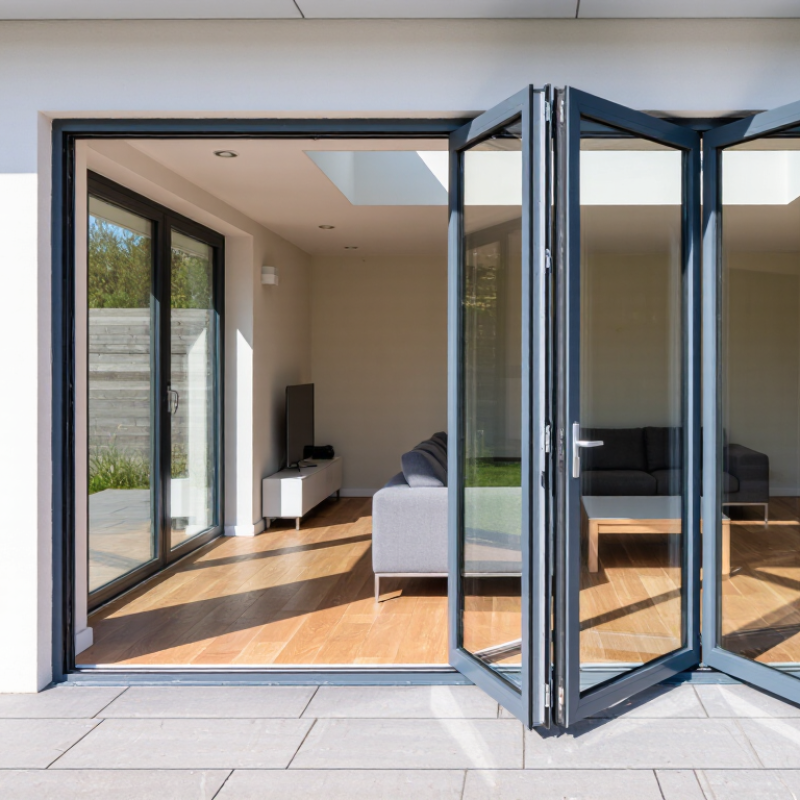
How to Choose the Best Aluminium Bifold Doors?

Understanding Your Space and Bifold Door Requirements

A bifold door should fit the way you use a room, not just the width of an opening. Measure the opening at several points, since older walls and floors are rarely perfectly level. Note where the folded panels will stack. A four-panel door may look balanced, but its open stack can block a light switch, radiator, or narrow walkway. Measure twice.

Think about how the room connects to the outdoors. A kitchen opening used every day needs an easy-to-operate handle and a threshold that suits foot traffic. For a patio exposed to rain, ask how the sill manages drainage and how the installer will seal the frame. Glass size, frame depth, and panel count can also affect daylight, heat loss, and views. These details depend on the building, so confirm them with a qualified installer rather than relying on a catalogue image.

Tips: Mark the proposed door’s full opening and folded stack on the floor with tape. Walk through the space, move a chair, and check the route. It sounds basic, but this test can reveal a layout problem before you order.

Comparing Aluminium Frame Designs and Configurations

Aluminium bifold doors differ most in frame depth, panel count, and stacking arrangement. Start with the opening: a two-panel set may preserve more clear wall space, while wider systems can create a larger opening but need room for panels to fold and stack. Check the parked panels against furniture, radiators, and walkways. Small detail. It matters.

Frame design affects comfort as well as appearance. Aluminium is strong, but it conducts heat; a thermal break helps reduce heat transfer through the frame. Ask for the whole-door U-factor and solar heat gain coefficient, not just glass specifications. The U.S. Department of Energy’s Energy Saver guidance says windows account for about 25–30% of residential heating and cooling energy use. That figure covers windows generally, not bifold doors alone, so treat it as context rather than a product promise.

Configuration also changes performance. More panels mean more joints, seals, rollers, and alignment points to maintain. A narrow profile can look clean, yet may leave less room for hardware or glazing, depending on the design. The National Fenestration Rating Council provides standardized ratings, including U-factor and solar heat gain coefficient, for comparing fenestration products. Request ratings for the exact panel arrangement and glazing you plan to buy. I still find it easy to focus on sightlines and overlook threshold height; check drainage, accessibility, and the installed floor level before choosing.

Evaluating Glazing, Thermal Performance, and Security

How to Choose the Best Aluminium Bifold Doors?

Glazing affects daylight, comfort, and heat loss. The U.S. Department of Energy’s Energy Saver guidance estimates that heat gain and loss through windows account for 25–30% of home heating and cooling energy use. Look beyond pane count: compare the whole door’s U-factor and solar heat gain coefficient (SHGC), using National Fenestration Rating Council (NFRC) ratings where available. Low-emissivity glass can help limit heat transfer, while solar-control glazing may reduce glare on sun-facing rooms. Small details matter. Check the spacer bars and seals, too.

Thermal figures are only useful when installation is sound. A poorly adjusted frame can let in cold air, even with high-performance glazing. For security, ask for evidence that the complete doorset—not just its lock—has been independently tested. In the UK, PAS 24 is one relevant security standard. Also inspect hinge protection, multipoint locking, and whether the panels close flush. A low U-factor is useful, but it is not the whole story; real comfort also depends on orientation, shading, and careful fitting.

Tips: Compare like-for-like whole-door ratings, not glass-only claims. Ask how the threshold drains and seals against rain. Test the handles in person; a stiff mechanism may become irritating with daily use. I would not choose from brochure figures alone.

How to Choose the Best Aluminium Bifold Doors? – Evaluating Glazing, Thermal Performance, and Security

Evaluation area What to compare Useful benchmarks and facts What to look for
Glazing configuration Double glazing versus triple glazing Double glazing is commonly made with two panes and an insulating cavity; triple glazing uses three panes and two cavities. Triple glazing can improve insulation, but adds weight and may affect panel dimensions and hardware requirements. Compare the complete door-set thermal rating, not just the glass specification. Confirm that the frame and operating hardware are suitable for the heavier glazed panels.
Thermal performance Whole-door U-value U-values are measured in W/m²K; lower values indicate less heat transfer. Depending on the design and test basis, aluminium bifold door sets may commonly fall around 1.4–1.8 W/m²K with double glazing and about 1.0–1.4 W/m²K with higher-performance triple glazing. Ask for a declared or certified U-value for the specified door size and configuration. Values vary with frame, glass, spacers, seals, and panel layout.
Thermal breaks and seals Frame insulation and weather sealing Thermally broken aluminium frames use a low-conductivity barrier between the inner and outer sections. Continuous, well-fitted seals help limit draughts and water ingress when the doors are closed. Check for a thermally broken frame, clearly specified weather seals, and test information for air permeability, water tightness, and resistance to wind load.
Glass safety Safety glass in critical locations Glazing in doors and other critical locations is generally required to meet applicable building regulations. Toughened or laminated safety glass is commonly used; EN 12600 is a pendulum-impact classification standard for flat glass. Confirm the glass type and safety classification for the project location and local regulations. Laminated glass can help retain fragments after breakage.
Security rating Tested resistance of the complete door set PAS 24 is a UK security test specification for doors and windows. EN 1627 classifies resistance to burglary attempts, including classes such as RC2. A rating applies to the tested configuration, not automatically to every variation. Request documentary evidence for the exact door configuration, including its panels, glazing, locks, and installation conditions.
Locking and hardware Multi-point locking, hinges, and shoot bolts Multi-point systems secure the door at several points along the frame. The security of a bifold set also depends on panel connections, hinges, tracks, and the way the doors are anchored and installed. Check how the lead panel locks, how the other panels are secured, and whether the supplied hardware is included in the claimed security test.
Installation and specification Opening size, threshold, and site conditions Installation quality affects operation, weather performance, and security. Threshold design can influence accessibility and water management; large openings may require structural support designed for the building. Obtain an accurate site survey, confirm the threshold and drainage detail, and ensure installation follows the door-set instructions and relevant local requirements.

Note: Performance figures are indicative ranges, not guarantees. Confirm current test reports, certifications, building regulations, and the specification for the exact door size and installation.

Checking Measurements, Thresholds, and Installation Needs

Accurate measurements shape the performance of aluminium bifold doors. Measure the opening at several points, including the top, middle, and bottom. Older walls may not be perfectly square. Note the smallest width and height, but ask the installer how much fitting clearance the system requires. Measure twice. Check the finished floor level too, since tiles or new flooring can change the required door height.

Threshold choice affects both daily access and weather protection. A low threshold creates an easier transition, but it still needs suitable drainage and careful sealing. Look at where rainwater could collect, especially near exposed patios. Installation also depends on the opening’s structure, access for carrying large panels, and space for the doors to fold back. A level, secure frame matters; even a small twist can make panels drag or leave uneven gaps. Site conditions can surprise you, so an early estimate is not always the final answer.

Tips: Photograph the opening and note floor finishes before ordering. Confirm the folding direction, handle position, and threshold detail with your installer. If the reveal is uneven, ask how it will be corrected rather than assuming trim will hide everything. That assumption can be wrong.

Assessing Supplier Quality, Warranty, and Overall Cost

When choosing aluminium bifold doors, assess the supplier as carefully as the frames. Ask who manufactures the doors, how they check dimensions, and whether installation is included. Request clear specifications for the aluminium, glazing, hardware, and finish. A neat showroom sample helps, but it cannot show how a full-sized set performs. Inspect corner joints and seals, and ask how the supplier handles adjustments after fitting.

Feel the movement. Small details matter. The panels should glide without scraping, and the locking points should engage smoothly. Read the warranty rather than relying on a headline duration. Check what it covers, who pays for labour, and whether moving parts, glass, and finishes have different terms. Exclusions can be easy to overlook, and warranty service may depend on following maintenance instructions.

Compare overall costs using the same opening size and glass specification. Include delivery, installation, finishing work, and likely upkeep, not just the quoted door price. Ask whether drainage, thresholds, or structural preparation are included; these can change the final bill. A lower quote may still be sensible, but only when the specification and after-sales support match. I would leave room for uncertainty: installation conditions can expose issues no brochure mentions. Keep the written quote and warranty together, and confirm who to contact if a panel needs adjustment.

FAQS

How should I measure an opening for a bifold door?

Measure its width and height at several points. Older walls and floors may not be level. Measure twice.

How can I check whether folded panels will block the room?

Mark the full opening and panel stack on the floor with tape. Move a chair and walk the route. Check switches, radiators, and narrow paths.

How many panels should I choose?

It depends on the opening and available stacking space. More panels can create a wider opening, but their stack may crowd furniture or walkways.

What should I consider for a door used every day?

Choose an easy-to-operate handle and a threshold suited to regular foot traffic. Small detail. It matters.

How can I assess thermal performance?

Ask for the whole-door U-factor and solar heat gain coefficient. Check ratings for your exact panel layout and glazing, not glass alone.

Why does a thermal break matter in an aluminium frame?

Aluminium conducts heat. A thermal break helps reduce heat transfer through the frame. It is worth checking.

What should I ask about a patio door’s sill?

Ask how it handles drainage and how the frame will be sealed. Rain exposure makes these details important.

Do more panels affect maintenance?

They add joints, seals, rollers, and alignment points to maintain. I might focus too much on slim sightlines; threshold height deserves a closer look.

Conclusion

Choosing the best Aluminium Bifold Doors starts with understanding your space, how you plan to use it, and how much of an opening you want to create. Compare frame styles, panel numbers, and folding configurations to find an option that suits your layout and everyday needs. Consider glazing carefully: its thermal performance can affect comfort and energy use, while suitable security features can provide added peace of mind.

Before making a decision, check the opening measurements, threshold design, and installation requirements, including accessibility and drainage. Ask suppliers about material quality, product testing, warranty coverage, and the support available before and after installation. Finally, compare the overall cost rather than focusing only on the initial price. A well-matched door balances appearance, performance, reliable installation, and long-term value.

Elodie

Elodie

Elodie is a professional marketing specialist with a strong understanding of product strategy, customer needs, and digital communication. As an active contributor to the company’s website, she regularly publishes insightful blog articles that explain industry trends, practical solutions, product......