0%

Choosing a reliable Aluminum Bathroom Door manufacturer in China requires more than comparing product photos and export claims. This market includes factories, trading companies, and integrated suppliers with very different capabilities. A polished website does not always prove stable quality. This guide introduces ten notable manufacturers and examines their experience, product range, customization services, and international support.

The evaluation focuses on practical details. These include aluminum alloy grades, surface treatments, glass options, hinge performance, waterproof seals, and production consistency. A suitable door should resist humidity, frequent cleaning, and daily opening cycles. Factory audits, sample inspections, technical drawings, and third-party certificates can provide stronger evidence than promotional language. Delivery records and communication quality also matter.

Small details matter.

The selected companies are discussed using available public information and industry-relevant criteria. However, rankings should not be treated as permanent conclusions. Manufacturer capabilities may change, and some online information may be incomplete or outdated. Buyers should request current certifications, material specifications, test reports, and installation guidance before placing an order. A sample can reveal uneven anodizing, weak corners, or poorly aligned hinges that photographs may hide. This article aims to offer a practical starting point for importers, contractors, distributors, and property developers seeking dependable Aluminum Bathroom Door solutions from China. It also encourages careful verification, because the lowest quotation is not always the lowest total cost. When quality evidence remains unclear, further questions are necessary. That is part of responsible sourcing.
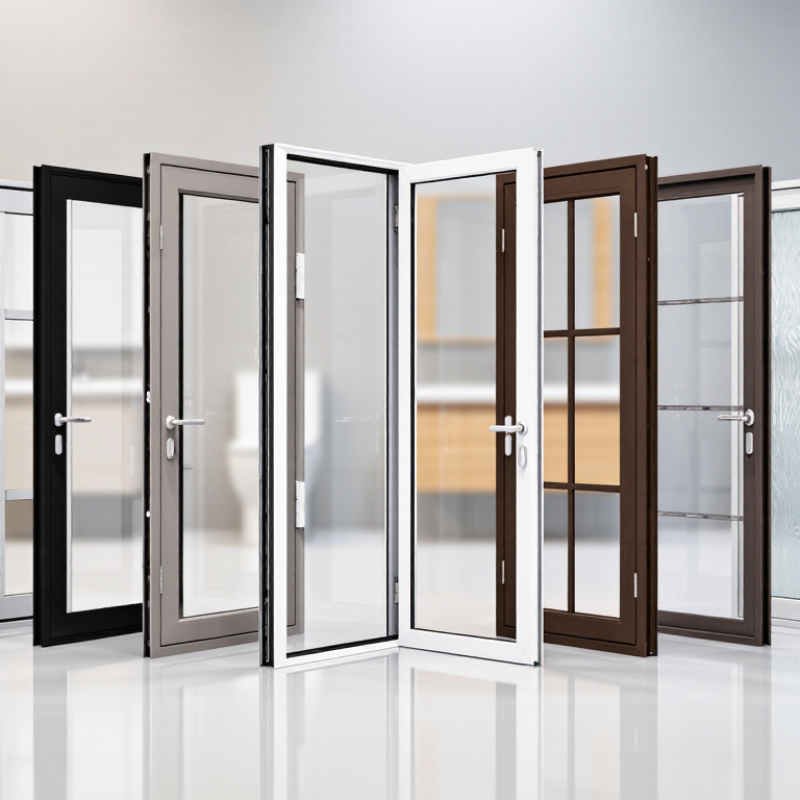
China Top 10 Aluminum Bathroom Door Manufacturers?

What Makes a Leading Aluminum Bathroom Door Manufacturer in China?

A leading aluminum bathroom door manufacturer in China is defined by more than production capacity. Experience appears in practical decisions: selecting 6063 aluminum profiles, controlling profile thickness, and matching frames to humid interiors. Engineers should review door openings, wall conditions, drainage, and installation habits before confirming drawings. Small details matter. A two-millimeter error can cause rubbing, uneven gaps, or water leakage.

Professional manufacturers turn these decisions into repeatable processes. They inspect incoming aluminum, verify coating thickness, check corner joints, and test hinges, locks, and seals. A reliable factory keeps batch records, inspection photos, and corrective-action reports. Water-spray testing and repeated opening cycles reveal weaknesses that visual checks may miss. Clear technical drawings, packing lists, and installation guidance also show operational maturity. They reduce confusion between factory teams, distributors, and installers.

Authority comes from evidence, not polished claims. Buyers should request material data, test methods, quality records, and references from comparable projects. Consistent communication matters when sizes or hardware change. No manufacturer gets every detail right. The stronger partner admits defects, explains root causes, and manages replacement parts without delay. I would also examine packaging: corner protection, separated glass panels, dry wrapping, and readable labels. These details often decide whether a well-made door arrives ready for installation.

How to Evaluate Aluminum Bathroom Door Quality and Design

China Top 10 Aluminum Bathroom Door Manufacturers?

How to Evaluate Aluminum Bathroom Door Quality and Design

A reliable aluminum bathroom door begins with material verification. Ask for the alloy grade, frame thickness, surface treatment, and corrosion-resistance test records. In humid rooms, powder coating should look even, without bubbles, pinholes, or exposed edges. Run a dry cloth along the frame. Rough spots may signal weak finishing.

Check the door’s structure by opening and closing it repeatedly. Movement should feel steady, not loose or unusually heavy. Hinges, handles, rollers, and screws need corrosion-resistant materials. A proper seal should reduce water leakage while keeping the door easy to operate. Glass panels require clear safety documentation and consistent thickness. Bigger is not always better.

Design should fit the room, not only the product photograph. Measure the opening, wall condition, swing direction, and available ventilation space. Consider privacy, cleaning access, threshold height, and compatibility with local installation practices. A skilled evaluator should request drawings, inspection records, packaging details, and warranty terms. These documents reveal reliability better than polished images.

Some quality judgments remain subjective. I once preferred a heavier frame, but its poor alignment caused daily frustration. That experience changed my checklist: precise installation matters as much as material strength. Look closely at corners, drainage paths, and the final gap around the door. Small defects become obvious after months of steam and splashing.

China Top 10 Aluminum Bathroom Door Manufacturers? - How to Evaluate Aluminum Bathroom Door Quality and Design

No. Evaluation Dimension Recommended Quality Benchmark Why It Matters in a Bathroom Verification Method Suggested Weight
1 Aluminum Alloy and Frame Strength 6063-T5 or 6063-T6 aluminum is commonly suitable for architectural door frames. A practical residential frame-wall benchmark is approximately 1.2–2.0 mm, subject to door size and structural design. Adequate alloy and wall thickness help reduce bending, corner movement, and premature hardware loosening. Review alloy and temper certificates, measure wall thickness at several locations, and inspect welded or mechanically joined corners. 15%
2 Surface Finish and Corrosion Protection Powder coating should have a documented film-thickness target, commonly around 60–100 μm for architectural applications. Anodized finishes are often specified at approximately 10–15 μm or according to the project requirement. Constant humidity, cleaning chemicals, and salt air can cause discoloration, blistering, or corrosion if the finish is poorly controlled. Check coating thickness, color uniformity, adhesion, pencil hardness, and neutral salt-spray testing under ISO 9227 or an equivalent agreed method. 15%
3 Safety Glass Specification Use safety glazing where required by local regulations. Common bathroom door options include 6–10 mm tempered glass or laminated safety glass, with the final thickness based on panel size and support conditions. Safety glazing reduces injury risk from accidental impact and is better suited to wet areas than ordinary annealed glass. Confirm glass type, thickness, safety markings, edge quality, flatness, and conformity with the applicable local or international glass standard. 12%
4 Water Sealing and Drainage Design The design should include continuous or properly joined seals, a suitable threshold or bottom sweep, and drainage paths that prevent water from entering the wall or adjacent room. Effective sealing limits splash leakage, mold growth, floor damage, and deterioration of nearby materials. Conduct a controlled spray test, inspect seal compression around the perimeter, and verify that drainage outlets are not blocked. 12%
5 Hardware Material and Load Capacity Stainless steel 304 is widely used for normal indoor bathrooms; stainless steel 316 is more suitable for coastal or high-chloride environments. Hinges, rollers, handles, and fasteners must be matched to the door weight. Hardware is exposed to water, condensation, soap, and cleaning agents and is often the first component to show corrosion or wear. Check material declarations, load ratings, fastener compatibility, smooth operation, and resistance to visible rust after repeated wet exposure. 10%
6 Dimensional Accuracy and Assembly Frame diagonals, panel gaps, and opening dimensions should be controlled according to the approved drawing. A practical inspection target for many finished door components is approximately ±1–2 mm, unless a stricter tolerance is specified. Accurate assembly improves alignment, reduces rubbing, and supports consistent sealing and installation. Measure height, width, diagonals, frame squareness, glass clearance, and gap consistency using calibrated tools. 10%
7 Door Operation and Durability The door should open, close, slide, and latch without binding. A documented repeated-operation test, such as 20,000 cycles for a residential product, provides a useful comparison when the test method and load are clearly defined. Frequent use can loosen hinges, wear rollers, deform seals, or create alignment problems. Request cycle-test records and inspect operation before and after testing, including latch engagement and seal compression. 8%
8 Design, Privacy, and Ventilation Evaluate clear or textured glass, opaque panels, slim or wide sightlines, handle ergonomics, ventilation gaps, and compatibility with the bathroom’s interior style. A good design balances privacy, light transmission, airflow, accessibility, and visual consistency without compromising water control. Review approved drawings, physical samples, privacy level, handle position, ventilation strategy, and cleaning accessibility. 6%
9 Installation and Maintenance The system should provide clear installation tolerances, replaceable seals, accessible adjustment points, compatible anchors, and drainage details appropriate to the wall and floor construction. Poor installation can cause leakage and movement even when the door itself is well manufactured. Assess the installation manual, hardware replacement process, adjustment range, spare-part availability, and cleaning instructions. 6%
10 Compliance, Traceability, and Inspection Records A reliable supplier should provide approved drawings, material declarations, inspection reports, batch traceability, packaging specifications, and documentation for applicable safety and performance requirements. Documented controls make quality claims verifiable and reduce uncertainty across repeat orders or different production batches. Audit sample records, incoming-material checks, final-inspection reports, corrective-action procedures, and product identification labels. 6%
Total Suggested Evaluation Weight 100%

Note: The figures above are practical procurement benchmarks rather than universal legal requirements. Final specifications should be confirmed against the project drawings, local building regulations, installation conditions, door size, glass configuration, and applicable testing standards.

China’s Top 10 Aluminum Bathroom Door Manufacturers

China’s Top 10 Aluminum Bathroom Door Manufacturers are often evaluated through material quality, production experience, and customization ability.

Reliable factories usually use corrosion-resistant aluminum, reinforced corners, and moisture-tolerant surface treatments. These details matter in bathrooms, where steam, splashes, and poor ventilation can weaken unsuitable doors.

A professional manufacturer should provide clear profiles, hardware specifications, sample testing, and quality inspection records. Check frame thickness, hinge strength, glass safety, sealing performance, and drainage design. Factory experience is useful, but it does not guarantee perfect results. Some suppliers may present attractive samples while overlooking installation tolerances. Request updated product photos and confirm packaging standards before placing an order. Small details become expensive later.

Tips:

  • Compare at least three quotations.
  • Ask for a physical sample.
  • Test the door in a humid environment.
  • Confirm warranty terms in writing.
  • Measure the opening twice.

This sounds simple, yet measurement mistakes remain common. Also review communication speed and technical answers, not only the lowest price. A dependable supplier should explain weaknesses honestly and suggest practical improvements. That honesty is sometimes more valuable than a polished catalog.

How to Compare Prices, Customization, and Production Capabilities

China Top 10 Aluminum Bathroom Door Manufacturers?

Comparing Chinese aluminum bathroom door manufacturers requires more than checking the lowest quotation. The World Bank’s Commodity Markets Pink Sheet recorded aluminum at about US$2,256 per tonne in 2023. However, material prices explain only part of the final door cost. Ask for alloy grade, wall thickness, surface treatment, glass specification, hardware, packaging, and delivery terms. A quote with a thinner frame may look attractive, yet it can feel weak during installation.

Customization should be measured through drawings, not promises. Request profile sections, color samples, tolerance ranges, opening direction, drainage details, and a sample unit. The International Aluminium Institute reports global primary aluminum production above 70 million tonnes annually. This confirms strong material availability, but it does not prove consistent factory quality. Review extrusion capacity, powder-coating lines, CNC equipment, glass processing, and monthly bathroom-door output. Production capability is practical evidence.

Tips: Compare identical specifications in one spreadsheet. Separate tooling, sample, inspection, freight, and after-sales costs. Ask for recent test records, factory videos, and batch photos. Check whether the supplier can repeat a custom color across several shipments. Small details matter.

A factory may claim high capacity but outsource key processes. That is not automatically bad, but it increases coordination risk. I would inspect process control before accepting a low price. Also, do not ignore lead time during peak seasons. A realistic comparison should include defect replacement, packaging damage, and installation feedback. My earlier mistake was trusting polished samples too quickly. A sample is evidence, not proof.

How to Choose the Right Chinese Manufacturer for Your Project

China’s large aluminum base creates many bathroom-door suppliers, but capacity alone proves little. The International Aluminium Institute reported about 41 million tonnes of Chinese primary aluminum production in 2023, exceeding half of global output. This supports broad material access, not automatic manufacturing quality.

When comparing a top-ten shortlist, inspect the process, not only the catalog. Ask whether the factory controls extrusion, cutting, assembly, glazing, and surface finishing under one system. Request recent reports for alloy composition, coating thickness, adhesion, and corrosion resistance. GB/T 5237 supports coated aluminum profile requirements, while ISO 9227 salt-spray testing can help assess hardware and finish durability. ISO 9001 certification is useful, but it is not a substitute for factory evidence. I have seen polished samples hide weak hinges and uneven drainage. A spreadsheet can still lie.

Send identical drawings to every candidate. Compare profile tolerances, glass specifications, packaging photos, replacement-part policies, and production lead times. Require a pre-production sample with your actual tile thickness and opening dimensions. Check independent inspection records before paying the final balance. The World Bank’s logistics performance research repeatedly shows that delivery reliability depends on coordination, not distance alone. Confirm export documents, pallet protection, and responsibility for damage in writing. Price should remain visible, but it should not lead the decision. A cheaper door may become expensive after warped frames, missing hardware, or repeated site labor.

FAQS

What defines a reliable aluminum bathroom door manufacturer?

Reliable manufacturers control materials, profiles, hardware, sealing, and packaging. They use repeatable inspection processes. Capacity alone proves little.

Which aluminum details should buyers check?

Ask about alloy grade, profile thickness, coating thickness, and corner reinforcement. A thin frame may flex during installation. Request profile drawings.

Why are bathroom measurements so important?

A two-millimeter error can cause rubbing, uneven gaps, or water leakage. Measure the opening twice. Review walls, drainage, and installation conditions.

How can buyers test door quality before ordering?

Request a physical sample and recent test records. Check hinges, locks, seals, glass safety, and drainage. Water-spray testing reveals hidden weaknesses.

What should a customized door quotation include?

It should list profiles, glass, hardware, finishes, packaging, tooling, freight, and delivery terms. Compare identical specifications in one spreadsheet.

How can buyers judge production capability?

Review extrusion, coating, cutting, glass processing, and assembly equipment. Ask about monthly output and batch records. Claimed capacity may not equal control.

What packaging details help prevent damage?

Look for protected corners, separated glass panels, dry wrapping, and readable labels. Good packaging prevents damage before installation. This part is often underestimated.

How should buyers respond to defects or delays?

Choose a supplier that explains root causes and replaces parts quickly. Confirm warranty terms in writing. Mistakes happen, but silence creates bigger costs.

Is the lowest quotation usually the best choice?

Not necessarily. A low price may hide thinner frames, weaker hardware, or missing inspection costs. I once trusted a polished sample too quickly. A sample is evidence, not proof.

Conclusion

This guide explores what defines a leading Aluminum Bathroom Door manufacturer in China, focusing on material quality, production consistency, design capability, and customer service. It explains how to assess aluminum alloy strength, surface finishes, hardware performance, waterproofing, safety features, and overall construction quality. Readers will also learn how modern designs, glass options, colors, dimensions, and opening styles can support different bathroom layouts and project requirements.

The article presents a practical overview of China’s top 10 Aluminum Bathroom Door manufacturers without relying solely on brand reputation. It shows how to compare pricing, minimum order quantities, customization options, production capacity, quality control, lead times, packaging, and export experience. Finally, it provides a clear framework for selecting the right manufacturer by matching technical capabilities, design expectations, budget, communication standards, and long-term project needs.

Clara

Clara

Clara is a dedicated marketing professional with a strong understanding of our company’s products, customers, and industry landscape. Combining strategic insight with clear, engaging communication, she helps translate complex product features into practical value for businesses and everyday users.......