An Aluminum Door With Window can bring daylight into a hallway, connect a kitchen to a patio, or make a small entry feel more open. Its appeal is visible at once: slim aluminum frames, clear glass, and a crisp, modern profile. Yet appearance is only part of the decision. The right configuration depends on the opening, local climate, privacy needs, and how often the door will be used.
For a transparent example rather than a real-world endorsement, consider fictional fenestration consultant Daniel Mercer: “A door performs as a system: frame, glass, seals, and installation all matter.” That is a useful principle when comparing options. Ask about thermal breaks, glazing type, hardware, and weather seals. Check the product’s documented performance, too. A beautiful frame cannot make up for poor installation.
Details show up in daily use. A well-placed glazed panel can brighten a dim landing; the wrong glass may expose a room to unwanted views. A wide door can improve access, but it also needs suitable hardware and adequate clearance. Small choices matter.
There is no universal best design. Measure carefully, compare specifications, and consider who will use the door each day. One detail is easy to miss: sunlight changes through the seasons. A little reflection before ordering can prevent a costly mismatch.
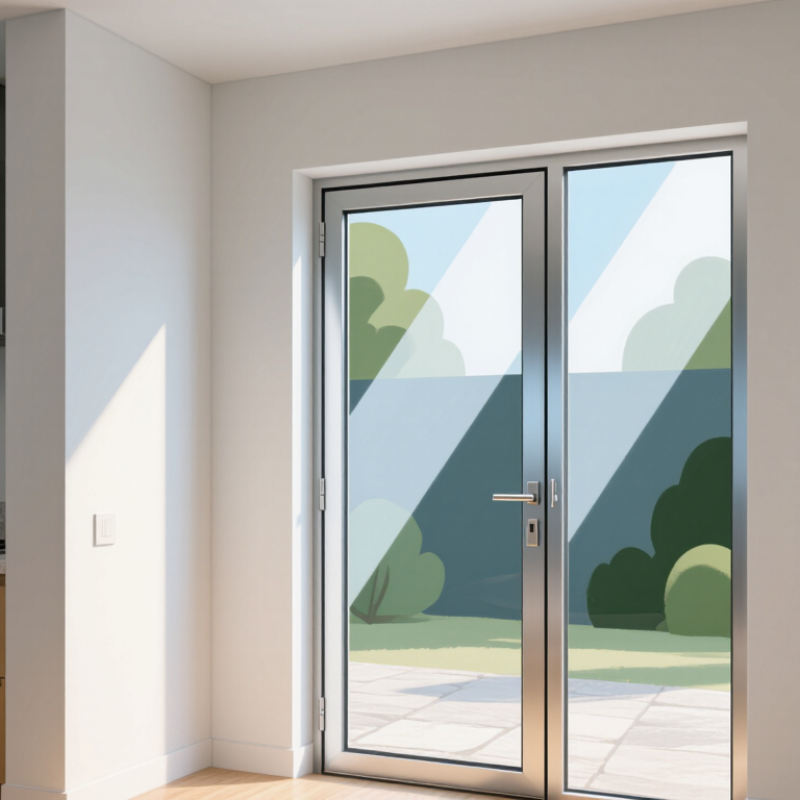
What Defines an Aluminum Door With a Window
An aluminum door with a window is a framed door leaf that combines aluminum profiles with one or more glazed panels. The glass may occupy a small upper section or most of the door, depending on privacy, daylight, and design needs. Look closely at the frame: many insulated models use a thermal break, a non-metal barrier between inner and outer aluminum sections. This helps reduce heat transfer. The glass unit, glazing seals, hinges, lock, and weatherstripping also affect performance. It is a system, not just a metal frame with glass inserted.
Ratings make comparisons more useful than appearance alone. The U.S. Department of Energy’s Energy Saver guidance estimates that windows can account for 25–30% of household heating and cooling energy use. A glazed door can contribute to that heat flow, so check its whole-unit U-factor and solar heat gain coefficient. The National Fenestration Rating Council (NFRC) provides standardized product ratings; a lower U-factor generally indicates better insulation. Check that the rating applies to the complete door assembly, not only the glass.
Details matter. On a sunny south-facing entry, a large clear panel may brighten a hallway but also increase summer heat and glare. Low-emissivity glass or a smaller glazed area may suit that exposure better. Inspect the sill and perimeter seals, too; a small installation gap can undermine a well-rated product. Aluminum is strong and allows slim sightlines, but it conducts heat readily without suitable thermal design. That trade-off deserves attention.
An aluminum door with a window combines a durable frame with glazing that can bring daylight into an entryway. Clear, low-emissivity, tinted, and frosted glass offer different balances of light transmission and privacy. Values shown are illustrative midpoints; actual performance varies with the specific glass and glazing assembly.
Aluminum frames offer slim sightlines and strong support for large glass panels. But aluminum also conducts heat readily. A thermal break—a non-metal section between the frame’s inner and outer surfaces—helps slow that transfer. The frame matters, too. Poorly insulated edges can undermine otherwise capable glazing.
Glass and frame should be assessed as one system. Double glazing traps an insulating air or gas space, while low-emissivity coatings help limit unwanted heat flow. In the United States, the Department of Energy reports that windows account for about 25–30% of residential heating and cooling energy use. That figure varies with climate, orientation, and building design; it is not a guarantee of savings for any single door.
Check the complete door’s U-factor and solar heat gain coefficient, not just the glass specification. The National Fenestration Rating Council explains how these ratings support product-to-product comparisons. A low U-factor generally means less heat transfer; a suitable solar heat gain coefficient depends on local climate and sun exposure. A south-facing entry with afternoon sun may need different glazing from a shaded, north-facing one. Ask for tested whole-door performance and inspect the threshold and frame joints. A narrow frame can look elegant, but it is not automatically efficient.
An aluminum door with a window can brighten an entryway while keeping the frame relatively slim. Aluminum is strong for its weight, so it can support broad glass panels without bulky profiles. It also resists routine moisture better than many untreated materials. That does not mean it needs no care. Check the finish and hardware periodically, especially near the coast or in areas with harsh weather.
Light is only one part of the decision. Double glazing, low-emissivity glass, thermal breaks, and well-fitted weather seals can help reduce heat transfer and drafts. Performance varies by design and installation, so compare tested specifications rather than relying on the frame material alone. A sun-facing hallway may feel brighter, but it may also warm up more than expected. That trade-off deserves attention.
Tips: Before choosing, measure the opening and consider where direct sun falls throughout the day. Ask how the glazing and frame work together, and inspect the door’s seals and drainage details. Keep the glass area suited to your privacy needs. A sample finish can look different in morning light. Don’t skip that small check.
Design options should follow the opening’s job, not just its appearance. A full-height glazed panel suits a bright garden room, while a narrow vertical lite can bring daylight into a hallway without exposing the whole interior. Sidelights widen a tight entry visually. For privacy, consider textured glass or a solid lower panel; the trade-off is less view.
Performance deserves equal attention. The International Energy Agency’s 2023 Global Status Report for Buildings and Construction estimates that buildings used 34% of global energy in 2022 and produced 37% of energy- and process-related CO₂ emissions. The U.S. Department of Energy notes that window heat gain and loss account for 25–30% of residential heating and cooling energy use. These figures make glazing area and specification worth checking, especially in exposed rooms. Ask for tested U-factor and solar heat-gain coefficient values, and compare them with local climate needs.
Aluminum frames allow narrow sightlines, but the metal conducts heat readily. A thermally broken frame, suitable glazing, and careful installation can help manage that weakness. Details matter. Think about where the door swings, how water drains at the threshold, and whether handles remain reachable beside a wall. A large clear pane may look excellent on a drawing, yet feel too exposed at night. Test the layout against actual furniture, sunlight, and daily routines before fixing the glass pattern.
Factors to Consider Before Choosing One
An aluminum door with a window can bring daylight into a hallway or connect a kitchen to a patio. Before choosing one, consider the opening’s direction, local climate, and privacy needs. A west-facing glass panel may add welcome light, but it can also create afternoon glare and heat. The U.S. Department of Energy reports that windows, skylights, and doors account for about 25–30% of residential heating and cooling energy use. That makes glazing performance worth checking, not guessing.
Compare the door’s U-factor and solar heat gain coefficient (SHGC), using ratings verified by the National Fenestration Rating Council. Lower U-factor generally means better insulation; suitable SHGC depends on climate and exposure. Ask whether the aluminum frame includes a thermal break, and check how the glazing and seals handle wind-driven rain. Coastal air can also make finish durability a practical concern. Looks are only part of it.
Tips: Measure the rough opening and furniture clearances before ordering. Request the actual product rating, not a general claim. Check that the threshold sheds water and that the glass provides the privacy you need. Small details matter. I would also inspect how the door feels when opening; a beautiful panel that sticks is a poor daily trade-off.
Aluminum is strong for its weight, so it can support broad glass panels with slim frames. It also handles routine moisture well. It still needs checks.
Yes. A full-height glass panel can bring daylight into a garden room. Direct sun may also warm the space more than expected.
Double glazing, low-emissivity glass, thermal breaks, and well-fitted seals can reduce heat transfer. Results depend on the design and installation.
Textured glass or a solid lower panel can limit views inside. A narrow vertical window can add hallway light without exposing the whole room. Less view, though.
Ask for tested U-factor and solar heat-gain coefficient values. Compare them with local climate needs, rather than relying on frame material alone.
Measure the opening and track direct sunlight through the day. Inspect seals and drainage, and consider privacy. Small checks matter.
Check whether the door clears nearby furniture and leaves handles reachable beside walls. Look at how water drains at the threshold. Details matter.
No. Aluminum conducts heat readily, so a thermal break, suitable glazing, and careful installation can help. I would still check the full specification.
An Aluminum Door With Window combines a sturdy metal frame with glazed panels to bring natural light into a space while maintaining a clear, modern appearance. The frame supports the glass, and the choice of glazing can influence insulation, sound control, privacy, and light transmission. Together, these elements create an opening that can suit both practical needs and a range of architectural styles.
Key advantages include durability, low maintenance, and the potential to improve daylight and energy performance when the frame, glass, and installation are selected appropriately. Design options may include different frame finishes, glass types, configurations, and opening styles. Before choosing one, consider the project’s climate, required thermal and acoustic performance, privacy needs, safety requirements, dimensions, budget, and maintenance expectations. Matching these factors to the intended setting helps ensure the door functions well and complements the overall design.