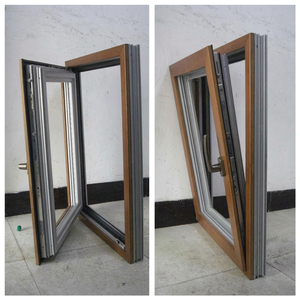
Architectural Portfolio
High-Performance Certified Fenestration Products
Direct manufacturer supply for architects, real estate developers, commercial contractors, and global window importers.
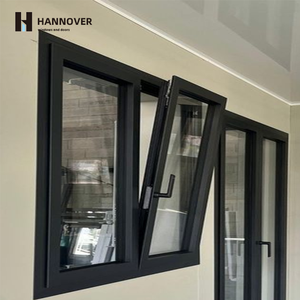
Double Glazed Aluminum Alloy Swing Casement Window Thermal Break System
Energy Efficient Modern Aluminum Clad Wood Tilt and Turn Swing Open Windows
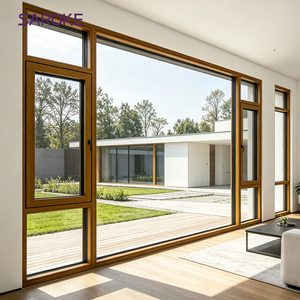
Premium Wood Grain Finish Aluminum Clad Wood Casement Windows For Timber Houses
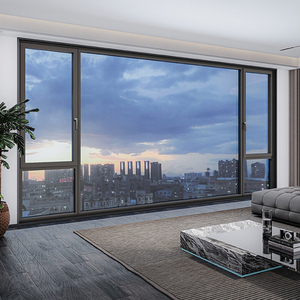
Custom Large Picture Windows For Modern Villas, Floor-to-Ceiling Slimline Frames
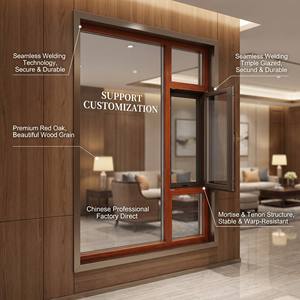
Architectural Grade Aluminum Wood Window German Roto/Siegenia Grade Oak
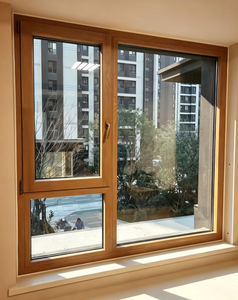
European High Energy Saving Triple Tempered Low-E Aluminum Wood Tilt Turn Windows
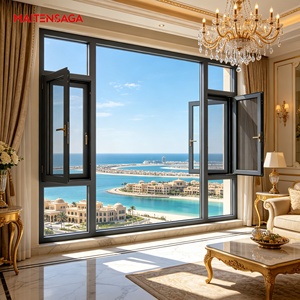
Aluminum Casement Window with Wood Grain Finish Thermal Break Double Glass Design
1. Comprehensive Technical Blueprint: Aluminium & Timber Fenestration Physics
In modern architectural engineering, the building envelope represents the critical boundary governing building performance, occupant comfort, operational energy consumption, and structural longevity. When specifying high-performance windows, engineering consultants and project developers are increasingly choosing CE-certified thermally broken aluminium and aluminium-timber composite fenestration systems over uninsulated metal or standard PVC alternatives.
1.1 Anatomy of Aluminium-Clad Timber Composite Systems
Aluminium-clad timber windows represent the pinnacle of architectural joinery by harmonizing two contrasting materials through physics-driven composite engineering. The interior timber substrate provides natural structural warmth, aesthetic elegance, and superior thermal resistance, while the exterior aluminium cladding functions as an impenetrable shield against UV degradation, extreme precipitation, and thermal stress.
- Interior Timber Substrate Engineering: SAGA utilizes multi-laminated finger-jointed timber profiles—primarily Siberian Larch (Larix sibirica), European Oak (Quercus robur), or Nordica Pine—processed to a strict moisture content of 8% to 12% (±2%). Lamination mitigates natural internal grain tension, preventing warping, bowing, or twisting over decadal temperature cycles.
- Exterior Aluminium Armor (6063-T5/T6 Grade): Extruded architectural aluminium profiles with a minimum wall thickness of 1.4mm to 2.0mm form the weatherboard. Surface treatment follows Qualicoat Class 2 standard fluorocarbon (PVDF) powder coating or anodizing, ensuring resistance to salt-spray corrosion (tested over 3,000 hours per ISO 9227).
- Floating Fastener Clip System: Because wood and aluminium exhibit vastly different coefficients of thermal expansion ($\alpha_{wood} \approx 4.0 \times 10^{-6} /K$ vs $\alpha_{alu} \approx 23.1 \times 10^{-6} /K$), direct rigid attachment causes structural buckling. SAGA integrates specialized polyamide 66 nylon clip fasteners that allow independent sliding movement while maintaining a continuous 5mm ventilation gap to evacuate condensed vapor.
Key Performance Metric: By decoupling thermal expansion and integrating continuous EPDM (Ethylene Propylene Diene Monomer) gasket lines, SAGA aluminium-timber composite windows achieve acoustic insulation values up to $R_w + C_{tr} = 45\text{ dB}$ and overall window thermal transmittance ratings as low as $U_w = 0.78\text{ W/m}^2\text{K}$.
1.2 Polyamide Thermal Break Physics in Pure Aluminium Joinery
For modern commercial facades and ultra-slim architectural designs, solid timber may not fit the aesthetic brief. In these applications, thermally broken extruded aluminium joinery is required. Standard non-thermal aluminium possesses a very high thermal conductivity ($k \approx 160\text{ to } 200\text{ W/m}\cdot\text{K}$), turning uninsulated frames into rapid thermal bridges that create interior condensation and massive HVAC energy loss.
To break this thermal bridge, SAGA utilizes precision-engineered PA66 GF25 (25% Glass Fiber Reinforced Polyamide) thermal struts. Polyamide 66 exhibits a low thermal conductivity ($k \approx 0.3\text{ W/m}\cdot\text{K}$), matching the mechanical expansion rate of aluminium closely enough to prevent shear failure under extreme structural wind pressure and thermal cycling (temperatures ranging from $-30^\circ\text{C}$ to $+80^\circ\text{C}$).
2. Material Comparison Matrix: Technical Performance Analysis
Selecting the optimal frame profile requires balancing thermal insulation metrics, structural wind deflection parameters, environmental durability, and project budget constraints. Below is a engineering evaluation matrix comparing core profile options engineered by SAGA.
| Technical Parameter | Standard Aluminium | Thermally Broken Aluminium | Aluminium-Clad Timber | uPVC System |
|---|---|---|---|---|
| Frame Conductivity ($U_f$) | $\ge 5.8\text{ W/m}^2\text{K}$ | $1.3 - 2.2\text{ W/m}^2\text{K}$ | $0.8 - 1.2\text{ W/m}^2\text{K}$ | $1.0 - 1.4\text{ W/m}^2\text{K}$ |
| Max Overall Window ($U_w$) | $\sim 3.2\text{ W/m}^2\text{K}$ | $1.1 - 1.6\text{ W/m}^2\text{K}$ | $0.75 - 1.0\text{ W/m}^2\text{K}$ | $0.8 - 1.2\text{ W/m}^2\text{K}$ |
| Acoustic Rating ($R_w$) | $28 - 32\text{ dB}$ | $35 - 42\text{ dB}$ | $40 - 48\text{ dB}$ | $34 - 40\text{ dB}$ |
| Structural Rigidity (Wind Load) | High (Class C5) | Very High (Class C5) | Exceptional (Class C5) | Moderate (Class C3) |
| Exterior Maintenance Lifecycle | Low (Powder Coat) | Zero Maintenance | Zero Maintenance (Alu Clad) | Low (Foil Care) |
| Interior Aesthetic Value | Industrial / Modern | Minimalist Metallic | Natural Luxury Timber | Synthetic Smooth |
| Fire Safety Rating (EN 13501) | Class A1 Non-Combustible | Class A1 / B-s1,d0 | Class B-s1,d0 (Treated) | Class B-s3,d0 Self-Extinguish |
3. CE Certification (EN 14351-1) & Global Regulatory Compliance Framework
For European procurement officers, project developers, and building certifiers, the CE Mark is not merely a marketing badge—it is a mandatory legal compliance framework governed by the EU Construction Products Regulation (CPR 305/2011). Under the harmonized standard EN 14351-1:2006+A2:2016 (Windows and Doors - Product Standard, Performance Characteristics), all external pedestrian doorsets and windows sold within the European Economic Area must undergo rigorous Initial Type Testing (ITT) and maintain continuous Factory Production Control (FPC).
Air Permeability
EN 12207 (Class 1 to 4): SAGA systems achieve Class 4 (highest test limit at 600 Pa test pressure with leakage rate below $3\text{ m}^3/\text{h}\cdot\text{m}^2$), eliminating convective heat losses and cold draft penetration.
Watertightness
EN 12208 (Class 1A to E1050): Tested under continuous water spray with dynamic differential air pressure. SAGA joinery reaches Class E1050 (1050 Pa), exceeding standard residential storm conditions.
Wind Load Resistance
EN 12210 (Class A1 to C5): Evaluates structural frame deflection ($L/300$ limit) under positive/negative wind pressures. SAGA systems achieve Class C5 (2000 Pa wind load with deflection < L/300).
3.1 Multi-Market Regulatory Compliance Architecture
In addition to strict European EN compliance, SAGA cross-engineers window extrusions to meet or exceed major global building code requirements, allowing multi-national real estate developers to standardize hardware procurement across global project portfolios:
- Australian Standard AS2047 & AS1288: Audited annually under the AGWA program for structural wind deflection, water penetration resistance (typically 450Pa–600Pa), and human impact safety glazing compliance.
- New Zealand Building Code (NZS4211:2008): Fully compliant with clauses B1 (Structure), B2 (Durability), E2 (External Moisture), F2 (Hazardous Building Materials), and H1 (Energy Efficiency / R-value updates).
- North American Fenestration Standard (NAFS / AAMA / WDMA / CSA): Rigorous performance testing for air filtration, water resistance, structural uniform load, and forced-entry security (ASTM F588).
- Miami-Dade County Hurricane Impact Standard: Tested under Florida Building Code Protocols High Velocity Hurricane Zones (HVHZ) TAS 201-94 (Large Missile Impact), TAS 202-94 (Static Air Pressure), and TAS 203-94 (Cyclic Wind Pressure).
4. B2B Procurement Trends & Market Analysis (2025–2030 Insights)
The global architectural window market is undergoing a structural transition driven by net-zero building regulations, embodied carbon accounting, and industrialized construction methodologies. SAGA’s supply chain analytics indicate four core macro procurement trends defining the next decade:
Trend 1: Decarbonization & Mandatory Environmental Product Declarations (EPDs)
European and North American commercial tenders increasingly mandate Life Cycle Assessment (LCA) data and verified EPDs. Buyers are moving away from carbon-intensive raw aluminium in favor of extrusions produced with renewable hydroelectric power or recycled scrap content (>75% circular aluminium), cutting embodied carbon from $18\text{ kg CO}_2\text{e/kg}$ down to $<4\text{ kg CO}_2\text{e/kg}$. Similarly, timber must carry 100% chain-of-custody FSC (Forest Stewardship Council) or PEFC certification to guarantee zero deforestation.
Trend 2: Shift Toward Unitized & Prefabricated Window Envelopes
To reduce expensive site labor costs and combat skilled trades shortages in Europe, North America, and Australasia, contractors are transitioning from stick-built site glazing to factory-assembled, fully unitized or pre-flashed window modules. SAGA provides factory-integrated sub-frames, pre-installed structural flashing fins, and integrated nail fins customized for timber frame, steel stud, or ICF (Insulated Concrete Form) wall construction.
Trend 3: Triple-Glazing & Vacuum Insulated Glass (VIG) Domination
With stringently enforced building energy codes (such as the UK Building Regulations Part L 2025 update requiring window U-values $\le 1.2\text{ W/m}^2\text{K}$ and Germany’s GEG regulations), double-glazed IGUs are rapidly losing market share to triple-glazed units containing argon gas (90%+ fill rate) and low-emissivity (Low-E) soft coatings. Furthermore, next-generation Vacuum Insulated Glass (VIG)—achieving a glass $U_g = 0.4\text{ W/m}^2\text{K}$ at a thickness of only 8.3mm—is entering mainstream architectural specifications.
Trend 4: Smart Electrochromic & Integrated Solar Fenestration
Commercial building envelopes are expanding beyond passive insulation into active energy management. Modern architectural tenders now incorporate dynamic electrochromic glass (tinting automatically via ambient light or BMS automation) and Building-Integrated Photovoltaics (BIPV) embedded into window spandrel zones.
5. Future Innovations in Fenestration Manufacturing
To remain competitive, forward-thinking manufacturers are investing heavily in advanced materials chemistry and mechanical automation. Key technical breakthroughs integrated into SAGA’s product pipeline include:
Aerogel-Infused Thermal Chambers
By injecting silica aerogel insulation into the polyamide profile cavity, frame conductivity ($U_f$) is reduced by up to 35% without expanding the visual sightline profile width.
Concealed Multi-Point Motorized Locks
Collaborating with European hardware leaders Roto, Siegenia, and Winkhaus, SAGA incorporates fully concealed electric actuator drives into tilt-turn sash frames for smart-home integration.
6. The SAGA Manufacturing Advantage: Factory Capabilities
SAGA Aluminum Doors & Windows Co., Ltd. operates a state-of-the-art manufacturing facility engineered specifically for customized, high-precision export joinery. Unlike local assembly workshops, our facility controls the entire production cycle from raw extrusion processing to final crate packaging.
6.1 Automated CNC Precision Machining
Equipped with 5-axis German CNC machining centers, profile cutting, corner crimping, lock-pocket milling, and drainage hole slotting are performed with sub-millimeter tolerances ($\pm 0.1\text{mm}$). This guarantees perfect gasket compression and frame squareness, eliminating on-site fitting failures.
6.2 Strict Quality Control Protocol (7-Step Quality Check)
- Raw Material Inspection: Spectrometric testing of 6063-T5 aluminium alloy composition and moisture testing of incoming timber.
- Surface Finish Evaluation: Gloss level, film thickness (minimum 60 microns for powder coating), and cross-hatch adhesion testing per ISO 2409.
- Thermal Break Insertion & Crimping: Shear-strength pull testing of polyamide profile joint connections.
- Insulated Glass Unit (IGU) Sealing Check: Dew point checking (down to $-60^\circ\text{C}$ per EN 1279-2) and argon gas concentration verification using non-invasive laser sensors.
- Dry Assembly & Hardware Fit Test: 100% pre-assembly of sash and frame to test multi-point locking force and smooth handle actuation.
- Air & Water Pressure Chamber Testing: In-factory mock-up chamber testing to verify performance before batch packing.
- Export-Grade Protective Crate Packaging: Fully enclosed, foam-wrapped plywood crates featuring moisture-absorbent desiccant and steel banding, built for rough ocean transport.

AGWA Accredited Certificate
Annual independent audit verifying AS2047, AS1288, and NCC 2022 building code compliance.

NZS4211 NZBC Certificate
Compliant with New Zealand structural, durability, water resistance, and H1 energy targets.

NAFS & Miami-Dade Certified
Tested to North American NAFS standards and TAS 201/202/203 high-velocity hurricane impact requirements.
7. B2B Sourcing FAQ: Frequently Asked Procurement Questions
Here are answers to the technical, logistical, and compliance questions most frequently raised by international importers, developers, and architects.
1. What documentation is provided to prove CE (EN 14351-1) compliance for European customs and building inspectors?
We provide a complete CE Compliance Package with every shipment. This includes the official Declaration of Performance (DoP) signed under EU Regulation CPR 305/2011, Initial Type Test (ITT) reports from accredited Notified Bodies for air permeability (EN 12207), water tightness (EN 12208), wind load (EN 12210), and acoustic attenuation (EN ISO 717-1), along with full Factory Production Control (FPC) certificates.
2. How does SAGA prevent timber decay or movement in aluminium-clad wood windows installed in humid or freezing climates?
Timber stability is guaranteed through three engineering controls: (1) Vacuum pressure impregnation with eco-friendly water-based fungicides and insecticides; (2) Multi-layer cross-laminated finger-jointing that balances internal grain tension; (3) Continuous rear-ventilation gaps (minimum 5mm) between the outer powder-coated aluminium shield and the timber frame, allowing condensate to drain instantly while preventing direct wood contact with trapped moisture.
3. What is the typical lead time from shop drawing sign-off to port loading?
Standard production lead time is 35 to 50 calendar days after shop drawings and technical specifications are formally approved and the initial deposit is received. For large-scale commercial project orders exceeding 2,000 square meters, phased production schedules and container loading plans are customized to match project site delivery dates.
4. Can SAGA match custom RAL powder-coat colors, anodized textures, or wood grain stains?
Yes. For exterior aluminium extrusions, we provide full RAL color matching in Qualicoat Class 2 standard powder coatings, PVDF fluorocarbon coatings, textured matte finishes, and wood-grain thermal transfer films. For interior timber, we offer natural clear lacquers, micro-porous stains, white polyurethane coatings, and custom color staining on Oak, Larch, Pine, or Teak.
5. Are custom window samples available for structural and aesthetic approval before placing bulk orders?
Yes, we regularly fabricate standard-size or scaled sample corner cutaways showing profile sections, thermal break construction, double/triple glazing structure, EPDM seal gaskets, and hardware integration. Sample units are provided free of charge for approved project inquiries, with the client covering express freight costs.
6. What hardware and multi-point locking systems are engineered into SAGA windows?
We partner directly with leading tier-1 hardware manufacturers including German ROTO Frank, Siegenia-Aubi, GU (Gretsch-Unitas), HOPPE, and high-spec Kinlong hardware. This ensures our tilt-turn, casement, and lift-slide hardware assemblies operate smoothly for over 25,000 continuous cycles and achieve high security ratings (RC2/RC3 anti-burglary resistance).
7. How are high-performance double and triple glazed units protected against seal failure and fogging during transit and installation?
Our Insulated Glass Units (IGUs) feature dual-seal construction using primary polyisobutylene (PIB) and secondary structural silicone or polysulfide sealant. Warm-edge composite spacers (e.g., Technoform or Swisspacer) are filled with molecular sieve desiccants to absorb ambient humidity. Units are helium-tested for seal integrity and shipped with corner protectors inside fully sealed, moisture-proof plywood crates.
8. Which shipping terms and export ports does SAGA support for international delivery?
Orders are primary loaded from Fuzhou Port or Xiamen Port in Fujian, China. We support flexible international commercial shipping terms including FOB, CIF, CFR, DDP (Delivered Duty Paid), and DAP directly to project job sites. Payment can be processed securely via T/T bank transfer or Alibaba Trade Assurance.
Ready to Engineer Your Project's Fenestration Envelope?
Submit your architectural drawings, window schedules, or tender specifications today. Our senior technical engineering team will return complete section CAD drawings, structural wind-load evaluations, and a competitive direct-factory quotation within 24 hours.