CE Certified Aluminium Clad & Composite Door Systems
Engineered for luxury villas, commercial developments, and high-wind architectural façades. Tested to CE, AS2047, NAFS, and Miami-Dade impact standards.
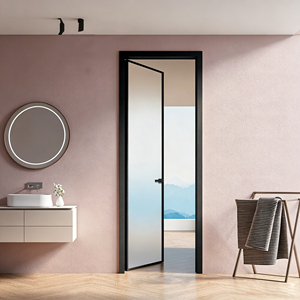
Eloyd Modern Aluminum Double Door French Doors Exterior Glass Front Terrace Casement Soundproof
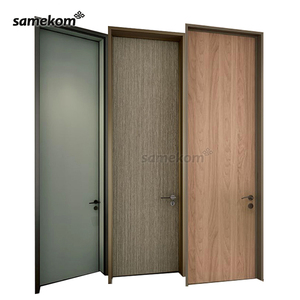
Australia Standard Aluminium Clad Composite Armored Interior/Exterior Wood Aluminum Certificated Door
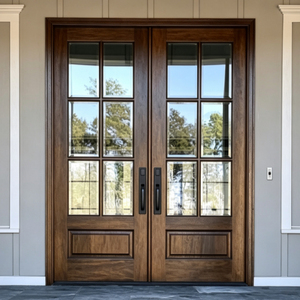
Modern Luxury Aluminum Clad Wood Casement Doors Sound Insulated Triple Glazed Solid Timber Entry Door
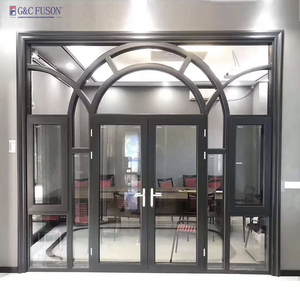
Fuson Luxury Aluminium Casement & Swing Door System for Residential & Commercial Projects
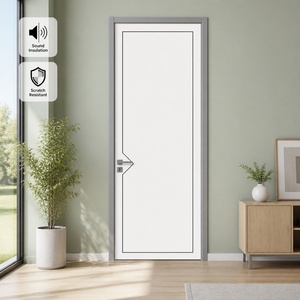
Customized Paint-Free Sound Insulated Aluminium Clad Wood Door with Solid Core Panel
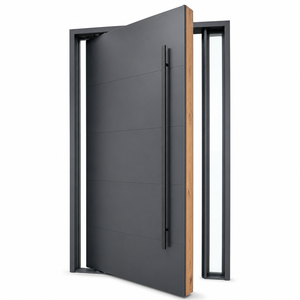
CE Certified Aluminium Clad Wood Pivot Door Solid Core Thermal Break Exterior Entry Door
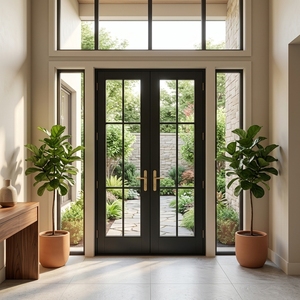
Modern Aluminium French Doors Ultra-Slim Frame Crittall Style Swing Glass Door System
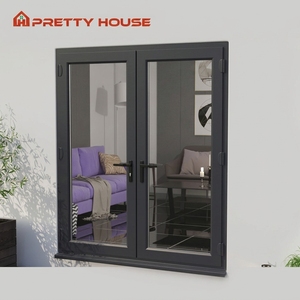
Custom Insulated Double Glazing Modern Aluminium French Door Exterior Double Entry Front Door
CE Certified Aluminium Clad Doors: The Pinnacle of Hybrid Architectural Joinery
As global building energy codes tighten under stringent net-zero standards, commercial property developers, architects, and B2B importers are increasingly abandoning legacy single-material doors. Standard solid timber doors suffer from thermal warping and UV degradation, while non-broken aluminium frames introduce critical thermal bridges.
CE EN 14351-1 Compliance
The CE mark is not merely a trading sticker; it is a legally binding declaration of conformity to European Harmonized Standard EN 14351-1. Our manufacturing facility undergoes annual third-party audits to guarantee that every door leaf and frame assembly strictly adheres to mandates regarding water tightness, air permeability, structural load resistance, and non-hazardous material composition.
Hybrid Structural Synergy
Aluminium-clad timber systems merge two contrasting material chemistries into a unified structural composite. The exterior powder-coated 6063-T5 aluminium extrusion acts as an impenetrable shield against harsh solar radiation, torrential rain, and atmospheric corrosion, while the interior kiln-dried European timber provides natural organic warmth, sound dampening, and high thermal resistance.
Lifecycle Cost & Asset Preservation
From an enterprise procurement perspective, aluminium-clad doors lower total cost of ownership (TCO) by eliminating the cycle of exterior sanding, staining, and painting every 3 to 5 years. This zero-maintenance exterior coupled with an ultra-durable polyamide thermal break ensures structural integrity over a 50+ year service life.
Precision Material Engineering & Layered System Anatomy
Achieving superior U-factors ($U_w \le 0.8 \, W/m^2K$) and high acoustic isolation (STC up to 45dB) requires precise material isolation techniques and micro-engineered thermal gaps.
1. Exterior Protective Armour: High-Precision Extrusions
Our exterior cladding utilizes primary 6063-T5 high-tensile aluminium profiles with wall thicknesses ranging from 1.8mm to 3.0mm depending on wind load requirements. Finishes include Qualicoat-certified AkzoNobel powder coating, fluorocarbon (PVDF) for coastal salt-spray resistance, or chemical anodizing. The aluminium skin is connected to the inner timber via specialized nylon snap-clip fasteners, establishing a 3mm to 5mm micro-ventilation gap. This gap accommodates differential thermal expansion coefficients between wood and metal without inducing frame distortion.
2. Interior Organic Core: FSC Kiln-Dried Timber
The interior timber profile is harvested exclusively from FSC-certified sustainable forests (European Oak, Larch, Teak, and German White Pine). Timber undergoes a 4-stage automated drying process until internal moisture content stabilizes at 8%–12%. Profiles are assembled using multi-layer finger-jointing technology to neutralize natural grain stress, preventing twisting or splitting over time. Interior surfaces are treated with non-toxic, water-based coatings that showcase natural grain aesthetics.
3. Polyamide Thermal Break Isolation (PA66-GF25)
To block thermal bridging, high-density glass-fiber reinforced polyamide strips (PA66-GF25) are mechanically inserted into the extrusion channels. Featuring low thermal conductivity ($\lambda \approx 0.3 \ W/m \cdot K$), these thermal breaks prevent ambient outdoor temperatures from transferring to interior timber surfaces, completely eliminating condensation risk even under freezing external temperatures.
4. Advanced Glazing Architecture & EPDM Weatherproofing
Standard glass configurations incorporate double or triple-pane insulated glass units (IGUs) utilizing Low-E coatings, warm-edge composite spacers, and 90%+ Argon gas fill. For extreme climate envelopes, laminated acoustic PVB interlayers are integrated. Weather sealing relies on triple continuous EPDM (Ethylene Propylene Diene Monomer) gaskets, providing superior UV resistance, air tightness, and elasticity compared to low-grade PVC seals.
Architectural Joinery Performance Comparison Matrix
A quantitative engineering comparison evaluating structural, thermal, and economic characteristics across mainstream door system technologies.
| Performance Metrics | Aluminium Clad Wood Doors | Standard Thermal Break Aluminium | Solid Timber Doors | High-Tier uPVC Doors |
|---|---|---|---|---|
| Thermal Transmittance ($U_w$) | 0.7 - 1.1 W/m²K (Excellent) | 1.4 - 2.2 W/m²K (Moderate) | 1.1 - 1.6 W/m²K (Good) | 0.8 - 1.3 W/m²K (Very Good) |
| Acoustic Insulation (STC / $R_w$) | Up to 45 dB (Superior) | 32 - 38 dB (Standard) | 35 - 40 dB (Good) | 36 - 42 dB (Good) |
| Exterior Weathering Lifespan | 50+ Years (Zero Paint Maintenance) | 40+ Years (Low Maintenance) | 10 - 15 Years (High Maintenance) | 20 - 30 Years (Moderate) |
| Structural Wind Load Capacity | Extreme (> 5000 Pa) | Very High (> 4500 Pa) | Moderate (2000 - 3000 Pa) | Moderate (2500 - 3500 Pa) |
| Interior Aesthetic Value | Luxury Natural Timber Warmth | Modern Metallic / Industrial | Classic Natural Timber | Synthetic Plastic / Foil Finish |
| CE EN 14351-1 Compliance Ease | Full Compliance Guaranteed | Full Compliance Guaranteed | Variable (Moisture Dependent) | Full Compliance Guaranteed |
Future Procurement Trends in B2B Fenestration Sourcing
Emerging global market shifts are changing how institutional buyers, volume developers, and trade importers source building envelope joinery over the next decade.
1. Ultra-Low U-Value Passive House Standards
Global building regulations are shifting towards Net-Zero Energy Buildings (NZEB). Sourcing specifications now demand total door U-factors of $\le 0.8 \ W/m^2K$. Importers are pivoting toward triple-glazed, warm-edge insulated aluminium-clad timber systems with foam-filled thermal chambers to satisfy localized green building certifications (such as LEED, BREEAM, and Passivhaus).
2. Concealed Hardware & Smart Automation
Modern architectural aesthetics prioritize clean sightlines. Procurement requests for heavy-duty hidden 3D adjustable hinges, motorized multi-point locking actuators, and integration with modern Smart Home Automation (biometric fingerprint sensors, keyless RFID, and remote app activation) are growing at over 25% annually in modern entry door design.
3. Decarbonized Aluminium & EPD Verification
European and North American buyers increasingly require Environmental Product Declarations (EPDs). Procurement contracts now specify low-carbon primary aluminium smelted using hydro-electric energy alongside FSC-certified timber, ensuring the entire window and door assembly contributes to reducing scope 3 embodied carbon emissions.
Why Global Importers Partner with SAGA Doors & Windows
Backing your projects with 16 years of OEM/ODM export expertise, advanced European CNC machinery, and complete multi-standard quality compliance.
Full In-House Precision Manufacturing & Quality Assurance
Operating from our expansive factory zone in Fujian, China, SAGA maintains total control over raw material inspection, profile extrusion cutting, timber CNC milling, automated corner welding/crimping, IGU assembly, and hardware installation. Every order undergoes a 100% pre-shipment dimensional, water-pressure, and operational check before loading.
Multi-Market Global Certification Portfolio
We eliminate regulatory barriers for global importers. Beyond CE EN 14351-1, our systems hold verified audits and test certifications across key jurisdictions: Australian AGWA standards (AS2047:2014, AS1288:2021, NCC 2022), New Zealand Building Code (NZS4211:2008), North American Fenestration Standard (NAFS), and Miami-Dade Hurricane Impact (TAS 201/202/203).
Global Strategic Hardware & Material Alliance
We partner exclusively with tier-1 hardware and profile innovators including German ROTO, Siegenia-Aubi, Hoppe, Veka, Rehau, and Kinlong. This ensures smooth hardware operation, robust security locking points, and reliable long-term spare-parts availability across 25+ export markets.
Optimized Export Packaging & Ocean Logistics
Export goods are loaded directly from Fuzhou or Xiamen ports. Products are packed using protective surface film, corner guards, water-resistant shrink wraps, and fully enclosed IPPC heat-treated wooden crates to eliminate transit damage during transoceanic shipping.
Frequently Asked Questions for B2B Sourcing & Imports
Detailed technical and commercial answers addressing common inquiries from importers, architects, and volume builders.
What specific parameters define a CE-certified aluminium clad door under EN 14351-1?
CE certification under EN 14351-1 requires verified testing for thermal transmittance ($U_w$), watertightness (EN 12208), air permeability (EN 12207), resistance to wind load (EN 12210), load-bearing capacity of safety devices, and acoustic performance. Full Factory Production Control (FPC) documentation is maintained for every export batch.
How do aluminium clad doors prevent timber rot and thermal expansion strain?
Our engineered systems feature a 3mm to 5mm micro-ventilation cavity between the outer aluminium profile and interior timber. Specialized nylon snap-clip connectors allow independent movement, avoiding tension caused by thermal expansion differences while allowing moisture to escape.
What is the standard production lead time and sample evaluation policy?
Standard production takes 35 to 50 days after final shop drawing approval and deposit receipt. We provide standard-size physical profile and corner joinery samples free of charge (buyer covers express freight) for structural evaluation before full production.
Can SAGA doors be customized to local regional standards like AS2047 or Miami-Dade?
Yes. Our engineering department adapts glass makeup, frame depth, wall thickness, and hardware specifications to comply with specific local standards, including Australian AS2047/AS1288, North American NAFS, and Miami-Dade TAS impact standards.
What port of loading and trade terms do you support?
Orders are packed in export-ready crates and loaded from Fuzhou or Xiamen port in Fujian, China. Flexible trade terms include FOB, CIF, CFR, and DDP upon request, with payments secured via T/T bank transfer or Alibaba Trade Assurance.
How is timber moisture content managed for different global destination climates?
All interior timber undergoes automated kiln drying and climate stabilization to hold internal moisture content precisely at 8%–12%. This prevents swelling in high-humidity tropical zones or shrinking in arid climates.
Ready to Accelerate Your Next Architectural Project?
Request bespoke engineering shop drawings, technical U-value calculations, physical timber/aluminium samples, and direct factory-gate pricing tailored to your procurement schedule.