High-Performance Aluminium & Fibreglass Door Solutions
Engineered to exceed European CE, Australian AS2047, and North American NAFS standards. Fully customizable structural profiles for luxury residential, commercial, and hurricane-prone coastal builds.
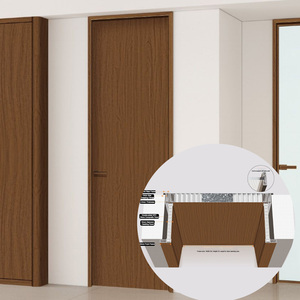
Minimalist Ultra Narrow Frame Full Aluminum Interior Door All Aluminum Honeycomb Core Wood Grain Pure Aluminum Bedroom Door
Send an Inquiry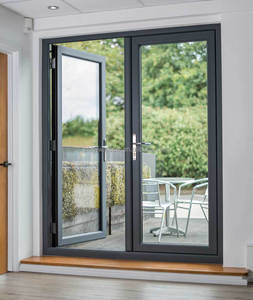
Profile Aluminum Interior Hurricane Proof Front Houses Modern Aluminum Casement Door
Send an Inquiry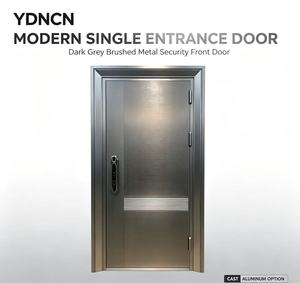
Modern Cast Aluminum Front Entrance Door Smart Security Exterior Entry Door Horizontal Groove Design Dark Grey Brushed Finish
Send an Inquiry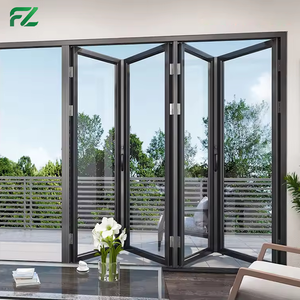
Modern Design Aluminum Folding Doors for Exterior Interior Use Foldable Finished Surface Fire Prevention Heat Insulation
Send an Inquiry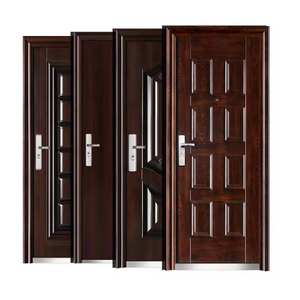
Residential Home House Custom Rustproof Insulation Aluminum Door Metal Front Entry Door Exterior Aluminum Entry Door
Send an Inquiry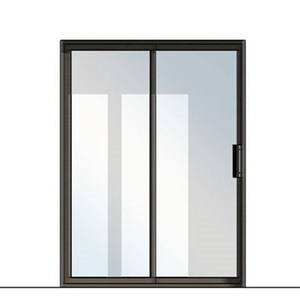
Partition Aluminium Fiber Glass exterior Sliding Door System and Doors Catalogue List
Send an Inquiry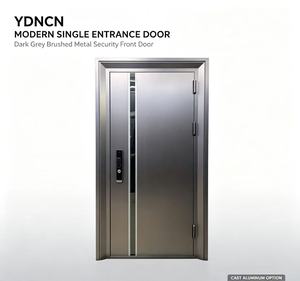
Modern Cast Aluminum Front Entrance Door Dark Grey Brushed Security Exterior Door With Verticalt Theft Custom Main Entry Door
Send an Inquiry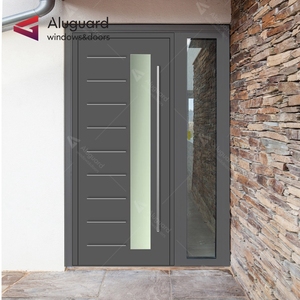
Luxury Minimalist Style Villa Exterior Home Entrance Main Door Aluminium Pivot Fibreglass Entry Door
Send an InquirySAGA Doors & Windows: Enterprise Precision Engineering & Global Supply Chain
Operating from our 16-year specialized manufacturing hub in Fuzhou and Xiamen, Fujian, SAGA Aluminum Doors & Windows Co., Ltd. delivers OEM/ODM structural entrance systems, aluminium fibre doors, and thermally broken architectural joinery to over 25 countries worldwide.
Rigorous International Certification
Fully compliant with global building codes. Independently audited under AGWA (AS2047:2014, AS1288:2021, NCC 2022), New Zealand NZS4211:2008, North American NAFS-17, and Miami-Dade Hurricane Impact TAS 201/202/203 standards.
Advanced Material Science
Combining extruded high-tensile 6063-T5 aluminium frames with pultruded glass-fiber reinforced polymer (GFRP) core panels and aluminum honeycomb inserts for zero-thermal-bridge insulation and anti-warping structural stability.
Direct Export & Logistics Infrastructure
Standard export packaging utilizing steel-reinforced protective crates, moisture-sealed shrink wrapping, and direct container loading out of Fuzhou and Xiamen ports for seamless ocean freight transit to Europe, Australia, and the Americas.
Material Science & Composite Architecture: Why Aluminium Fibre Doors Redefine Modern Sourcing
Architects, facade engineers, and volume importers face a persistent challenge with traditional doors: solid timber expands and warps under moisture fluctuations; hollow steel doors rust in saline marine air; and basic monolithic aluminium doors suffer high thermal conductivity. CE Certified Aluminium Fibre Composite Doors eliminate these failure modes by integrating extruded T6 architectural aluminium frames with structural fibreglass (GFRP) matrix skins and high-density interior insulations.
1. Anatomical Breakdown of Structural Composite Doors
The core structural advantage of our aluminium fibre door systems lies in their multi-layered sandwich construction:
- Exterior Shell: Anodized or PVDF fluoropolymer powder-coated T6 6063-T5 aluminium profile extrusions, providing extreme surface hardness, UV color stability (Delta E < 1 over 10 years), and high impact protection.
- Sub-Surface Armour: Fiber-reinforced polymer (FRP) skin plates. Pultruded glass fibers embedded in thermosetting resin provide flexural strength exceeding 300 MPa, absorbing structural stress without permanent deformation.
- Insulation Core Matrix: High-density polyisocyanurate (PIR) foam or structural aluminium honeycomb core (density 48–60 kg/m³), securing thermal insulation (U-values down to 0.85 W/m²K) and acoustic damping (Rw ratings up to 42 dB).
- Thermal Separation: Polyamide PA66GF25 (25% glass fiber reinforced nylon) thermal break strips physically isolate the exterior frame from interior rooms, eliminating cold bridges and condensation formation.
Engineering Performance Index vs. Industry Benchmarks
2. Comparative Material Analysis for Enterprise Procurement
The following engineering data table highlights why global developers are shifting procurement quotas from legacy materials toward Aluminium Fibre Composite Door systems for commercial and premium residential projects:
| Performance Parameter | Aluminium Fibre Composite | Standard Aluminium | Solid Hardwood | Hollow Metal Steel |
|---|---|---|---|---|
| Thermal Transmittance (U-Value) | 0.85 – 1.2 W/m²K | 2.8 – 3.5 W/m²K | 1.8 – 2.4 W/m²K | 3.0 – 4.2 W/m²K |
| Wind Pressure Rating | Class C5 (>5000 Pa) | Class C3 (3000 Pa) | Class C2 (2000 Pa) | Class C4 (4000 Pa) |
| Moisture & Warping Sensitivity | Zero Expansion / Immunity | Zero Expansion | High Expansion / Warping Risk | Rust / Corrosion Risk |
| Salt Spray Corrosion Resistance | 3000+ Hours Passed | 1500 Hours Passed | Decays under humidity | Requires regular repainting |
| Maintenance Cycle | Low (Wipe Clean) | Low | High (Re-varnish 2 yrs) | Medium (Rust protection) |
| Weight-to-Strength Ratio | Ultra-High (Low hinge strain) | High | Low (Heavy frame load) | Medium (Excessive weight) |
Future Procurement & Technological Trends in Architectural Openings
As carbon reduction regulations tighten across Europe and North America, commercial importers and residential builders must align procurement strategies with evolving technological directives.
1. Decarbonized Low-Carbon Extrusions
Future CE and EU Taxonomy mandates demand low embodied carbon. Modern manufacturers utilize hydro-powered low-carbon primary aluminium billets alongside recycled content (>75%), reducing carbon intensity to under 4.0 kg CO2e per kg of aluminium extruded.
2. Ultra-Narrow Sightlines with High Wind Load
Architectural demand favors minimal visible frame profiles (20mm to 35mm sightlines) paired with massive floor-to-ceiling spans. Aluminium-fibre composite reinforcement allows slim frames to maintain high moment of inertia ($Ix, Iy$) values capable of withstanding hurricane force loads.
3. Embedded Smart IoT & Biometric Ecosystems
Commercial doors are transitioning to intelligent access hubs. Hidden electromagnetic multi-point locks, facial recognition sensors, motorized automatic opening hardware, and building management system (BMS) telemetry sensors are integrated directly into door profiles during factory assembly.
4. Digital Twin & BIM LOD 400 Integration
Leading enterprise buyers require factory-supplied Building Information Modeling (BIM) files at Level of Detail (LOD) 400. SAGA supplies detailed CAD sections, thermal analysis reports, and IFC files for seamless inclusion into architectural Revit digital twin models.
7-Step Transparent OEM/ODM Production Workflow
From detailed shop drawings to containerized loading, our documented engineering process minimizes project lead times while guaranteeing 100% compliance with client specifications.
CAD & Section Design
Engineers review architectural plans, specifying frame depths, glass specs, and wind load engineering calculations.
Sample Verification
Standard or customized corner samples produced for client quality audit and physical testing prior to mass production.
Shop Drawing Sign-off
Detailed fabrication drawings including hardware placement, reveal offsets, and opening directions confirmed by buyer.
Precision CNC Machining
Automated CNC extrusion cutting, corner crimping, composite skin bonding, and PA66GF25 thermal strip insertion.
Pre-Assembly & QC
100% pre-assembly inspection: testing diagonal tolerances (<1mm), EPDM seal contact, and multi-point lock actuation.
Crate Packaging
Steel-reinforced wooden crates, corner guards, and vacuum-sealed plastic wrap protect door units during ocean transit.
Global Delivery
Direct FCL/LCL vessel shipping out of Fuzhou / Xiamen ports, complete with CE declarations and test certificates.
Frequently Asked Questions for Importers & Distributors
Technical clarity on CE compliance, wind pressure testing, minimum order quantities, and international warranty terms.
What specific European standards are verified under your CE Certification for doors?
Our aluminium fibre doors are tested and certified under EN 14351-1:2006+A2:2016 (Pedestrian doorsets for exterior use). Independent laboratory testing verifies Air Permeability (EN 12207 Class 4), Watertightness (EN 12208 Class 9A), Resistance to Wind Load (EN 12210 Class C5/B5), Thermal Transmittance (EN ISO 10077-2), and Dangerous Substances compliance under EU Construction Products Regulation (CPR No 305/2011).
How does the fibreglass composite core prevent door panel thermal warping?
Monolithic metal door panels suffer from thermal expansion mismatch between their interior (air-conditioned room) and exterior (sun-baked outside) surfaces, causing bow deflection. Pultruded fibreglass (GFRP) possesses an extremely low coefficient of thermal expansion ($\approx 8 \times 10^{-6} /\text{K}$, closely matching structural glass). Combined with internal aluminium honeycomb structural shear web plates, the panel remains flat across exterior ambient temperature deltas spanning $-30^\circ\text{C}$ to $+80^\circ\text{C}$.
What is the typical manufacturing lead time for custom container orders?
Standard production turnaround is 35 to 50 calendar days following shop drawing sign-off and initial deposit confirmation. Sample orders for engineering review are dispatched within 15–20 days. Ocean freight transit times range from 12–18 days to Australia/New Zealand, 22–30 days to Europe, and 20–28 days to the North American West/East coasts.
Are SAGA door systems suitable for aggressive coastal C5 marine environments?
Yes. For severe coastal locations within 1km of ocean water, we specify Qualicoat Class 2 or Class 3 PVDF (polyvinylidene fluoride) fluoropolymer coatings with a minimum dry film thickness of 40–50 microns, or 25-micron anodized finishes. Combined with 316 marine-grade stainless steel hardware and non-metallic FRP composite surfaces, our systems pass 3,000 hours of continuous ASTM B117 salt spray exposure without pitting or filiform corrosion.
Can SAGA doors be custom-integrated with European hardware brands?
Absolute customizability is a core factory capability. Profile euro-grooves are designed to seamlessly integrate leading hardware mechanisms, including German ROTO Frank, Siegenia-Aubi, GU, and heavy-duty Kinlong systems. Multi-point locking configurations, hidden 3D adjustable hinges, flush thresholds, and electric strike integration are engineered into the shop drawings per client specifications.
What is your Minimum Order Quantity (MOQ) and sample policy for new buyers?
We support growing regional dealers and builders with flexible trial terms. The standard MOQ for custom project production is 1 x 20GP container (approx. 80–120 door sets depending on size), but sample door sets and small mixed-item orders can be accommodated for initial structural and aesthetic evaluations. Standard size corner and section samples are free of charge, with the buyer handling air freight logistics.
How do SAGA products assist builders in achieving compliance with Australian AS2047 and AS1288?
SAGA undergoes annual independent auditing under the Australian Glass and Window Association (AGWA) program. Our door systems are engineered with full physical test reports confirming wind pressure performance up to N6/C4 ratings under AS2047:2014, while all glass lites comply strictly with safety glazing rules under AS1288:2021 and National Construction Code (NCC 2022) energy mandates.
What standard packaging and shipping protection is provided to prevent sea freight damage?
Export orders are packaged in fully enclosed, fumigated wooden crates or heavy-duty steel-frame A-frames. Every door panel is wrapped in 5-layer protective foam film, fitted with rigid plastic corner guards, and sealed inside moisture-absorbent desiccant shrink wrapping. Container loading is conducted directly inside our factory covered warehouse using specialized forklift jigs to prevent transit shift.
Ready to Upgrade Your Architectural Door Sourcing?
Partner directly with a certified manufacturer. Request CAD section drawings, technical specifications, factory-direct pricing, and complete CE/AGWA compliance packages for your upcoming development project.
Send an Inquiry