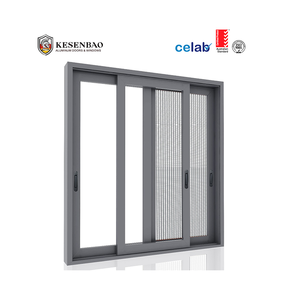
Featured Export Windows & Doors Portfolio
Factory-direct custom architectural systems tested to international standards including AS2047, NZS4211, NAFS, and CE EN 14351-1.
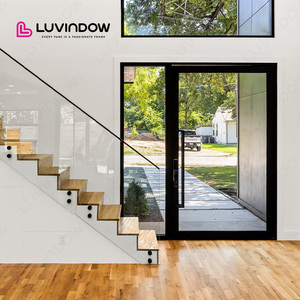
Modern Style Main Entrance Door Heat Insulated Aluminum Double Glazed Glass Pivot Door
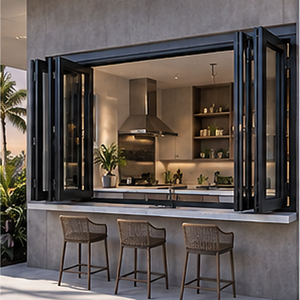
New Design Aluminum Glass Folding Windows Bi-fold Soundproof Sliding Terrace Balcony Door System
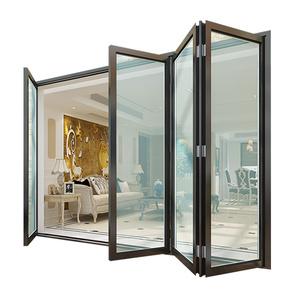
NFRC Factory Hot Sale Bifold Doors Aluminium Folding Patio Bi-fold Aluminum Door Profile Bifold Patio Doors Us Standards
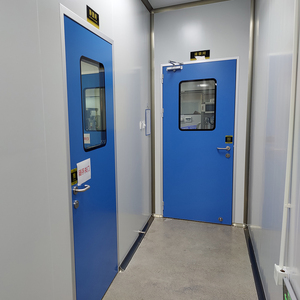
Aluminium Cleanroom Door Airtight GMP Lab Door Anti-Bacterial Steel Frame Swing Door Minimalist Double Glass Interior Workshop
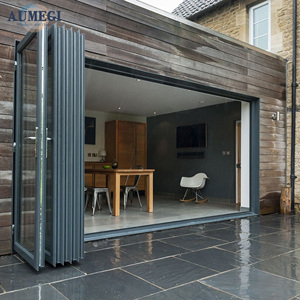
Aumegi Hot Sale American NFRC Aluminium Internal Bifold Doors Glass Bifold Fire Anti-theft Doors
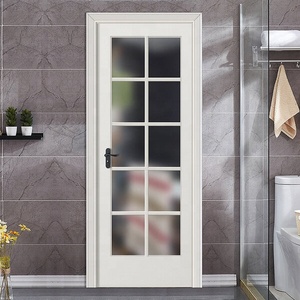
Aluminum Bathroom Doors Aluminium Frame Toilet Doors
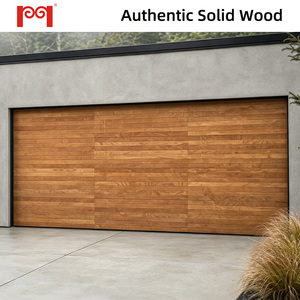
Architectural Grade Real Wood-Clad Insulated Aluminum Panel Stable Structure Smooth Operation Noise Reduction Garage Doors
16+
Years Industry Experience
25+
Global Export Markets
10-Yr
Comprehensive Warranty
100%
Pre-Shipment Inspection
Enterprise Strengths & Manufacturing Excellence
SAGA Aluminum Doors & Windows Co., Ltd. brings 16 years of direct factory manufacturing expertise to the global fenestration market.
Factory-Direct Precision Manufacturing
Situated in the Tieling Technical and Economic Development Zone, Fuzhou, Fujian, our state-of-the-art production facility operates high-precision CNC machining centers, automated corner-crimping units, and dual-component silicone sealing lines. Shipping directly via Fuzhou and Xiamen ports ensures streamlined global logistics.
Strict Quality Audits & International Certifications
We hold verified testing credentials under AGWA (AS2047:2014 / AS1288:2021 / NCC 2022), New Zealand Building Code (NZS4211:2008), North American NAFS standards, and Miami-Dade TAS 201/202/203 high-velocity hurricane zone (HVHZ) requirements, guaranteeing structural compliance across diverse building codes.
Bespoke Engineering & Shop Drawing Support
Every commercial and high-end residential project receives specialized engineering consultation. Our technical team delivers structural load calculations, thermal performance simulations (U-factor & SHGC), glass stress analyses, and complete architectural shop drawings prior to production sign-off.
Technical Whitepaper: Engineering CE Certified Aluminium Fixed Glass Windows
In modern architectural fenestration, CE Certified Aluminium Fixed Glass Windows serve as critical structural components within building envelopes. Unlike operable sashes, fixed glass windows (frequently referred to as picture windows or direct-glazed architectural frames) are engineered to maximize clear aperture light transmission, enhance thermal insulation, and withstand stringent lateral wind loadings in medium- to high-rise structures.
1. Structural Metallurgy & Extrusion Engineering
The performance of any fixed window system relies primarily on the structural integrity of its aluminium alloy profile. Standard commercial specifications require extruded 6063-T6 architectural aluminium alloy, engineered with nominal wall thicknesses ranging between 1.6mm to 3.0mm depending on wind zone demands.
To comply with CE EN 14351-1 standards, profiles undergo multi-stage surface treatments:
- Fluoropolymer Coating (PVDF): A 3-coat/2-bake resin matrix providing resistance against salt spray corrosion, UV degradation, and chemical etching in coastal environments.
- Qualicoat Class 2 Powder Coating: Thermosetting TGIC-free polyester powders delivering high scratch resistance and color stability over extended design lifespans.
- Anodization (25 Micron Grade): An electrochemical process creating an integral aluminum oxide layer for maximum abrasion resistance in high-traffic or marine conditions.
2. Thermal Break Technology: Mitigating Thermal Transmittance
Aluminium exhibits high thermal conductivity ($k \approx 200 \text{ W/m}\cdot\text{K}$). To achieve energy-efficient envelope standards, our CE-certified fixed windows utilize structural thermal breaks composed of Polyamide PA66 reinforced with 25% short glass fibers (PA66GF25).
The integration of multi-cavity polyamide struts physically isolates the exterior aluminium profile from the interior frame. When combined with advanced insulation inserts (such as expanded polyethylene or polyurethane foam cores), system thermal transmittance values ($U_f$) are reduced to as low as 1.2 W/m²K.
3. High-Performance Insulated Glass Units (IGU) & Acoustic Attenuation
The glazing assembly constitutes up to 90% of a fixed window's surface area. Achieving compliance with international energy codes requires customized Insulated Glass Unit (IGU) configurations:
| Glazing Specification | Thermal Transmittance ($U_g$ Value) | Solar Heat Gain Coefficient (SHGC) | Sound Reduction Index ($R_w$) | Target Application |
|---|---|---|---|---|
| Double Glazed (6mm Low-E + 12Ar + 6mm Clear) | 1.4 W/m²K | 0.35 - 0.42 | 35 - 38 dB | Standard Residential & Commercial Buildings |
| Triple Glazed (6mm Low-E + 12Ar + 4mm Clear + 12Ar + 6mm Low-E) | 0.8 W/m²K | 0.28 - 0.34 | 40 - 42 dB | Passive House & Cold Climate Zones |
| Acoustic Laminated (6.38mm Soundproof PVB + 12Ar + 6mm Low-E) | 1.3 W/m²K | 0.32 - 0.38 | 42 - 46 dB | Urban High-Rise & Airport Proximity Projects |
| Hurricane Impact (6mm Temp + 1.52mm SentryGlas + 6mm Temp IGU) | 1.5 W/m²K | 0.30 - 0.36 | 38 - 41 dB | Coastal & Miami-Dade HVHZ Zones |
4. Verification Under CE EN 14351-1 Mandates
European Union directives mandate strict conformity testing for windows entering the single market. The harmonized standard EN 14351-1 dictates that direct-glazed fixed window assemblies must undergo standardized physical testing:
- Air Permeability (EN 12207): Classified up to Class 4 (600 Pa test pressure), ensuring near-zero uncontrolled infiltration.
- Water Tightness (EN 12208): Tested under continuous water spray up to Class E1050 (1050 Pa static pressure without moisture entry).
- Wind Load Resistance (EN 12210): Rated up to Class C5/B5 (2000 Pa design pressure with structural deflection $< 1/300$ of span).
Future Trends in Fenestration Procurement & Engineering (2026–2035)
As international energy codes tighten and architectural design favors expansive transparent surfaces, the global market for aluminium fixed glass windows is undergoing systemic technical evolution. Procurement specialists and developers must align their supply chains with four decisive industry shifts:
1. Decarbonization & Embodied Carbon Tracking
Global procurement criteria are transitioning from operational energy efficiency alone to holistic Environmental Product Declarations (EPD). Green building schemes (LEED v4.1, BREEAM, and Green Star) increasingly penalize high embodied carbon in extrusions. Importers now actively source aluminium manufactured using hydro-electric power, targeting billet carbon footprints below 4.0 kg CO₂e per kg of aluminium, alongside 100% recyclable polyamide thermal breaks.
2. Ultra-Slim Sightlines & Structural Silicone Glazing (SSG)
Architectural demand is moving away from heavy perimeter framing toward minimal sightlines. Advanced fixed window designs utilize 4-sided Structural Silicone Glazing (SSG), where structural sealant transfers wind loads directly from the glass to the concealed aluminum sub-frame. This configuration eliminates external aluminum beads, achieving seamless glass-to-glass corner joints and maximizing daylight harvest.
3. Integration of Smart & Dynamic Glazing Systems
Fixed glass facades are transforming into active building components. Modern procurement briefs increasingly specify Electrochromic Smart Glass (which alters tint levels dynamically via electrical current to eliminate mechanical blinds) and Building-Integrated Photovoltaic (BIPV) glass, enabling non-operable vision panels to generate solar power while controlling solar heat gain.
4. Pre-Assembled Unitized Window Modules
To reduce expensive job-site labor and eliminate installation errors, major builders are moving from stick-built glazing to factory-assembled unitized window modules. Pre-glazed, pressure-equalized fixed window units are manufactured, sealed, and inspected under controlled cleanroom conditions before being shipped in custom steel crates for crane-assisted site installation.
B2B Buyer Frequently Asked Questions
Technical clarity for wholesalers, commercial contractors, and project certifiers.
What structural documentation is provided to verify CE and international code compliance?
Every commercial export order includes a comprehensive technical submittal package containing factory test reports, CE Declarations of Performance (DoP), structural load calculation sheets signed by fenestration engineers, profile section drawings, and material safety data sheets (MSDS) for sealants and thermal bars.
What is the standard production lead time for customized aluminium fixed window orders?
Standard manufacturing lead time is 35 to 50 calendar days following final shop drawing sign-off and deposit confirmation. Specialized finishes (such as custom PVDF colors or timber-grain powder coats) or custom glass make-ups (e.g., SentryGlas impact laminates) may require extended lead times.
How are large fixed glass window units packaged to prevent transport damage?
Units are protected with peelable surface film, corner guards, and wrapped in moisture-barrier plastic. They are packed upright in fully enclosed, ISPM-15 certified fumigated plywood crates equipped with internal rubber padding and structural steel lifting lugs to facilitate safe container discharge.
Can SAGA supply physical window samples for architectural approval?
Yes. We provide sample corner cuts illustrating profile wall thickness, polyamide thermal break assembly, gasket sealing, and glass unit configuration. Standard samples are provided free of charge, with the buyer responsible for express courier freight.
What payment terms and trade protections are offered for global buyers?
We accept T/T bank transfers (30% deposit, 70% balance prior to shipment or against Bill of Lading) as well as Alibaba Trade Assurance, providing full payment security and shipping timeline protection for international buyers.
Initiate Your Window & Door Procurement
Send your architectural drawings, window schedules, or project specifications directly to our engineering desk. Our team will generate detailed shop drawings and competitive factory pricing within 24 hours.