Direct Factory Catalog
CE Certified Architectural Aluminium Doors & Security Net Systems
Engineered to rigorous EN, AS2047, NAFS, and Miami-Dade structural specifications for international real estate developers, wholesalers, and architectural firms.
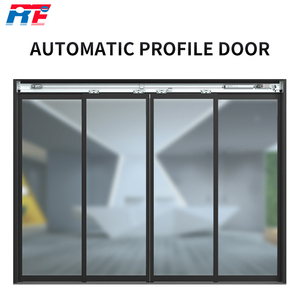
RETO Automatic Sliding Aluminum Alloy Framed Door Complete Set | Electric Commercial Entrance For Shopping Mall Shop Office
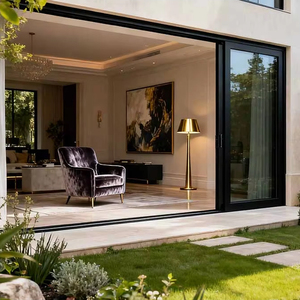
OUNA Canadian CSA Standard Heavy-Duty Modern Energy Efficient External Glass Large Sliding Patio Doors And Windows For Home
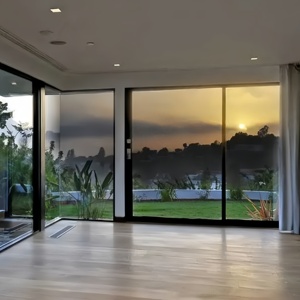
Customized Aluminium Fixed House Window Double Glass Design Large Sliding windows for Porch Balcony Fixed Window for Sale
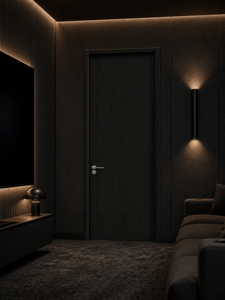
Customized Modern Aluminum Clad Wood Interior Bedroom Door for Villa House Residential Architectural Building Projects
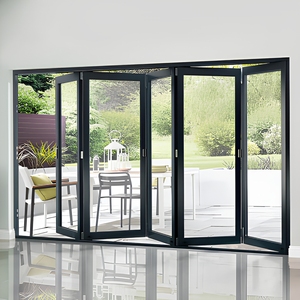
Aluminum Folding Patio Doors Folding Glass System for Seamless Indoor Outdoor Modern Home Design Aluminum Bi Folding Doors
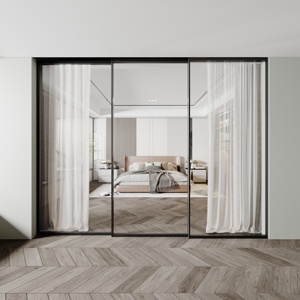
Modern Two-Way Sliding Cabinet Door Aluminum Frame Safety Suspended Track System Interior Pocket Glass Door for Apartment Use
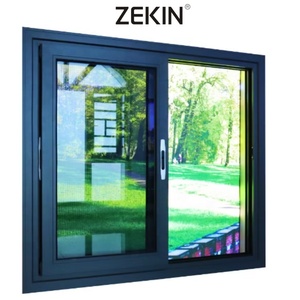
Customized Sliding Windows For Balcony Thermal Break Aluminum Tempered Glass Horizontal Hurricane Proof Aluminum Sliding Windows
1. The Technical Anatomy of CE Certified Aluminium Security Net Doors
When sourcing fenestration products for European Union and international commercial projects, specifying CE Certified Aluminium Net Doors guarantees compliance with essential health, safety, and environmental protection requirements established under EN 14351-1:2006+A2:2016 (Windows and doors product standard, performance characteristics). CE certification is not merely a mark of quality—it is a legal prerequisite for commercialization within the European Economic Area (EEA), providing standardized verification of mechanical resistance, air permeability, water tightness, and structural load capacities.
Modern architectural net doors combine heavy-duty extrusions with woven high-tensile stainless steel mesh to deliver multi-layered protection against physical intrusion, vector-borne insects, and severe meteorological stress. Unlike standard fly screens, security mesh doors function as primary barrier systems capable of absorbing static and dynamic impact forces.
Key Material Specifications & Metallurgy
- Aluminium Extrusion Alloy: High-precision 6063-T5 or 6063-T6 architectural grade aluminium billets. Wall thicknesses range from 1.4 mm for standard residential doors to 2.0 mm+ for commercial security applications. Tensile strength exceeds 205 MPa with yield strength above 170 MPa.
- High-Tensile Stainless Steel Security Mesh: Woven using AISI 304 or marine-grade AISI 316-L stainless steel wire (diameter: 0.70 mm to 0.90 mm). The mesh undergoes electrostatic powder coating with AkzoNobel Interpon or Kynar 500 fluoropolymer resin to guarantee superior corrosion resistance (>1,500 hours neutral salt spray testing per EN ISO 9227).
- Aperture Ratio & Airflow Dynamics: Wire spacing is calibrated to 11x11 mesh (approx. 1.5mm x 1.5mm aperture), providing an optimized balance between physical security, vector exclusion (flies, mosquitoes), and natural ventilation airflow retention (>68%).
- Thermal Break Integration: Premium configurations feature polyamide insulating bars (PA66-GF25 with 25% glass fiber reinforcement), eliminating thermal bridging and lowering overall U-values below 1.6 W/m²K when combined with low-emissivity double-glazed units.
| Performance Characteristic | Test Standard / Benchmark | Technical Threshold & Capability | Architectural Application |
|---|---|---|---|
| Burglary Resistance | EN 1627 / EN 1630 (RC2 – RC3) | Resists static loads up to 6 kN; dynamic impact loads via 50kg drop body test | High-security villas, luxury apartments, perimeter access control |
| Wind Load Resistance | EN 12210 / AS2047 (Class C5/P3000) | Deflection criteria L/300 under 3000 Pa test pressure | High-rise residential balconies, hurricane-prone coastal regions |
| Water Penetration | EN 12208 (Class 9A / 600 Pa) | Zero water leakage under continuous static pressure spray at 600 Pa | Exposed coastal facades, tropical storm zones |
| Salt Spray Corrosion | EN ISO 9227 (AASS / CASS) | >1,500 hours without blistering, flaking, or filiform corrosion | Marine environments (< 500m from coastline) |
| Mechanical Durability | EN 12400 (Class 8) | 1,000,000 continuous opening/closing operating cycles without hardware failure | High-traffic commercial entrances, public institution doors |
2. Macro Trends Reshaping the Global Aluminium Door Manufacturing Industry
The international fenestration sector is experiencing a paradigm shift driven by stringent decarbonization mandates, smart home integration, and evolving architectural aesthetics. Manufacturers and procurement executives must adapt to three key structural trends:
1. Near-Zero Energy Buildings (NZEB) & Thermal Decarbonization
European Union directives (EPBD) and Australian NCC 2022 building codes demand higher energy efficiency standards. Non-thermal break profile systems are rapidly being phased out in favor of multi-chamber thermal break aluminium frames. The integration of aerogel insulation strips and warm-edge spacer technology within net door frames allows developers to achieve Passivhaus-level thermal efficiency without compromising slim sightlines.
2. Concealed Hardware & Biometric Security Systems
Architectural preferences are converging on minimalist profiles with zero visible hinges and flush threshold transitions. High-end aluminium net doors now integrate electronic multi-point locking mechanisms compatible with Tuya, Zigbee, and motorized smart home hubs. 3D biometric fingerprint scanners, facial recognition modules, and keyless access control are built directly into the aluminium jamb profiles.
3. Low-Carbon Billet Extrusion & Recycled Content
Leading global manufacturers are transitioning to primary aluminium produced via renewable hydroelectric power or incorporating >75% post-consumer recycled aluminium (Ecolabel compliance). Sourcing low-carbon aluminium reduces the embodied carbon footprint of real estate developments by up to 60%, aiding developers in qualifying for LEED Gold and BREEAM certifications.
Future Sourcing & Procurement Strategies for B2B Importers
For international buyers—including building material wholesalers, project developers, and general contractors—sourcing direct from factory manufacturers requires evaluating total cost of ownership (TCO) beyond initial FOB unit pricing. Strategic procurement frameworks prioritize:
- Factory Audit & Quality Assurance Rigor: Verification of ISO 9001 quality management systems, automated CNC extrusion cutting precision (<0.1mm tolerance), and heavy-duty corner crimping machinery to prevent frame distortion under seismic or wind strain.
- Documentation & Code Compliance Mapping: Ensuring the manufacturer provides accredited third-party test reports (e.g., AGWA audits for AS2047, NAFS test sheets, Miami-Dade TAS 201/202/203 hurricane impact approvals) alongside standard CE declarations of performance (DoP).
- Modular Packaging & Freight Optimization: Utilizing reinforced steel-framed plywood crates with vacuum vapor-corrosion-inhibitor (VCI) shrink wrapping to protect powder-coated finishes against sea-air oxidation during containerized ocean transit from major loading hubs such as Fuzhou or Xiamen ports.
3. Enterprise Manufacturing Infrastructure & Compliance Framework
As a leading specialized exporter with over 16 years of window and door manufacturing experience, our production complex operates under rigorous industrial quality control protocols. We engineer custom aluminium, uPVC, and aluminium-timber composite joinery systems tailored to international climate zones—from high-humidity Caribbean coastal islands to freezing Nordic urban centers.
AGWA & Australian Standards
Audited under the AGWA program for full compliance with AS2047:2014, AS1288:2021, and NCC 2022. Frame depth, glass selection, and security mesh anchorage are certified for high wind pressures.
North American NAFS & Miami-Dade
Tested for air infiltration, uniform static load deflection, forced-entry resistance, and Florida Miami-Dade hurricane impact protocols (TAS 201, 202, 203 cyclic pressure loads).
New Zealand NZS4211 Compliance
Certified against NZS4211:2008 covering New Zealand Building Code clauses B1 (Structure), B2 (Durability), E2 (External Moisture), F2, G4, G7, and H1 Energy Efficiency.
Complete End-to-End OEM/ODM Production Workflow
Every commercial order follows a strictly controlled 7-step engineering milestone process to guarantee 100% drawing accuracy and zero site installation mismatch:
- Architectural Plan Review: Technical evaluation of elevation schedules, CAD section drawings, wind load pressures, and structural fixing details.
- Sample & Mock-Up Verification: Custom structural mock-ups supplied for client testing, finish approval, and hardware touch-and-feel evaluation.
- Shop Drawing Approval: Fully dimensional manufacturing shop drawings generated and signed off by the buyer's engineering team before raw material extrusion.
- Precision CNC Machining: Computer-controlled profile cutting, milling, hardware mortising, and automatic hydraulic corner crimping.
- Security Mesh & Glazing Integration: High-tensile stainless steel mesh tensioning and toughened safety glass installation with structural silicone sealants.
- 100% Pre-Shipment Inspection: Rigorous dimensional checks, squareness tolerance validation, hardware operation testing, and finish inspection.
- Protected Crate Logistics: Custom timber/steel packaging loaded directly into FCL containers at Fuzhou or Xiamen ports with comprehensive tracking support.
4. Frequently Asked Questions (Procurement FAQ)
What specific testing standards confirm CE certification for aluminium security net doors?
CE certification for external pedestrian doorsets requires full compliance with EN 14351-1. Key tested parameters include air permeability (EN 12207), water tightness (EN 12208), wind load resistance (EN 12210), load-bearing capacity of safety devices, and dangerous substance release. Burglary resistance is further validated under EN 1627 to EN 1630 standards for Resistance Classes RC2 or RC3.
How does 316 marine-grade mesh compare to 304 mesh in high-salinity coastal environments?
AISI 316 stainless steel contains 2–3% molybdenum, which dramatically increases its resistance to chloride pitting and crevice corrosion compared to AISI 304. For projects within 5 km of coastlines or marine installations, specifying 316-grade mesh with a high-durability fluoropolymer coating prevents tea-staining and premature wire degradation, ensuring a service life exceeding 15 years.
What is the standard production lead time for customized commercial door orders?
Standard factory production lead time is typically 35 to 50 calendar days following shop drawing confirmation and final deposit receipt. Custom powder coating colors (non-standard RAL shades) or specialized anodized finishes may require an additional 7–10 days for billet processing and profile treatment.
Can CE-marked security net doors be integrated with automated smart home systems?
Yes. Profiles can be precision-milled to accommodate motorized multi-point locks, magnetic sensors, motorized sliding actuators, and electronic strike plates. Wiring channels are integrated inside the hollow profile chambers, preserving a clean aesthetic while enabling seamless connectivity with smart home access control systems.
What technical documentation accompanies export shipments for customs clearance and site inspection?
Each export container is supplied with a complete compliance binder including: Declaration of Performance (DoP), factory test reports, physical mill test certificates (MTC) for aluminium extrusions and stainless mesh, glass safety compliance certificates, detailed packing lists with itemized crate tags, and step-by-step installation manuals.
Partner with a Certified OEM Aluminium Net Door Manufacturer
Submit your architectural drawings, window schedules, or tender requirements. Our senior engineering team will return a comprehensive technical proposal, structural calculations, and factory-direct quotation within 24 hours.