Featured CE Certified Aluminum Lower & Architectural Windows
Explore our range of precision-engineered lower window frames, sliding glass systems, and thermally broken aluminium assemblies built to European Standards (EN 14351-1).
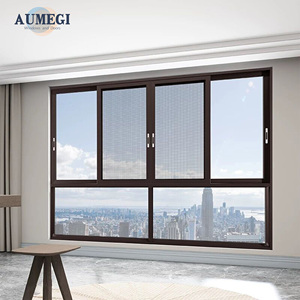
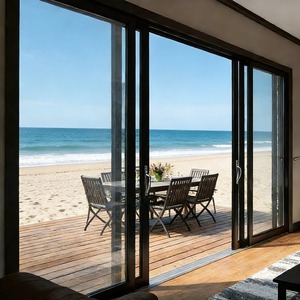
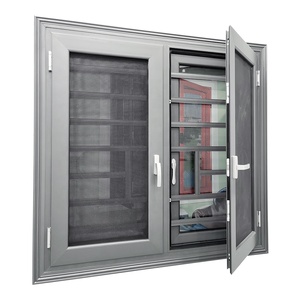
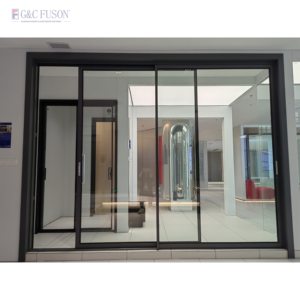
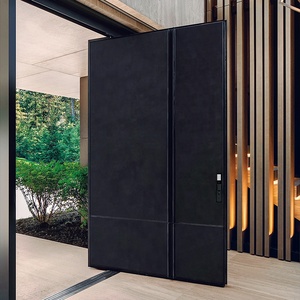
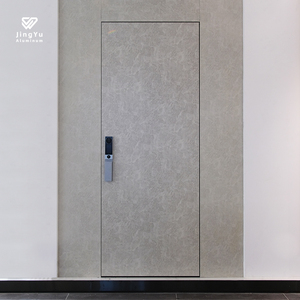
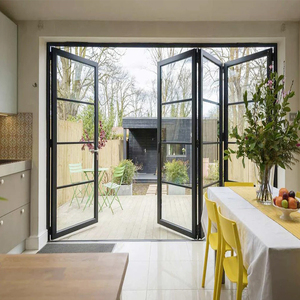
1. Technical Deconstruction: CE Certification Standards for Lower Aluminum Windows
In modern architectural fenestration, lower windows—often configured as sill-level fixed lites, lower transom sashes, ground-adjacent ribbon glazing, or integrated subterranean lightwell units—face severe environmental and structural stresses. Obtaining a legitimate CE Certification for aluminum lower window manufacturing requires rigorous compliance with the European Construction Products Regulation (CPR 305/2011) and the harmonized standard EN 14351-1:2006+A2:2016 (Windows and doors - Product standard, performance characteristics).
As a premiere manufacturer, SAGA engineers lower window profiles to undergo exhaustive Type Testing (ITT) and maintain continuous Factory Production Control (FPC). B2B procurement managers and architectural certifiers must verify the following key performance parameters documented within the manufacturer's Declaration of Performance (DoP):
Air Permeability (EN 12207)
Lower window openings are prone to high micro-climate pressure zones at ground level. CE-compliant lower window units are tested up to 600 Pa (Class 4 rating), guaranteeing less than $3.0\text{ m}^3/(\text{h}\cdot\text{m}^2)$ air leakage at maximum pressure differential.
Watertightness (EN 12208)
Because lower window sills absorb heavy splash-back and standing water runoff, our systems achieve Class E1200 Exceptional rating (unshielded static water spray up to 1200 Pa), utilizing multi-tiered EPDM drainage channels and pressure-equalized weep holes.
Wind Load Resistance (EN 12210)
Structural deflection at the sill level is strictly controlled within $L/300$ under dynamic pressure loads up to Class C5 (2000 Pa wind pressure, 3000 Pa safety gust tests), preventing seal degradation and glass rupture over extended lifecycle usage.
| CE Normative Reference | Testing Parameter | Standard Compliance Level | SAGA Architectural Grade Performance |
|---|---|---|---|
| EN ISO 10077-2 | Thermal Transmittance ($U_f$) | $U_f \le 2.2\text{ W/m}^2\text{K}$ | $U_f = 1.1 \sim 1.4\text{ W/m}^2\text{K}$ (PA66GF25 Thermal Break) |
| EN ISO 717-1 | Acoustic Isolation ($R_w$) | $R_w \ge 30\text{ dB}$ | $R_w = 42 \sim 48\text{ dB}$ (Laminated Double/Triple Glazed) |
| EN 12600 | Impact Resistance (Glass) | Class 2B2 | Class 1B1 (Toughened Safety / PVB Interlayer) |
| EN 1627-1630 | Burglar Resistance | RC1N / RC2 | RC2 & RC3 (Multi-Point Mushroom Cam Locking) |
2. Structural Metallurgy & Sub-Frame Drainage Engineering of Lower Windows
Lower window profiles endure unique mechanical loads compared to standard upper casement windows. Direct contact with floor slabs, human impact risk, and localized moisture accumulation demand superior metallurgical formulation and internal chamber engineering.
2.1 Aluminum Profile Alloy Chemistry: 6063-T5 vs. 6060-T6
To ensure structural rigidity and flawless surface treatment (whether QUALICOAT powder coating or QUALANOD anodizing), SAGA exclusively utilizes primary extrusion billets of EN AW-6063-T6 aluminum alloy. The chemical composition is strictly regulated with Silicon ($0.20-0.60\%$) and Magnesium ($0.45-0.90\%$) to achieve minimum yield strength ($\sigma_{0.2} \ge 170\text{ MPa}$) and tensile strength ($\sigma_b \ge 215\text{ MPa}$). This prevents lower sash bowing under thermal elongation or heavy double/triple-pane glass dead loads.
Sub-Sill Pressure Equalized Drainage
Water penetration at the lower window threshold is the primary failure mode in commercial buildings. SAGA’s proprietary lower frame designs feature a three-tier pressure-equalization chamber system. Exterior wind pressure is permitted into an internal cavity via hidden weep ports, equalizing cavity air pressure with outdoor ambient pressure. Consequently, gravity alone pulls water down through staggered drainage slots equipped with anti-backflow flap valves, completely eliminating capillary suction into the interior building envelope.
Thermal Insulation & Polyamide Barrier Integration
Lower windows situated near cold floor slabs are prone to surface condensation and perimeter cold-bridging. Our CE-certified thermal break aluminum lower windows incorporate multi-chambered Polyamide PA66 GF25 (25% glass-fiber reinforced) thermal insulation strips ranging from 24mm to 34mm in depth. Combined with polyolefin insulating foam insertions, the system limits internal surface temperature drops, keeping the interior dew point well below condensation thresholds even when external ambient temperatures fall to $-20^\circ\text{C}$.
3. Product Portfolio Analysis: Specifying Lower & System Windows by Project Type
Selecting the optimal lower window configuration requires matching architectural aesthetic intents with functional performance parameters. Below is a detailed specification guide curated by SAGA's chief window engineers for global project developers and contractors:
Ground-Floor Heavy Duty Sliding Windows
Designed for large horizontal glass expanses with minimal vertical sightlines. Features stainless steel heavy-duty tandem rollers (load capacity up to 300 kg per sash) and subterranean flush tracks with integrated linear drainage channels. Ideal for hotel balconies, ground floor patios, and luxury villas.
Request Sub-Sill DrawingsLow-Sill Tilt & Turn Energy Efficient Windows
Provides dual-action operation: interior tilting for draft-free micro-ventilation and full inward swinging for easy cleaning. Fitted with multi-point perimeter gear locking (ROTO NT / SIEGENIA hardware), securing the lower frame against forced entry to RC2/RC3 security standards.
Get Thermal CalculationsAcoustic Soundproof Balcony & Lower Glazing
Engineered for high-density urban environments, traffic corridors, and airport proximity zones. Utilizes asymmetrical double/triple acoustic laminated glass (e.g., 6mm Toughened + 1.52mm Acoustic PVB + 8mm Glass) with a 16mm Argon gas spacer, delivering up to $48\text{ dB}$ sound isolation.
Download Noise Test Data4. Next-Generation Development Trends in Aluminum Lower Window Manufacturing
The global architectural fenestration market is undergoing a structural paradigm shift driven by stringent decarbonization policies (EU Net-Zero Industry Act), changing climate extremes, and advanced manufacturing automation. Leading aluminum lower window manufacturers are prioritizing five critical technology vectors:
1. Ultra-Narrow Sightline Sub-Frames (Minimalist Architecture)
Modern architectural intent demands seamless indoor-outdoor visual transition. Future lower window designs feature fully concealed frame profiles embedded directly into floor screeds and lateral walls. Outer frame sightlines are reduced to under 18mm while maintaining structural stiffness through structural silicone structural glazing (SSG) technology bonding glass directly to hidden aluminum sashes.
2. Vacuum Insulating Glass (VIG) Integration
Replacing traditional thick double-glazed units with ultra-thin Vacuum Insulated Glass ($0.1\text{mm}$ vacuum gap held by micro-pillars). VIG achieves center-of-glass thermal performance of $U_g \le 0.4\text{ W/m}^2\text{K}$ with total unit thickness under 12mm, allowing significantly slimmer lower aluminum profile extrusions without sacrificing energy efficiency.
3. Bio-Based & Recycled Aluminum (Low-Carbon Procurement)
Driven by Europe's Carbon Border Adjustment Mechanism (CBAM) and Environmental Product Declarations (EPD), tier-1 manufacturers are shifting to 75%+ Post-Consumer Recycled (PCR) Aluminum extrusions. Recycled aluminum requires only 5% of the energy used in primary smelting, drastically lowering the embodied carbon of building facades.
4. Smart Sensor & Automated Drainage Systems
Integration of embedded rain, wind, and flood sensors into lower window sills. Automated electro-mechanical actuators trigger weather seals or initiate micro-ventilation when internal humidity reaches set thresholds, communicating directly with central Building Management Systems (BMS).
5. Future B2B Procurement Strategies for Global Importers, Developers & Architects
Procuring CE certified aluminum lower windows from overseas manufacturers requires a structured risk-mitigation framework. To prevent costly job site delays, compliance rejections, or structural failures, procurement teams should implement the following four-stage sourcing protocol:
Stage 01: Audit
Factory Audit & FPC Verification
Verify that the manufacturer holds valid ISO 9001 quality system accreditation and a factory production control (FPC) audit log for EN 14351-1. Ensure ITT (Initial Type Testing) reports are issued by accredited EU Notified Bodies.
Stage 02: Shop Drawings
BIM & Shop Drawing Sign-Off
Demand 2D CAD section details and 3D BIM models illustrating sub-frame anchoring, thermal break alignment, flashing detail, and continuous weatherboard sealing prior to tooling or profile cutting.
Stage 03: Mock-Up
Pre-Shipment Sample Mock-Up
Require a full-scale mock-up window unit to evaluate corner joint crimping precision, gasket continuity, hardware operation smoothness, and QUALICOAT paint thickness (minimum 60–80 microns).
Stage 04: Packaging
Sea Freight Crate Packaging
Ensure frames are protected by blue protective film, fully enclosed in fumigated ISPM-15 plywood crates, and equipped with desiccant packs to prevent transit oxidation and sea salt air corrosion.
6. Why Partner with SAGA: Advanced Manufacturing Capability & Compliance Mastery
With over 16 years of direct manufacturing experience, SAGA Aluminum Doors & Windows Co., Ltd. has established itself as an authoritative global manufacturer of high-performance architectural fenestration systems. Operating from our advanced production facilities in Fujian, China, we export code-compliant joinery to over 25 countries across Europe, Australia, North America, and the Caribbean.
Multi-Standard Global Testing
Beyond our CE Certification (EN 14351-1), our windows are independently audited and accredited under AGWA AS2047:2014 / AS1288:2021 (Australia), NZS4211:2008 (New Zealand), NAFS (North America), and Miami-Dade TAS 201/202/203 hurricane impact protocols.
Precision CNC Automated Fabrication
Our workshop features German-imported 5-axis CNC machining centers, automated double-head mitre saws, and digital corner crimping machines. Every aluminum lower frame is cut and assembled with dimensional tolerances within $\pm 0.5\text{ mm}$, guaranteeing perfect gasket compression.
10-Year Factory Warranty & Engineering Support
Every window shipment is backed by a comprehensive 10-year structural and finish quality guarantee. Our dedicated technical engineering department provides shop drawing conversion, structural calculation notes, and real-time installation guidance for project teams worldwide.
7. Frequently Asked Questions (FAQ) for Lower Aluminum Window Procurement
Key technical and logistics inquiries frequently posed by global buyers, architects, and compliance officers:
Accelerate Your Architectural Project with CE Certified Excellence
Connect directly with SAGA’s window engineering specialists for shop drawing reviews, U-value thermal analysis, and competitive factory-direct pricing for your upcoming development.