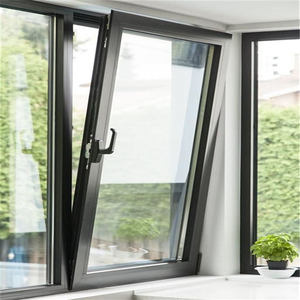
Export Product Portfolio
Engineered Windows & Doors for High-Performance Architecture
Direct factory supply audited under AGWA, NAFS, and Miami-Dade testing protocols. Click below to request customized shop drawings and engineering catalogs.
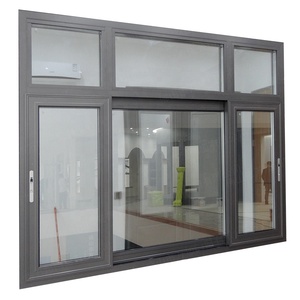
Hurricane Impact Aluminum Glass Customized Sliding Window Home Aluminum Windows Impact Soundproofing Double Glazed Windows
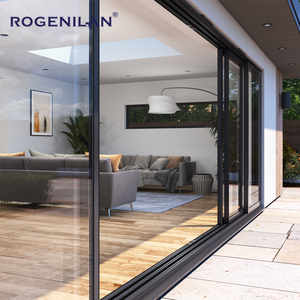
Rogenilan Villa House Heavy Duty Aluminium Frame Panoramic Large Glass Panel Sliding Slide Door With Mosquito Net
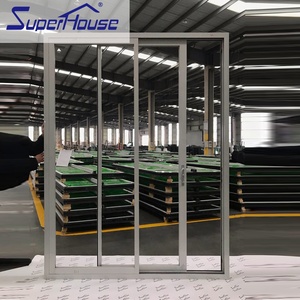
Caribbean Islands Standard Sliding Door Miami-dade NOA Approval Customized Sliding Stacker Patio Bacony Door Pocket Door
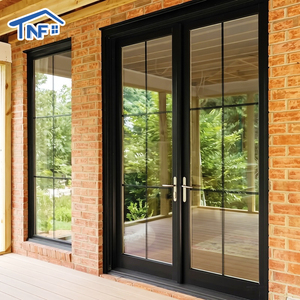
Modern Design Aluminum French Door Entrance Door For Workshop Apartment Tempered Glass Casement Doors
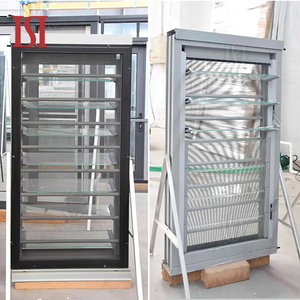
Top Brand Modern Minimalist Aluminum Alloy Glass Louver Window Outdoor Kitchen Exterior Rolling Open Style Heat Insulation
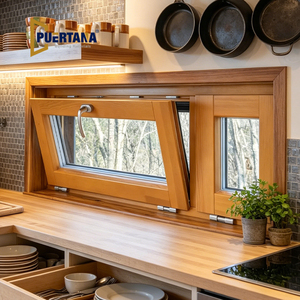
Wood Aluminum Passive House Windows and Doors for Home Residential Clad Wood Hopper Window
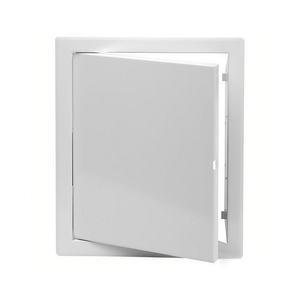
Aluminum Made With Standard Powder Coated White Finish Camlocked HVAC Access Door
16+
Years Industry Expertise
25+
Global Export Markets
10-Yr
Quality Assurance
100%
Code & Pre-Shipment Audit
Material Synthesis: Fiber-Reinforced Aluminium Doors in Modern Architecture
In contemporary architectural engineering, the quest for ultra-low energy consumption, structural stability, and structural durability has driven a massive evolution in exterior building envelopes. Traditional aluminium doors, while offering high tensile strength and sleek sightlines, historical suffered from linear thermal bridging. Conversely, non-metallic solutions lacked the modulus of elasticity required for large-span panoramic fenestrations. The emergence of China’s high-precision Aluminium Fiber composite door systems solves this trade-off by combining high-grade 6063-T6 architectural aluminium extrusions with fiberglass-reinforced polyamide (PA66 GF25) composite thermal barriers.
As primary suppliers and global exporters out of China's premier industrial manufacturing hubs in Fujian, leading manufacturers utilize continuous filament fiber co-extrusion technology. This structural integration yields an composite assembly capable of handling wind pressures exceeding 3.0 kPa to 6.0 kPa, while maintaining thermal transmittance values (U-factors) down to 0.8–1.2 W/m²K when combined with argon-filled, low-emissivity double or triple insulated glass units (IGUs).
PA66 GF25 Thermal Insulation
Interlocking 25% glass-fiber reinforced polyamide thermal break strips eliminate cold bridges, drastically preventing interior condensation and thermal expansion stress.
AAMA 2605 Surface Finishes
Fluorocarbon (PVDF) and hyper-durable AkzoNobel powder coatings deliver 30+ year salt-spray and UV resistance for hyper-saline coastal installations.
Cyclic Wind & Impact Resistance
Engineered to pass extreme wind pressure and large missile impact tests, complying fully with Florida's stringent Miami-Dade TAS 201/202/203 protocol.
Future Procurement Trends: What Global Importers & Developers Must Prepare For
Procurement intent among commercial contractors, real estate developers, and wholesale distributors in North America, Australia, New Zealand, and Europe has shifted dramatically from initial unit cost toward Life Cycle Assessment (LCA), embodied carbon compliance, and standardized code certification. When sourcing aluminium fiber doors and fenestration products from China, international buyers are focusing on three core macro-trends:
1. Low-Carbon Aluminum & EPD Documentation
Global building standards (such as LEED v4.1, BREEAM, and Australia's NCC 2022 H1 requirements) demand Environmental Product Declarations (EPD). Tier-1 Chinese manufacturers now utilize hydro-powered primary aluminium billets combined with high-grade post-industrial scrap recycling to achieve lower carbon footprints per kilogram of extruded profile.
2. Prefabricated Unitized Façade Compatibility
Modular off-site construction requires windows and doors engineered with integrated sub-frames, flashing fins, and factory-glazed composite glass units. Sourcing pre-tested, fully assembled frames significantly drops site labor costs and installation error rates for commercial high-rises.
3. Acoustic Isolation in Urban Infill Projects
High-density multi-family urban developments demand sound transmission class (STC) ratings above 40 dB. Advanced multi-chamber fiber-aluminium profiles paired with unequal glass thickness laminates (e.g., 6mm + 1.52PVB + 8mm) effectively damp low-frequency street and aircraft noise.
4. Supply Chain Consolidation & Single-Source OEM
Developers are migrating away from fragmented sourcing. Tier-1 China exporters offer single-source supply covering main entry doors, patio sliding stacker doors, HVAC access doors, curtain walls, shower screens, and sunshades to streamline container utilization and color-matching.
International Testing Standards & Engineering Benchmarks
To successfully clear customs and pass local building authority audits, imported aluminium fiber windows and doors must hold verified independent third-party test reports. SAGA systems are rigorously audited across global regulatory jurisdictions:
| Target Region | Primary Governing Standard | Verified Performance Metrics | Recommended Configuration |
|---|---|---|---|
| Australia & New Zealand | AS2047:2014, AS1288:2021, NZS4211:2008, NCC 2022 | Deflection (ULS/SLS), Water Penetration (over 450Pa), Air Infiltration, Human Impact Safety Glazing | Thermally broken aluminium awning/casement, double glazed Low-E, chain winders, sub-head & sub-sill flashings |
| North America (USA & Canada) | NAFS (AAMA/WDMA/CSA 101/I.S.2/A440), ASTM E283/E330/E331 | Air Leakage, Uniform Static Structural Load, Water Resistance, Forced-Entry Resistance (ASTM F588) | Heavy-duty sliding patio doors, tilt & turn windows, multi-point lock hardware, heavy profile walls (>2.0mm) |
| Florida & Caribbean Islands | Miami-Dade NOA, Florida Building Code (TAS 201/202/203) | Large Missile Impact (9 lb 2x4 at 50 fps), Cyclic Wind Pressure Loading (±90 psf), Water Structural Proof | Impact laminated glass (SGP interlayer), structural silicone sealant structural glazing, reinforced fiber-aluminium frames |
| European Union | CE Mark, EN 14351-1, Passive House Institute (PHI) | Thermal Transmittance (U-value ≤ 0.8 W/m²K), Air Permeability Class 4, Watertightness Class E900 | Aluminium-timber composite / Multi-chamber fiber uPVC, triple glazed with warm-edge spacers & Krypton gas |
Why Partner With SAGA Aluminum Doors & Windows Co., Ltd.
Operating directly out of the Tieling Technical and Economic Development Zone in Minhou County, Fuzhou, Fujian, SAGA represents the pinnacle of Chinese direct-factory manufacturing. With over 16 years of dedicated export experience serving builders, architects, and distribution partners across 25+ nations, our production ecosystem delivers unparalleled reliability and compliance security.
Factory Direct Production
State-of-the-art CNC 5-axis machining centers, automatic corner crimping, and automated insulating glass lines guarantee precise fabrication tolerances within ±0.5mm.
Comprehensive Engineering BIM/DWG
Our in-house facade engineering team prepares full shop drawings, structural wind load calculations, and section details for council and certifier approval prior to manufacturing.
Strategic Logistics (Fuzhou & Xiamen)
Located in close proximity to major deep-water shipping hubs at Fuzhou and Xiamen ports, enabling efficient ocean container consolidation, protective steel-frame crating, and dependable delivery schedules.
Frequently Asked Questions for International B2B Buyers
Q: Which buyer categories does SAGA supply custom aluminium fiber doors and windows to?
We supply directly to commercial real estate developers, volume residential homebuilders, building material wholesalers/dealers, facade sub-contractors, architectural firms, and high-end residential owners. Each client receives tailored shop drawings, technical specifications, and packaging optimized for site handling or showroom distribution.
Q: What is the typical factory production lead time for custom fenestration orders?
Standard production lead time ranges between 35 to 50 calendar days following the formal approval of shop drawings and color samples. Production time depends on custom extrusions, special powder coating colors, or complex laminated impact glass configurations. Shipping transit times vary depending on the destination port.
Q: How does SAGA ensure compliance with Australian Standards (AS2047 / AS1288)?
Our manufacturing processes and window assemblies are audited under the Australian Glass and Window Association (AGWA) compliance program. Every unit exported to Australia adheres strictly to AS2047 (window testing and performance), AS1288 (glass in buildings selection and safety), and the updated National Construction Code (NCC 2022).
Q: Can SAGA provide structural engineering wind load and thermal calculations?
Yes. Before starting production, our technical department generates engineering shop drawings, section profiles, installation details, structural wind load deflection charts, and overall thermal performance data (U-values and SHGC) tailored to your specific project site wind zone.
Q: What surface coating options are available for coastal or high-corrosion environments?
For harsh marine or tropical coastal environments, we recommend hyper-durable fluorocarbon (PVDF) 3-coat paint finishes or high-grade powder coatings adhering to AAMA 2605 specifications. These coatings withstand up to 3,000 hours of continuous salt spray testing without chalking, fading, or peeling.
Q: How are fragile glass products and large doors packaged for ocean freight?
All finished products undergo a 100% pre-shipment assembly inspection. Frames and glazed units are wrapped in protective foam film, corner-protected, and packed into fully enclosed fumigated plywood crates or heavy-duty steel A-frames designed for safe forklift unloading at site.
Accelerate Your Next Architectural Project
Get full access to our technical profile catalogs, CAD section details, certification test reports, and factory-direct wholesale pricing. Talk to our engineering specialists today.