Featured Architectural Aluminium Windows & Doors Portfolio
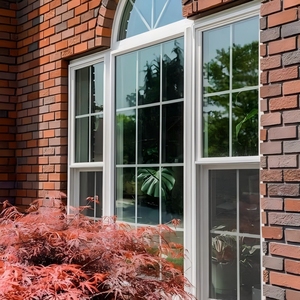
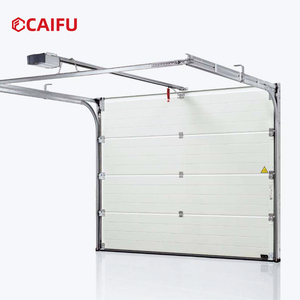
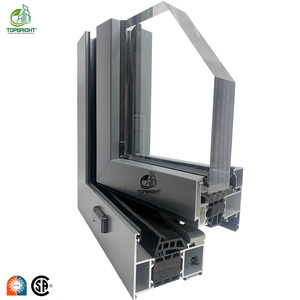
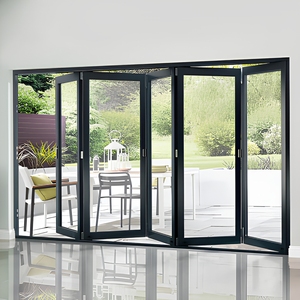
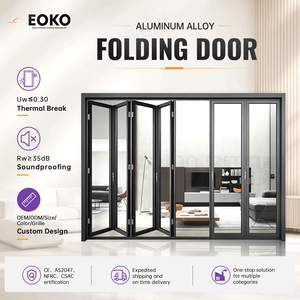
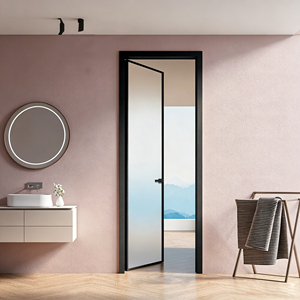
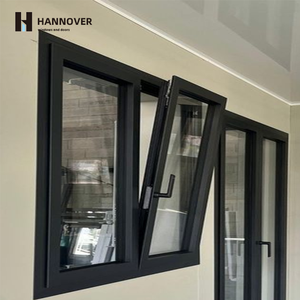
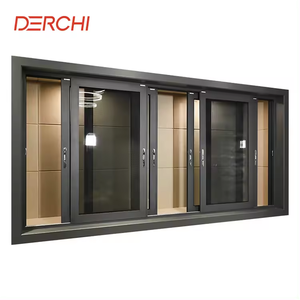
Macro Industry Trends: The Evolution of Chinese Aluminium Window Export Procurement
The global architectural joinery and fenestration sector is experiencing a fundamental paradigm shift driven by modern decarbonization mandates, evolving energy codes, and advanced material science. For international developers, general contractors, architects, and trade importers, sourcing aluminium windows from China is no longer merely a low-cost transaction. It has transformed into a strategic technical partnership focused on high-performance thermal insulation, automated precision fabrication, and verifiable global certification compliance.
Polyamide Thermal Break 2.0
Transitioning from standard non-thermal profiles to PA66 GF25 (25% glass fiber reinforced polyamide) structural insulation strips. This mitigates conductive thermal bridging, lowering overall frame $U$-values down to 1.2–1.6 W/m²K.
Spectral Solar Control Glazing
Widespread integration of magnetron sputtering double-silver and triple-silver Low-E coatings, argon gas filling (>90% concentration retention), and warm-edge TPS composite spacers to maximize visual light transmittance (VLT) while minimizing SHGC.
Extreme Weather Resilience
Engineering fenestration units capable of resisting severe hurricane force winds, cyclic storm pressures, and coastal salt spray corrosion via heavy-wall 6063-T5 aluminum extrusions and multi-point concealed locking mechanisms.
Key Procurement Insight for 2026 Buyers
Global building codes—such as Australia’s National Construction Code (NCC 2022 7-Star energy ratings), New Zealand’s H1 Energy Efficiency Clause, and the USA's Energy Star 7.0 standards—now mandate ultra-strict thermal transmittance caps. Sourcing from accredited Chinese manufacturers with certified thermal break systems ensures full compliance while maintaining a 30% to 45% cost advantage over Western European or North American domestic fabricators.
Engineering Principles: Thermal Physics & Wind-Load Structural Dynamics
Understanding the physics behind modern custom aluminium house windows allows project specifiers to balance architectural vision with rigorous engineering performance. Windows act as the primary barrier in the building envelope against dynamic thermal radiation, acoustic wave transmission, structural wind deflections, and water ingress.
1. Thermal Transmittance Physics ($U$-Factor & SHGC)
The total thermal transmittance of a window assembly ($U_w$) is governed by the combined heat transfer coefficients of the glazing unit ($U_g$), the structural frame ($U_f$), and the linear thermal bridge factor of the perimeter glass spacer ($\Psi_g$), expressed by the formula:
Where Ag and Af represent the visible sightline area of the glass and frame respectively, and lg is the perimeter length of the insulated glass unit (IGU). By inserting a 24mm or 32mm Polyamide (PA66 GF25) thermal barrier between the inner and outer aluminum extrusions, conductive heat flow through the metal aluminum structural profile ($\lambda \approx 160\text{ W/m}\cdot\text{K}$) is severed and reduced to that of an insulating polymer ($\lambda \approx 0.3\text{ W/m}\cdot\text{K}$).
2. Structural Wind Load Resistance & Deflection Mechanics
Under extreme wind pressure ($P = 0.5 \cdot \rho \cdot V^2 \cdot C_p$), window frames experience bending moments that can lead to structural deflection, air infiltration, or catastrophic glass fracture. Premium Chinese export factories utilize structural 6063-T5 or 6060-T6 aluminum alloys with minimum wall thicknesses ranging from 1.4mm for residential window profiles up to 2.0mm–3.0mm for high-span sliding/bifold doors and curtain walls.
Under Australian Standard AS2047 and North American NAFS standards, windows must pass rigorous Serviceability Limit State (SLS) and Ultimate Limit State (ULS) tests, ensuring structural deflection does not exceed L/175 or L/250 of the clear span length when subjected to positive and negative wind loads up to 4500 Pascals (Pa).
Specifier's Selection Matrix: Material & Structural Performance Comparison
| Performance Criteria | Thermally Broken Aluminium (6063-T5) | Standard Non-Thermal Aluminium | uPVC (Unplasticized PVC) | Aluminium-Timber Composite |
|---|---|---|---|---|
| Thermal Transmittance (U-Value) | 1.4 - 2.2 W/m²K (Excellent) | 3.8 - 5.5 W/m²K (Poor) | 1.1 - 1.8 W/m²K (Superior) | 1.2 - 1.9 W/m²K (Superior) |
| Structural Wind Resistance | Up to 5000 Pa (Very High) | Up to 4000 Pa (High) | Up to 2500 Pa (Moderate) | Up to 4500 Pa (High) |
| Profile Sightline Width | Slim / Ultra-Narrow (Max Glass Area) | Slim / Ultra-Narrow | Wide / Bulky Profiles | Medium / Architectural Accent |
| Bushfire Resistance (BAL Rating) | BAL-29 to BAL-FZ (Flame Zone compliant) | BAL-29 to BAL-FZ compliant | BAL-12.5 to BAL-19 (Limited) | BAL-29 with external aluminium cladding |
| Maintenance & Service Life | 40+ Years (Zero Maintenance) | 40+ Years (Zero Maintenance) | 20-30 Years (Yellowing Risk) | 30+ Years (Interior Timber Care) |
| Finish Customization | Powder Coating, Anodizing, Woodgrain | Powder Coating, Anodizing | Laminated Foils / Co-extrusion | Stained Interior / Coated Exterior |
Global Regulatory Compliance & Mandatory Certification Frameworks
Direct international sourcing requires absolute proof of compliance with local building codes. Authentic leading Chinese window exporters undergo third-party auditing by international testing bodies to ensure that products meet or exceed the following region-specific standards:
Australia & New Zealand Standards
• AS2047:2014: Windows and external glazed doors in buildings (Air infiltration, Water penetration resistance up to 750Pa, Ultimate strength).
• AS1288:2021: Glass in buildings selection and installation (Safety glazing compliance).
• NZS4211:2008 & NZBC Clause H1: Structural adequacy, water tightness, and stringent energy efficiency ratings for New Zealand construction.
North America & Florida Miami-Dade
• NAFS (AAMA/WDMA/CSA 101/I.S.2/A440): Structural performance rating, air leakage (ASTM E283), and forced-entry resistance.
• Miami-Dade TAS 201, 202, 203: High-Velocity Hurricane Zone (HVHZ) certifications, verifying large missile impact resistance (8 ft 2x4 lumber fired at 50 ft/s) and severe cyclic pressure loading.
Rigorous Pre-Shipment Quality Control (QC) Protocol
Top-tier manufacturers maintain in-house testing laboratories equipped with automated water spray booths, positive/negative wind pressure chambers, digital coating thickness gauges (ISO 2360 compliant), and corner crimping pull-testers. 100% pre-assembly inspection guarantees zero structural or dimensional defects prior to container loading.
Enterprise Leadership: Why Global Buyers Partner with SAGA Doors & Windows
SAGA Aluminum Doors & Windows Co., Ltd. stands as a premier direct factory manufacturer specializing in custom aluminium, uPVC, and aluminium-timber windows and doors. Backed by 16 years of specialized manufacturing experience and exports across 25+ global countries, SAGA bridges the gap between high-end Chinese manufacturing efficiency and stringent Western building specifications.
Tier-1 Supply Chain
Strategic integration with world-class extrusion and hardware suppliers, including Veka, Rehau, Zhongcai extrusions, and German-engineered hardware systems from ROTO, Siegenia-Aubi, CMECH, and Kinlong.
Bespoke Technical CAD/BIM
In-house engineering teams produce structural calculation reports, detailed 2D/3D shop drawings, cross-sectional profiles, and installation flashing details tailored for local certifier or council approval.
Direct Port Logistics
Direct dispatch from Fuzhou or Xiamen ocean ports in Fujian, China. Every shipment utilizes heavy-duty fully enclosed steel-framed wooden crates with polyethylene corner protectors to guarantee 0% glass breakage.
Standardized 7-Step B2B Procurement Workflow
Submission of architectural window schedules, elevation drawings, wind load requirements, and glass specifications.
Preparation of comprehensive CAD shop drawings detailing profile sections, sub-frame fixings, hardware layout, and color samples.
Fabrication of full-scale standard window samples for client quality testing, color confirmation, and hardware operation review.
Final technical sign-off, contract confirmation, and payment processing via T/T bank transfer or Alibaba Trade Assurance.
Automated profile cutting, corner crimping, insulating glass unit (IGU) glazing, and double EPDM gasket insertion.
Rigorous dimensional verification, frame squareness check, water spray test, and protective film wrapping.
Custom steel-reinforced wooden crate packing and ocean freight loading via Fuzhou or Xiamen ports with full documentation.
Frequently Asked Questions (Sourcing & Technical FAQ)
Ready to Source Certified Custom Aluminium Windows Direct from China?
Submit your architectural plans, window schedules, or project specifications today. Our senior engineering team will evaluate your structural wind loads, energy code requirements, and deliver a comprehensive CAD technical proposal and factory-direct quote within 24 hours.