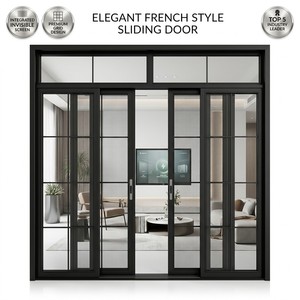
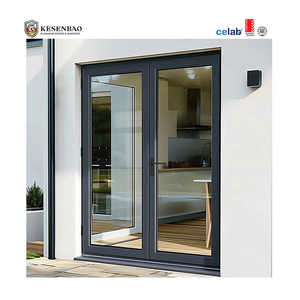
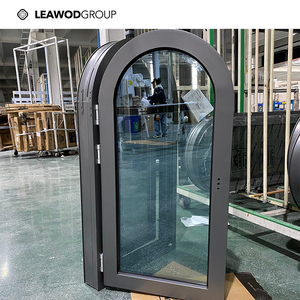
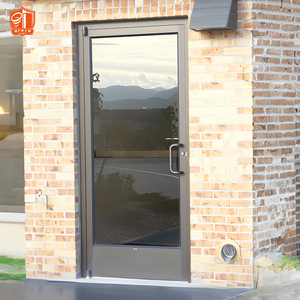
1. The Evolution of Structural Fenestration: China’s Role as a Global Manufacturing Hub
The global architectural joinery and fenestration landscape is undergoing a paradigm shift driven by stringent decarbonization codes, net-zero operational targets, and evolving structural safety mandates. As commercial developers, general contractors, and architectural firms strive to balance extreme environmental resilience with sleek minimalist aesthetics, selecting a qualified China top aluminium and glass window manufacturer & supplier has transitioned from a pure cost-containment strategy into an essential strategic partnership.
Modern aluminium extrusions, structural thermal breaks, and low-emissivity (Low-E) insulated glass units (IGUs) manufactured in high-precision facilities across Fujian, China (such as SAGA Aluminum Doors & Windows Co., Ltd. located in the Tieling Technical Zone, Fuzhou) now set international benchmarks for quality control, engineering adaptability, and compliance verification. By integrating automated CNC machining centers, precision corner-crimping technology, and advanced surface finishing lines (PVDF Fluorocarbon and AkzoNobel powder coating), top-tier Chinese fabricators deliver facade systems engineered to withstand structural wind loads exceeding 5,000 Pascals, severe coastal salt-spray corrosion, and violent hurricane impacts.
Key Technical Drivers in Global Window Sourcing:
- Structural Alloy Quality: Standardized application of prime 6063-T6 and 6060-T66 architectural-grade aluminium extrusions, offering optimal tensile strength (minimum 190 MPa) and yield strength (minimum 150 MPa) for wide-span clear glass openings.
- Advanced Thermal Barrier Integration: Transitioning from legacy pour-and-debridge systems to high-performance polyamide (PA66 GF25) thermal struts, significantly reducing thermal bridge transmission and lowering whole-window U-values below 1.4 W/m²K.
- Acoustic & Solar Performance Tuning: Customized glass build-ups utilizing double/triple glazing, acoustic PVB/SGP interlayers, argon gas filling, and soft-coat silver Low-E coatings tailored to specific microclimates and urban sound abatement requirements (STC ratings up to 45 dB).
2. Future Global Procurement Trends in Commercial & Residential Joinery (2025–2030)
Sourcing strategies within the building envelope sector are shifting rapidly. Procurement officers and developers no longer evaluate suppliers solely on unit pricing; technical transparency, digital BIM support, supply chain traceability, and embodied carbon footprints are now core evaluation criteria.
1. Decarbonization & Low-Carbon Aluminium
Global building rating systems (LEED, BREEAM, Green Star) demand environmental product declarations (EPDs). Primary extruders are pivoting to hydro-powered recycled aluminium billets, reducing embodied CO2 per kilogram by over 65% compared to coal-smelted primary metal.
2. Vacuum Insulated Glass (VIG) Adoption
Next-generation glazing replaces standard air/argon spaces with a microscopic vacuum gap (0.2mm), delivering ultra-slim glazing units with U-values as low as 0.4 W/m²K. This technology allows narrow profile depth without sacrificing extreme thermal isolation.
3. Automated & Smart Building Integration
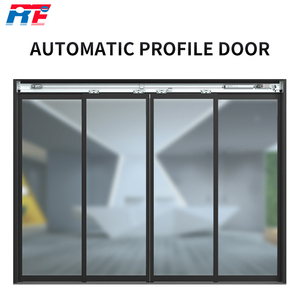
Commercial facades and residential luxury developments increasingly integrate concealed chain winders, motorized lift-and-slide hardware, dynamic electrochromic glass, and automated actuators synced directly to building management systems (BMS).
Comprehensive Material Performance & Specification Comparison
Understanding the balance between material properties, durability, and cost structure is crucial for structural engineers and project specifiers when evaluating fenestration profiles:
| Performance Criteria |
Thermally Broken Aluminium |
Aluminium-Clad Timber |
High-Impact uPVC Profiles |
| Structural Load Resistance |
Extreme (>5000 Pa wind pressures) |
Very High (Solid structural wood backing) |
Moderate to High (Steel reinforced) |
| Thermal Insulation (U-Value) |
1.2 – 1.8 W/m²K (with PA66 break) |
0.8 – 1.3 W/m²K (Natural wood core) |
0.9 – 1.4 W/m²K (Multi-chambered) |
| Frame Sightlines & Aesthetics |
Ultra-Slim (Maximum glass area) |
Medium / Warm natural wood interior |
Thicker profiles / Broad sightlines |
| Exterior Maintenance & Weathering |
Zero Maintenance (PVDF / Anodized) |
Low (Protected exterior aluminium shell) |
Low (UV-stabilized resin foils) |
| Ideal Project Applications |
High-rise, luxury villas, wide openings |
Cold-climate luxury estates, heritage retrofits |
Multi-family residential, volume housing |
3. Global Regulatory Standards & Testing Protocols
A key differentiator for a true industry-leading factory is verified international compliance. Importing non-compliant window systems risks job-site failure, certifier rejection, expensive teardowns, and legal liability. Leading Chinese suppliers provide third-party audited test reports validated by recognized international testing bodies.
Australian & New Zealand Standards (AS2047 / NZS4211)
Mandatory testing under AGWA (Australian Glass and Window Association) schemes includes AS2047 (Windows in buildings), AS1288 (Glass in buildings selection and installation), and NCC 2022 energy efficiency mandates. Tests evaluate deflection, air infiltration (operating under 1.0 L/s·m²), water penetration resistance (up to 450Pa+), and ultimate strength.
North American Fenestration Standard (NAFS / AAMA)
Compliance across USA and Canadian markets requires rigorous testing for air leakage, structural deflection under uniform static pressures, water resistance, and forced-entry resistance. Rating classes range from R (Residential) to AW (Architectural Window) for demanding high-rise structures.
Miami-Dade County Hurricane Impact Certification
For coastal Florida, Texas, and Caribbean deployments, window assemblies undergo TAS 201 (Large Missile Impact), TAS 202 (Uniform Static Air Pressure), and TAS 203 (Cyclic Wind Pressure Loading). Heavy-gauge extrusion profiles fitted with laminated SentryGlas® (SGP) interlayers ensure structural envelope integrity during Category 5 hurricanes.
European Union Standards (CE Marking / EN 14351-1)
Harmonized European standards govern window weatherability, acoustic performance, energy transmittance (g-values), and dangerous substances release. Factory production control (FPC) audits guarantee batch-to-batch structural performance.
4. Enterprise Strengths & Factory Engineering Process
SAGA Aluminum Doors & Windows Co., Ltd. brings over 16 years of dedicated fenestration manufacturing, custom engineering, and international distribution expertise. Operating advanced production lines in Fujian, China, SAGA maintains a vertically integrated manufacturing ecosystem covering drawing design, extrusion processing, CNC machining, insulating glass assembly, and final pre-shipment testing.
The 7-Step B2B Order & Quality Control Workflow:
01
Architectural Consultation
Reviewing architectural CAD/BIM drawings, wind pressure requirements, and local code compliance goals.
02
Engineering Shop Drawings
Drafting detailed 2D/3D profile section drawings, flashing details, structural anchorage, and hardware specs.
03
Sample Approval
Fabricating full-scale corner samples or standard-size window units for physical evaluation and lab validation.
04
Precision Fabrication
CNC cutting, automated corner crimping, polyamide thermal strip inserting, and dual-seal IGU glass assembly.
05
In-House QC Testing
Conducting dimensional accuracy, water tightness, operation smoothness, and paint thickness inspection.
06
Export Crate Packaging
Plywood fully-enclosed crate packaging with protective film, foam padding, and moisture-desiccant packs.
07
Port Logistics & Support
Direct ocean shipping dispatch via Fuzhou or Xiamen ports, complete with installation manuals and hardware spares.