Export-Grade Exterior Aluminium Door & Window Systems
Direct factory supply featuring thermal break profiles, double/triple glazing, and severe weather rating for global project developers and importers.
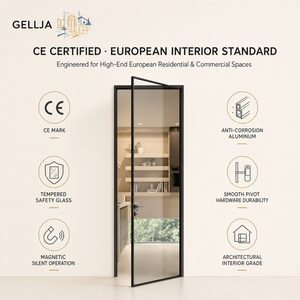
Modern French Design Narrow Frame Aluminum Glass Vertical Hinged Door
Contact Us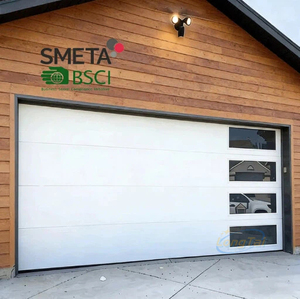
Andexin Modern White Aluminum Flat Panel Garage Door Clean Style
Contact Us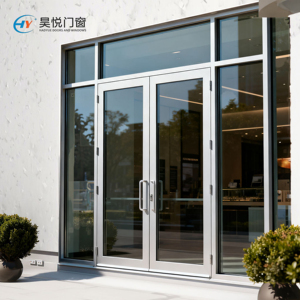
High Quality Factory Price Customized Double Aluminum Alloy Glass Door French Doors
Contact Us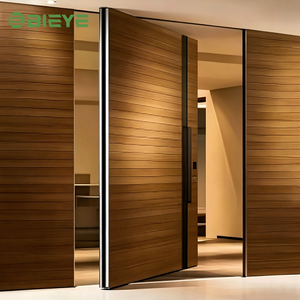
Modern Matte Finished Aluminum Off Axis Pivot Door With Intelligent Smart Lock System
Contact Us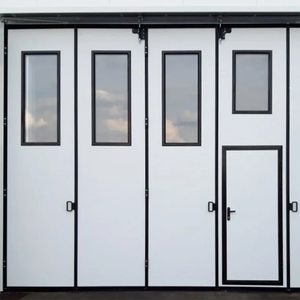
Modern Waterproof Accordion Sliding Folding Door System Double Glazed Bi-Fold Doors
Contact Us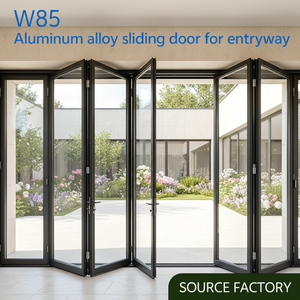
NFRC Aluminium Outdoor Accordion Door, Thermal Break Double Tempered Glass Exterior Bi-fold
Contact Us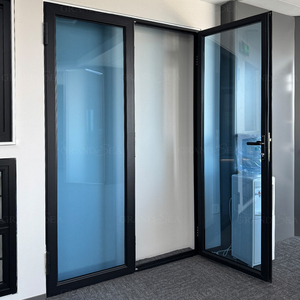
Residential Crittall Door Interior Partition Aluminum Tempered Glass French Doors
Contact Us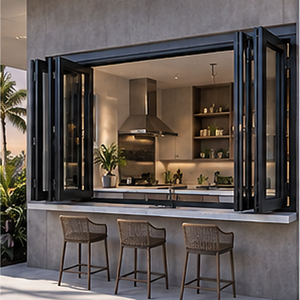
New Design Aluminum Glass Folding Windows Bi-fold Soundproof Sliding Terrace Balcony Door
Contact UsArchitectural Exterior Aluminium Bifold Doors: Strategic Procurement & Engineering Analysis
The global demand for high-performance architectural envelope systems has positioned exterior aluminium bifold doors (accordion glass folding doors) as a key element in modern residential and commercial construction. Connecting indoor luxury living spaces with outdoor environments requires structural joinery capable of withstanding extreme environmental loads, maintaining stringent thermal insulation standards, and providing continuous operational durability over decades.
As international building codes elevate energy efficiency baselines—such as Australia’s National Construction Code (NCC 2022), New Zealand’s H1 energy standards, and North America’s NAFS air-water-structural mandates—importers, project developers, and architectural specifiers face complex technical trade-offs. Selecting a premier supplier from China requires evaluating profile metallurgy, thermal break integration, structural hardware carrying capacities, and lab-tested weatherproofing certifications.
6063-T6 Extrusion Alloy
High-tensile architectural aluminum alloy with precision T6 heat treatment for superior structural rigidity, supporting oversized sashes up to 3.5 meters in height.
Polyamide Thermal Breaks
Integrated PA66 GF25 structural glass-fiber reinforced polyamide struts eliminate thermal bridging, achieving U-factors as low as 1.4 W/m²K.
Severe Weather Sealing
Continuous EPDM dual-durometer gasket systems engineered for DP60 wind pressure resistance and high-volume water shedding capabilities.
Engineering Parameters & Structural Mechanics of Exterior Bifold Doors
The structural reliability of an exterior aluminium folding door relies on five critical engineering subsystems:
1. Extrusion Profile Wall Thickness & Tempering
Unlike light-duty interior folding partitions, exterior load-bearing bifold systems require profile structural wall thicknesses ranging between 2.0mm and 3.0mm. Primary framing extrusions manufactured from 6063-T6 aluminum alloy undergo rigorous artificial aging, establishing a minimum ultimate tensile strength of 205 MPa. This ensures structural deflection remains within L/175 limits under peak wind load events.
2. Thermal Barrier System (Polyamide PA66 GF25)
To prevent heat transfer across the metal envelope, advanced bifold doors utilize multi-chambered thermal breaks consisting of 24mm to 34mm PA66 GF25 struts. The coefficient of thermal expansion of PA66 GF25 closely matches that of aluminum extrusions, preventing delamination or mechanical failure across extreme temperature cycles (-30°C to +80°C).
3. Heavy-Duty Stainless Steel Carriage & Track Mechanics
Operation smooth operational feel hinges on the carriage assembly. Top-hung or bottom-rolling carriages incorporate quad-wheel stainless steel roller bearings coated in structural nylon. Engineered to support up to 300 kg per panel, these assemblies pass 50,000 continuous open-close cycle durability audits under full load conditions.
4. High-Performance Insulated Glass Units (IGU)
Glazing options dictate acoustic insulation (STC ratings) and thermal solar gain (SHGC). Double-glazed IGUs featuring 6mm toughened Low-E + 12mm Argon gap + 6mm toughened glass are standard. For severe hurricane zones or coastal installations, structural laminated glass containing 1.52mm PVB or SentryGlas (SGP) interlayers provides impact protection against high-velocity flying debris.
AAMA 2605 Powder Coating
Fluoropolymer PVDF coatings designed for aggressive marine environments, resisting salt spray corrosion for over 3,000 hours.
Multi-Point Shootbolt Locks
Top and bottom shoot-bolt locking mechanisms linked to stainless steel gearboxes deliver high resistance against forced entry.
Flush Threshold Design
Zero-step recessed sills with integrated sub-floor drainage channels balance ADA barrier-free access with water resistance.
Sound Reduction (STC 42)
Double acoustic laminated glazing combined with continuous compression seals reduces urban noise pollution significantly.
Global Compliance Framework for B2B Window & Door Importers
Ensuring architectural products meet local jurisdiction standards is essential for project certification and building sign-off.
Navigating global building codes requires factory proof of performance. Below is an overview of standard certifications required across key export destinations:
| Region / Market | Governing Standard | Key Performance Metrics Tested | Engineering Solution Required |
|---|---|---|---|
| Australia & New Zealand | AS2047:2014, AS1288:2021, NZS4211:2008, NCC 2022 | Deflection (Ultimate Wind Load up to 4500Pa), Water Penetration (over 450Pa), Air Infiltration | Thermally broken aluminium frames, sub-head & sub-sill drainage flashings, AGWA audit certification |
| North America (USA / Canada) | NAFS (AAMA/WDMA/CSA 101/I.S.2/A440), ASTM E283/E330/E547 | Design Pressure (DP50-DP70), Air Leakage (<0.1 cfm/ft²), Structural Uniform Load | Reinforced profile chambers, heavy-duty stainless steel hinge plates, multi-point lock hardware |
| Florida & Caribbean (Coastal) | Miami-Dade County TAS 201-94, TAS 202-94, TAS 203-94 | Large Missile Impact Test (9lb 2x4 lumber @ 50ft/s), Cyclic Wind Load Pressure (9000 cycles) | SentryGlas (SGP) laminated security glazing, heavy-gauge 3.0mm structural extrusions |
| European Union & UK | EN 14351-1, CE Mark, UKCA Mark, BS 6375 | Thermal Transmittance (U-value < 1.4 W/m²K), Water Tightness (Class 9A), Air Permeability (Class 4) | Multi-chamber polyamide thermal break system (34mm), triple glazed Low-E Argon units |
Future Sourcing & Architectural Trends for Bifold Exterior Systems (2025–2030)
As modern architecture favors expansive transparent elevations, exterior folding door systems are evolving rapidly. Procurement managers and project developers should align their supply chains with these key upcoming industry trends:
Trend 1: Ultra-Slim Sightline Minimalist Profiles
Traditional bifold doors had interlock sightlines of 120mm to 160mm. Future-focused architectural trends demand ultra-slim frame profiles with visible sightlines under 90mm at the panel junctions. Achieving this requires structural adhesive glazing technology, where the insulated glass unit is structural bonded to the aluminum frame to carry wind shear loads.
Trend 2: Integrated Smart Home Automation & Motorization
Motorized exterior bifold doors featuring concealed electric actuators and smart home integration (Zigbee/Matter/KNX) represent a fast-growing market sector. Automated folding doors equipped with safety light curtains and rain/wind sensor overrides allow large-scale commercial spaces and luxury villas to transition open automatically.
Trend 3: Passive House Standard Thermal Performance
Driven by net-zero building regulations, demand for ultra-insulated bifold doors with U-factors ≤ 0.8 W/m²K is accelerating. Suppliers are adopting polyurethane foam-injected profile chambers, triple-pane Low-E coatings with warm-edge spacers, and quadrupled EPDM gasket sealing systems.
Trend 4: Carbon-Neutral Recycled Aluminum Extrusions
Environmental Product Declarations (EPD) are becoming mandatory in public and commercial tenders. Leading Chinese exporters are shifting towards green aluminum smelted using hydroelectric power, utilizing 75%+ recycled scrap aluminum to drastically lower embodied carbon footprint.
Why Partner with SAGA Doors & Windows for Global Supply
A vertically integrated factory dedicated to custom engineering, rigorous quality assurance, and seamless global logistics support.
16+ Years Manufacturing
Specialized operational history producing custom aluminum and timber-composite fenestration systems tailored to strict overseas building standards.
AGWA & NAFS Accredited
Regular third-party audited production facility ensuring continuous compliance with AS2047, AS1288, NZS4211, and NAFS testing protocols.
Full CAD/BIM Shop Drawings
In-house engineering team providing detailed architectural section drawings, installation details, and structural calculations prior to production sign-off.
Steel-Crated Export Packaging
Heavy-duty steel-frame crates and fully sealed shrink-wrap protection prevent transport damage during ocean container transit.
Flexible Commercial Terms
Supporting standard T/T payments and Alibaba Trade Assurance to provide buyer security and transparent milestone tracking.
35–50 Days Lead Time
Streamlined direct production scheduling from Fuzhou and Xiamen ports guarantees predictable jobsite delivery schedules.
Key B2B Buyer Considerations & Technical Procurement FAQs
Clear answers to essential technical, logistics, and quality assurance questions asked by international buyers.
QWhich buyer categories does SAGA primarily supply?
We supply window dealers, builders, general contractors, commercial project developers, architectural firms, and high-end residential homeowners. Each account receives engineered CAD drawings and technical specifications tailored to local building codes.
QWhat is the standard production turnaround time for custom orders?
Standard manufacturing lead time is 35 to 50 days following final CAD shop drawing sign-off and deposit receipt. Shipping duration depends on the destination port (e.g., 14-20 days to Australia, 25-35 days to North America).
QCan standard sample corner blocks or full windows be provided?
Yes. We supply free profile corner samples demonstrating frame extrusion thickness, thermal break assembly, gasket sealing, and surface finish quality. Standard size full window samples can also be arranged, with freight covered by the buyer.
QWhat technical drawing and engineering support is included?
Every project includes custom CAD shop drawings, glass schedules, section details, structural wind load calculations, and step-by-step installation guides so your technical team can verify fit and performance prior to manufacturing.
QDo SAGA doors comply with Australian and New Zealand Standards?
Yes. SAGA products are accredited under the AGWA compliance program, meeting AS2047:2014, AS1288:2021, and NCC 2022 standards. New Zealand project shipments comply with NZS4211:2008 and Building Code clauses B1, B2, E2, F2, G4, G7, and H1.
QWhat are the main loading ports for international shipments?
All orders are custom packaged in steel-reinforced wooden crates and loaded directly into sea containers at Fuzhou Port or Xiamen Port in Fujian Province, China.
QWhich payment methods and trade terms are supported?
We accept Wire Transfers (T/T) and Alibaba Trade Assurance orders. Standard trade terms include FOB (Fuzhou/Xiamen), CIF, and DDP upon request for specialized project deliveries.
QWhat customization options exist for frame colors and hardware?
We offer a wide selection of RAL powder-coat colors, anodized metallic finishes, and authentic woodgrain timber foils. Premium hardware selections include German ROTO, Siegenia, Kinlong, and custom heavy-duty stainless steel fittings.
Request a Free Engineering Proposal & Factory Quote
Send us your project architectural drawings, window schedules, or custom dimensions. Our engineering team will review your specifications and return a technical proposal within 24 hours.
Contact Us