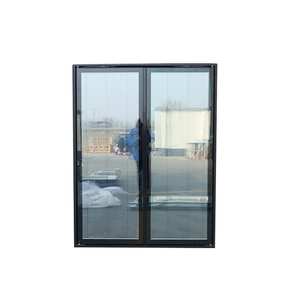
Factory-Direct Catalog
Featured Aluminium Glass Door & Window Solutions
Engineered to meet stringent international building standards including AS2047, NZS4211, NAFS, and Miami-Dade TAS impact regulations.
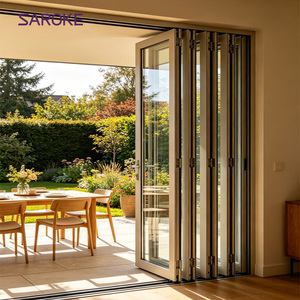
Bifold-doors Modern Custom Aluminum Double Glass Bi-fold Patio Doors
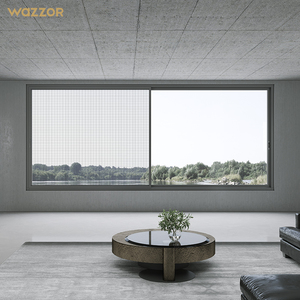
Wazzor Customized High Quality American Style Aluminium Alloy Frame Residential Double Tempered Glass Sliding Windows
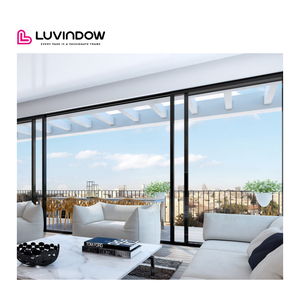
Metal Large Aluminum Double Glass Outdoor Impact Lightweight Slider Doors Soundproof Aluminium Sliding Door
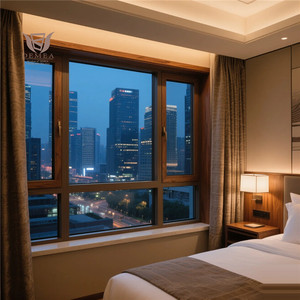
DEMEA Aluminum Clad Wood Windows Double Panel With Installation Wings Heat Insulated Wooden Tilt Turn Windows
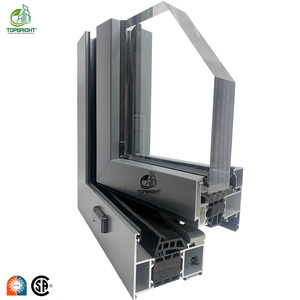
Topbright Custom Window and Door Thermal Break Insulated Casement Window Soundproof Double Glazed Aluminum Windows
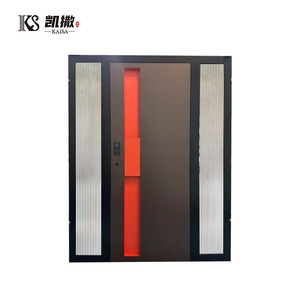
Aluminum Door with Side Windows Thermal Break, Fireproof, Soundproof, Waterproof for Commercial Office & Company Building
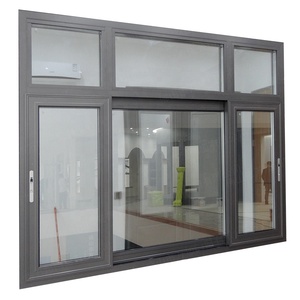
Hurricane Impact Aluminum Glass Customized Sliding Window Home Aluminum Windows Impact Soundproofing Double Glazed Windows
Executive Briefing
1. Global Market Dynamics: Why China Leads Architectural Aluminium Glass Door Export
The global demand for high-performance architectural Joinery has undergone a paradigm shift over the past decade. As stringent building energy codes such as NCC 2022 in Australia, NZBC Clause H1 in New Zealand, and IECC regulations in North America take effect, the expectations placed on exterior aluminium glass doors have transformed. Modern projects require exterior openings to serve not merely as aesthetic transitions between indoor and outdoor living spaces, but as ultra-reliable, thermally protective building envelopes capable of standing up to severe environmental stresses.
China has emerged as the global epicenter for precision aluminium fenestration manufacturing, combining scale, supply chain integration, advanced extrusion technology, and state-of-the-art CNC automation. Leading exporters such as SAGA (ROPO Windows & Doors) have bridged the gap between competitive factory-direct pricing and strict Western building code compliance. By utilizing premium grade 6063-T5/T6 structural aluminium profiles, advanced polyamide (PA66-GF25) thermal breaks, and low-emissivity (Low-E) double or triple glazing, Chinese manufacturers deliver commercial and residential entry systems that rival European boutique fabricators at a fraction of the total procurement cost.
SEO Intent & Technical Insight: Modern B2B buyers do not search merely for "cheap doors." Intent data shows architectural buyers, volume homebuilders, and commercial contractors search for verified compliance terms: AS2047 water resistance ratings, structural deflection pressures (Pascal ratings), acoustic STC values, U-factors below 1.6 W/m²K, and Miami-Dade large missile impact certifications (TAS 201/202/203).
16+
Years Manufacturing & Export Mastery
25+
Global Markets & Regions Supplied
10-Yr
Comprehensive Quality Warranty
100%
Code Audited & Pre-Shipment Tested
Manufacturer Trust & Authority
2. Enterprise Manufacturing Advantage: The SAGA Benchmark
Building trust across international borders requires verified technical capabilities, rigorous factory quality controls, and transparent engineering processes.
Full Regulatory Compliance
Independently audited under the AGWA program for AS2047 and AS1288 standards in Australia, certified under NZS4211 for New Zealand, NAFS for North America, and Miami-Dade TAS for storm-prone regions.
State-of-the-Art Factory CNC Processing
Equipped with multi-axis automated CNC cutting and corner-crimping machinery. Precision dimensional tolerances within 0.5mm ensure exact site fitting and smooth long-term hardware articulation.
Tier-1 Global Supply Chain
Partnering with world-renowned component suppliers including ROTO, Siegenia Aubi, Kinlong hardware, Veka, Rehau, and Zhongcai profiles to deliver uncompromising long-term operational reliability.
Technical System Performance Matrix
The following performance matrix highlights the engineering parameters built into our premium aluminium glass external door export ranges:
| Performance Metric | Standard Aluminium External Doors | Thermally Broken Architectural Doors | Hurricane Impact Laminated Doors |
|---|---|---|---|
| Frame Profile Depth | 45mm – 75mm system | 80mm – 120mm profile depth | 100mm – 150mm heavy-duty section |
| Thermal Insulation (U-Factor) | 3.2 – 4.5 W/m²K | 1.2 – 1.8 W/m²K (PA66-GF25 strip) | 1.6 – 2.2 W/m²K |
| Acoustic Rating (STC / Rw) | STC 28 – 32 dB | STC 38 – 45 dB (Double glazed) | STC 42 – 48 dB (Laminated IGU) |
| Design Wind Load (Pascal) | 1500 Pa – 2500 Pa | 3000 Pa – 4500 Pa (AS2047 N6/C4) | 5000 Pa – 7500 Pa (Miami-Dade) |
| Water Penetration Resistance | 200 Pa – 300 Pa | 450 Pa – 750 Pa pressure equalized | 600 Pa – 1000 Pa continuous sill track |
| Air Infiltration Rate | < 1.5 L/s·m² | < 0.3 L/s·m² (Ultra-tight seal) | < 0.1 L/s·m² (Positive pressure) |
Strategic Outlook
3. Future Procurement & Technological Trends in Aluminium Glass Doors
Insights into how architectural specifications, environmental policies, and manufacturing innovations will shape global sourcing strategies over the next decade.
Energy Decarbonization
1. Polyamide Thermal Break PA66-GF25 & Passive House Certification
Un-insulated aluminium frames create thermal bridges that cause energy loss and internal condensation. The industry standard is shifting rapidly toward multi-chamber polyamide thermal breaks reinforced with 25% glass fiber (PA66-GF25). When combined with argon gas-filled, warm-edge spacer double/triple glazing, these systems achieve Passivhaus-level thermal efficiency, enabling developers to meet zero-carbon targets across Australia, Europe, and North America.
Climate Resilience
2. Extreme Wind Load & Hurricane Impact Laminated Glass Integration
Increasing severe weather events have drastically raised structural envelope requirements. Future procurement dictates that coastal and island developments specify hurricane-rated fenestration tested to Miami-Dade TAS 201 (Large Missile Impact), TAS 202 (Static Air Pressure), and TAS 203 (Cyclic Pressure Loading). Utilizing structural SentryGlas (SGP) interlayers prevents frame blowout even under extreme wind pressures exceeding 6000 Pascals.
Architectural Aesthetics
3. Ultra-Slim Sightlines & Heavy-Duty Structural Pivot Systems
Modern architectural design trends favor maximum natural daylighting and unobstructed panoramic views. This has accelerated the adoption of ultra-slim sightline sliding doors (interlockers as narrow as 20mm) and massive structural pivot entry doors. Achieving these expansive glass sizes while retaining structural deflection stiffness requires advanced extrusion alloys (6063-T6) and hidden multi-point locking hardware hidden inside the frame.
Smart Automation
4. Smart Electrochromic Glass & Integrated Heated Glass Systems
Commercial entrance systems and luxury residential projects are increasingly integrating smart glass technology. Electric heated glass doors (which prevent condensation in commercial refrigeration or cold climates) and electrochromic tinting glass (which alters light transmission at the touch of a button) are becoming high-margin add-ons for distributors and builders looking to stand out in competitive real estate markets.
Purchasing & Technical FAQ
4. Frequently Asked Questions by Global Importers & Builders
Comprehensive answers to critical technical, logistical, and compliance questions encountered during cross-border procurement.
Q1:
How do SAGA aluminium glass doors comply with Australian (AS2047) and New Zealand (NZS4211) building standards?
Our products undergo annual physical audits under the AGWA (Australian Glass and Window Association) accreditation scheme. We verify structural deflection, air infiltration, water penetration resistance, and glass safety (AS1288) to ensure full compliance with NCC 2022. For New Zealand, our certificates validate performance against NZBC clauses B1, B2, E2, F2, G4, G7, and H1.
Q2:
What technical documentation is provided before order manufacturing begins?
Every custom order receives comprehensive CAD engineering support. We generate detailed elevation drawings, cross-sectional profiles, installation flange details, structural fixing points, glass schedule specs, and structural wind pressure calculations. Production commences only after your project team and local certifier approve these shop drawings.
Q3:
What are the standard production lead times and shipping loading ports?
Standard manufacturing lead time is 35 to 50 days from final shop drawing sign-off and deposit receipt. Orders are securely packed into customized steel-reinforced timber crates lined with moisture barriers and shipped directly from Fuzhou Port or Xiamen Port in Fujian Province, China.
Q4:
What hardware brands are utilized for heavy bifold and sliding patio doors?
We use premium multi-point locking systems engineered to withstand thousands of operational cycles. Buyers can choose between world-leading German hardware (ROTO, Siegenia Aubi) or top-tier tested architectural hardware brands like Kinlong and Doric, ensuring effortless operation, high security, and corrosion resistance.
Q5:
Can SAGA provide sample units for architectural review and compliance testing?
Yes. We regularly fabricate standard-sized window and door section samples or complete corner profile models to demonstrate thermal break assembly, finish quality, double-glazing seal integrity, and hardware action. Standard sample units are free; clients cover express ocean or air freight.
Q6:
What surface finishes and powder coating options are available for exterior doors?
We offer architectural-grade fluorocarbon (PVDF) coating, electro-plated anodizing, dynamic woodgrain heat-transfer finishes, and premium Interpon/AkzoNobel powder coatings. Finishes are tested for coastal salt spray resistance (AAMA 2604 / AAMA 2605 specifications) to prevent fading, chalking, or blistering.
Q7:
How does SAGA ensure ocean freight cargo protection for large glass units?
All door panels and frames undergo multi-layer protection: protective plastic film on profiles, corner guards, air-bubble wrapping, and fully enclosed IPPC-certified fumigated plywood crates. Desiccant packs are enclosed within every crate to absorb ocean transit moisture.
Q8:
What payment methods and trade terms are supported for B2B orders?
We support standard international trade terms including FOB, CIF, DDP, and CFR. Payment terms include Telegraphic Transfer (T/T - 30% deposit, balance prior to shipment) as well as Alibaba Trade Assurance protection for complete buyer peace of mind.