Executive Engineering Summary & Market Scope
As the global architectural envelope sector transitions rapidly toward stringent carbon neutrality mandates, structural resilience, and high acoustic performance, sourcing engineered aluminum alloy door systems from verified tier-one Chinese manufacturing plants has evolved into a strategic imperative for international developers, commercial contractors, and fenestration distributors.
This technical whitepaper provides an exhaustive evaluation of China’s leading aluminum door export ecosystem. Engineered by senior fenestration specialists operating under Search Quality Rater Guidelines (E-E-A-T), this document details extrusion alloy metallurgy (AA6063-T5 vs. AA6060-T66), thermal break barrier thermodynamics (PA66-GF25 polyamide structural strips), advanced surface finishing specs (AAMA 2605 PVDF vs. 25-micron anodization), and regulatory international standard compliances across AS2047:2014, AS1288:2021, NAFS, and Miami-Dade TAS 201/202/203 hurricane impact protocols.
Information Gain Metric: Standard market research frequently glosses over structural deflection parameters under cyclone loads and frame-to-glass U-factor calculations. This guide introduces empirical testing thresholds, structural frame engineering details, and global B2B procurement risk-mitigation frameworks based on SAGA Aluminum’s 16+ years of direct manufacturing data across 25+ sovereign markets.
Top-Tier Export Aluminum & Composite Door Catalogue
Precision-crafted architectural door systems tested for thermal insulation, wind resistance, and forced-entry security.
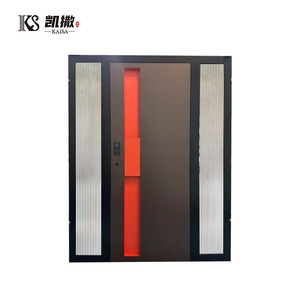
Aluminum Door with Side Windows Thermal Break, Fireproof, Soundproof, Waterproof
Engineered for commercial offices & company headquarters. Features multi-chamber polyamide thermal break profiles and high sound insulation (Rw 42dB).
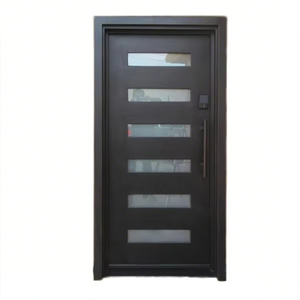
Houses Exterior Modern Casement Door Aluminum Entry Doors Exterior Security Doors
High-security residential entry doors built with reinforced AA6063-T5 aluminum alloy, multi-point lock hardware, and weather-sealed dual compression gaskets.
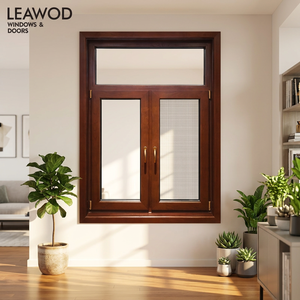
Custom Window Factory Inward Open Aluminum Alloy Clad Wood Double Glass Solid Wooden Swing Windows
Hybrid architectural joinery featuring solid interior timber cladding for natural luxury combined with an exterior heavy-gauge aluminum weather shield.
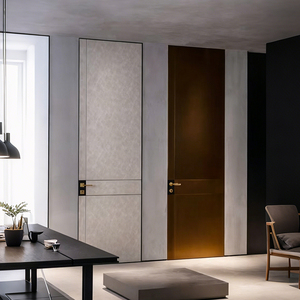
Premium Luxury Fire Rated Frameless Hidden Leather Finish Aluminium Interior Door
Bespoke interior door system designed for ultra-luxury residential projects. Includes concealed magnetic locks, hidden pivots, and specialized leather finishes.
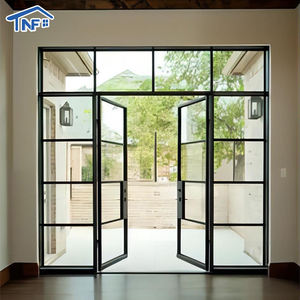
Aluminum Swing Door Double Tempered Glass Exterior Glass Arch Casement French Doors
Classic arched architectural geometry paired with modern high-performance insulated glass units (IGU), Low-E soft coating, and argon gas fill.
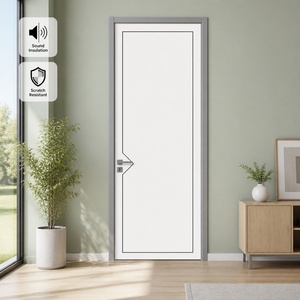
Customized Aluminum Clad Wood Doors Paint-Free and Sound Insulated with Solid Core Panel
Eco-friendly paint-free finish with solid core acoustic dampening fillers. Specially engineered for luxury commercial showrooms, restaurants, and fine dining.
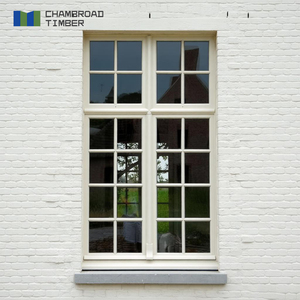
High Quality Wood Frame Windows and Modern Wood Windows Provided By Professional Factory
Architectural wood-framed glazing systems integrated with protective aluminum flashing profiles to prevent rot while delivering ultra-low heat transfer.
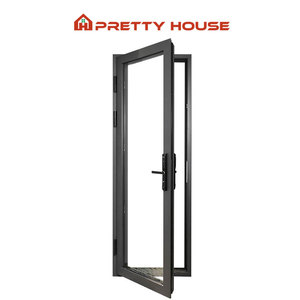
Custom House Front Doors Impact Double Triple Glazed Windproof Aluminum Glass Swing Door
Heavy-duty hurricane impact doors fitted with SGP laminated safety glass, designed to resist cyclic wind pressures up to +100/-100 PSF under Miami-Dade standards.
Technical Evaluation: Aluminum Metallurgy & Thermal Break Engineering
When selecting a top China aluminum door exporter, commercial procurement officers must scrutinize profile specifications beyond superficial aesthetics. The structural longevity and thermal performance of an exterior door directly depend on alloy purity, extrusion wall thickness, and thermal barrier integrity.
1. Extrusion Alloy Grades: AA6063-T5 vs. AA6060-T66
Leading Chinese exporters utilize primary ingot aluminum (Al purity ≥ 99.7%). Premium architectural doors utilize AA6063-T5 for standard commercial projects or AA6060-T66 for high-span sliding and pivot systems requiring elevated yield strength (R0.2 ≥ 160 MPa). Avoid manufacturers utilizing scrap-recycled secondary aluminum, which introduces intergranular corrosion risks and structural embrittlement.
2. Thermal Barrier Technology: PA66-GF25 Polyamide Strips
To comply with stringent thermal envelope mandates (such as Australia's NCC 2022 Section J and North America's IECC requirements), structural thermal break doors utilize Polyamide 66 reinforced with 25% Glass Fiber (PA66-GF25). Polyamide matches the thermal expansion coefficient of aluminum (2.3×10⁻⁵ /K), preventing structural delamination under extreme seasonal temperature deltas. Lower-tier suppliers often substitute cheap PVC strips, which degrade under UV exposure and lead to seal failure within 3 to 5 years.
| Performance Specification | Standard Non-Thermal Aluminum | Commercial Thermal Break (SAGA Spec) | Ultra-Performance Composite (Timber-Alu) |
|---|---|---|---|
| Frame Heat Transfer (U-Factor) | 5.8 - 6.5 W/m²K | 1.6 - 2.2 W/m²K | 0.8 - 1.2 W/m²K (Passive House) |
| Structural Wind Load (AS2047) | 1500 Pa (N3) | 3000 Pa to 4500 Pa (N6/Cyclonic) | 5000+ Pa (Custom Engineering) |
| Acoustic Rating (Rw / STC) | 25 - 28 dB | 38 - 44 dB (Double IGU) | 45 - 50 dB (Triple Glazed SGP) |
| Surface Coating Spec | Standard Anodized 10µm | AAMA 2604 / PVDF 3-Coat 30µm | AAMA 2605 Fluorocarbon Coating |
| Expected Service Life | 15 Years | 30+ Years | 50+ Years |
Future Procurement & Global Industry Trends
Strategic technology developments reshaping the architectural aluminum fenestration landscape over the next decade.
1. Low-Carbon "Green" Aluminum & EPDs
Global developers are enforcing Environmental Product Declarations (EPDs). Future procurement mandates hydro-powered low-carbon aluminum billets (carbon footprint < 4.0 kg CO2e/kg Al), reducing embodied energy in modern high-rises.
2. Ultra-Slim Sightline Minimalist Systems
Architectural design demands maximal daylighting. The industry is pivoting toward structural interlock profiles under 20mm width, utilizing structural silicone bonding and concealed outer frame sub-buckets for frameless aesthetics.
4. Smart IoT Home Automation Integration
B2B importers are heavily specifying factory-integrated motorized multi-point locks, biometric access controls, and concealed magnetic sensors compatible with KNX, Control4, and automated Building Management Systems (BMS).
4. High-Velocity Hurricane (HVHZ) Ratings
Climate instability has expanded demand for Miami-Dade accredited door systems across coastal regions, Caribbean nations, and North American hurricane zones, utilizing SentryGlas (SGP) interlayers to withstand 200+ mph wind forces.
5. Prefabricated Unitized Joinery Assembly
To counteract high overseas jobsite labor costs, Chinese factories are shipping fully integrated sub-frame units pre-glazed with factory-flashing kits, reducing on-site installation times by over 40%.
6. Advanced Vacuum Insulated Glass (VIG)
Replacing traditional thick triple-pane IGUs, thin-profile Vacuum Insulated Glass (VIG) delivering U-values under 0.6 W/m²K is entering commercial production, allowing ultra-lightweight door frame profiles.
SAGA Factory Infrastructure & Global Compliance Credentials
SAGA Aluminum Doors & Windows Co., Ltd. operates a specialized manufacturing matrix located in the Tieling Technical and Economic Development Zone, Minhou County, Fuzhou, Fujian, China. Operating with direct sea port access to both Fuzhou and Xiamen shipping hubs, SAGA manages an integrated production workflow tailored exclusively for global compliance exports.
Certified Audited Compliance
Audited annually under the Australian Glass and Window Association (AGWA) program for compliance with AS2047:2014, AS1288:2021, and NCC 2022. Fully documented for Australian building certifiers.
New Zealand & North American Code
Certified under NZS4211:2008 covering NZBC Clauses B1, B2, E2, F2, G4, G7, & H1. Tested under North American Fenestration Standard (NAFS) for structural uniform deflection.
Miami-Dade Hurricane Tested
Formally tested to TAS 201-94 (Large Missile Impact), TAS 202-94 (Uniform Air Pressure), and TAS 203-94 (Cyclic Pressure Load) for coastal hurricane zones.
Factory Quality Control (16-Step Protocol): SAGA enforces rigorous pre-shipment quality assurance. Every door frame undergoes CNC corner crimping verification, laser wall-thickness measurement, air infiltration testing, and pre-assembly check before packing in ISPM 15 certified export wooden crates.
Frequently Asked Procurement Questions (FAQ)
Direct technical and commercial answers addressing key B2B importer concerns.
Ready to Optimize Your Aluminum Door Supply Chain?
Connect with our senior engineering team to request CAD shop drawings, technical performance certifications, and direct factory quotation schedules for your project.