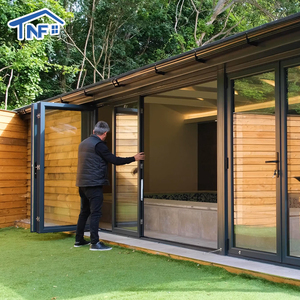
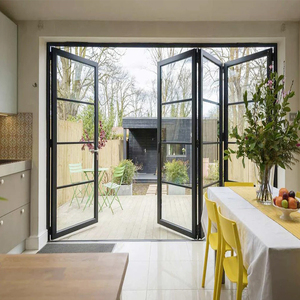
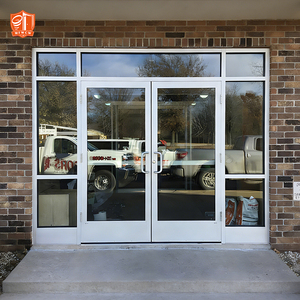
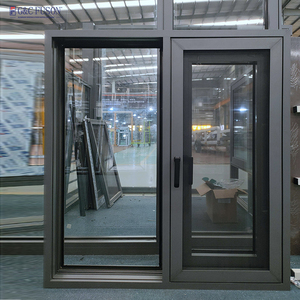
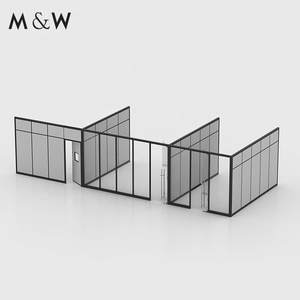
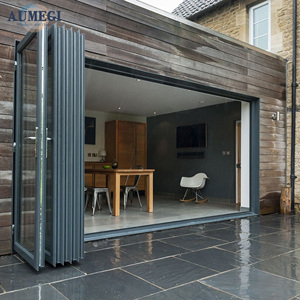
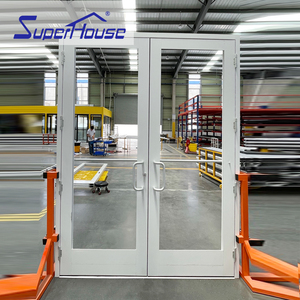
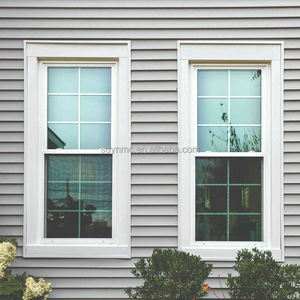
As a premier China aluminum fixed glass windows manufacturer and global Fenestration exporter, SAGA / ROPO offers factory-direct engineering across a wide portfolio of custom joinery products. Below is our featured product collection tested for structural wind pressure, thermal insulation, sound attenuation, and weatherproofing across North American, Australian, New Zealand, and European commercial markets.
Executive Technical Whitepaper: Engineering Aluminum Fixed Glass Windows
In modern commercial architecture and high-end residential design, Aluminum Fixed Glass Windows (Picture Windows) represent the foundational element for building envelope envelope transparency, structural durability, and energy optimization. Unlike operable window assemblies containing hinges, winders, or tracks, fixed glass windows eliminate mechanical air leakage paths, presenting an inherently superior barrier against rainwater penetration and acoustic transmission.
When evaluating suppliers from China, global procurement managers, principal architects, and structural engineering firms must look beyond surface aesthetic finishes. Selecting a verified manufacturer requires a deep dive into aluminum alloy metallurgy, glass physics, structural deflection limits, structural silicone structural glazing (SSG) joint mechanics, and thermal break isolation technologies.
1. Structural Mechanics & Wind Pressure Resistance Physics
Fixed window frames absorb pure wind shear and pressure loads directly, transmitting forced deflection vectors into the primary building structural slab. China's top aluminum fixed glass windows factories utilize Architectural Extrusion Profile 6063-T5 / 6063-T6 Aluminum Alloys with nominal wall thicknesses ranging from 1.6mm up to 3.0mm for high-rise curtain wall applications.
- Deflection Limit Compliance: Engineered to strictly respect $L/175$ or $L/250$ deflection limits under design wind loads (where $L$ is the clear span length of the unsupported glass edge).
- Serviceability Limit State (SLS): Tested under static positive and negative air pressures from 1500 Pa to 3000 Pa to ensure zero frame deformation or seal dislodgement.
- Ultimate Limit State (ULS): Structural integrity validated up to 6000 Pa (equivalent to Category 5 hurricane wind velocity exceeding 280 km/h).
- Miami-Dade TAS 201/202/203 Testing: Heavy-duty commercial impact fixed frames utilize laminated glass with SentryGlas® (SGP) interlayers to withstand large missile impacts (9-lb 2x4 timber shot at 50 ft/s) followed by 9,000 cyclic pressure loadings.
2. Thermal Performance & Building Energy Simulation
Heat transfer through fixed window systems occurs via three distinct physical mechanisms: thermal conduction through the aluminum frame, conduction/radiation through the Insulated Glass Unit (IGU), and solar heat gain coefficient (SHGC) radiation. Un-insulated aluminum profiles act as heat bridges, leading to interior condensation and energy loss.
To satisfy stringent global energy codes such as the Australian NCC 2022 Section J, New Zealand NZBC H1 Energy Efficiency, and North American IECC standards, SAGA / ROPO integrates advanced polyamide thermal barriers:
- PA66 GF25 Polyamide Thermal Break: Structural 24mm to 34mm polyamide strips reinforced with 25% glass fiber, mechanically crimped between inner and outer aluminum extrusions to drop overall frame U-factors ($U_f$) below 1.5 W/m²K.
- Triple-Silver Low-E Glass Coatings: Vacuum magnetron sputter deposition (MSVD) applying microscopic silver layers that reflect long-wave infrared radiation while allowing high visual light transmittance (VLT > 68%).
- Inert Gas Fill & Warm-Edge Spacers: 90%+ Argon gas fills combined with composite Technoform / Swisspacer warm-edge spacer bars reduce thermal bridging at the glass perimeter, preventing internal edge condensation.
- Passive House Ultra-Low Values: Triple-glazed fixed window units achieve system U-values ($U_w$) down to 0.80 W/m²K (0.14 BTU/h·ft²·°F).
3. Acoustic Isolation Engineering (STC / Sound Attenuation)
In modern urban infill developments located near highways, airports, or commercial centers, fixed glass windows serve as critical acoustic dampening barriers. Because fixed windows do not suffer from perimeter sashes weatherstrip gaps, sound isolation is governed entirely by mass law and glazing cavity resonance.
China top aluminum fixed glass windows suppliers overcome low-frequency noise resonance by specifying asymmetrical double glazing setups. For instance, combining a 6mm toughened exterior pane with a 12mm Argon cavity and an 8.76mm acoustic laminated interior pane (4mm Glass + 0.76mm PVB + 4mm Glass) disrupts acoustic standing waves, achieving a Sound Transmission Class (STC rating up to 45 dB / Weighted Sound Reduction Index $R_w + C_{tr} \ge 40 \text{ dB}$).
Global Procurement Trends: Direct-from-Factory Sourcing Matrix (2025–2030)
The international supply chain for commercial fenestration and facade systems is undergoing a rapid paradigm shift. Commercial general contractors, real estate developers, and wholesale distributors are bypassing local multi-tiered distribution channels in favor of direct engineering partnerships with Tier-1 China window factories.
Key Procurement Shift 1: Factory-Direct CAD/BIM Integration
Modern procurement is no longer based on buying standard off-the-shelf window dimensions. Advanced projects require direct integration between project architects and factory CAD/BIM teams. SAGA / ROPO provides precise shop drawings, 3D DWG section details, and structural anchoring calculations prior to production. This eliminates on-site fitting discrepancies and reduces total installed fenestration costs by 25% to 40%.
Key Procurement Shift 2: Full Audit Compliance & Traceability
Customs authorities and municipal building surveyors enforce mandatory compliance documentation before approving structural joinery. Importers must ensure their Chinese OEM supplier holds verified accreditation under recognized international audit frameworks:
| Target Region | Mandatory Building Standards | Verified Performance Criteria | Audit & Testing Authority |
|---|---|---|---|
| Australia | AS2047:2014, AS1288:2021, NCC 2022 | Structural Wind Load, Water Penetration (450 Pa+), Air Infiltration, Glass Thickness | AGWA (Australian Glass & Window Association) Audited |
| New Zealand | NZS4211:2008, NZBC B1, B2, E2, F2, H1 | Severe Wind Zone Weathertightness, Durability, Thermal Insulation H1 Compliance | IANZ Accredited Laboratory Test Reports |
| North America (USA/CA) | NAFS (AAMA/WDMA/CSA 101/I.S.2/A440) | Design Pressure (DP) Rating, Air Leakage, Structural Deflection, Forced Entry | Intertek / Fenestration & Glazing Industry Alliance (FGIA) |
| Florida & Caribbean | Miami-Dade TAS 201, 202, 203 | Large Missile Impact Resistance, High Velocity Hurricane Zone (HVHZ) Cyclic Load | Miami-Dade County Product Control Approval (NOA) |
Key Procurement Shift 3: Carbon Footprint & Low-Carbon Aluminum
With the implementation of the European Union's Carbon Border Adjustment Mechanism (CBAM) and global ESG reporting requirements, developers actively seek low-embodied-carbon aluminum extrusions. Top Chinese manufacturers are transitioning to hydro-powered primary aluminum ingot smelting and integrating post-consumer recycled aluminum, reducing embodied carbon dioxide equivalent ($CO_2e$) emissions from 16 kg per kg of aluminum down to under 4 kg per kg.
Industry Development & Next-Generation Window Technologies
As building facades evolve toward minimalist aesthetics and smart energy management, the technology embedded within aluminum fixed glass windows is advancing rapidly. Leading Chinese suppliers are investing heavily in automated manufacturing and smart glass integration:
Architectural demand for floor-to-ceiling glass walls has driven frame profile face widths down to as low as 18mm. Outer extrusions are designed to be fully concealed within the building perimeter plaster/soffit, yielding an uninterrupted 98% glass sightline without sacrificing wind pressure resistance.
Integration of Polymer Dispersed Liquid Crystal (PDLC) switchable privacy film and electrochromic solar-tinting layers directly inside the fixed double-glazed unit. Allows users to switch glass opacity from crystal clear to opaque via smart home automation or remote control.
For severe coastal environments subject to salt spray and high UV radiation, frame extrusions undergo 3-coat 70% Fluorocarbon PVDF (Kynar 500) or Qualicoat Class 3 powder coating. Provides 20-to-30-year color retention and zero chalking guarantee under AAMA 2605 specifications.
Commercial Fixed Window Performance Comparison Matrix
Selecting the correct window frame profile and glass configuration requires balancing structural limits, thermal requirements, and project budgets. The table below outlines standard market offerings versus SAGA / ROPO high-performance fixed aluminum window series:
| Performance Metrics | Standard Non-Break Aluminum | SAGA Thermally Broken Fixed System | SAGA Miami-Dade Impact Fixed System | SAGA Structural Glazing Curtain System |
|---|---|---|---|---|
| Profile Alloy & Depth | 6063-T5 (45mm - 60mm) | 6063-T6 Architectural (75mm - 100mm) | 6063-T6 Reinforced (100mm - 120mm) | High-Strength Aluminum / Steel Core (120mm+) |
| Thermal Barrier | None (Solid Aluminum) | 24mm - 34mm PA66 GF25 Polyamide | 24mm PA66 Polyamide + Insulated Core | Continuous EPDM Thermal Isolator |
| System U-Value ($U_w$) | 4.5 - 5.8 W/m²K | 1.1 - 1.8 W/m²K | 1.4 - 2.2 W/m²K | 0.8 - 1.4 W/m²K |
| Max Wind Pressure (ULS) | 1500 Pa - 2500 Pa | 4500 Pa - 6000 Pa | 8000 Pa (HVHZ Approved) | 6000 Pa+ Custom Engineered |
| Water Tightness Rating | 300 Pa | 600 Pa - 900 Pa | 1000 Pa+ (Extreme Exposure) | 1000 Pa+ Static & Dynamic Pressure |
| Acoustic Rating (STC) | STC 28 - 32 dB | STC 38 - 45 dB | STC 40 - 48 dB (Laminated IGU) | STC 42 - 50 dB |
| Impact Resistance | Standard Tempered Glass | Toughened Safety Glass (AS1288) | TAS 201 Large Missile (SGP Interlayer) | Laminated Heat-Strengthened Structural Glass |
SAGA / ROPO Enterprise Advantages & Factory Ecosystem
With over 16 years of direct manufacturing experience in customized architectural windows and doors, SAGA Aluminum Doors & Windows Co., Ltd. operates a modern, fully equipped manufacturing facility in Minhou County, Fuzhou, Fujian, China. Exporting to more than 25 countries across Australia, New Zealand, North America, Europe, and the Caribbean, our operations are optimized for seamless international business delivery.
Utilizing fully automated German 5-axis CNC machining centers, automated aluminum profile cutting saws, and hydraulic corner crimping machinery ensuring frame dimensional tolerances within ±0.5mm.
Every finished fixed window undergoes 100% factory inspection testing: corner joint seal integrity check, glass unit seal inspection, diagonal measurement verification, and protective film wrapping before crating.
Custom heavy-duty fumigated plywood crates reinforced with internal steel frames and foam edge protectors. Designed specifically to endure long ocean freight trips and eliminate glass breakage during container unloading.
Purchasing & Technical FAQ (Frequently Asked Questions)
Here are standard technical and commercial questions raised by international general contractors, window distributors, architects, and real estate developers during the sourcing process:
Ready to Partner with China's Top Aluminum Fixed Glass Windows Factory?
Send us your architectural window schedules, CAD elevation drawings, or project tender specifications. Our experienced fenestration engineering team will review your wind load requirements, thermal targets, and provide a direct factory quotation within 24 hours.