Engineered Aluminum Swing & Specialty Window Systems
Factory-direct precision joinery engineered for structural durability, extreme weatherproofing, and international building code compliance.
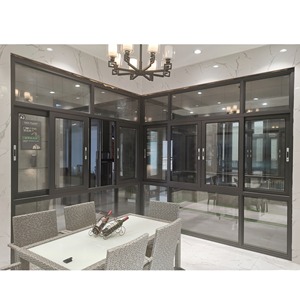
Fuson Motorised Automatic Retractable Open Air Aluminium Glass Sliding Roof Rooflight Smart Aluminum Glazing Skylights Window
Inquire Now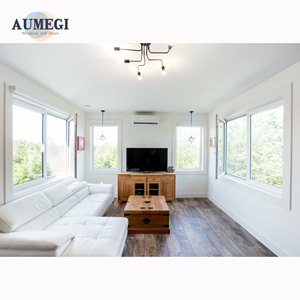
AUMEGI American NFRC Aluminium Black Casement windows With Burglary Tilt and Turn Window
Inquire Now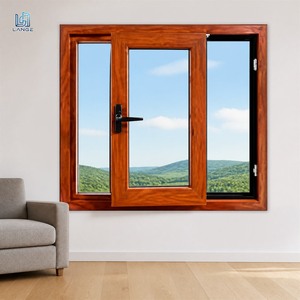
LANGE Professional Grade Aluminum Clad Wood Window Aluminum Wood Composite Window NFRC Certified Thermal Window for Project
Inquire Now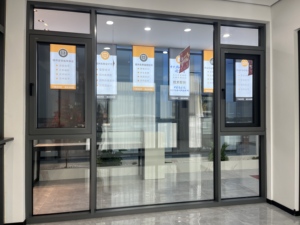
Anthracite Aluminum Double Inward Casement Window with Top Transom and Removable Insect Screen for Modern Homes
Inquire Now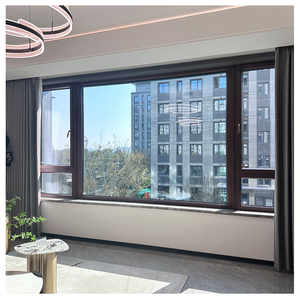
Aluminum-Clad Timber Window PHI EnerPHit Ready Uw≤0.8 W/m²K ROTO Hardware CE EN14351 Heritage Style Available
Inquire Now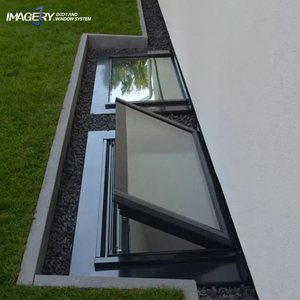
Automatic Remote Control Aluminum Alloy Glass Skylight Roof Window with Modern Design for House
Inquire Now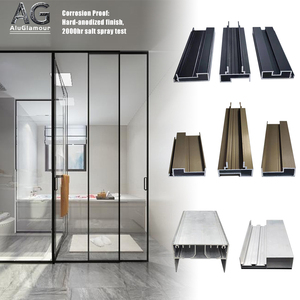
Modern Minimalist Sliding Aluminum Cabinet Door with Glass Waterproof Other Door Profiles for Bedroom Home Warehouse
Inquire Now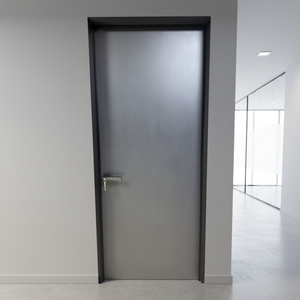
Modern Interior Aluminum Alloy Finished Bathroom Slab Door Frosted Glass Waterproof Vertical Hinged Toilet Doors Total Solution
Inquire NowExecutive Overview: The Evolution of Architectural Aluminum Swing Windows
Aluminum swing windows—encompassing traditional outward casements, European-style tilt-and-turn assemblies, and French double swing doors—represent the gold standard of architectural joinery for modern commercial and high-end residential envelopes. Unlike sliding mechanisms constrained by track friction and perimeter brush seal air gaps, swing windows utilize perimeter compression seals. Driven by multi-point locking gear, swing sash profiles compress continuous EPDM gaskets tightly against the outer frame, creating an airtight, watertight seal capable of resisting structural wind pressures exceeding 4500 Pa.
As global energy codes tighten under frameworks such as Australia’s NCC 2022, North America’s NAFS/IECC, and New Zealand’s NZBC Clause H1, China's premier manufacturing ecosystem has undergone a paradigm shift. Moving away from basic non-thermal extrusions, leading Chinese exporters now engineer micro-engineered polyamide thermal barrier systems, structural silicone structural glazing (SSSG), and multi-chambered insulated glass units (IGUs). This whitepaper provides commercial procurement managers, architects, real estate developers, and window importers with a deep technical evaluation of manufacturing standards, compliance protocols, and sourcing dynamics from premier Chinese factories.
Information Gain Key Takeaway: Proper thermal break alignment (aligning the inner polyamide strip with the glass warm-edge spacer line) reduces thermal bridging losses by up to 38% compared to unaligned thermal frames, achieving system Uw values lower than 1.1 W/m²K.
Technical Anatomy & Material Engineering of High-Performance Swing Windows
1. Aluminum Alloy Matrix & Structural Extrusion Profiles
The structural integrity of any aluminum swing window relies on alloy chemistry and heat treatment temper. Premier Chinese manufacturers utilize primary 6063-T5 or 6063-T6 architectural aluminum billets over re-melted scrap material. T6 temper provides a tensile strength of ≥205 MPa and yield strength of ≥180 MPa, essential for large-size casement sashes handling heavy triple-glazed loads without deflection.
Wall thickness compliance strictly follows international building standards: residential applications mandate profile structural wall thickness of ≥1.4mm to 1.8mm, while commercial curtain-wall integrated swing windows utilize heavy-duty extrusions ranging from 2.0mm to 3.0mm. Profiles undergo multi-stage surface treatments including fluorocarbon (PVDF) spraying (resisting AAMA 2605 3,000-hour salt spray tests) or marine-grade anodizing for harsh coastal environments.
2. Polyamide Thermal Break Technology (PA66-GF25)
To break the thermal conductor loop of aluminum (thermal conductivity λ ≈ 200 W/m·K), modern swing profiles integrate continuous structural polyamide barrier strips. High-tier factories specify PA66 reinforced with 25% glass fiber (PA66-GF25), matching the linear thermal expansion coefficient of aluminum (α ≈ 2.3 x 10⁻⁵/K). This prevents bi-metallic warping, delamination, or seal failure under extreme thermal differentials (-30°C winter to +60°C sun-exposed summer surface temperatures).
3. Multi-Point Perimeter Locking Hardware & Ergonomics
The operational longevity and security of an aluminum swing window depend on its hardware integration. Premium exporters partner with elite hardware manufacturers like ROTO Frank, Siegenia Aubi, and Kinlong. Advanced swing window hardware features multi-point mushroom-head locking cams distributed along all four sash edges. Turning the handle drives locking pins into heavy-gauge stainless steel keep plates, delivering anti-burglary performance up to RC2/RC3 European security grades and ensuring uniform gasket compression.
| Performance Parameter | Standard Non-Thermal Aluminum | Advanced Thermal Break Aluminum | Aluminium-Clad Timber Composite |
|---|---|---|---|
| Thermal Transmittance (Uw) | 5.0 – 5.8 W/m²K | 1.0 – 1.6 W/m²K High Efficiency | 0.7 – 1.1 W/m²K Passive House |
| Acoustic Attenuation (Rw / STC) | Rw 25 - 28 dB | Rw 38 - 45 dB | Rw 42 - 48 dB |
| Air Infiltration Rating | Moderate (3.0 L/s·m²) | Ultra-Low (< 0.5 L/s·m²) | Near-Zero (< 0.1 L/s·m²) |
| Structural Wind Load (Pa) | 1500 - 2500 Pa | 3500 - 5000+ Pa (AS2047 V2) | 4000 - 5500 Pa |
| Maintenance & Lifecycle | Low / 15-20 Years | Very Low / 30-50 Years | Low Exterior / Interior Care Needed |
Why Global Builders & Wholesalers Partner with SAGA
Integrating 16 years of direct manufacturing experience, advanced CNC automation, and verified compliance for seamless project delivery.
Full-Spectrum Customization
Engineered joinery adapted to your architectural brief. Custom shop drawings, section profiles, frame depths, and bespoke opening configurations tailored to exact site dimensions.
AGWA & NAFS Audited Quality
Annual independent third-party audits ensure our production lines comply strictly with AS2047, AS1288, NZS4211, and North American NAFS structural air/water standards.
6-Axis CNC Machining
Automated corner crimping, digital profile milling, and seamless joint welding guarantee sub-millimeter tolerances, eliminating frame racking during transit and installation.
35-50 Day Reliable Lead Times
Streamlined supply chain logistics with direct container loading from Fujian's primary deep-water ports (Fuzhou and Xiamen), backed by fully insured steel-crate packaging.
10-Year Factory Assurance
Every order is covered by a comprehensive 10-year warranty on aluminum profiles, structural integrity, double-glazed glass sealants, and operational hardware components.
Complete Building Envelope
Consolidate your shipments by sourcing complementary architectural systems: glass balustrades, entry pivot doors, sunshades, and hurricane shutters under one roof.
Global Market Compliance & Structural Verification Matrix
Exporting custom aluminum swing windows requires absolute compliance with regional building regulatory codes. SAGA maintains rigorous independent testing certifications across major global jurisdictions to ensure rapid sign-off by structural engineers, building certifiers, and municipal inspectors.
AS2047 & AS1288
Australia NCC 2022 compliant. AGWA audited for deflection, water penetration (up to 700 Pa), air infiltration, and glass safety selection.
NZS4211:2008
New Zealand Building Code verified covering Clauses B1 Structure, B2 Durability, E2 External Moisture, and H1 Energy Efficiency.
NAFS / ASTM
North American Fenestration Standard certified. Uniform static pressure testing, forced-entry resistance, and structural load verification.
Miami-Dade HVHZ
Tested under TAS 201 (Large Missile Impact), TAS 202 (Uniform Static Pressure), and TAS 203 (Cyclic Wind Pressure Loading).
Future Sourcing Trends: The Next Decade in Architectural Fenestration (2025–2035)
The global architectural joinery industry is undergoing rapid technical evolution. B2B procurement managers and real estate developers must anticipate these structural shifts when selecting manufacturing partners in China:
1. Passive House (PHI) Standard Adoption & Super-Insulated Framing
With net-zero operational carbon mandates taking effect across Western economies, the market demand for Passive House certified swing windows (Uw ≤ 0.8 W/m²K) is expanding beyond Western Europe into North America and Australasia. Achieving these ultra-low U-values requires expanded polyurethaned-filled thermal break profiles, triple-pane argon-filled glass units with dual Low-E coatings, and structural composite frame construction.
2. Concealed Hinge Aesthetics & Slim Sightline Profiles
Modern architectural philosophy favors minimalist, unobtrusive frame profiles that maximize daylighting. Next-generation swing windows integrate heavy-duty concealed hinges hidden entirely within the profile rebate. These concealed mechanisms support sash weights up to 160 kg while preserving clean frame lines and uninterrupted perimeter gasket lines.
3. Smart Building Integration & Motorized Actuation
Automated building control systems demand swing windows equipped with integrated 24V DC motor drives and concealed chain actuators. Integrated sensors communicate with HVAC systems to execute automated night-purge natural ventilation strategies, automatically closing sashes upon detecting rain, high wind loads, or elevated indoor CO2 levels.
Frequently Asked B2B Procurement Questions
Detailed answers for project developers, importers, architects, and main contractors specifying Chinese aluminum swing windows.
Accelerate Your Next Architectural Project
Submit your project window schedules, CAD elevations, or tender specifications. Our senior fenestration engineering team will return a comprehensive technical proposal, U-factor calculation, and factory-direct quote within 24 hours.
Inquire Now