Featured Wholesale Composite & Architectural Fenestration Systems
Direct factory supply of certified aluminum-clad wood joinery, thermally broken window frames, engineered entrance systems, and architectural curtain walls built for global export.
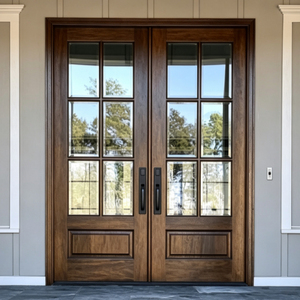
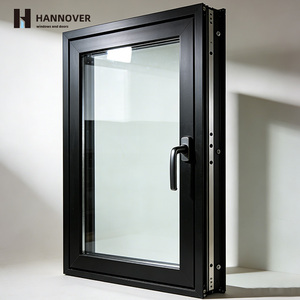
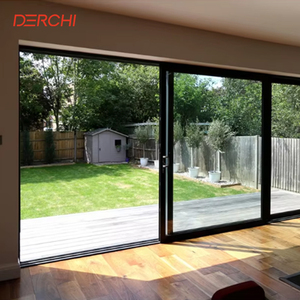
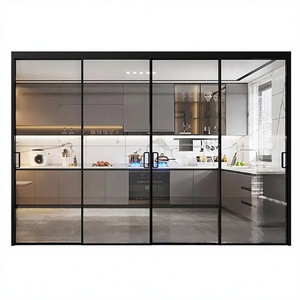
Industrial Supply Capabilities & Operational Metrics
Delivering high-precision fenestration solutions backed by automated manufacturing, rigorous international compliance audits, and total supply chain control.
Engineering Architecture of Aluminium-Timber Composite Windows
Understanding the material integration, structural thermal breaks, and moisture isolation systems that define high-performance composite joinery.
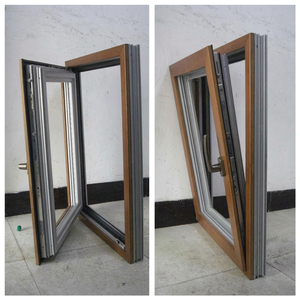
In modern architectural fenestration, Aluminium Timber Composite Windows (commonly designated as Alu-Clad Wood joinery) represent the apex of thermal efficiency, acoustic isolation, and structural durability. By unifying the exterior weatherability of architectural-grade extruded aluminum profiles with the structural warmth and interior aesthetic of solid timber, composite window systems eliminate the historical compromise between natural interior organic beauty and exterior harsh weather resistance.
1. Extruded Aluminum Exterior Shield (6063-T6 Alloy)
The exterior cladding functions as an unyielding protective envelope against atmospheric degradation, ultraviolet radiation, and wind-driven rain penetration. Leading Chinese wholesale manufacturers utilize 6063-T6 or 6060-T66 aluminum alloys extruded to a minimum wall thickness of 1.8mm to 2.2mm (exceeding standard architectural residential grade). The surface finish is executed via advanced fluorocarbon PVDF spray coatings or AkzoNobel powder coating, delivering resistance against salt spray corrosion up to 3,000 hours under ASTM B117 testing standards.
2. Polyamide PA66GF25 Thermal Isolation Barrier
To eliminate the high thermal conductivity inherent to aluminum profiles ($k \approx 200 \text{ W/m}\cdot\text{K}$), precision-engineered multi-chamber polyamide thermal breaks reinforced with 25% glass fiber (PA66GF25) are integrated into the frame core. These thermal struts maintain structural rigidity under mechanical stress while lowering the thermal transmission value, preventing condensation formation on interior surfaces under severe temperature differentials.
3. Kiln-Dried Interior Timber Core & Moisture Stabilization
The interior timber profile is harvested from certified sustainable FSC forests, utilizing premium timber species such as European White Oak, Siberian Larch, American Black Walnut, and Laminated Pine. To guarantee long-term dimensional stability, the wood undergoes multi-stage kiln-drying procedures, maintaining an equilibrium moisture content strictly between 8% and 12%. The raw timber is processed into 3-ply or 4-ply finger-jointed laminated beams to neutralize natural grain stresses, rendering the wood immune to warping, checking, or twisting.
4. Independent Floating Clip System
Because aluminum and timber exhibit significantly different coefficients of linear thermal expansion ($\alpha_{\text{Al}} \approx 23 \times 10^{-6}/\text{K}$ versus $\alpha_{\text{Wood}} \approx 4 \times 10^{-6}/\text{K}$), rigid bonding between materials leads to internal shear stress and frame deformation. Chinese specialized factories utilize high-density nylon snap-on floating clips. This mechanism leaves an active air ventilation cavity of 4mm to 6mm between the wood and aluminum shell, enabling independent thermal expansion while continuously evacuating micro-condensation.
Technical Specification & Material Performance Comparison Matrix
Comparative technical data for architectural specifiers, structural engineers, and procurement teams evaluating window material selection.
| Performance Metric | Aluminium Timber Composite | Thermally Broken Aluminium | Solid Architectural Timber | High-Impact uPVC Profiles |
|---|---|---|---|---|
| Thermal Transmittance ($U_w$ Value) | 0.79 – 1.2 W/m²K | 1.3 – 1.8 W/m²K | 0.85 – 1.3 W/m²K | 0.95 – 1.4 W/m²K |
| Acoustic Rating (STC / Soundproof) | 38 dB – 48 dB (Triple IGU) | 32 dB – 42 dB | 35 dB – 44 dB | 30 dB – 38 dB |
| Structural Wind Load Resistance | Up to 4500 Pa (AS2047 / NAFS) | Up to 5000 Pa | Up to 3000 Pa | Up to 2500 Pa |
| Exterior Weatherability & UV Life | 30+ Years (PVDF / Powder) | 30+ Years | 5 – 10 Years (Needs Refinishing) | 15 – 20 Years |
| Interior Aesthetic Warmth | Authentic Natural Timber Grain | Metallic / Painted Finish | Authentic Natural Timber Grain | Foil Laminated / Painted |
| Maintenance Requirement | Very Low Exterior Maintenance | Very Low Maintenance | High (Periodic Sanding/Sealing) | Low Maintenance |
| Air Infiltration Rating | Class A4 (EN 12207) / <0.1 L/s·m² | Class A4 / <0.3 L/s·m² | Class A3 / <0.5 L/s·m² | Class A3 / <0.5 L/s·m² |
Global Fenestration Compliance & Building Code Requirements
Navigating mandatory international standards to ensure frictionless customs clearance, building code compliance, and certifier approval.
Australian & NZ Standards (AGWA Audited)
Compliance with AS2047:2014 (Windows and external glazed doors in buildings), AS1288:2021 (Glass in buildings - Selection and installation), and National Construction Code (NCC 2022). Verified under NZS4211:2008 for structural wind load, air infiltration, and water penetration limits in New Zealand extreme weather zones.
North American NAFS & NFRC Rating
Tested strictly in accordance with NAFS (AAMA/WDMA/CSA 101/I.S.2/A440). Performance metrics validated for structural design pressure (DP), water resistance (ASTM E331), air tightness (ASTM E283), and forced-entry resistance. Thermal ratings audited under NFRC protocols for U-Factor, SHGC, and Visible Transmittance (VT).
Miami-Dade HVHZ Hurricane Impact
Engineered for high-velocity hurricane zones (HVHZ) and coastal storm regions. Validated through TAS 201-94 (Large Missile Impact Test), TAS 202-94 (Uniform Static Air Pressure), and TAS 203-94 (Cyclic Wind Pressure Loading) utilizing laminated SentryGlas® (SGP) interlayer glazing.
European CE & Passive House Standard
Certified under EN 14351-1 harmonized European standards. Frame thermal breaking and triple glass insulated units meet ultra-low energy Passive House Institute (Passivhaus) requirements, delivering $U_w \le 0.80 \text{ W/m}^2\text{K}$ for zero-energy green building developments across Northern Europe and North America.
Future Procurement & Architectural Trends in Window Manufacturing (2025–2030)
Key market shifts driving fenestration design, material sourcing, environmental regulations, and smart building integration globally.
As international energy performance standards tighten and architectural design favors expansive transparent glass envelopes, the global wholesale fenestration industry is undergoing a structural technological evolution. Sourcing managers and real estate developers must align their procurement strategies with four dominant macro-trends:
1. Embodied Carbon Accounting & Green Aluminium Sourcing
Global developers face mounting pressure under ESG frameworks and local building mandates to minimize the carbon intensity of building materials. Sourcing strategies are rapidly shifting toward low-carbon recycled aluminum profiles extruded using hydro-electric energy sources (reducing carbon footprint from the industry average of 16kg CO2/kg Al down to < 4kg CO2/kg Al). Chinese manufacturers are increasingly issuing third-party audited Environmental Product Declarations (EPDs) to support LEED v4.1, BREEAM, and Green Star building rating points.
2. Ultra-Slim Sightlines & Concealed Hardware Integration
Modern architectural language demands maximum natural daylighting and uninterrupted panoramic views. Future composite window designs feature ultra-slim frame profiles with visible sash widths under 45mm, concealed friction hinges (such as Roto NT Designo or Siegenia AUBI hardware), and integrated glass-to-glass corner joints. Aluminum-clad timber systems allow extreme frame dimensions while maintaining structural integrity, as the timber core provides vibration damping and torsional stiffness that pure hollow aluminum cannot match.
3. Smart Glass Integration & Dynamic Envelope Performance
The integration of electrochromic dynamic glass (PDLC smart tinting glass), building-integrated photovoltaics (BIPV), and electro-motorized integrated Venetian blinds sealed directly within the double/triple glazed IGUs is transitioning from luxury customization to standard project specification. These systems allow automated shading control synchronized with Building Management Systems (BMS), cutting solar heat gain during peak summer months without requiring external facade alterations.
4. Industrialized Prefabrication & Unitized Composite Curtains
Rising labor costs on job sites across North America, Australia, and Western Europe are pushing developers toward prefabricated unitized window systems. Wholesale Chinese factories are expanding off-site modular window assembly lines—delivering fully glazed, pre-flashed, and factory-sealed aluminum timber composite window units directly to construction sites, cutting field installation schedules by up to 60%.
SAGA Factory Infrastructural Strengths & Supply Chain Assurance
Direct factory manufacturing, precision German tooling, and end-to-end quality assurance built for global trade compliance.
Automated German Machining Lines
Equipped with high-precision double-head CNC cutting saws, automatic four-corner timber jointing machines, and digital corner crimping units to guarantee frame tolerances within ±0.5mm across complex window geometries.
100% Pre-Shipment Quality Testing
Every custom order undergoes on-site testing in factory test chambers for air tightness, water penetration resistance under continuous pressure spray, and operation force inspection prior to export crate packing.
Strategic Export Port Logistics
Direct proximity to major deep-water ocean ports (Fuzhou and Xiamen Port), enabling flexible container loading (FCL/LCL), fumigated solid wood crating, and direct shipment dispatch to world ports.
Frequently Asked Questions (B2B Procurement & Custom Sourcing)
Clear, direct technical answers addressing logistics, custom engineering, building codes, and warranty terms for international buyers.
Ready to Request an Architectural Quote or Technical Shop Drawing?
Partner directly with China's leading certified custom window & door manufacturer. Send your project schedule, CAD elevations, or procurement specs to our engineering team today.
Inquire Now