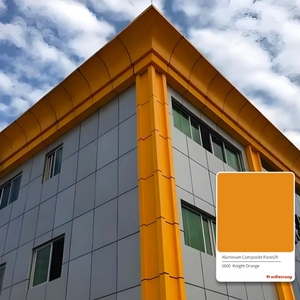
Direct OEM/ODM Supply
Wholesale Architectural Aluminum & Glass Joinery Systems
Engineered for global builders, distributors, contractors, and architectural projects demanding rigorous structural integrity and code compliance.
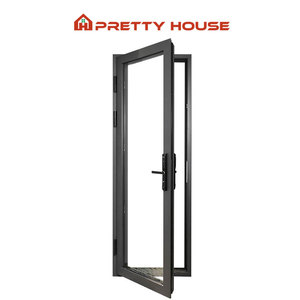
Custom House Front Doors Impact Double Triple Glazed Windproof Aluminum Glass Double Casement Swing Door
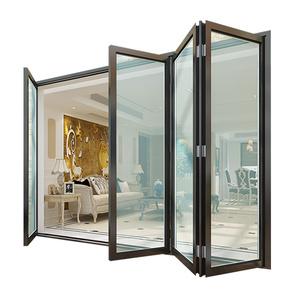
NFRC Factory Hot Sale Bifold Doors Aluminium Folding Patio Bi-fold Aluminum Door Profile Bifold Patio Doors US Standards
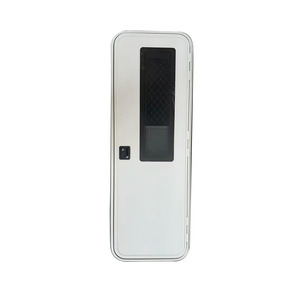
Wholesale Aluminium Alloy Trailer White RV Camper Door
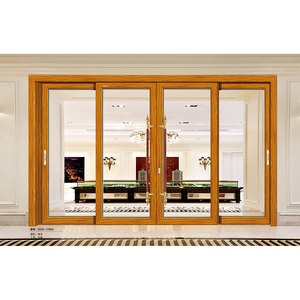
Exterior Modern Aluminum Clad Wood Composited Sliding Door
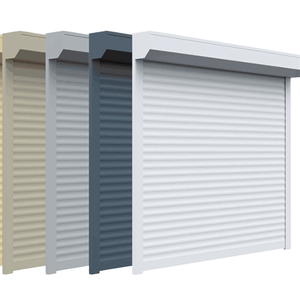
2026 Customized Aluminum Alloy Anti-Theft Warehouse Roll Door with Powerful Motor Windproof Remote Control Roller Shutter Doors
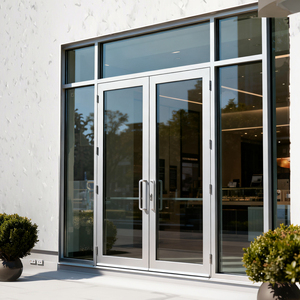
Double Aluminum Alloy Glass Door Commercial Store Front for Mall Entry
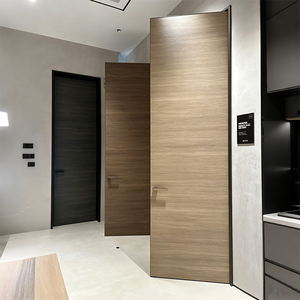
Foshan Manufacturer Modern Interior Aluminum Wooden Frame Swing Door Custom Solution For Residential Room
Industry Insights
Executive Whitepaper: Sourcing Custom Aluminum Joinery from China
A comprehensive analysis of metallurgical engineering, supply chain logistics, and code compliance for procurement managers and architects.
The global architectural fenestration market is undergoing a structural transition toward ultra-low energy buildings, extreme wind-load resistance, and slim-sightline minimalist designs. As global construction standards tighten—driven by the Australian NCC 2022 energy mandates, New Zealand H1 insulation updates, North American NAFS performance metrics, and Florida’s High-Velocity Hurricane Zone (HVHZ) requirements—selecting a qualified OEM/ODM manufacturer for custom aluminum windows and doors in China has moved far beyond simple price-per-square-meter considerations.
China’s aluminum manufacturing infrastructure produces over 55% of the world’s extruded aluminum profiles. However, significant variances exist between domestic architectural grade extrusions and high-performance, export-compliant systems. Leading Chinese fabrication hubs—particularly industrial manufacturing centers in Fujian and Guangdong—have integrated advanced automated CNC machining, pneumatic corner crimping, continuous polyamides thermal breaking, and high-spec surface treatment lines (AAMA 2605 PVDF and anodizing) to deliver joinery solutions that match or exceed European and North American benchmarks.
Key Sourcing Takeaway: Procurement success requires partnering with a factory that owns complete compliance verification (AS2047, NZS4211, NAFS, Miami-Dade TAS 201/202/203) and provides mill-cert traceability from raw billet 6063-T5 aluminum through to final insulated glass unit (IGU) installation.
This technical whitepaper breaks down the metallurgical parameters, thermal break physics, global structural compliance rules, and strategic procurement trends shaping the wholesale aluminum fabrication sector in 2026 and beyond.
Engineering Metrics
Metallurgical Precision & Thermal Break Physics
Understanding structural extrusion alloys, polyamide barrier performance, and surface durability.
6063-T5 / T6 Aluminum Alloy Matrix
High-purity primary aluminum billets extruded to structural wall thicknesses (1.4mm to 3.0mm). Heat-treated to T5 or T6 temper for ultimate tensile strength exceeding 160–205 MPa, preventing frame deflection under violent wind loads.
Polyamide PA66GF25 Thermal Barriers
Reinforced 25% glass-fiber polyamide thermal break strips (widths from 14.8mm to 34mm) mechanically crimped between inner and outer profile extrusions, reducing thermal conductivity from 201 W/m·K down to <0.3 W/m·K.
AAMA 2605 Surface Finishes
Advanced electrostatically applied AkzoNobel or PPG fluorocarbon PVDF coatings and 25-micron anodic oxidation layers designed to resist intense UV radiation, salt spray corrosion, and chemical degradation in severe coastal environments.
Product Selection Matrix
Comparative Performance Breakdown by Joinery System
Technical evaluation matrix used by structural engineers to select optimal framing for project requirements.
| Performance Metrics | Thermally Broken Aluminum | Standard Non-Thermal Aluminum | uPVC Multi-Chamber | Aluminum-Timber Composite |
|---|---|---|---|---|
| Thermal Transmittance (U-Factor) | 1.4 – 2.2 W/m²K (Low-E Double IGU) | 3.8 – 5.6 W/m²K (High Loss) | 1.0 – 1.6 W/m²K (Passive House Spec) | 1.1 – 1.8 W/m²K (Natural Timber Core) |
| Structural Wind Load Resistance | Extremely High (Up to 5000 Pa) | High (Up to 3500 Pa) | Moderate to High (Steel Reinforced) | Very High (Structural Outer Shell) |
| Sightline Minimalism | Ultra-Slim (Maximum Glass Area) | Ultra-Slim | Medium to Wide Frame Profile | Medium Architectural Profile |
| Maintenance & Lifecycle | Zero Maintenance (40+ Yr Life) | Zero Maintenance (30+ Yr Life) | Low Maintenance (25+ Yr Life) | Low Exterior / Interior Care Required |
| Recommended Applications | High-rise luxury, coastal homes, commercial facades | Internal partitions, mild climate residential | Cold climate housing, acoustic projects | High-end luxury villas & boutique resorts |
Testing Verification
Global Fenestration Standards & Compliance Protocols
Independent laboratory testing reports ensuring seamless building code sign-offs across target export regions.
Australia: AS2047 & AS1288
Audited under AGWA certification program. Verifies structural wind pressure (AS4420.2), air infiltration (AS4420.4), water penetration resistance (AS4420.5), and safety glazing compliance (AS1288:2021 / NCC 2022).
NCC 2022 CompliantNew Zealand: NZS4211:2008
Full compliance documentation covering NZ Building Code clauses B1 (Structure), B2 (Durability), E2 (External Moisture), F2 (Hazardous Building Materials), G4/G7, and H1 (Energy Efficiency requirements).
NZBC CertifiedNorth America: NAFS Standard
Tested against AAMA/WDMA/CSA 101/I.S.2/A440 standards. Assesses uniform load structural performance, forced-entry resistance, vertical sash deflection, and air/water tightness classes.
AAMA / WDMA TestedMiami-Dade HVHZ Hurricane Impact
Rigorous testing under Protocols TAS 201-94 (Large & Small Missile Impact), TAS 202-94 (Uniform Static Air Pressure), and TAS 203-94 (Cyclic Wind Pressure Loading) for hurricane regions.
TAS 201/202/203 Certified
Strategic Sourcing 2026–2030
Future Procurement Trends in Wholesale Architectural Joinery
Key technological shifts global buyers must navigate to maintain market competitiveness.
1. Decarbonization & Low-Carbon Recycled Aluminum
Institutional developers increasingly mandate Scope 3 carbon tracking. Global procurement is shifting toward aluminum extrusions smelted using renewable hydropower and post-consumer recycled billets, cutting embodied carbon footprint by up to 70% per square meter of window frame.
2. Triple Glazing & Aerogel Spacer Systems
To satisfy stringent net-zero carbon codes, joinery orders are transitioning from standard double IGUs to triple-pane glazed assemblies featuring warm-edge stainless/polypropylene spacers, argon gas fills (90%+ concentration), and micro-thin Low-E hard/soft coatings.
3. Smart Building Integration & Automated Actuators
Modern commercial and luxury residential builds demand hidden motorized chain winders, concealed electronic locks, smart glass (electrochromic dynamic tinting), and automatic roller shutter synchronization integrated directly with building management systems (BMS).
Manufacturing Evolution
China's Window Manufacturing Development Horizon
How advanced smart factories in China are upgrading technical capabilities and quality control.
Robotic CNC 5-Axis Machining
Shift from manual routing to high-precision 5-axis CNC machining centers. Millimeter-accurate notch cuts, lock-gear cavity milling, and drainage slot routing guarantee zero frame misalignment during field assembly.
Automated Pneumatic Corner Crimping
Advanced hydraulic corner key crimping paired with dual-component structural corner adhesives ensures structural joints resist frame racking, water seepage, and thermal shear over decades of operation.
BIM / Revit LOD 350 Digital Integration
Leading export factories now provide detailed 3D Building Information Modeling (BIM) files and custom CAD section drawings, enabling architects to simulate air leakage, thermal bridging, and structural loads prior to tooling.
Why Partner With SAGA
Enterprise Strengths & Global Manufacturing Capabilities
16 years of direct factory engineering experience delivering custom windows, doors, and architectural glass.
16+ Years Direct Export Experience
Headquartered in Minhou County, Fuzhou, Fujian, China, SAGA (ROPO system lineage) operates specialized extrusion, thermal breaking, and glazing lines serving buyers across 25+ countries with ocean loading out of Fuzhou and Xiamen ports.
Tier-1 Global Hardware Ecosystem
Strategic integration with world-class component suppliers including ROTO, Siegenia-Aubi, Kinlong, Veka, Rehau, and Zhongcai guarantees smooth multi-point locking operation, corrosion resistance, and verified seal durability.
100% Pre-Shipment Inspection & Crate Packing
Every custom joinery order undergoes full trial frame assembly, squareness tolerance validation, hardware cycling tests, and protective steel-framed plywood crate packing to eliminate container transit damage.
B2B Buyer FAQ
Frequently Asked Questions on Sourcing & Customization
Clear, direct answers regarding production lead times, engineering shop drawings, certification, and shipping logistics.
Q1 Which types of commercial and residential buyers does SAGA supply to?
We direct-supply building materials wholesalers, window dealers, general contractors, commercial property developers, architects, and custom home builders. Each order receives tailored shop drawings, section profiles, and structural calculation reports tailored specifically to local building authority requirements.
Q2 What is the standard production lead time for customized wholesale window orders?
Standard factory production turnaround is 35 to 50 calendar days following official shop drawing sign-off and deposit receipt. Lead times may vary slightly based on custom anodizing colors, specialized glass makeups (e.g., triple-laminated Low-E IGUs), or large project container volumes.
Q3 Can SAGA provide sample corner profiles or full-scale window test samples?
Yes. We supply free sample corner cutaways showing extrusion wall thickness, thermal break crimping, and seal gaskets. Standard-size window samples can also be manufactured for laboratory testing or client sign-off, with sample freight covered by the buyer.
Q4 What technical documentation and engineering support are included with an order?
Every project includes full CAD elevation schedules, horizontal/vertical section detail drawings, structural wind load calculation sheets, glass performance certificates (U-value, SHGC, VLT), and step-by-step sub-frame installation guidelines.
Q5 Do your aluminum window and door systems meet Australian AS2047 and New Zealand NZS4211 standards?
Yes. Our joinery systems are fully audited and certified under the AGWA program for AS2047:2014, AS1288:2021, and NCC 2022. For New Zealand, our certification covers NZS4211:2008 and Building Code clauses B1, B2, E2, F2, G4, G7, and H1.
Q6 What are the primary shipping ports and packaging methods utilized for export?
All export shipments are loaded directly into 20GP, 40GP, or 40HQ containers at Fuzhou Port or Xiamen Port in Fujian, China. Products are wrapped in protective film, corner-guarded, and secured within custom heavy-duty steel-reinforced wood crates.
Q7 What payment terms and trade protection mechanisms are supported?
We accept Telegraphic Transfer (T/T - 30% deposit, 70% balance prior to shipment after final QC inspection) as well as Alibaba Trade Assurance payment protection for international buyers.
Q8 What frame surface finishes and color options can be specified?
We offer powder-coated finishes matching standard RAL color palettes, Interpon/AkzoNobel architectural coatings, anodic oxidation (matt/clear/bronze), and realistic heat-transfer woodgrain foils designed for UV stability.
Ready to Engineer Your Project's Window & Door Package?
Connect directly with our engineering team to review architectural plans, confirm structural wind-load compliance, and receive factory-direct wholesale pricing within 24 hours.