Featured Engineering Solutions & Wholesale Products
Direct factory supply of precision-engineered aluminum screen doors, thermal break patio doors, security mesh systems, and architectural fenestration manufactured for global building code compliance.
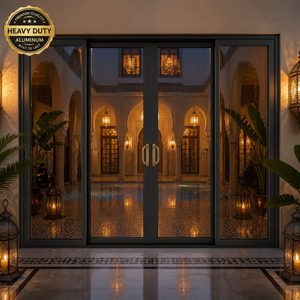
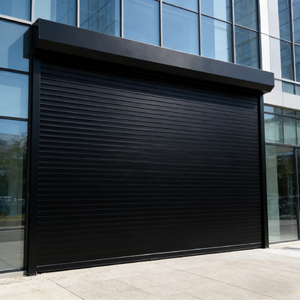
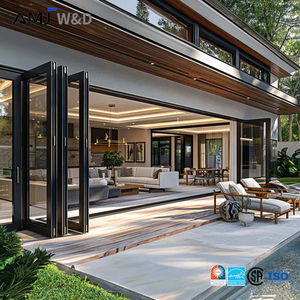
Architectural Engineering Whitepaper: Aluminum Mesh Door Systems
In modern residential, commercial, and high-end villa construction, aluminum mesh doors (frequently designated as security screen doors or architectural insect screens) serve a critical dual role: providing uncompromising forced-entry resistance while guaranteeing uninterrupted natural ventilation, solar control, and insect protection. For international buyers, commercial contractors, and fenestration importers sourcing from China, evaluating factory manufacturing capabilities requires a deep technical understanding of profile metallurgy, mesh weave integrity, thermal break integration, and multi-point locking physics.
1. Metallurgical Profiles & Profile Temper Standards
Leading Chinese wholesale aluminum mesh door factories utilize 6063-T5 and 6063-T6 architectural aluminum extrusions as the core structural frame. 6063 alloy offers superior surface finish quality, excellent anodizing characteristics, and robust yield strength (exceeding 170 MPa for T5 and 210 MPa for T6 tempers). Wall thickness for heavy-duty security screen frames typically ranges from 1.4 mm to 2.5 mm, ensuring zero frame deflection during high-wind load events or forced leverage attacks.
2. High-Tensile Mesh Weave Standards (304 vs. 316 vs. 316L Stainless Steel)
The mesh infill is the primary defense barrier of any security mesh door. Top-tier suppliers utilize high-tensile marine-grade 316 stainless steel wire woven to an 11x11 mesh count per inch with a standardized wire diameter of 0.80 mm to 0.90 mm. Unlike basic fiberglass or aluminum flyscreens, 316 marine-grade mesh offers high tensile strength (often exceeding 900 MPa per strand), preventing penetration by knives, shears, or blunt impact tools while providing exceptional corrosion resistance in coastal environments (rated for over 2,000 hours under Neutral Salt Spray ASTM B117 testing).
| Spec Parameter | Standard Fly Screen | Commercial Security Mesh | SAGA Heavy-Duty Security Mesh |
|---|---|---|---|
| Frame Alloy & Temper | 6063-T5 (1.0 mm – 1.2 mm) | 6063-T5 (1.4 mm – 1.6 mm) | 6063-T6 Heavy Structural (1.8 mm – 2.5 mm) |
| Mesh Material Grade | Fiberglass / PET Mesh | 304 Grade Stainless Steel | 316 / 316L Marine-Grade High-Tensile SS |
| Wire Diameter & Count | 0.25 mm (18x16 mesh) | 0.70 mm (10x10 mesh) | 0.80 mm - 0.90 mm (11x11 High-Density) |
| Shear & Impact Resistance | Low (Insect protection only) | Moderate (Passes basic shear test) | Extreme (Passes AS5039 / AS5041 Knife & Dynamic Impact) |
| Surface Coating Spec | Standard Mill / Anodized | Standard Powder Coating | AkzoNobel / Jotun Qualicoat Class 2 Architectural Powder |
Future Procurement Trends in Architectural Mesh Doors (2025–2030)
The global market for architectural doors and screen systems is undergoing a rapid evolution driven by energy efficiency standards, smart home automation, minimalist interior design, and climate adaptation requirements.
Thermally Broken Mesh Profiles
Traditional screen doors often bypass thermal break zones. Future procurement mandates integrated thermal break aluminum profiles using polyamide (PA66 GF25) thermal struts to prevent heat transfer while maintaining security screen protection.
Ultra-Slim Sightline Engineering
Architects increasingly demand minimal visual disruption. Next-generation factories are engineering concealed frame mesh doors with sightlines under 20mm, embedding the screen channel flush into sub-frame extrusions.
Smart Sensor & Multi-Point Locks
Integration of biometric access control, smart home sensor contacts, and 3-point or 5-point automatic drop-lock gearboxes directly milled into the aluminum profile sash for seamless smart-building connectivity.
Bushfire & Flame Attenuation (BAL-FZ)
Driven by Australian AS3959 and Mediterranean/California wildfire codes, aluminum mesh doors are being customized as flame attenuation barriers capable of blocking radiant heat flux and ember attacks in high-risk bushfire attack levels.
Sustainable & Low-Carbon Aluminum
International tenders increasingly mandate Environmental Product Declarations (EPD) and green building credits (LEED/BREEAM), prioritizing suppliers using hydro-powered low-carbon aluminum billets.
B2B Sourcing Guide: How to Audit & Qualify Chinese Suppliers
Sourcing aluminum mesh doors and customized fenestration directly from Chinese factories provides immense cost efficiencies, but only when paired with rigorous supplier auditing protocols. When evaluating Chinese suppliers and wholesale manufacturers, structural engineers and procurement managers must verify five primary technical benchmarks:
1. Dynamic Impact & Knife Shear Testing
Verify that the factory possesses independent third-party test reports complying with AS5039 / AS5041 (Australia) or NAFS / Miami-Dade TAS 201/202/203 (USA). A compliant security screen must withstand repeated dynamic impact strikes from a heavy pendulum bag without mesh pull-out from the frame channel.
2. Mesh Retention Technology
Inquire how the stainless steel mesh is secured into the aluminum profile frame. Premium factories avoid simple pop-rivets or cheap rubber wedges. Look for patented PVC wedge clamping systems or continuous high-pressure mechanical tensioning clips that eliminate bimetallic galvanic corrosion between steel mesh and aluminum frame.
3. Shop Drawing & BIM Capability
Full-scale commercial suppliers must provide CAD section drawings, elevation details, 3D BIM models, and structural calculation reports tailored to local wind pressure (Pa ratings) prior to order sign-off.
Enterprise Capabilities: Why SAGA Doors & Windows Lead the Market
SAGA Aluminum Doors & Windows Co., Ltd. is a specialized, factory-direct manufacturer of custom aluminum, uPVC, and aluminum-timber joinery systems. Headquartered in Minhou County, Fuzhou, Fujian, China, SAGA operates high-precision CNC manufacturing facilities equipped with automated corner-crimping, double-head cutting saws, and automated mesh tensioning equipment.
With over 16 years of international market experience, SAGA manufactures architectural systems strictly tailored to regional building codes, including Australian Standards (AS2047, AS1288, AS5039), New Zealand Standards (NZS4211), North American Fenestration Standard (NAFS), and Miami-Dade Hurricane Impact certifications (TAS 201/202/203).
Full Customization Engineering
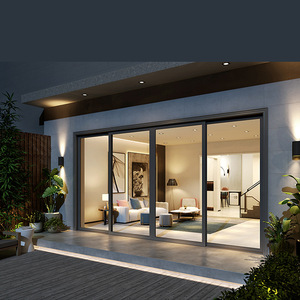
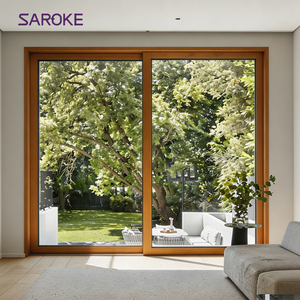
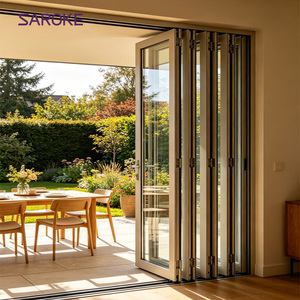
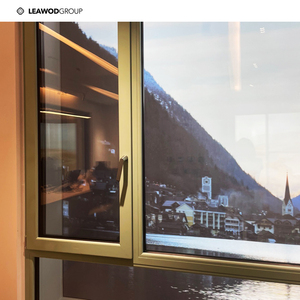
From modern ultra-slim sliding patio mesh doors to bi-fold accordion screens and tilt-and-turn window integration, SAGA engineers every sash size, powder-coat finish (RAL/Colorbond), and glass thickness around your project brief.
Audited International Compliance
SAGA products undergo independent compliance audits under programs such as AGWA (Australian Glass and Window Association) for NCC 2022 and NZBC clauses (B1, B2, E2, F2, G4, G7, H1), eliminating certifier risk for builders and importers.
Export Container Protection
All customized orders are packed in fully enclosed, IPPC-certified fumigated steel-frame plywood crates with protective corner guards and moisture-barrier shrink wrap to ensure zero transit damage during sea freight from Fuzhou or Xiamen ports.
Frequently Asked Questions (FAQ) for Global Buyers
Essential technical and commercial answers for architects, property developers, dealers, and general contractors sourcing aluminum mesh doors from China.
Accelerate Your Fenestration Project with Factory Direct Precision
Submit your architectural floorplans, window schedules, or custom mesh door specifications today. Our senior structural joinery engineers will deliver detailed shop drawings, technical pricing, and compliance documentation within 24 hours.