High-Performance Aluminium Alloy Windows & Architectural Openings
Explore our engineered range of custom aluminum windows, thermal barrier sliding systems, impact-resistant entrance doors, and structural curtain wall joinery manufactured to stringent international building standards.
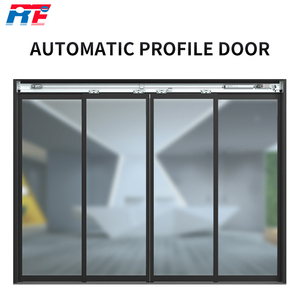
RETO Automatic Sliding Aluminum Alloy Framed Door Complete Set | Electric Commercial Entrance
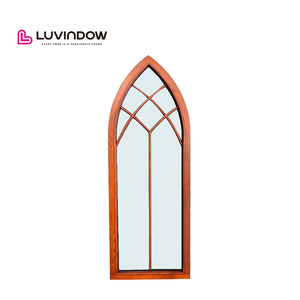
Modern House Designs Wooden Aluminium Casement Arch Window Custom Special Shape Glass Windows
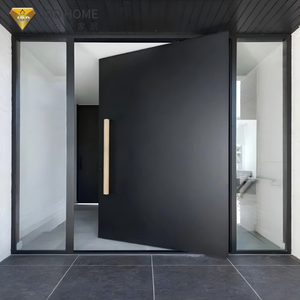
Aluminum Alloy Pivot Door with Concealed Hinge Mechanism - Anti-Impact External Entrance Door
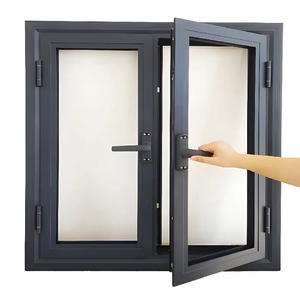
Customized SoundProof Aluminum Alloy Casement Windows Double Glazing French Patio Window
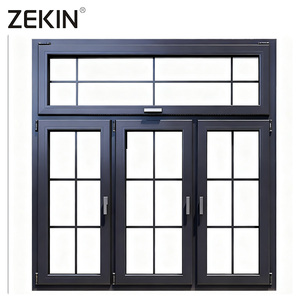
ZEKIN Custom Villa Hurricane Proof High Impact Black Aluminum Alloy Thin Profile Casement Window
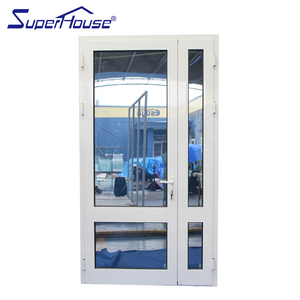
Modern Slim Frame Patio Balcony Exterior Storm Hurricane Impact Double Glazed Thermal Broken Door
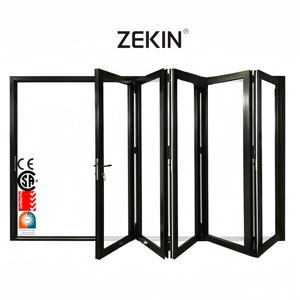
High Quality Aluminum Double Glass Energy Efficient Bi-fold Doors - NFRC AS2047 Exterior Folding Door
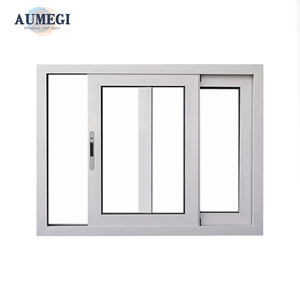
Aumegi Wall Thickness 1.4MM Aluminum Automatic Sliding Window Small Architectural Sliding Windows
Architectural Whitepaper: Engineering Considerations for Custom OEM Aluminium Alloy Windows
As modern building envelopes face escalating thermal efficiency mandates, severe windstorm loads, and demanding architectural aesthetics, selecting a specialized Custom OEM Aluminium Alloy Windows Manufacturer & Supplier is pivotal for property developers, principal contractors, and fenestration wholesalers. OEM custom aluminum window manufacturing requires precise coordination between extrusions alloy physics, polyamide thermal break integration, structural silicone sealant geometry, and certified glass units (IGU).
This technical whitepaper outlines the essential structural engineering parameters, material science standards, and fabrication tolerances involved in high-end OEM aluminium fenestration manufacturing, providing buying teams with transparent benchmarks for structural integrity and energy compliance.
1. Metallurgy & Structural Profile Engineering: 6063-T5 vs. 6063-T6 Extrusions
The foundation of long-term structural fenestration performance rests upon the extruded aluminum alloy specification. Premium OEM custom windows utilize high-grade 6063 architectural aluminum extrusions heat-treated to T5 or T6 tempers:
- 6063-T5 Alloy: Rapidly cooled after extrusion and artificially aged. It delivers an ultimate tensile strength of ≥ 160 MPa and yield strength of ≥ 110 MPa. Ideal for standard residential casements, awning windows, and internal partitioning where smooth surface finish for powder coating is paramount.
- 6063-T6 Alloy: Solution heat-treated and artificially aged to yield significantly higher mechanical strength (Ultimate tensile strength ≥ 205 MPa, yield strength ≥ 170 MPa). Essential for high-rise curtain walls, large-span exterior bifold doors, and hurricane-impact coastal window systems subjected to high cyclic wind loading.
| Mechanical Property | 6063-T5 Standard Grade | 6063-T6 Structural OEM Grade | SAGA Quality Target Standard |
|---|---|---|---|
| Ultimate Tensile Strength | 160 MPa minimum | 205 MPa minimum | ≥ 215 MPa Verified |
| Yield Tensile Strength | 110 MPa minimum | 170 MPa minimum | ≥ 180 MPa Verified |
| Profile Wall Thickness | 1.2 mm - 1.4 mm | 1.8 mm - 3.0 mm Heavy Duty | Complies with AS2047 / NAFS |
| Anodizing Film Thickness | Class 10 (10μm) | Class 25 (25μm Architectural) | Qualicoat Class 2 Standard |
2. Thermal Break Science: Polyamide PA66 GF25 Barriers
Raw aluminum alloys exhibit high thermal conductivity ($k \approx 200 \text{ W/m}\cdot\text{K}$), which leads to thermal bridging, interior condensation, and excessive HVAC energy loads. To meet Net-Zero and Passive House mandates, custom OEM aluminum windows integrate Polyamide PA66 GF25 thermal break strips (25% glass fiber-reinforced nylon).
By mechanically crimping precision PA66 strips between the inner and outer extruded aluminum profiles, the thermal bridge is effectively broken. This reduces frame $U$-factors from over $6.0 \text{ W/m}^2\text{K}$ down to under $1.5 \text{ W/m}^2\text{K}$ when combined with double Low-E argon insulated glass units. Furthermore, PA66 GF25 matches the coefficient of thermal expansion of aluminum alloy ($\approx 2.3 \times 10^{-5} /\text{K}$), preventing structural shear stress or seal failure during extreme thermal cycling.
3. Acoustic Attenuation & Glazing Configuration Physics
Acoustic insulation performance ($R_w$ / STC ratings) is governed by mass, air gap distance, and structural damping. OEM window customization allows tailored glass units to mitigate specific sound frequencies:
- Standard Double Glazing (6mm Glass + 12mm Air + 6mm Glass): Achieves sound reduction of approx. 31 dB to 34 dB.
- Asymmetric Laminated Glass Configuration (6mm Toughened + 12mm Argon + 8.38mm Acoustic PVB Laminated): Interrupts wave coincidence dips, pushing acoustic attenuation beyond 42 dB ($R_w$).
Future Procurement Trends in OEM Aluminium Window Sourcing
Key technological, regulatory, and environmental shifts transforming the commercial fenestration supply chain over the next decade.
1. Ultra-Slim Sightline Minimalist Architecture
Global architectural demand is accelerating toward hidden frame profiles, zero-threshold tracks, and narrow interlock sightlines (down to 21mm). OEM suppliers must possess high-precision 5-axis CNC machining capabilities to maintain structural strength while reducing visible profile widths.
2. Low-Carbon Recycled Aluminium Sourcing
With Scope 3 carbon reporting becoming mandatory across North America, Europe, and Australasia, developers favor OEM factories using post-consumer recycled aluminum or primary smelting powered by hydro-energy, slashing embodied carbon dioxide ($e\text{CO}_2$) per square meter of window frame.
3. Extreme Storm & Hurricane Impact Compliance
Climate volatility has expanded strict building envelope requirements beyond Florida into coastal Australia, the Caribbean, and Pacific regions. Window procurement increasingly specifies Miami-Dade TAS 201/202/203 missile impact resistance and AS2047 cyclic wind pressure performance (6000 Pa+).
4. Smart Hardware & Motorized Automation
Commercial and high-end residential briefs now regularly call for integrated concealed chain winders, motorized gas-strut pop-out openings, smart lock compatibility, and automated weather sensor integration wired directly into Building Management Systems (BMS).
Enterprise Advantages: Why Global Buyers Partner with SAGA
SAGA Aluminum Doors & Windows Co., Ltd. is a factory-direct OEM/ODM manufacturer specializing in engineered aluminum alloy, uPVC, and aluminum-timber window and door systems. With 16 years of dedicated manufacturing experience and export operations spanning more than 25 countries, SAGA bridges the gap between low factory-direct costs and international building code compliance.
AGWA & AS2047 Audited
Our compliance is audited annually under the Australian Glass and Window Association (AGWA) program, verifying strict adherence to AS2047:2014, AS1288:2021, and the National Construction Code (NCC 2022).
North American NAFS & Miami-Dade
Engineered for high-wind exposure, our hurricane-impact series holds rigorous test certifications for NAFS standards as well as Miami-Dade TAS 201-94, TAS 202-94, and TAS 203-94 testing protocols.
New Zealand Building Code (NZS4211)
Fully compliant with NZS4211:2008 covering structural wind load, watertightness, durability (B2), hazardous materials (F2), natural light (G7), and energy performance (H1).
Custom OEM Aluminium Windows Procurement FAQ
Direct technical and operational answers to common questions asked by commercial importers, developers, and trade buyers.
Request a Custom Engineering Proposal & Factory Quote
Submit your architectural window schedule or project floor plans today. Our fenestration engineering team will review your wind load requirements, energy target specifications, and CAD sections within 24 business hours.