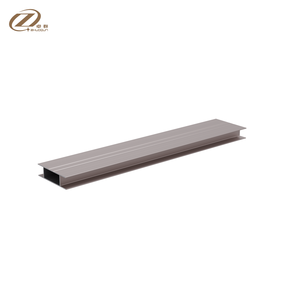
Factory Direct Catalog
Featured Custom OEM Aluminium & Composite Joinery Systems
Engineered with high-tensile 6063-T5/T6 alloy profiles, advanced thermal break insulation, and weather-resistant surface coatings. All units are fully customizable to meet regional building codes including AS2047, NZS4211, NAFS, and Miami-Dade TAS standardizations.
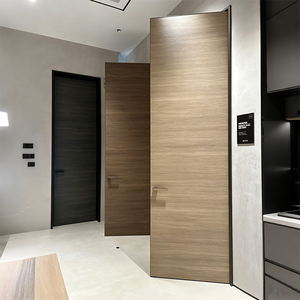
Foshan Manufacturer Modern Interior Aluminum Wooden Frame Swing Door Custom Solution For Residential Room
Contact Us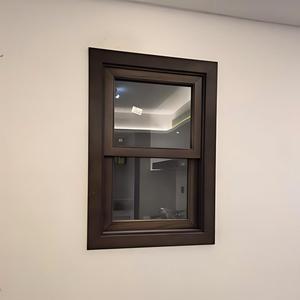
Hot Sale Single Hung Window Modern Design Black Aluminum Double Glazed Sliding Vertical Windows for Kitchen Use
Contact Us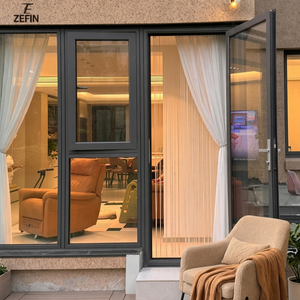
Aluminum Villa Entrance Sliding Door, Weatherproof Powder Coated Courtyard Gate With Smart Lock For Residential Exterior
Contact Us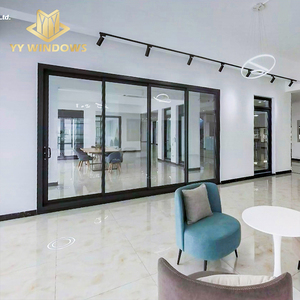
NFRC Certification Soundproof Interior Dividers Aluminum Glass Sliding Doors with Screen
Contact Us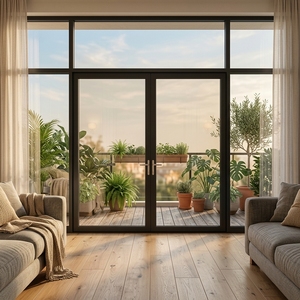
Customized Bulk Insulated Front Entry Doors French Doors Factory Direct Entry Aluminum Casement Doors
Contact Us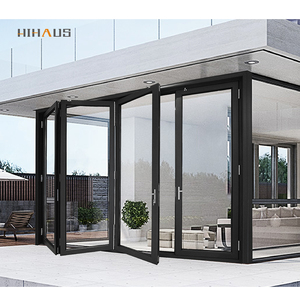
Hihaus New Chinese Aluminium Accordion Folding Patio Glass Sliding Back Doors
Contact Us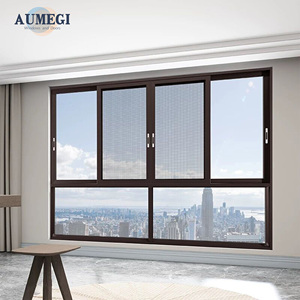
Aumegi Tempered Glass Aluminum Aluminium Frame Sliding Glass Window Metal Sliding Windows
Contact Us
Manufacturing Authority
Enterprise OEM Customization & Engineering Capacity
As a tier-one custom OEM aluminium composite doors exporter, SAGA (ROPO) combines advanced metallurgy, precision extrusion engineering, and multi-tier quality control to supply global commercial developers, architectural procurement teams, and volume distributors.
Precision Alloy Extrusion & CNC Milling
Utilizing architectural grade 6063-T5 and 6063-T6 aluminum alloys, our extrusion lines achieve tight wall-thickness tolerances (1.6mm to 3.0mm structural frame profiles). Integrated 5-axis CNC machining centers execute corner crimping, lock mortising, drain slotting, and hinge recessing with sub-millimeter precision.
Advanced Thermal Barrier Assembly
Our composite doors integrate high-density polyamide thermal breaks (PA66GF25 with 25% glass fiber reinforcement). This structural separation prevents conductive heat transfer, eliminating thermal bridging, preventing interior condensation, and achieving industry-leading U-values under 1.4 W/m²K.
Surface Treatment & Environmental Finishes
From AkzoNobel powder coatings and architectural anodizing to fluorocarbon (PVDF) 3-coat finishes, our surface lines deliver exceptional UV resistance and salt spray durability exceeding 3,000 hours (Qualicoat Class 2 standard), critical for harsh marine exposures.
Material Science & Joinery Engineering
Aluminium Composite Door Technical Architecture
Understanding the engineering behind modern composite exterior doors. By pairing structural extruded aluminium skins with insulating core materials (polyurethane, mineral wool, or honeycomb composite matrices), OEM manufacturers create entryways that surpass traditional solid timber or uninsulated metal doors in every performance metric.
| Performance Specification | Standard Aluminium Door | OEM Thermally Broken Composite Door | Aluminium-Timber Composite Door |
|---|---|---|---|
| Thermal Transmittance (U-Value) | 3.5 – 5.0 W/m²K | 1.1 – 1.6 W/m²K | 1.2 – 1.8 W/m²K |
| Sound Transmission Class (STC) | 28 – 32 dB | 38 – 45 dB | 36 – 42 dB |
| Structural Wind Load (Ultimate) | up to 2500 Pa | up to 4500 Pa (Miami-Dade Approved) | up to 3500 Pa |
| Airtightness (EN 12207 / AS2047) | Class 2 (300 Pa) | Class 4 (600 Pa / Extra High Wind) | Class 3 (450 Pa) |
| Maintenance Cycle | 5 - 7 Years | 15+ Years (Zero Rot/Warping) | 8 - 10 Years (Interior Wood Care) |
| Core Substrate Insulation | Air Gap / Hollow Extrusion | High-Density PIR / PA66 Thermal Strip | Solid Hardwood + Thermal Barrier |
Strategic Market Insights
Future Procurement Trends for Global B2B Importers
The international building envelope sector is undergoing a rapid evolution. Sourcing managers, project procurement directors, and wholesale importers must align with these four macro supply chain shifts to maintain commercial and regulatory advantage over the next decade.
1. Decarbonization & Low Embodied Carbon Aluminum
Global building rating systems (LEED v4.1, BREEAM, Green Star Australia, and Europe’s CBAM regulations) now mandate transparency in material carbon footprint. Procurement trends favor OEM exporters capable of supplying aluminum extruded using hydropower energy sources or utilizing certified recycled aluminum scrap (>75% recycled content). OEM partners providing verified EPDs (Environmental Product Declarations) are securing preferential bidding status on major commercial developments.
2. Stringent Passive House & Net-Zero Thermal Mandates
With energy codes tightening across North America (IECC 2024), Australia (NCC 2022 7-Star energy ratings), and New Zealand (NZBC Clause H1 updates), traditional single or standard uninsulated double-glazed entry systems are being phased out. Importers are expanding orders for multi-chambered thermally broken aluminium composite doors capable of incorporating 32mm to 44mm triple-glazed units filled with 90% argon gas and dual Low-E coatings.
3. Prefabricated & Modular Joinery Integration
Rising jobsite labor costs across Western markets are driving demand for factory-assembled, plug-and-play architectural joinery. OEM exporters who pre-install sub-frames, integrated perimeter flashing fins, factory-fitted smart locks, and pre-hung heavy-duty pivot hardware allow developers to reduce on-site installation labor by up to 60%, drastically cutting construction schedule risks.
4. Direct-to-Factory Engineering Transparency
B2B buyers are moving away from traditional trading intermediaries toward direct OEM relationships. Importers require direct digital access to shop drawing sign-offs (2D CAD section details & 3D BIM models), real-time factory video auditing, structural stress calculations, and uncompromised supply chain tracing for raw ingot profiles and hardware origins.
R&D Roadmap
Key Product Development Trends in OEM Door Manufacturing
Architectural preferences and security demands are reshaping product design. Here are the core technological innovations defining the next generation of aluminium composite doors.
Ultra-Slim Sightlines & Flush Thresholds
Minimalist design continues to dominate modern residential and commercial architecture. Recent OEM engineering breakthroughs allow ultra-narrow stile profiles (< 45mm visible width) while maintaining high structural wind-load capability. Flush drainage thresholds integrated with concealed stainless steel water channels deliver barrier-free transitions without compromising water tightness.
Biometric & Smart Automation Integration
Commercial entry doors are evolving into smart security hubs. Modern OEM custom composite doors feature factory-routed wiring channels and concealed mortises to accommodate biometric fingerprint scanners, facial recognition cameras, motorized multi-point gearboxes (3-point to 5-point locking), and smart home IoT access control system compatibility.
Severe Coastal & Impact Weatherproofing
Climate volatility requires doors capable of resisting extreme wind driven rain and hurricane force impacts. OEM engineering utilizes heavy-gauge aluminum composite structures paired with multi-layer SentryGlas (SGP) laminated glass panels, tested under stringent TAS 201 (Large Missile Impact) standards to protect coastal properties in hurricane zones.
Regulatory Compliance Matrix
Audited Performance Standards by Target Export Region
Custom products supplied by SAGA (ROPO) undergo continuous independent testing to guarantee compliance with regional building authorities worldwide.
| Target Region | Governing Building Standard | Certified Performance Audit Scope | Primary Product Configuration |
|---|---|---|---|
| Australia | AS2047:2014, AS1288:2021, NCC 2022 | AGWA annual factory audit, deflection, water penetration (up to 700Pa), air infiltration. | Thermally broken aluminium casement, awning & composite entry doors. |
| New Zealand | NZS4211:2008, NZBC Clauses B1, B2, E2, H1 | Structural performance, durability, external moisture control, energy efficiency (H1 compliant). | uPVC & Aluminium composite thermal systems with double/triple Low-E glazing. |
| North America (US & Canada) | NAFS (AAMA/WDMA/CSA 101/I.S.2/A440), NFRC | Air leakage, water resistance, uniform load structural testing, forced-entry resistance. | Heavy-duty entrance doors, tilt & turn joinery, sliding patio systems. |
| Florida & Caribbean | Miami-Dade High Velocity Hurricane Zone (HVHZ) | TAS 201-94 (Large Missile Impact), TAS 202 (Static Air), TAS 203 (Cyclic Wind Pressure). | Reinforced aluminium hurricane impact doors with SGP laminated glass. |
Execution Protocol
The 7-Stage OEM Order Execution Workflow
Our standardized engineering and production process guarantees absolute fidelity to architectural drawings and project deadlines.
01
Design Brief
Review architectural plans & wind-load specs.
02
Shop Drawings
Issue CAD & 3D BIM models for sign-off.
03
Sample Prototype
Full-scale sample for finish & hardware audit.
04
CNC Production
Extrusion, thermal break crimping & milling.
05
Quality Control
100% pre-assembly air/water tightness test.
06
Export Packing
Steel-framed wooden crating for ocean transport.
07
After-Sale Care
10-year warranty & jobsite technical support.
Buyer Help Desk
Frequently Asked Questions by Importers & Builders
Get immediate answers to common technical, logistical, and transactional inquiries.
Which types of buyers does SAGA supply custom windows and doors to?
We supply wholesalers and dealers, commercial project builders, real estate developers, facade contractors, architects, and custom homeowners. Each order receives tailored shop drawings, engineering calculation reports, and packaging optimized for the buyer's supply chain and local building code requirements.
What is the typical production lead time for customized doors and windows?
Standard production lead time is 35 to 50 days following shop drawing sign-off and deposit confirmation. For custom extruded dies or non-standard powder coat colors, initial lead time may extend by 10 days. Ocean freight duration varies by destination port (e.g., 14-20 days to Australia/NZ; 22-35 days to North America).
Can SAGA supply custom product samples for engineering evaluation?
Yes. We supply standard-size window corner sections or full-frame door samples for structural, thermal, and finish quality evaluation. Sample hardware and aluminum profile cutaways are provided free of charge, with the buyer covering international express freight.
What technical drawings and engineering support are provided?
Every project includes full 2D CAD elevation schedules, horizontal/vertical section details, structural wind load analysis sheets, thermal modeling reports, and step-by-step flashing/installation drawings to streamline local engineering sign-off.
Do SAGA products comply with Australian, New Zealand, and North American Standards?
Yes. Our compliance is audited under the AGWA program for AS2047:2014, AS1288:2021 and NCC 2022. New Zealand testing covers NZS4211:2008 across Building Code clauses B1, B2, E2, F2, G4, G7, and H1. North American lines hold NAFS test reports and Miami-Dade TAS 201/202/203 hurricane certifications.
What ports are utilized for export container shipments?
All orders are custom packed and shipped in full container loads (20GP, 40GP, 40HQ) or specialized steel-frame LCL crates directly from Fuzhou Port or Xiamen Port in Fujian Province, China.
Which payment terms and trade protection mechanisms are supported?
We accept T/T (Telegraphic Transfer with 30% deposit upon drawing approval, 70% balance prior to container loading) as well as Alibaba Trade Assurance for complete buyer capital protection.
What surface finishes and hardware brands are available for OEM orders?
Extrusion finishes include RAL color powder coating, PVDF fluorocarbon spraying, anodizing, and heat-transfer woodgrain textures. Premier hardware choices include German ROTO, Siegenia-Aubi, and Kinlong multi-point locking mechanisms, all backed by 10-year mechanical guarantees.
Accelerate Your Door & Window Procurement Strategy
Partner with an audited OEM exporter capable of transforming your architectural concepts into certified, factory-direct joinery. Contact our engineering desk today for instant technical proposals, shop drawings, and competitive project estimates.