Tested Architectural Door & Window Systems
Factory-direct custom architectural joinery engineered to international building standards (AS2047, NZS4211, NAFS, Miami-Dade TAS).
Engineering Blueprint: Custom OEM Aluminium Hopper Windows Exporter & Global Procurement
Understanding structural dynamics, thermodynamic isolation, and high-performance fenestration for modern commercial and high-density residential builds.
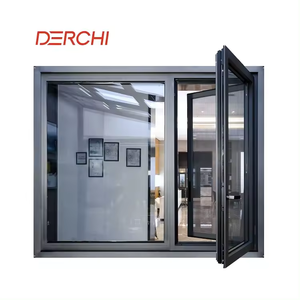
In contemporary architectural design, fenestration is no longer viewed as a passive building envelope component. As stringent international building energy codes take effect across Australia, North America, New Zealand, and Europe, selecting a highly specialized Custom OEM Aluminium Hopper Windows Exporter & Exporters network becomes a critical strategic decision for developers, general contractors, and commercial glazing distributors. Aluminium hopper windows—hinged at the bottom and opening inward at the top—provide optimal natural ventilation while maintaining rain deflection and maximum security, making them indispensable for modern basements, high-level clerestory installations, hospital cleanrooms, and educational institutions.
Thermodynamic & Thermal Break Integration
Non-insulated aluminum profiles act as heat bridges, leading to massive energy loss. Advanced OEM hopper manufacturing utilizes Polyamide (PA66-GF25) reinforced thermal break bars. This structural barrier isolates outer weather exposure from interior ambient temperatures, achieving U-values as low as 1.3 W/m²K when combined with Low-E double or triple insulated glass units (IGUs).
Aerodynamic Ventilation & Water Tightness
Operating on heavy-duty stainless steel friction stays or concealed scissor hinges, bottom-hinged hopper systems pull cooler air inward while creating positive air pressure upwards. Dual or triple-stage continuous EPDM gasket sealing systems guarantee static water penetration resistance exceeding 450 Pa to 600 Pa under severe coastal storm conditions.
Acoustic Attenuation & Structural Integrity
Fabricated using high-tensile 6063-T5 or 6063-T6 architectural grade aluminum extrusions, OEM hopper windows deliver exceptional structural rigidity. Paired with laminated acoustic glass configurations (e.g., 6mm Clear + 1.52PVB + 6mm Low-E), frame acoustic isolation reaches Sound Transmission Class (STC) ratings up to STC 42.
Architectural Window Performance Comparison Benchmark
Comprehensive technical parameters comparing custom aluminium hopper windows against traditional window operating mechanisms.
| Operating Type | Thermal Transmittance (U-Value) | Water Resistance Pressure | Air Infiltration Rating | Max Glass Thickness | Security & Intrusion Level |
|---|---|---|---|---|---|
| Thermal Break Aluminium Hopper | 1.3 - 1.8 W/m²K | 450 Pa - 700 Pa | Class A4 (< 0.5 m³/h·m) | up to 39 mm Double/Triple IGU | High (Multi-point interior cam locks) |
| Standard Aluminium Awning Window | 2.2 - 2.8 W/m²K | 300 Pa - 450 Pa | Class A3 (< 1.5 m³/h·m) | up to 28 mm Double Glazed | Medium to High (Chain winder locks) |
| Horizontal Aluminium Sliding Window | 2.8 - 3.4 W/m²K | 150 Pa - 300 Pa | Class A2 (< 2.5 m³/h·m) | up to 24 mm Double Glazed | Medium (Latch & crescent locks) |
| European Tilt & Turn Window | 1.1 - 1.5 W/m²K | 600 Pa - 900 Pa | Class A4 (< 0.1 m³/h·m) | up to 44 mm Triple Glazed | Maximum (Perimeter multi-locking) |
| Aluminium Casement Window | 1.5 - 2.0 W/m²K | 400 Pa - 650 Pa | Class A4 (< 0.8 m³/h·m) | up to 32 mm Double Glazed | High (Multi-point friction stays) |
* Data based on laboratory testing following ISO 10077-2, AS2047, and ASTM E283/E330/E331 test standards. Custom parameters vary depending on frame depth and glass specifications.
International Building Code Audits & Certification
Every custom OEM window supplied by top exporters undergoes third-party structural and environmental testing to pass local building authority approvals globally.
Australian & New Zealand Standards (AS2047 / AS1288 / NZS4211)
For buyers importing into Oceania, factory compliance requires rigorous AGWA (Australian Glass and Window Association) audited accreditation. Testing includes Ultimate Limit State (ULS) wind pressure up to 3000Pa - 6000Pa, Water Penetration Resistance, and deflection limits. Glass elements comply with AS1288:2021 safety glazing guidelines and NCC 2022 energy requirements (Section J / NatHERS).
North American Fenestration Standard (NAFS / AAMA / WDMA)
OEM exported windows destined for North American residential and commercial markets are tested under NAFS CW (Commercial Window) and AW (Architectural Window) performance classes. Criteria cover uniform load structural deflection (ASTM E330), air leakage resistance (ASTM E283), and forced-entry protection (ASTM F588).
Miami-Dade High-Velocity Hurricane Zone (HVHZ) Testing
For coastal, tropical, and storm-prone regions, extreme weather hopper units require Miami-Dade Notice of Acceptance (NOA) compliance. Systems are subjected to TAS 201-94 (Large Missile Impact Test), TAS 202-94 (Static Air Pressure Test), and TAS 203-94 (Cyclic Wind Pressure Loading), confirming frame durability under hurricane-force events.
European CE & Passive House Certification
European standards (EN 14351-1) require strict CE marking verifying non-toxicity, air permeability, reaction to fire, and thermal performance. Passive house compliant profiles integrate foam-filled thermal chambers and triple-pane warm-edge spacer technology to lower carbon footprints across EU developments.
Future Sourcing & Procurement Trends in Aluminium Joinery
Strategic trends shaping global OEM window exporting, sustainable manufacturing, and smart building integration.
BIM Level 2/3 & Digital Twin Integration
Leading global buyers no longer accept simple 2D CAD files. Exporters must now provide fully articulated 3D Building Information Modeling (BIM) Revit families containing metadata on U-factors, frame depth, structural loads, and hardware maintenance schedules, enabling seamless integration into large-scale building digital twins.
Low-Carbon Recycled Billets (Scope 1-3)
Environmental Product Declarations (EPD) are becoming mandatory in public tenders. Forward-thinking OEM exporters are transitioning to primary aluminium smelted using hydroelectric energy or incorporating over 75% post-consumer recycled aluminium billets, drastically cutting embedded carbon footprints per square meter.
Automated Actuation & Smart Home Connectivity
Hopper windows positioned out of reach in commercial atriums or industrial spaces are increasingly ordered with integrated 24V DC chain actuators. Connected directly to Building Management Systems (BMS) or smart rain sensor arrays, these systems open automatically for night purge cooling and close during precipitation.
Precision OEM Manufacturing & Quality Control Protocol
From CAD engineering to seaworthy crating, our multi-stage quality control ensures flawless execution of custom architectural orders.
CNC Extrusion Precision
Automated 5-axis CNC machining centers process aluminum profiles with cutting and milling tolerances under ±0.2mm, ensuring perfectly square corner joins and precise drainage slot placement.
Hydraulic Corner Crimping
Corners are mechanically crimped with heavy-duty cast aluminum corner cleats and injected with two-component polyurethane corner adhesive, preventing water ingress and structural racking under load.
Advanced Surface Finishing
Profiles are treated with AkzoNobel or PPG Fluorocarbon (PVDF) coatings, anodizing, or durable powder coating, providing resistance against salt-spray corrosion (tested to 3,000+ hours ASTM B117).
Heavy-Duty Export Crating
Finished windows feature fully sealed glass protection films, corner guards, and are packed into steel-reinforced, fully enclosed plywood crates designed for ocean container shipping and forklift handling.
Frequently Asked Questions for Importers & Specifiers
Direct technical answers addressing structural calculation, customized production, compliance documentation, and order execution.
Your Trusted OEM Manufacturing & Export Supply Chain Partner
16 years of continuous engineering innovation, global project delivery, and factory-direct reliability.
Factory-Direct Pricing & Scalability
By eliminating middleman brokers, SAGA delivers direct OEM/ODM factory pricing. Our modern production facility scales effortlessly from high-end custom residential builds to multi-tower commercial developments.
Rigorous 100% Pre-Shipment Inspection
Every window assembly undergoes a 16-point final audit before packing—including glass clarity, hardware smooth operation, corner seal integrity, dimensional accuracy, and diagonal squareness verification.
Comprehensive Technical Support
Our in-house facade engineers support your project from initial design through final installation. We provide shop drawing submittals, glass calculation reports, and remote installation guidance for site crews.
Ready to Upgrade Your Fenestration Supply Chain?
Contact our engineering sales team today to request a factory-direct quotation, custom shop drawings, or architectural sample sets for your project.
Contact Us