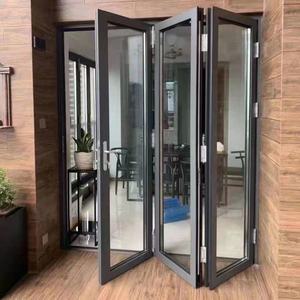
CHANGYI NFRC Impact Door Florida Commercial Entrance Aluminum Piano Bi-Fold Door
Heavy-duty commercial entry bifold door with NFRC energy certification and Miami-Dade high-velocity hurricane impact resistance.
Engineered for global B2B procurement, multi-residential developments, and custom architectural projects.
Heavy-duty commercial entry bifold door with NFRC energy certification and Miami-Dade high-velocity hurricane impact resistance.
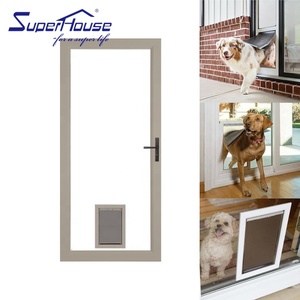
Precision-engineered back entrance door featuring integrated pet opening, 316 marine-grade stainless steel mesh, and multi-point lock security.
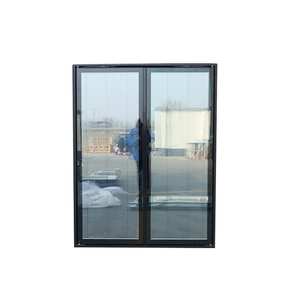
Commercial-grade electrically heated tempered glass aluminum door designed to prevent condensation in high-humidity hotel & kitchen zones.
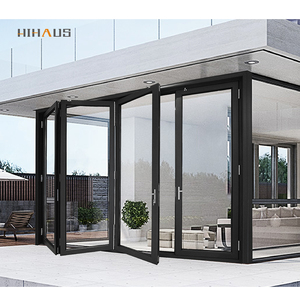
Ultra-slim frame accordion folding glass door system with heavy-duty bottom tracks, dual-glazed Low-E glass, and acoustic insulation.
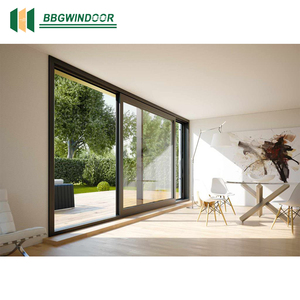
High-strength 6063-T5 aluminum alloy sliding door with double argon-filled tempered glass, providing superior thermal barrier ratings.
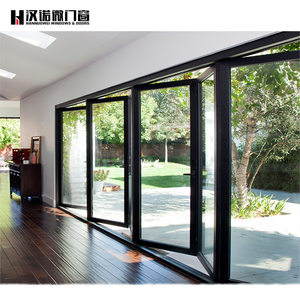
Specialized anti-flooding threshold design with windproof polymer seals and structural drainage paths to eliminate water ingress.
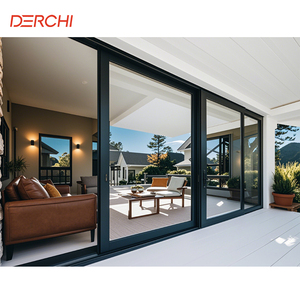
NAFS-tested thermally broken multi-track sliding door system customized for North American building envelope insulation standards.
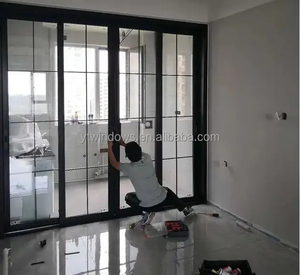
Architectural 5-track system enabling expansive panoramic openings, double toughened security glass, and stainless steel hardware.
In modern architectural fenestration, the traditional back entrance door has evolved from a simple secondary utility hatch into a critical component of the building envelope's thermal barrier, structural stability, and security matrix. Global real estate developers, commercial contractors, and Fenestration B2B importers are increasingly looking beyond basic aesthetic design to demand comprehensive OEM/ODM engineering capabilities. Custom aluminum back door factories must now meet multi-jurisdictional building standards—ranging from Australia's AS2047:2014 and AS1288:2021 to North America's NAFS and Florida's extreme Miami-Dade TAS 201/202/203 hurricane impact requirements.
SAGA Aluminum Doors & Windows Co., Ltd. operates state-of-the-art production facilities situated in Phase 1 of the Tieling Technical and Economic Development Zone, Minhou County, Fuzhou, Fujian, China. Leveraging strategic access to Fuzhou and Xiamen shipping ports, our enterprise integrates raw 6063-T5 aluminum alloy profile extrusion, precision thermal break stripping, automatic CNC corner crimping, IGCC-certified double/triple glass unit assembly, and rigorous pre-shipment quality auditing. This white paper serves as a technical procurement guide for international buyers seeking reliable custom OEM aluminum back door factories.
Standardized profile systems, repeatable hardware configurations, unified RAL powder coat color matching, and custom-branded crate packaging tailored for seamless warehousing and local reselling networks.
Itemized window and door schedules quoted directly from CAD blue-prints, complete structural load calculations, and signed shop drawings prepared for local council or certifier sign-off prior to mass fabrication.
Bespoke slim-sightline designs, custom extrusions, thermal performance simulation reports (U-factor and SHGC modeling), and specialized glass configurations including heated, smart electrochromic, and acoustic acoustic laminates.
Aluminum is structurally superior to timber and uPVC due to its ultra-high tensile strength, resistance to UV degradation, and negligible thermal expansion coefficient over large spans. However, raw aluminum exhibits a high thermal conductivity of approximately 200 W/m·K. To prevent back doors from acting as thermal bridges that transmit extreme outdoor heat or cold into interior spaces, custom OEM back door factories employ advanced **Thermal Break Technology**.
A thermal break door profile structurally separates the exterior aluminum extrusion from the interior extrusion using an engineered structural polymer strip—specifically **Polyamide 66 with 25% Glass Fiber (PA66 GF25)**. This polymer exhibits a thermal conductivity of less than 0.3 W/m·K, effectively reducing overall window frame thermal transmittance by up to 75%.
Choosing the correct structural framework depends on the project's geographic climate zone, wind exposure category, and acoustic isolation target:
| Key Criteria | Standard Aluminum (Non-Thermal) | Thermally Broken Aluminum (PA66 GF25) | Aluminium-Timber Composite |
|---|---|---|---|
| Target Application | Mild climates, interior back bar exits, budget commercial partitions | Cold/hot climate regions, residential back doors, low-E energy code compliance | Luxury villas, high-end hospitality requiring interior real wood luxury aesthetics |
| Thermal Transmittance (U-Value) | 3.5 – 5.8 W/m²K | 1.2 – 2.2 W/m²K (With Low-E IGU) | 1.1 – 1.8 W/m²K (Natural interior wood insulation) |
| Profile Structural Alloy | 6063-T5 (Tensile strength ≥160 MPa) | 6063-T5 / 6060-T66 (High structural yield strength) | 6063-T5 Exterior + Solid Engineered Timber interior |
| Weather Gasket Architecture | Dual PVC / EPDM strip weather-stripping | Triple-seal continuous EPDM rubber gasket matrix | Triple-seal EPDM + acoustic timber seals |
| Surface Coating Specs | Standard Powder Coating (40-60μm) | Qualicoat Class 2 Powder Coat / PVDF (60-80μm) | Fluorocarbon exterior (PVDF) / Stain interior timber |
As global building energy codes tighten—such as Australia’s National Construction Code (NCC 2022) and North America’s ASHRAE 90.1 standards—the procurement strategy for commercial and residential aluminum back doors is undergoing four structural shifts:
Importing custom aluminum back doors requires strict proof of compliance with local building codes. Certifiers and local authorities will reject shipments that lack independent laboratory test reports. SAGA maintains rigorous auditing protocols certified across four major international fenestration regimes:
| Target Market | Required Standard & Scheme | Verified Performance Parameters | Recommended Door Configuration |
|---|---|---|---|
| Australia | AS2047:2014, AS1288:2021, NCC 2022 (AGWA Audited) | Deflection wind load (up to 3000 Pa), water penetration (up to 600 Pa), air infiltration, glass safety design | Thermally broken awning doors, chain winder access doors, heavy-duty bifold back doors |
| New Zealand | NZS4211:2008 & NZBC Clauses B1, B2, E2, F2, G4, G7, H1 | Structural strength, air/water moisture management, acoustic comfort, H1 energy efficiency compliance | uPVC & Thermally broken aluminum double glazed tilt & turn / hinged back doors |
| United States & Canada | NAFS (North American Fenestration Standard) | Air filtration rate, water resistance test, uniform structural load deflection, forced entry resistance | Heavy multi-track sliding patio doors, French back doors, single-hung access sashes |
| Florida & Caribbean Zone | Miami-Dade TAS 201-94, TAS 202-94, TAS 203-94 | Large missile impact test (9 lb 2x4 lumber shot at 50 ft/s), static pressure, cyclic wind pressure loading | Hurricane impact sliding back doors, laminated glass entrance bifolds, heavy storm sashes |
Our standardized engineering workflow ensures every custom aluminum back door order is fully vetted, dimensionally precise, and tested prior to export.
Our engineering team translates your project drawings, architectural elevation sheets, and opening schedules into detailed CAD shop drawings detailing section profiles, wall thickness, and glass callouts.
For high-volume multi-residential developments or distributor partnerships, we provide full-scale corner cross-section or standard-size door samples to verify frame finishes, hardware feel, and seal tightness.
Production commences only after your project engineers, certifiers, or purchasing team review and officially sign off on dimensions, glass specs, handings, and color codes.
Aluminum profiles undergo automated CNC cutting, milling for multi-point lock mortises, hydraulic corner crimping, and dual-component polyurethane glue injection for structural joint rigidity.
Insulated glass units (IGUs) are assembled in dust-free cleanrooms using dual-seal butyl and structural silicone. Every completed door sash undergoes 100% pre-shipment dimensional, hardware, and water-seal testing.
Doors are wrapped in multi-layer protective film, corner-guarded, and secured in fumigated plywood crates. Loading is executed directly into FCL containers at Fuzhou or Xiamen ports.
Clear, authoritative answers regarding customized aluminum back door OEM procurement, compliance, and logistics.
Every OEM order includes comprehensive CAD shop drawings, elevation profiles, section detail sheets, installation anchor diagrams, and raw material mill certificates. For Australian and North American projects, we supply official AGWA compliance certificates and NAFS/Miami-Dade laboratory test reports verifying structural wind pressure and water ingress ratings.
Our standard production lead time is 35 to 50 calendar days following official shop drawing sign-off and deposit receipt. Sample orders or custom powder-coat extrusion die creations may take 15 to 20 additional days. Transit times vary depending on the destination ocean freight route (typically 14-22 days to Australian ports, 18-30 days to US West/East Coasts).
Yes. As a direct OEM factory, we manufacture custom sashes with integrated pet openings housed alongside 316 marine-grade stainless steel security screens. For commercial hospitality or cold-climate applications, we supply back bar doors equipped with low-voltage electric heating film embedded within double-glazed tempered units to permanently prevent glass condensation.
We utilize certified Qualicoat Class 2 architectural powder coatings (such as AkzoNobel, PPG, or Jotun). Every production batch undergoes spectrophotometer color-matching audits and cross-hatch paint adhesion testing under ISO 2409 standards, ensuring zero color variation across large multi-container shipments.
We accommodate both project-specific builder orders and continuous wholesale supply contracts. While there is no rigid minimum piece count, full container loads (20GP or 40HQ) optimize sea freight cost per unit. All back doors are fully crated in fumigated solid plywood cases with internal foam corner pads, guaranteeing zero transit damage.
We provide a comprehensive 10-Year Structural & Profile Finish Warranty covering aluminum extrusion integrity, powder coating resistance against chalking and peeling, and insulating glass seal failure. Hardware components (German ROTO, Siegenia, or Kinlong systems) are covered under a 5 to 10-year mechanical warranty with quick-ship replacement parts support.