Featured Aluminium Doors & Windows Systems
Architectural-grade fenestration engineered for high structural load, thermal efficiency, and long-term anti-corrosion performance.
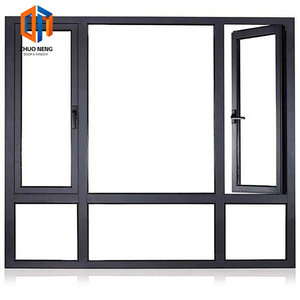
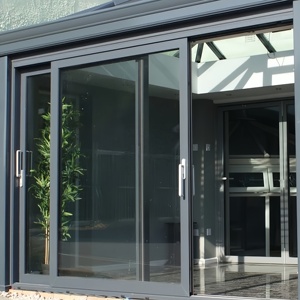
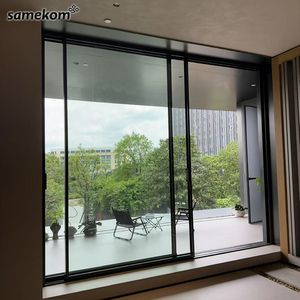
Technical White Paper: OEM/ODM Aluminium Fabrication for High-Performance Sliding Door Systems
Modern architectural fenestration demands an intricate balance between structural integrity, thermal resistance, acoustic attenuation, and minimalist aesthetic design. As a premier OEM/ODM aluminium fabrication sliding door manufacturer and factory, SAGA Aluminum Doors & Windows Co., Ltd. bridges the gap between complex architectural concepts and mass-production precision. Supplying commercial contractors, residential developers, facade engineers, and B2B distributors across Australia, New Zealand, North America, and the Caribbean, our manufacturing facility produces bespoke aluminium joinery certified under strict international building codes including AS2047:2014, NZS4211:2008, NAFS, and Miami-Dade TAS 201/202/203.
1. Enterprise OEM/ODM Fabrication & Extrusion Capabilities
Custom OEM/ODM manufacturing goes far beyond cutting and assembling off-the-shelf aluminium extrusions. It requires deep metallurgical control, advanced structural calculations, and precision CNC machining. At our state-of-the-art facility in Fujian, China, we manage every stage of the fabrication workflow:
- Alloy Selection & Heat Treatment: We predominantly utilize primary aluminium ingot extrusions in 6063-T5 and 6063-T6 grades, offering tensile strength up to 205 MPa. For extreme structural spans, 6005A-T6 structural alloy is deployed to withstand elevated wind loads without increasing visible profile sightlines.
- 5-Axis CNC Precision Machining: Profile routing, drainage slotting, lock-gear mortising, and corner connection drilling are processed on automated 5-axis CNC machining centers. Machining tolerances are held within ±0.05 mm, ensuring exact fitment for heavy-duty roller carriages and multipoint lock hardware.
- Corner Joinery & Mechanical Crimp Integrity: Sliding door sashes undergo dual-component epoxy structural injection combined with heavy-duty pneumatic corner crimping. This creates hermetically sealed, torsion-resistant joints capable of handling sash weights exceeding 400 kg.
- Advanced Surface Treatment Options:
- Qualicoat Class 2 Powder Coating: Architectural polyester coating offering exceptional UV resistance and color retention for harsh climate exposures.
- Fluorocarbon (PVDF) Coating: 3-coat/2-bake AAMA 2605 compliant coatings specifically specified for saltwater coastal environments.
- Anodizing (up to 25µm): Electro-chemically sealed anodic films providing maximum abrasion resistance and metallic aesthetics.
Thermal Break Engineering
Utilizing imported 24mm to 34mm Polyamide PA66-GF25 (25% glass fiber reinforced) structural thermal struts to interrupt conductive heat transfer, achieving low U-factors down to 1.0 W/m²K.
Hurricane & Impact Resistance
Engineered with reinforced steel mullions, heavy-duty interlocking stiles, and laminated SGP/PVB glass systems tested against Florida Miami-Dade TAS 201 (Large Missile Impact) standards.
Acoustic Isolation (STC 42+)
Multi-chamber extrusions paired with asymmetric double/triple IGU glass units and continuous perimeter EPDM weather seals eliminate acoustic leakage in urban applications.
2. Technical Performance Matrix: Frame System Comparison
Selecting the optimal framing system for commercial or residential sliding doors depends heavily on localized climate conditions, structural wind load mandates (Design Wind Pressure), and target energy efficiency budgets. Below is a detailed engineering comparison of our core custom extrusion systems:
| Performance Metrics | Standard Non-Thermal Aluminium | Heavy-Duty Thermal Break Aluminium | Aluminium-Timber Composite |
|---|---|---|---|
| Target U-Factor (W/m²K) | 3.8 – 5.2 Standard | 1.2 – 2.0 High Performance | 0.8 – 1.4 Passive Standard |
| Max Sash Weight Capacity | 180 kg / panel | 400 kg – 600 kg (Lift-and-Slide) | 350 kg / panel |
| Structural Wind Load (Pa) | 1500 Pa – 2500 Pa | 3500 Pa – 6000 Pa (TAS 202) | 2500 Pa – 4000 Pa |
| Water Penetration Resistance | 300 Pa | 600 Pa – 1050 Pa (Sub-head drainage) | 450 Pa – 750 Pa |
| Acoustic Rating (STC / R_w) | STC 28 – 32 dB | STC 38 – 45 dB | STC 40 – 48 dB |
| Typical Architectural Applications | Interior dividers, mild climate residential doors | Luxury coastal villas, high-rise balconies, commercial facades | Premium residential estates, cold climate passive buildings |
3. Future Procurement & Global Industry Trends (2025–2030)
As global building codes tighten around embodied carbon, energy efficiency (such as NCC 2022 7-Star NatHERS in Australia, NZ Building Code Clause H1, and US Title 24), purchasing managers and project developers must align with modern manufacturing trends:
A. Adoption of Low-Carbon & Recycled Aluminium
Sustainability mandates are pushing B2B buyers to request primary extrusions forged using renewable hydro-electric energy or containing certified post-consumer recycled content (e.g., Hydro CIRCAL standards). SAGA integrates green aluminium billets that reduce the carbon footprint from the global average of 16.6 kg CO2e/kg down to under 4.0 kg CO2e/kg of metal.
B. Ultra-Slim Interlock Profiles & Concealed Automation
Architectural preference has decisively shifted toward invisible frame boundaries. Modern custom sliding doors feature interlock stiles as slim as 18 mm to 25 mm without sacrificing structural wind resistance. Furthermore, OEM integration of concealed magnetic motorization drives allows touchless smart home operation via smartphone applications or Building Management Systems (BMS).
C. High-Performance Glass Configuration Strategy
Frame performance is only half the thermal equation. Modern export sliding doors incorporate warm-edge spacer bars (such as Technoform or Swisspacer), double-silver or triple-silver Low-E soft coatings, and argon gas fill (90%+ concentration) to optimize Solar Heat Gain Coefficients (SHGC) for tropical climates or minimize U-values for sub-zero environments.
Request Engineering Shop Drawings & OEM Specifications
Planning a multi-residential project, commercial facade, or custom window distribution line? Partner directly with our engineering factory team for structural calculations, CAD sections, and wholesale pricing.
Get Catalog4. Procurement FAQ: Essential Guidance for Importers & Developers
Below are technical and operational answers to common questions encountered by global buyers during the OEM/ODM specification process:
5. Enterprise Advantages & Quality Assurance Standards
SAGA Aluminum Doors & Windows Co., Ltd. operates under strict ISO 9001 quality management protocols. Every extrusion batch, glass unit, and hardware component is checked across 7 distinct quality gates:
- Raw Material Verification: Spectrometric testing of aluminium billets to verify chemical composition (Si, Fe, Cu, Mn, Mg alloy ratios).
- Extrusion Anodizing & Powder Thickness Testing: Magnetic gauge measurement ensuring powder coat thickness meets 60–80 µm standards.
- Thermal Break Shear Testing: Mechanical pull testing to verify the mechanical interlock strength between the polyamide strip and aluminium profile.
- Glass IGU Dew Point & Seal Integrity Check: Optical measurement verifying dew points below -40°C inside sealed double glazing units.
- Pre-Assembly Mockup Test: Random batch assembly of full-size sliding frames to test roller smoothness, multipoint lock engagement, and sash alignment.
- Dual-Stage Water Pressure Chamber Testing: Testing window samples under continuous water spray and static air pressure differentials according to ASTM E331 and AS4420.1.
- Export Export Packing Protocol: Corner protectors, foam separation layers, vacuum drying agents, and heavy-duty steel-strapped wooden crate packaging.
By pairing world-class profile suppliers (Veka, Rehau, Zhongcai) with industry-leading hardware platforms (ROTO, Siegenia Aubi, Kinlong), SAGA offers a single-source OEM/ODM fabrication platform for global fenestration projects.
Start Your Custom OEM/ODM Fabrication Inquiry
Connect with our technical sales engineers to review project specifications, request technical catalogs, or obtain factory-direct quotation schedules.
Get Catalog