Engineered Architectural Joinery Systems
Factory-direct OEM/ODM solutions tested to AS2047, NZS4211, NAFS, and Miami-Dade hurricane standards for global project specs.
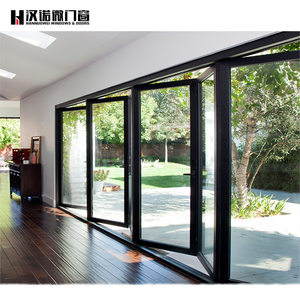
Water-Barrier Folding Tempered Glass Aluminum Alloy Windproof Door
Inquire Specification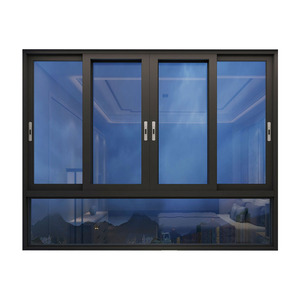
Bi-Folding Corner Window Reflective Glass Water-Proof Aluminum System
Inquire Specification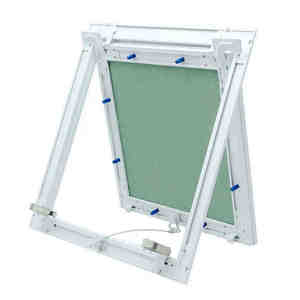
Seamless Hidden Recessed Moisture-Proof Soundproof Inspection Access Door
Inquire Specification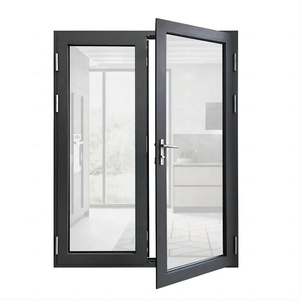
Precision Engineered Arch Top Architectural Aluminum Frame Door
Inquire Specification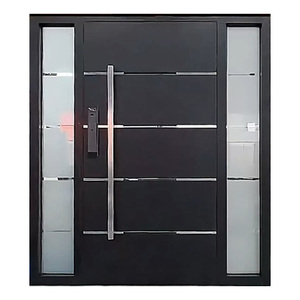
Modern European Security Waterproof Aluminum Front Entry Door
Inquire Specification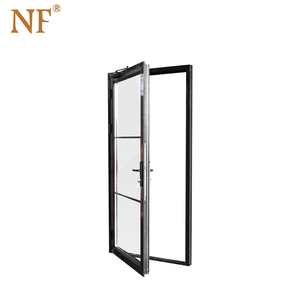
Double Leaf Fireproof Insulated Aluminum Architectural Door System
Inquire Specification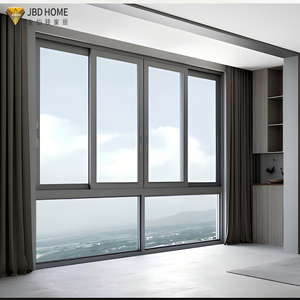
Balcony Hurricane-Proof Tempered Glass Horizontal Aluminum Sliding Windows
Inquire Specification
Modern Aluminum-Clad Wood Folding Door with Triple Insulated Glass
Inquire SpecificationTechnological Evolution of OEM/ODM Architectural Aluminium Fenestration
An analysis of structural metallurgy, thermal break mechanics, and high-performance glazing technologies reshaping global facade engineering.
6063-T5 vs 6060-T66 Extrusion Alloys
Modern OEM/ODM aluminium glass window factories have shifted from standard commercial profile alloys to high-tensile 6063-T5 and T6 structural alloys. Wall thicknesses ranging from 1.4mm for residential casements up to 3.0mm for high-rise curtain walls ensure minimal deflection under extreme wind loads (up to 5000 Pa), satisfying stringent structural limits (L/175 and L/250).
PA66 GF25 Thermal Break Innovations
To eliminate thermal bridging in metal frames, leading factories integrate Polyamide (PA66) structural strips reinforced with 25% glass fiber. This mechanical separation achieves U-factors as low as 0.8 to 1.4 W/m²K, drastically reducing thermal conduction compared to obsolete pour-and-debridge methods while matching the thermal expansion coefficient of aluminium alloy.
Advanced Low-E & Inert Gas Glazing
Evolution in glass processing enables double and triple IGU (Insulated Glass Units) featuring double-silver or triple-silver Low-E coatings, 90%+ Argon gas fill, and Warm Edge TPS (Thermo Plastic Spacer) technology. This optimizes Solar Heat Gain Coefficients (SHGC) down to 0.22 while preserving maximum visible light transmittance (VLT).
Engineering Information Gain: Surface Coating Longevity Standards
A critical benchmark for top-tier OEM/ODM factories is adherence to AAMA 2605 specifications for architectural powder coatings. Utilizing PVDF (Polyvinylidene Fluoride) fluorocarbon resins guarantees color retention and chalking resistance under intense UV exposure for over 20 years, far outperforming basic AAMA 2603 commercial coatings.
Strategic Global Procurement Trends (2025–2035)
How commercial developers, window wholesalers, and architectural firms are adapting supply chains to meet decarbonization and building performance codes.
1. Decarbonization & Embodied Carbon (EPDs)
Global building codes (such as Australia's NCC 2022 and Europe's EPBD) increasingly demand Environmental Product Declarations (EPDs). Sourcing from factories utilizing primary aluminium smelted via hydropower drastically reduces the embodied carbon metric of window assemblies from 18 kg CO2e/kg down to under 4 kg CO2e/kg.
2. Ultra-Slim Sightlines & Structural Bonding
Architectural demand leans heavily toward minimalist design with frame face widths under 30mm. Achieving structural integrity requires factories to employ two-component structural silicone bonding (e.g., Dow Corning 983), turning the glass pane into a structural element that resists wind pressure and torsion.
3. Factory-Integrated Hardware & Smart Controls
Procurement is shifting away from site-assembled components toward complete OEM factory integration. Multi-point security gearboxes (ROTO, Siegenia, Kinlong), concealed hinges, chain winders, and motorized smart actuators are pre-installed and calibrated at the factory, cutting jobsite labor costs by up to 40%.
OEM/ODM Technical Performance Matrix
Comparative engineering parameters across major structural systems produced in advanced aluminium fenestration plants.
| System Type | Alloy & Wall Depth | U-Factor Range (W/m²K) | Acoustic Rating (Rw / STC) | Max Wind Load (Pa) | Primary Target Compliance |
|---|---|---|---|---|---|
| Non-Thermal Aluminium Casement | 6063-T5 (1.4mm - 2.0mm) | 3.8 - 5.2 | Rw 28 - 34 dB | 2500 - 3500 Pa | Tropical / Mild Regions (AS2047 N3/N4) |
| Thermally Broken Aluminium Awning | 6063-T6 (2.0mm + PA66) | 1.4 - 2.2 | Rw 36 - 42 dB | 4500 Pa | NCC 2022 / NZS4211 / NAFS CW Class |
| Aluminium-Timber Composite Tilt & Turn | 6060-T66 + Solid Oak/Pine | 1.0 - 1.6 | Rw 40 - 45 dB | 3000 Pa | European Passive House / Premium Villa |
| Hurricane Impact Heavy Sliding Door | 6063-T6 (3.0mm Reinforcement) | 2.2 - 2.8 | Rw 38 - 44 dB | 8000+ Pa (TAS 202) | Miami-Dade HVHZ / Caribbean Coastal |
International Compliance & Testing Standards
Exporting to key global regions demands rigorous third-party laboratory audits and certified physical testing protocols.
Australia & New Zealand (AS2047 / NZS4211)
Certified through annual AGWA (Australian Glass and Window Association) audits. Mandatory testing includes Deflection (AS4420.2), Air Infiltration (AS4420.4), Water Penetration Resistance (AS4420.5 at 150 Pa - 600 Pa), and Ultimate Limit State (AS4420.6). Safety glass must strictly comply with AS1288 grade A requirements.
North America (NAFS / AAMA / CSA)
Evaluated under the North American Fenestration Standard (NAFS 101/I.S.2/A440) across performance classes R, LC, CW, and AW. Test sequences measure uniform static structural air pressure, water resistance under dynamic pressure, forced-entry resistance, and hardware operating force requirements.
Miami-Dade HVHZ Impact Protocols
Designed for high-velocity hurricane zones. Testing requires TAS 201 (Large Missile Impact test using 9-lb 2x4 timber shot at 50 ft/s), TAS 202 (Uniform Static Air Pressure), and TAS 203 (9,000 cycles of positive and negative wind pressure loading), combined with DuPont SentryGlas (SGP) laminated glass interlayers.
Factory OEM/ODM Production Ecosystem
Behind SAGA's 16 years of manufacturing precision lies an integrated infrastructure built for volume, quality, and customization.
Precision CNC Machining
Utilizing 4-axis German CNC machining centers capable of milling, drilling, and routing extruded aluminum profiles up to 6.5 meters with sub-millimeter tolerance (±0.1mm), eliminating hand-assembly inconsistencies in corner crimping and lock mortising.
100% Pre-Shipment Trial Assembly
Every custom order undergoes 100% full-scale trial assembly on factory test frames prior to packaging. Hardware operation, gasket compression, diagonal tolerances, and glass clearance are verified and logged in project QC books.
Engineered Freight Packaging
Standard ocean export shipping poses risks of corrosion and scratching. Products are sealed in moisture-vapor barrier films, corner-protected with high-density EPE foam, and encased in fully enclosed IPPC-certified fumigated plywood crates loaded from Fuzhou or Xiamen ports.
Frequently Asked Questions for OEM/ODM Buyers
Technical and commercial clarity for importers, developers, architects, and general contractors.
Which types of buyers does SAGA supply custom windows and doors to?
We supply B2B wholesalers, stocking dealers, commercial developers, custom home builders, general contractors, architectural firms, and individual project owners. For each buyer type, our engineering office provides tailored support ranging from die customization and extruded profile supply to complete unitized shop drawings ready for local council permit approvals.
What is the standard production lead time for OEM/ODM orders?
Standard manufacturing lead time is 35 to 50 calendar days following official CAD shop drawing sign-off and deposit receipt. For custom powder-coat color matching (Kynar 500 / PVDF) or custom extrusion die development, an additional 10 to 15 days is allocated for die testing and sample color plaque verification.
Can SAGA supply physical window samples for local laboratory or compliance testing?
Yes. We regularly manufacture standard-size sample corner sections (showcasing frame profile, thermal break strip, sealant, and double-glazed corner construction) as well as full-scale sample windows for independent NATA/AAMA lab verification. Sample units are complimentary; international express freight or container consolidation is arranged per buyer preference.
What engineering support and technical documentation is provided before production?
Our in-house facade engineering department supplies complete AutoCAD elevation drawings, cross-sectional connection details, installation flashing guides, wind load calculation reports, and thermal modeling performance files (WHER/LBNL WINDOW software outputs) to guarantee absolute alignment with your project specification.
Do SAGA window and door systems satisfy Australian (AS2047) and New Zealand (NZS4211) codes?
Yes. Our product ranges have passed independent NATA-accredited laboratory testing in accordance with AS2047:2014, AS1288:2021, and NCC 2022 in Australia. For New Zealand, our engineering certificates satisfy NZS4211:2008 and cover key Building Code clauses B1 (Structure), B2 (Durability), E2 (External Moisture), F2 (Hazardous Building Materials), G4 (Ventilation), G7 (Natural Light), and H1 (Energy Efficiency).
Which shipping ports and trade delivery terms are supported?
Primary loading ports are Fuzhou Port and Xiamen Port in Fujian Province, China. We support international commercial trade terms including FOB (Free on Board), CIF (Cost, Insurance, and Freight), DDP (Delivered Duty Paid), and DAP (Delivered at Place) direct to construction sites or regional warehouses.
What payment methods and financial guarantees are accepted for bulk orders?
Commercial transactions are typically processed via T/T (Telegraphic Transfer bank transfer) or Alibaba Trade Assurance escrow protection, providing end-to-end payment security, milestone tracking, and guaranteed dispatch timelines.
What aluminum frame finishes and customized color-matching options are available?
We offer fluorocarbon PVDF liquid spraying, Interpon / Dulux architectural powder coating (AAMA 2604 / AAMA 2605 certified), anodized finishes (15µm to 25µm film thickness), and heat-transfer 3D woodgrain textures. Colors can be customized to any RAL, Pantone, or Dulux color code.
Partner with a Verified OEM/ODM Aluminium Window Factory
Accelerate your project with custom engineered shop drawings, verified code compliance, and factory-direct pricing. Contact our engineering desk today for a detailed technical quote.