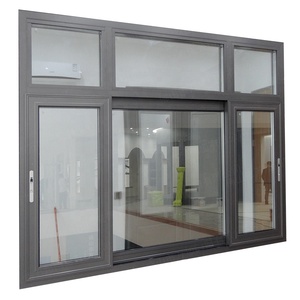
Hurricane Impact Aluminum Glass Customized Sliding Window
- Structural Rating: TAS 201/202/203
- Acoustic Insulation: STC 42 dB
- Glazing: Double Laminated Impact
Explore our export-grade architectural window systems. Each unit features custom powder coating, high-yield alloy profiles, and precision energy-efficient glazing tailored to international structural and thermal codes.
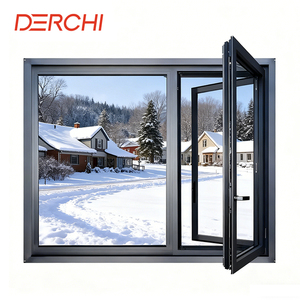
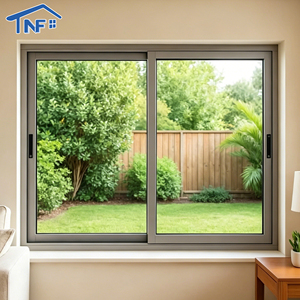
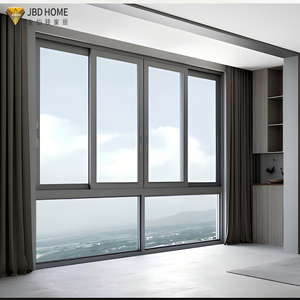
A comprehensive breakdown of metallurgical selection, structural extrusion design, thermal break mechanics, and precision automated manufacturing protocols driving world-class fenestration performance.
We utilize primary 6063-T5 and high-tensile 6063-T6 architectural grade aluminum extrusions engineered with nominal wall thicknesses from 1.4mm for residential casements up to 2.2mm+ for heavy-duty commercial curtain walls. This structural rigidity supports wind pressure loads exceeding 5000 Pa without frame deflection.
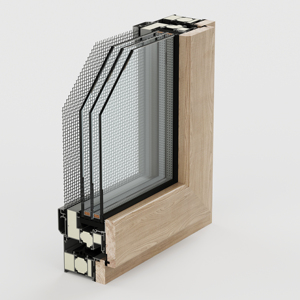
Our thermally broken profile systems incorporate Technoform PA66 GF25 (25% glass fiber reinforced polyamide) thermal barrier strips. By decoupling the exterior and interior aluminum profiles, we eliminate thermal bridging, achieving ultra-low system U-values down to 1.1 W/m²K for Passive House projects.
Factory coatings comply with AAMA 2604 and AAMA 2605 high-performance architectural specifications. Utilizing PPG Fluorocarbon (PVDF) and AkzoNobel Interpon powder coatings, profiles undergo a 10,000-hour salt spray test, offering superior UV resistance, gloss retention, and protection against coastal salt-air corrosion.
The global market for high-performance architectural fenestration is experiencing a paradigm shift. Buyers, commercial developers, and envelope engineers no longer select window suppliers based on unit cost alone. Regulatory shifts, severe weather patterns driven by global climate dynamics, and aggressive decarbonization mandates have turned window specification into a precise engineering science.
Building codes in North America (Energy Star v7.0), Australia (NCC 2022 H1 energy mandates), and Europe are driving the adoption of triple-glazed Insulated Glass Units (IGUs) with argon gas fills and warm-edge spacer technology. The integration of double soft-coat Low-E silver layers reflects far-infrared solar thermal energy while permitting high visible light transmittance (VLT > 70%), dramatically reducing HVAC loads in both tropical and alpine environments.
With coastal urban zones expanding rapidly across Florida, the Caribbean, Australia, and East Asia, storm resilience is paramount. Modern OEM specifications mandate rigorous TAS 201 (Large Missile Impact), TAS 202 (Uniform Static Air Pressure), and TAS 203 (Cyclic Wind Pressure Loading) compliance. Glazing configurations utilizing structural SentryGlas® (SGP) interlayers ensure that glass panes remain intact even when impacted by wind-borne debris at speeds exceeding 34 m/s.
| Global Market Standard | Testing Protocol / Code Compliance | Key Verified Performance Parameters | Target Sourcing Application |
|---|---|---|---|
| Australia & New Zealand | AS2047:2014, AS1288:2021, NZS4211:2008 | Structural deflection, water penetration resistance (up to 700Pa), air infiltration (L/s/m²) | Residential & Commercial developments across AU/NZ |
| North America (US & Canada) | NAFS (AAMA/WDMA/CSA 101/I.S.2/A440) | Uniform static air pressure (ASTM E330), water tightness (ASTM E331), forced entry resistance | Multi-family residential, mid-rise commercial buildings |
| Florida & Caribbean | Miami-Dade NOA, TAS 201/202/203 | 9-lb wooden 2x4 missile impact at 50 fps, cyclic positive/negative wind load 9000 cycles | Coastal high-velocity hurricane zones (HVHZ) |
Architects are increasingly demanding slim frame profiles to maximize daylighting area. OEM factories must meet tight machining tolerances (+/- 0.2mm) to ensure frame rigidity despite structural material reduction. Simultaneously, modern window assemblies integrate motorized chain winders and IoT smart actuators linked directly to Building Management Systems (BMS) for automated natural ventilation and emergency smoke evacuation.
Inside our digitalized Industry 4.0 production center: how automated robotics, 4-axis CNC machining, and advanced glass processing deliver uncompromised quality for high-volume custom OEM orders.
Every profile length undergoes computer-controlled milling for hardware mortises, drainage channels, and lock slots. Frame corners are joined using heavy-duty hydraulic corner crimpers paired with dual-component polyurethane corner key adhesive (Weiss Cosmovoll), guaranteeing watertight joints with exceptional shear strength.
Our glass processing lines perform automated washing, glass cutting, Low-E edge deletion, robotic warm-edge spacer placement, and automated argon gas filling (reaching > 90% gas density). Dual-seal secondary silicone sealant ensures hermetic longevity and prevents gas leakage across 25-year service lifespans.
Direct technical answers to common questions asked by commercial importers, building contractors, and window system distributors during factory auditing and order placement.
Structural wind load design is dictated by building height, local terrain category, and ultimate limit state (ULS) design pressure (calculated via AS/NZS 1170.2, ASCE 7, or EN 1991). Our engineering team performs finite element analysis (FEA) on profile cross-sections to verify moment of inertia (Ix and Iy values). For high-wind zones, profile wall thickness is upgraded to 2.0mm–2.5mm with internal steel or aluminum structural stiffeners to limit deflection under full design load to less than L/175 or L/250.
Our OEM workflow follows a 6-stage quality gateway: (1) Initial CAD/BIM drawing review and architectural specification review; (2) Detailed shop drawing generation (cross-sections, fixing details, drainage path); (3) Client sign-off and 3D-printed/sample physical profile approval; (4) Precision extrusion, CNC cutting, surface coating, and IGU fabrication; (5) In-house QC testing for water air infiltration and dimensional accuracy; (6) Cradled sea-worthy steel/wooden crate packing and shipping container loading.
For custom profile geometries requiring non-standard extrusion dies, we engineer matrix dies in-house. Dies are produced via precision EDM wire cutting. Standard die lead time is 14 to 21 days. We offer die cost rebate incentives: if the buyer's cumulative order volume exceeds a predefined tonnage threshold (typically 10 to 15 metric tons), 100% of the initial tooling and die charge is refunded to the client.
Glass and aluminum joinery are vulnerable to dynamic impact, moisture, and micro-vibrations during long-distance ocean freight. We wrap all window units in 80-micron protective film, pad corners with shock-absorbing EPE foam guards, and pack frames into fully enclosed fumigated plywood crates or customized steel A-frames. Desiccant packs are enclosed within vapor-barrier wrapping to prevent moisture condensation during tropical ocean transits.
Yes. Our window systems undergo annual independent audits under the Australian Glass and Window Association (AGWA) compliance framework. Test reports cover AS2047 (windows in buildings) and AS1288 (glass in buildings safety glazing), satisfying all requirements of the National Construction Code (NCC 2022). Comprehensive test certificates and structural NATA-accredited test results are provided for council certifier approval prior to shipment.
Accelerate your project timelines, reduce unit procurement costs, and ensure absolute compliance with international structural standards. Connect directly with our fenestration engineering team to request full product catalogs, profile section drawings, and factory-direct wholesale quotes.