Featured Architectural Aluminium Door Systems
Direct-factory OEM/ODM door solutions engineered for luxury residential, high-traffic commercial, and passive acoustic environments.
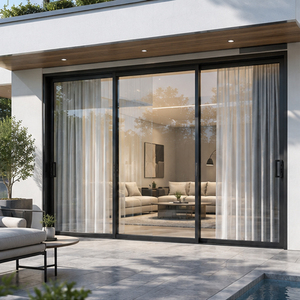
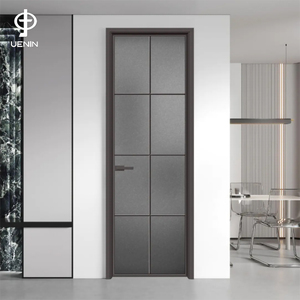
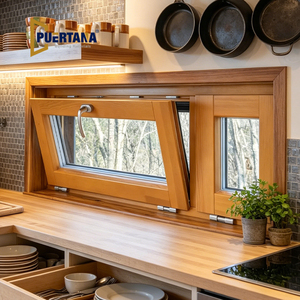
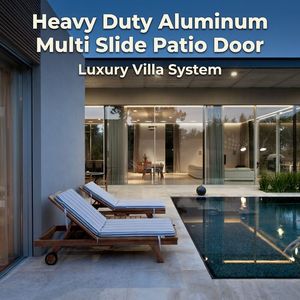
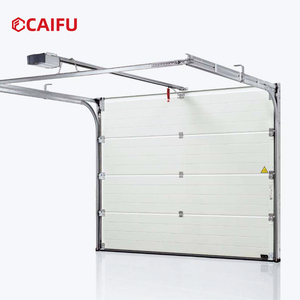
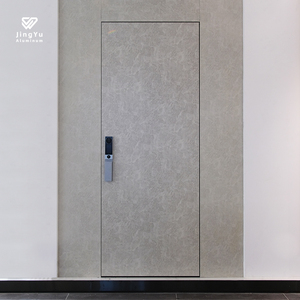
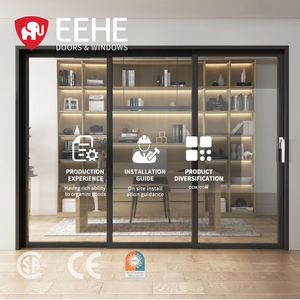
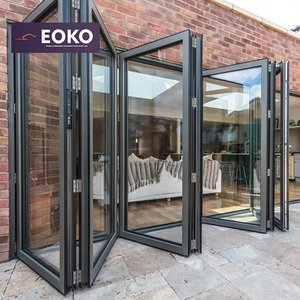
Executive Overview: The Structural Shift in Architectural Interior Door Systems
In modern architectural design and interior space planning, the transition from legacy timber and standard hollow-core doors to precision-engineered extruded aluminium internal door systems represents a fundamental material evolution. Global commercial developers, hospitality chains, luxury residential builders, and architectural procurement managers increasingly specify extruded aluminium profile doors for interior spatial partitioning due to their dimensional stability, superior strength-to-weight ratio, structural longevity, and minimal visual sightlines.
Unlike traditional timber doors which are prone to hygroscopic expansion, warping, swelling, and delamination under varying humidity levels, high-grade 6063-T5/T6 extruded aluminium frame profiles remain permanently inert. This structural rigidity allows architects to specify floor-to-ceiling interior partitions, ultra-slim pocket sliding doors, micro-profile hinged glass doors, and acoustic bi-folding partition walls up to 3.5 meters in height without compromising cycle durability or frame alignment.
Structural Permanence & Zero Warping
Fabricated using primary 6063-T5 architectural aluminium alloy extrusions, maintaining tight fabrication tolerances (±0.5mm) across high-traffic residential and commercial interior installations.
Acoustic Isolation Engineering
Integrated acoustic perimeter gasketing combined with 8mm to 12mm laminated acoustic glass options delivers laboratory-tested sound attenuation up to STC 45dB for executive boardrooms and master suites.
Ultra-Slim Minimalist Sightlines
Proportioned narrow frames (as slim as 16mm vertical stile sightline) maximize daylight transfer while supporting oversized heavy glass payloads without sagging over extended usage cycles.
Engineering Matrix: Extruded Aluminium Internal Door Technical Specifications
When selecting a factory direct manufacturer and exporter for commercial-grade aluminium interior door systems, technical evaluation of alloy composition, anodizing/powder coating film thickness, glass performance, and hardware mechanical cycles is mandatory to ensure compliance with international building standards such as AS2047, NZS4211, NAFS, and European EN standards.
| Specification Parameter | Standard Architectural Grade | Premium Commercial / Export Grade | Technical / SEO Information Gain Note |
|---|---|---|---|
| Alloy & Temper | 6063-T5 Extruded Aluminium | 6063-T6 Precision Heat-Treated | T6 temper delivers 15-20% higher yield strength for ultra-tall custom doors. |
| Profile Wall Thickness | 1.2mm – 1.4mm | 1.6mm – 2.0mm Reinforced Stiles | Prevents frame flexing during heavy door operation and concealed hinge load-bearing. |
| Surface Finish Standard | Standard Anodized 10-15μm | AAMA 2604 / PVDF Powder Coating (≥25μm) | High resistance to chemical cleaning agents, salt air, and interior scratch damage. |
| Acoustic Performance | STC 28dB – 32dB (Single Glass) | STC 38dB – 45dB (Double Laminated) | Employs acoustic PVB interlayers and perimeter magnetic/EPDM drop seals. |
| Hardware Cycle Life | 50,000 Cycles (EN 1191) | 200,000+ Cycles Heavy-Duty Grade | Uses German/European concealed 3D adjustable hinges and soft-closing dampeners. |
| Glass Safety Compliance | Standard Tempered (SGCC) | ANSI Z97.1 / AS/NZS 2208 Laminated Safety Glass | Ensures shatter-proof containment for high-traffic public, hospitality, and residential spaces. |
Top 10 Benchmark Evaluation Criteria for Selecting an Aluminium Internal Doors Factory & Exporter
Navigating global B2B procurement for aluminium interior doors requires a rigorous audit framework. Below are the top 10 technical criteria that architectural procurement teams, contractors, and building product importers must evaluate when auditing China-based manufacturing facilities and export vendors:
- Primary Extrusion Metallurgy and Billet Sourcing: Top-tier factories utilize 100% virgin aluminium billets rather than remelted scrap aluminium. Primary 6063-T5/T6 alloy guarantees consistent anodizing surface clarity, eliminating structural micro-fissures and color banding across large batches.
- Precision CNC Machining & Mitre Corner Crimping: High-precision 4-axis CNC machining centers perform lock-pocket milling, concealed hinge routing, and corner joinery prep. Heavy-duty cast corner cleats combined with dual-component polyurethane corner adhesive ensure zero joint gap expansion over time.
- Advanced Surface Finish & Coating Integrity: Verify factory coating processes against ISO 9227 Neutral Salt Spray tests and AAMA 2604/2605 architectural standards. Anodized matte black, brushed champagne, and tactile woodgrain transfer finishes must resist UV degradation, moisture staining, and abrasive cleaning.
- Concealed Magnetic Hardware & German Mechanism Integration: Export-ready factories integrate top-tier hardware brands (such as ROTO, Hoppe, Siegenia, Kinlong) alongside proprietary magnetic latch systems. Magnetic latches retract flush into the door jamb when open, preventing latch plate scraping and maintaining pristine frame aesthetics.
- Acoustic & Thermal Gasketing Architecture: Superior soundproof internal doors incorporate continuous co-extruded EPDM weatherstripping and auto-drop bottom seals. When the door closes, the bottom acoustic plunger automatically drops to seal the floor gap, eliminating noise transmission and draft airflow.
- Bespoke Glass Profile Customization: Professional factories support specialized decorative glass options, including low-iron ultra-clear glass, fluted/reeded glass, bronze-tinted glass, frosted privacy glass, and Smart Electrochromic switchable privacy glass integrated directly into double-glazed door leaves.
- Pre-Assembly Quality Control & Zero-Tolerance Testing: Audit whether the factory conducts 100% pre-erection frame testing prior to packing. Frame squareness, diagonal tolerance within ±1mm, hinge smooth swing force, and latch engage mechanics must be verified before crating.
- International Certification and Audit Documentation: Reliable exporters maintain verified compliance certificates, including AGWA audited AS2047/AS1288 (Australia), NAFS/AAMA (North America), CE marking (Europe), and ISO 9001 quality management systems.
- Export-Grade Protective Packaging & Fumigated Wooden Crating: Sea freight logisitics require heavy-duty protective packaging. Frames and door leaves must be wrapped in protective PE scratch film, corner-guarded with high-density EPE foam, and sealed inside fully enclosed, ISPM-15 compliant fumigated plywood crates to prevent transit impact and moisture damage.
- OEM/ODM Shop Drawing and BIM Engineering Support: A expert exporter offers dedicated technical support, converting architectural floor plans into detailed 2D CAD shop drawings, section profiles, and 3D BIM models for certifier and client sign-off prior to production lock-in.
Global Procurement & Architectural Trends (2025–2030 Insights)
As global architectural design shifts toward open-plan flexibility with optional spatial privacy, several clear procurement trends are reshaping the aluminium internal door industry:
1. Minimalist Pocket & Ceiling-Recessed Track Systems
Architects are abandoning exposed top tracks in favor of zero-sightline ceiling recessed sliding tracks. Track mechanisms are embedded directly into concrete slabs or dropped ceiling bulkheads, leaving only floating glass and ultra-narrow aluminium frame stiles visible.
2. Integrated Smart Access & Biometric Latches
Internal office partitions and luxury bedroom suites are rapidly adopting battery-operated or hardwired concealed smart locks featuring fingerprint sensors, RFID keycards, and Bluetooth app connectivity seamlessly integrated within slim 40mm door stiles.
3. Sustainable Low-Carbon Recycled Aluminium
International building codes increasingly mandate low embodied carbon products. Leading aluminium door exporters are adopting green-certified hydroelectric-smelted aluminium billets to help commercial projects achieve LEED Gold and BREEAM sustainability credentials.
Enterprise Strengths: Why SAGA / ROPO Stands as a Premier Manufacturing Partner
SAGA Aluminum Doors & Windows Co., Ltd. brings over 16 years of direct factory manufacturing experience, supplying high-performance custom aluminium, uPVC, and aluminium-timber windows and doors to architects, builders, wholesalers, and project developers across more than 25 countries worldwide.
- State-of-the-Art Production Base: Located in Minhou County, Fuzhou, Fujian, our modern production facility operates high-precision automated CNC cutting centers, corner crimping machinery, and double-head glass assembly lines.
- Rigorous AGWA & NAFS Compliance: Our product series are engineered to meet stringent international standards, including Australian AS2047:2014 / AS1288:2021 (AGWA audited), New Zealand NZS4211:2008, North American NAFS standards, and Miami-Dade TAS 201/202/203 hurricane impact guidelines.
- Comprehensive Architectural Range: From ultra-slim internal glass sliding partitions and acoustic hinged doors to heavy-duty exterior multi-slide patio doors, passive house timber-clad windows, garage doors, glass balustrades, and hurricane shutters.
- Full OEM/ODM Engineering Service: We provide tailored technical proposals, section drawings, installation guidance, and flexible trade terms (T/T, Alibaba Trade Assurance) to ensure seamless delivery from order placement to job site arrival.
B2B Buyer Frequently Asked Questions (FAQ)
Partner with a Leading Architectural Aluminium Door Factory
Submit your project window & door schedules, CAD plans, or procurement specifications to receive a direct-factory engineering quote and shop drawing evaluation within 24 hours.
Contact Us