Featured Architectural Window & Door Systems
Factory-direct thermal break and structural glass solutions engineered for international building codes.
1. B2B Executive Summary: The Evolution of Corner Fenestration
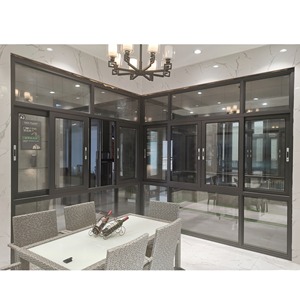
In modern high-end residential real estate, ultra-luxury villas, and high-rise commercial architecture, the demand for open visual connections has shifted corner windows from niche structural features into mandatory architectural specs. Structural aluminum corner windows—available as frameless glass-to-glass butt joints or reinforced structural post assemblies—eliminate vertical structural obstructions, optimizing interior daylighting while maximizing panoramic view angles.
However, engineering 90-degree aluminum corner window systems presents unique challenges for architectural specifiers, general contractors, and global importers. Unlike conventional planar windows, corner fenestration must absorb bidirectional thermal expansion, resist complex dynamic wind shear forces, prevent air infiltration under extreme rain conditions, and mitigate linear thermal bridging.
This technical whitepaper provides B2B procurement managers, real estate developers, and architectural specifiers with an empirical evaluation framework. Below, we benchmark the Top 10 Aluminum Corner Windows Factories & Exporters based on alloy metallurgy (6063-T5 vs. T6), structural glazing silicone integration, thermal break performance, and compliance with international standards such as AS2047:2014, NZS4211:2008, NAFS, and Miami-Dade TAS 201/202/203.
2. Benchmark Matrix: Top 10 Aluminum Corner Windows Exporters
A technical cross-comparison evaluating global manufacturing capabilities, alloy specifications, engineering compliance, and export performance metrics.
| Rank / Exporter | Primary Alloy & Profiles | Corner Structural Type | Thermal Break Tech | Standards & Testing Compliance | Target Buyer Segments |
|---|---|---|---|---|---|
| 01 SAGA Windows & Doors | 6063-T5 / T6 High-Tensile Architectural Aluminum | Frameless Glass-to-Glass & Heavy-Duty Structural Post | Polyamide PA66GF25 Multi-Chamber Strip | AS2047, AS1288, NZS4211, NAFS, Miami-Dade TAS 201-203 | Builders, Wholesalers, Commercial Developers, Architects |
| 02 Schüco International | EN AW-6060 / 6063 Precision Alloy | System Integrated Corner Mullion | Super-Insulated (SI) Polyurethane / Polyamide | CE, DIN EN 12207, Passive House Institute Certified | Tier-1 Commercial Contractors, European Specifiers |
| 03 Reynaers Aluminium | 6060-T66 Architectural Profile | 90-Degree Zero-Sightline Corner Joinery | High-Performance Fiberglass Reinforced Strips | Qualicoat, Qualanod, CE Mark, NAFS Compliant | High-End Architectural Firms, Luxury Villa Developers |
| 04 YKK AP Inc. | Anodized & Fluoropolymer Coated Extrusions | Mitred Aluminum Corner & Curtain Wall Corner | ThermaCore Iso-Web Thermal Isolators | AAMA / WDMA / CSA 101/I.S.2/A440, ASTM E283/E330 | North American Commercial Projects, Institutional Bldgs |
| 05 Technal (Hydro Group) | Recycled Hydro CIRCAL 75R Low-Carbon Aluminum | Minimalist Glass Corner & Motorized Sliding Corner | Multi-Cavity Thermal Insulation Barriers | ISO 14001, Cradle to Cradle Certified, EN Standards | Eco-Centric Commercial Projects, European Specifiers |
| 06 Aluk Group | 6063-T5 Anodized & Powder-Coated Profile | Standard Structural Post & Bifold Corner | Polyamide Thermal Barrier Systems | BS 6375, PAS 24 Security Certified, CE Marked | UK & European Residential Fabricators, Importers |
| 07 Cortizo Systems | Extruded Aluminum Alloy 6063 | Slim-Sightline 90-Degree Corner Sliding Glass | Tubular Polyamide 24mm–34mm Strips | UNE-EN ISO 9001, Qualicoat, Qualideco Certified | European & South American Architectural Importers |
| 08 Fleetwood Windows | Heavy-Gauge USA Manufactured Extrusions | Glass-to-Glass Structural Silicone Corner | Thermal Break Polyurethane Cavity Pour | NFRC Rated, Title 24 California Compliant, AAMA | North American Luxury Modern Architectural Homes |
| 09 JELD-WEN Architectural | Aluminium Clad Structural Timber & Pure Extrusion | Timber-Reinforced & Metal Corner Assemblies | Composite Dual-Material Separation | NAFS, Energy Star Compliant, CSA Certified | North American Sub-Division Developers & Retailers |
| 10 LIXIL Building Products | High-Durability Japanese Anodized Extrusions | Compact Residential Corner Windows | Resin-Aluminum Hybrid Thermal Strips | JIS A 4706 Wind & Water Resistance Standards | Asia-Pacific High-Density Residential Developments |
3. Deep-Dive Engineering: Structural & Thermal Physics
Evaluating raw materials, structural glazing silicones, PA66GF25 insulation barriers, and 90-degree corner joinery mechanics.
Alloy Metallurgy: 6063-T5 vs. 6063-T6
Aluminum corner windows require superior flexural yield strength to prevent frame twist under wind pressure. Top-tier factories utilize 6063-T5 or T6 grade extruded aluminum alloys with a wall thickness ranging between 1.8mm and 3.0mm, ensuring tensile strength exceeding 205 MPa.
Thermal Break Physics (PA66GF25)
Unbroken aluminum profiles act as direct thermal conductors. Exporters integrate 24mm to 34mm multi-chamber Polyamide (PA66GF25 with 25% glass fiber reinforcement) strips, achieving low thermal transmittance values (U-factor ≤ 1.4 W/m²K when combined with Low-E double/triple IGUs).
Structural Silicone Glazing (SSG)
For frameless corner windows, the 90-degree glass intersection uses high-modulus, UV-resistant Structural Silicone Glazing (such as Dow Corning 983 or SikaSil SG-20). This maintains air and water tightness while absorbing seismic and differential thermal movement.
Frameless Glass-to-Glass vs. Structural Post Corner Assemblies
When specifying aluminum corner windows, buyers must choose between two primary structural corner typologies:
- Frameless Glass-to-Glass 90° Corner: The outer pane of the double-glazed Insulated Glass Unit (IGU) extends past the inner pane, mitered at 45 degrees and field-sealed with structural silicone sealant. This option provides uninterrupted 90-degree panoramic views without vertical aluminum mullions.
- Structural Post Aluminum Corner: Employs an engineered 90-degree corner mullion post extruded from heavy-wall 6063-T6 aluminum. This style is designed for high-wind coastal zones, high-rise buildings, and large-span openings requiring high design wind pressure ratings (up to 4500 Pa).
4. Future Trends in B2B Aluminum Corner Window Procurement
Key technological advancements transforming global supply chains, building decarbonization, and fenestration architecture.
1. Zero-Threshold Motorized Corner Sliding Systems
The boundary between interior living space and outdoor patios is blurring. Future procurement favors pocketing 90-degree open corner sliding door systems equipped with subterranean drainage tracks and concealed electric drive actuators capable of moving 400kg glass sashes effortlessly.
2. Integration of Vacuum Insulated Glass (VIG)
To meet zero-carbon building targets (such as Passive House and Australian NCC 2022 7-Star energy mandates), factories are incorporating 8.3mm thin Vacuum Insulated Glass into slim aluminum corner frames, delivering thermal insulation equivalent to solid masonry walls (U-value < 0.60 W/m²K).
3. Decarbonized Low-Carbon Extrusions
Global developers are requesting Environmental Product Declarations (EPDs). Leading exporters utilize low-carbon aluminum smelted using hydroelectric energy, reducing embedded carbon footprints from the industry average of 18kg CO2/kg aluminum down to less than 4.0kg CO2/kg.
5. Global Building Code Compliance & Testing Standards
Importing aluminum corner windows requires strict adherence to localized structural, energy, and safety glass codes.
| Target Region | Mandatory Test Standards | Technical Verification Criteria | Required SAGA Factory Certification |
|---|---|---|---|
| Australia & New Zealand | AS2047:2014, AS1288:2021, NZS4211:2008, NCC 2022 | Structural Wind Load (Ultimate & Serviceability), Water Penetration Resistance (up to 600 Pa), Air Infiltration | AGWA Accredited Compliance Certificate, NATA Lab Test Reports |
| North America (USA & Canada) | NAFS (AAMA/WDMA/CSA 101/I.S.2/A440), NFRC Thermal Rating | Uniform Structural Load Deflection (ASTM E330), Forced Entry Resistance, Air Leakage (ASTM E283) | Independent NAFS Test Reports, NFRC Window Energy Ratings |
| Florida & Caribbean (HVHZ) | Miami-Dade TAS 201-94, TAS 202-94, TAS 203-94 | Large & Small Missile Impact Test, High Velocity Hurricane Zone Cyclic Wind Pressure Loading | Miami-Dade Notice of Acceptance (NOA) / Florida Product Approval |
| European Union | EN 14351-1:2006+A2:2016, CE Marking, Passive House Standard | Acoustic Isolation (EN ISO 717-1), Air Permeability (EN 12207), Thermal Transmittance (EN ISO 10077) | CE Mark Certificate of Conformity, Factory Production Control (FPC) ISO 9001 |
6. SAGA Factory Manufacturing & Global OEM/ODM Support
Combining 16+ years of specialized joinery production with end-to-end engineering support for global buyers.
5-Axis CNC Precision Fabrication
Corner window frames demand sub-millimeter tolerances. SAGA operates automated German 5-axis CNC machining centers for profile cutting, hardware routing, and mechanical corner crimping to ensure tight sealant joint integrity.
Custom CAD Shop Drawings & Engineering Support
Every corner window project receives bespoke structural calculations, shop drawings, wind load deflection modeling, and installation section details tailored for local building certifiers and site crews.
Crated Export Packaging & Port Logistics
Corner window units are pre-assembled, water-tested, and packed into steel-reinforced, fully enclosed plywood crates. Direct ocean freight dispatch is managed via Fuzhou or Xiamen ports in Fujian, China.
SAGA 7-Step Standardized Export Workflow
Architectural Review
Evaluating window schedules, wind zones, elevation drawings, and structural attachments.
CAD Shop Drawings
Formulating millimeter-accurate profile cross-sections, corner joinery details, and glass specs.
Corner Sample Proofing
Fabricating structural corner corner-section samples for engineering sign-off.
Precision CNC Machining
Extruding 6063-T5 profiles, inserting PA66GF25 breaks, and automated corner crimping.
Glazing & SSG Sealant
Applying structural silicone glazing sealant, dual-seal edge spacers, and argon gas fill.
100% Pre-Assembly QC
Testing air leakage, water penetration, frame squareness, and surface finish thickness.
Crating & Ocean Logistics
Custom fumigation-free crate packaging and port loading from Fuzhou or Xiamen.
7. Frequently Asked Questions (FAQ) for Importers & Specifiers
Direct answers from our engineering department on structural stability, water ingress prevention, thermal performance, and logistics.
How do frameless glass-to-glass corner windows prevent water leakage under driven rain?
Frameless glass-to-glass 90-degree corner windows rely on a dual-barrier sealing strategy. The primary outer seal is created using high-modulus, weather-resistant Structural Silicone Sealant (such as Dow Corning 983) applied over mitered, toughened glass edges. Inside the sub-frame, internal EPDM gaskets and engineered pressure-equalized drainage channels direct any trace condensation away from the building envelope through hidden weep holes.
What design wind pressure (DP) ratings can aluminum corner windows achieve?
Design Wind Pressure (DP) ratings depend on frame depth, aluminum alloy temper, wall thickness, and glass composition. SAGA structural corner post assemblies constructed from 6063-T6 aluminum with 3.0mm wall thickness reach ultimate wind pressures exceeding 4500 Pa (equivalent to AS2047 Extra High wind ratings or NAFS CW/AW performance classes). Frameless corner glass configurations are custom-calculated using finite element analysis (FEA) to suit project-specific design pressures.
Which types of international buyers does SAGA supply custom aluminum corner windows to?
SAGA directly serves window wholesalers, regional distributors, general building contractors, commercial real estate developers, architectural specifiers, and custom home builders. Each client type receives tailored support: wholesalers get modular profile systems, while developers receive project-specific shop drawings, wind load calculations, and energy rating certificates.
How is thermal expansion managed at 90-degree aluminum corner junctions?
Aluminum expands and contracts at a rate of approximately 2.3 mm per meter per 100°C temperature differential. SAGA corner window frames utilize Polyamide PA66GF25 thermal breaks which match the thermal expansion coefficient of aluminum, preventing joint separation. Corner mechanical connectors employ floating stainless-steel cleat inserts and expansion-tolerant EPDM gasket seals that accommodate micro-movements without compromising structural integrity or water tightness.
What compliance documentation is provided for Australian and New Zealand building certifiers?
SAGA provides AGWA-audited compliance certificates verifying compliance with AS2047:2014 (Windows in buildings), AS1288:2021 (Glass in buildings), and National Construction Code (NCC 2022) energy requirements. For New Zealand projects, compliance documentation covers NZS4211:2008 and NZ Building Code clauses B1 (Structure), B2 (Durability), E2 (External Moisture), F2 (Hazardous Building Materials), and H1 (Energy Efficiency).
What is the standard production lead time and loading port for overseas orders?
The standard manufacturing lead time for custom aluminum corner windows and thermal break joinery ranges between 35 and 50 days following final CAD shop drawing sign-off and deposit receipt. Orders are safely packaged into custom export crates and loaded from Fuzhou or Xiamen sea ports in Fujian Province, China.
Can SAGA manufacture hurricane impact-resistant corner window systems?
Yes. SAGA manufactures heavy-duty impact aluminum corner windows designed to meet Florida Building Code and Caribbean HVHZ requirements. These units utilize heavy-gauge aluminum profiles paired with laminated impact glass (incorporating PVB or SentryGlas SGP interlayers), tested under Miami-Dade TAS 201 (Large Missile Impact), TAS 202 (Uniform Static Pressure), and TAS 203 (Cyclic Wind Pressure Loading).
Accelerate Your Fenestration Project with SAGA Direct Factory Supply
Send us your architectural window schedules, CAD floor plans, or structural specifications for a comprehensive technical evaluation and factory-direct quotation within 24 hours.