Product Catalog
Featured Architectural Aluminum Sliding & Specialty Door Systems
Direct factory OEM manufacturing tested to rigorous Australian, North American, and European performance metrics.
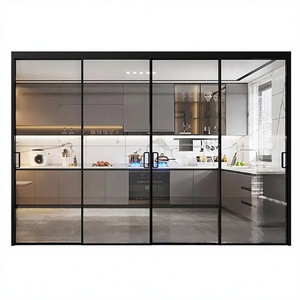
Australia House Design Patio Heat Insulation Sound-Proof Sliding Glass Door Durable Aluminum Alloy Frame Slide Glass Door
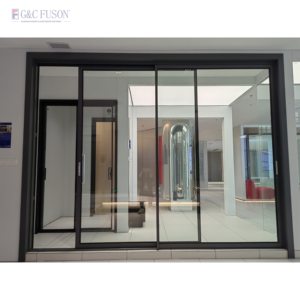
XIYATECH Aluminum Bi Fold Door AS2047 Certified Aluminum Track Multi Panel Stacking Residential Mansion Doors
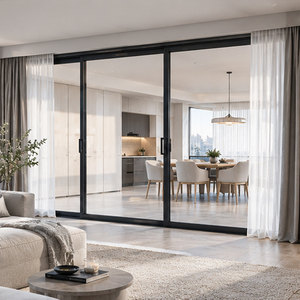
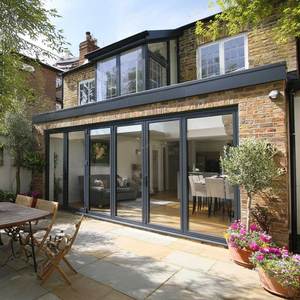
Modern Custom Aluminum Alloy European Style Sliding Door Soundproof Windproof Thermal Break Single Glass Interior Door
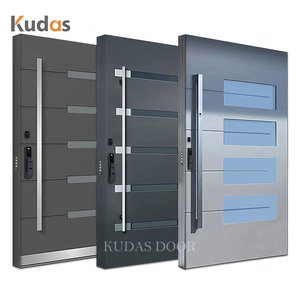
Modern Soundproof Windproof Seal Cast Aluminum Front Entry Pivot Door Villa Exterior Security Entrance Door with Glass
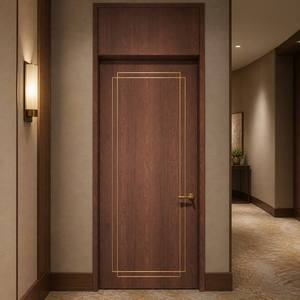
Custom Size Aluminum Wood Composite Fire Door Listed WH Certified IPX5 Waterproof for Apartment Office Commercial Building
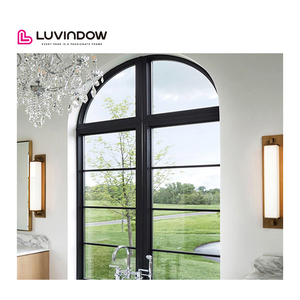
Energy Efficient Villa Aluminum Arch Window Double Glazed Heat Insulated Grill Design French Style Fixed Glass Windows
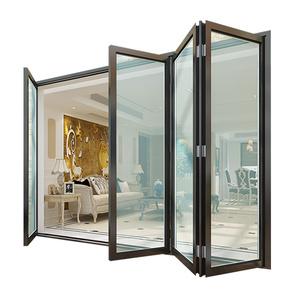
NFRC Factory Hot Sale Bifold Doors Aluminium Folding Patio Bi-fold Aluminum Door Profile Bifold Patio Doors Us Standards
16+
Years Manufacturing Excellence
25+
Global Export Markets
100%
Code Compliance Audited
10-Year
Comprehensive Warranty
Strategic Sourcing Analysis
Evaluating Top 10 Aluminum Sliding Glass Doors Factories: Technical Audit Standards
Selecting a manufacturing partner for architectural aluminum sliding glass doors requires looking far beyond initial unit price quotes. High-performance fenestration demands structural integrity, thermal isolation, precise hardware integration, and multi-jurisdictional code certifications.
In the global building materials landscape, leading aluminum sliding glass door manufacturers are distinguished by their metallurgy, extrusion precision, thermal break engineering, and glass unit assembly processes. The best factories utilize high-grade 6063-T5 or 6063-T6 architectural aluminum alloy profiles, engineered with minimum wall thicknesses ranging from 1.6mm for standard residential sliders up to 3.0mm+ for heavy-duty hurricane-impact or high-rise commercial installations.
When auditing top-tier aluminum door factories, international procurement directors, general contractors, and developers evaluate five core technical benchmarks:
1. Extrusion & Alloy Grade
Tier-1 factories enforce strict alloy purity standards, using prime aluminum billets to achieve optimal tensile strength, yield strength, and surface finish consistency suitable for premium powder coating (AAMA 2604/2605) or anodizing.
2. Thermal Break Polyamide Strips
Leading manufacturers feature precision-crimped Technoform PA66-GF25 (25% glass fiber reinforced polyamide) thermal barriers. This decouples inner and outer frames, dramatically reducing thermal conductivity (U-factor < 1.6 W/m²K).
3. Structural Wind & Impact Resistance
For high-wind and coastal projects, top factories design profiles to withstand massive design pressures (DP rating > 50 PSF), backed by Miami-Dade TAS 201/202/203 large missile impact certifications.
Technical Benchmark Matrix: Standard Suppliers vs. Premier Export-Grade Factories
Comparing technical attributes when procuring large-span aluminum sliding glass doors for luxury residential and commercial developments.
| Evaluation Parameter | Standard Local Supplier | Export-Grade Tier-1 Factory Benchmark |
|---|---|---|
| Profile Alloy & Thickness | Recycled aluminum; 1.2mm - 1.4mm wall thickness | 6063-T5/T6 Pure Billet; 1.6mm - 3.0mm structural wall |
| Thermal Insulation Tech | Non-thermally broken or basic PVC isolators | PA66-GF25 Polyamide Thermal Strips (Technoform) |
| Glazing Specifications | Single glass or basic double glazing (air filled) | Double/Triple Low-E, Argon Filled, Warm Edge Spacers |
| International Testing | In-house mill test report only | AGWA AS2047, NZS4211, NAFS, Miami-Dade TAS 201-203 |
| Hardware & Roller Systems | Generic domestic hardware (< 20,000 cycles) | ROTO, Siegenia, Kinlong Stainless Steel (100,000+ cycles) |
| Water Tightness (Pa) | 150 Pa - 300 Pa resistance | 450 Pa - 600 Pa+ High-Pressure Deflection Resistance |
Industry Insight
Future Procurement Trends for Aluminum Sliding Glass Doors
As global energy codes tighten and architectural design pushes for seamless indoor-outdoor transitions, key sourcing trends are shaping the fenestration market.
Ultra-Slim Interlock Sightlines
Architectural demand is shifting heavily toward ultra-narrow vertical interlocks (ranging from 18mm to 25mm). Minimalist frame profiles maximize daylight intake while relying on structurally bonded glass to maintain wind load stiffness.
Net-Zero & Passive House Efficiency
With NCC 2022 in Australia, H1 energy clauses in New Zealand, and updated Title 24 codes in North America, double and triple-glazed Low-E sliding doors with U-factors as low as 1.0-1.4 W/m²K are becoming mandatory baseline specifications.
Heavy-Duty Lift & Slide Mechanisms
For large architectural spans where individual door sashes exceed 300kg - 400kg, Lift & Slide hardware allows smooth, effortless single-hand operation. When lowered, the weather seals compress tightly onto the track for superior air barrier tightness.
Factory Qualifications
Enterprise Sourcing Advantages & Global Compliance Strength
How our high-capacity OEM fenestration facility guarantees precision, certified compliance, and smooth supply chain execution for builders, architects, and wholesalers worldwide.
16+ Years Export Manufacturing Experience
Dedicated production lines tailored specifically for foreign building codes across 25+ countries, eliminating costly regional compliance errors.
Full Compliance Testing & Accreditation
Audited under AGWA program for AS2047:2014 & AS1288:2021, NZS4211:2008, NAFS North American standards, and Miami-Dade TAS 201/202/203 impact ratings.
Bespoke Engineering & Shop Drawings
Every order includes detailed section drawings, wind-load calculation sheets, and installation details prepared by experienced window engineers prior to production.
Strategic Dual Loading Hubs
Direct export loading from Fuzhou or Xiamen ports, packaged in fully enclosed steel-reinforced wooden crates engineered to eliminate ocean transit damage.
Buyer Knowledge Base
Frequently Asked Questions (FAQ) for Door Sourcing & Procurement
Addressing crucial technical, legal, and operational questions asked by global importers, general contractors, and developers.
Which types of buyers does SAGA supply custom windows and doors to?
We supply wholesalers and dealers, volume builders, property developers, commercial contractors, architects, and luxury homeowners. Each project receives tailored shop drawings and structural specifications matched to the buyer's exact role, site location, and regional building codes.
What is the standard production lead time for customized aluminum sliding doors?
Typical manufacturing lead time is 35 to 50 days following the final sign-off of shop drawings and deposit confirmation. Ocean freight transit time varies by destination port (e.g., 14–20 days to Australian ports, 22–35 days to North American West/East coasts).
Do SAGA aluminum sliding doors comply with Australian (AS2047) and New Zealand (NZS4211) standards?
Yes. Our product range has undergone rigorous third-party audits and physical testing under the AGWA program for AS2047:2014 (Windows in buildings), AS1288:2021 (Glass in buildings), and NCC 2022 guidelines. For New Zealand, our certificates verify compliance with NZS4211:2008 and key NZ Building Code clauses including B1 (Structure), E2 (External Moisture), and H1 (Energy Efficiency).
Can SAGA supply physical window and door corner samples prior to bulk orders?
Yes. We regularly supply standard-size window/door corner samples or scaled sample units demonstrating frame profile extrusions, thermal break layers, corner joint crimping, track systems, and powder-coat finish quality. The sample unit is provided free of charge, with express air freight covered by the buyer.
What structural hurricane protection standard is offered for coastal regions?
For hurricane-prone zones such as Florida, Hawaii, and the Caribbean islands, we manufacture impact-rated sliding doors tested to Miami-Dade County TAS 201-94 (Large Missile Impact Test), TAS 202-94 (Uniform Static Air Pressure Test), and TAS 203-94 (Cyclic Wind Pressure Loading Test) with SentryGlas (SGP) laminated glass interlayers.
Where is the port of loading and what logistics terms are supported?
Orders are packed into custom ISPM-15 compliant heat-treated wooden crates and loaded directly from Fuzhou Port or Xiamen Port in Fujian, China. We accommodate FOB, CIF, CFR, DDP, and DDU shipment terms according to client preference.