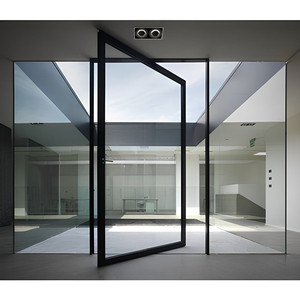
Featured Architectural Aluminium Products & Cabinet Joinery Solutions
Factory-direct custom extrusion profiles, soundproof doors, thermal windows, and modular aluminium kitchen cupboard door solutions engineered to international standards.
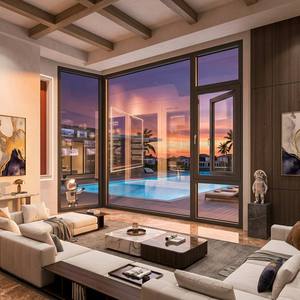
HUACAI Waterproof Anti-theft Aluminium Casement Window with Built-in Magnetic Blinds
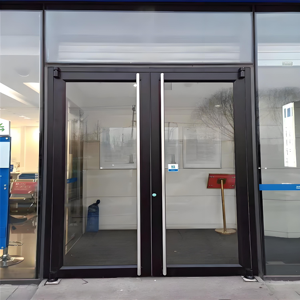
Commercial Double Doors KFC Waterproof Supermarket Storefront Shop Black Double Glaze Aluminum Entry Exterior Commercial Door
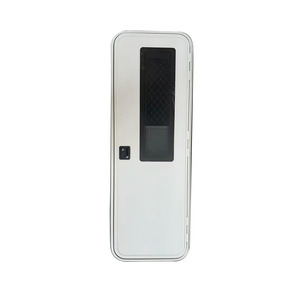
Whole Sale Aluminium Alloy Trailer White RV Camper Door
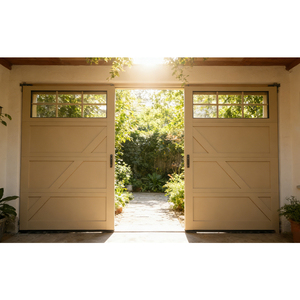
Design Insulated Aluminum Panels 16ft Barn Style Door Modern Styles Custom Overlay Garage Door for Outdoor Warehouse Villa Use
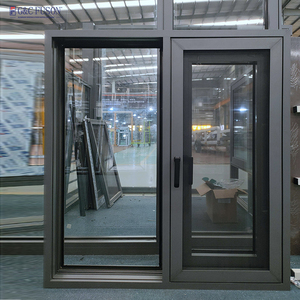
Fuson Thermal Break Aluminum Windows Double Glazing French Window Triple Glazed Casement House Windows
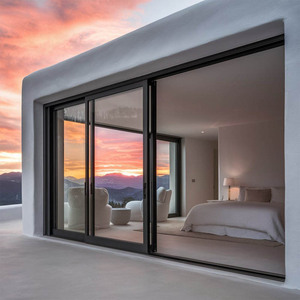
Deezon Modern Minimalist 5 Tracks Patio Outdoor Thermal Break Heat Insulation Aluminum Lift Sliding Door Hotel Apartment Garden
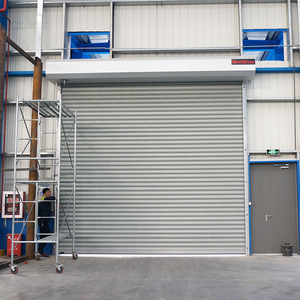
Windproof Roller Shutter Door Automatic Hurricane Steel Roll Up Door
16+
Years Manufacturing Excellence
25+
Global Export Markets
100%
Zero-VOC & Moisture Proof
10-Yr
Structural Quality Assurance
Executive Technical Overview: Architectural-Grade Aluminium Kitchen Cupboard Doors
In modern architectural joinery and residential cabinetry design, the global market is undergoing a seismic structural shift. Traditional wood-based cabinetry—such as medium-density fiberboard (MDF), high-density fiberboard (HDF), and plywood—is increasingly recognized as vulnerable to moisture-induced swelling, termite infestation, delamination, and volatile organic compound (VOC) off-gassing (primarily formaldehyde). As commercial developers, hotel chains, multi-family housing procurement officers, and kitchen cabinet distributors demand higher durability standards, aluminum kitchen cupboard doors have emerged as the premier high-performance alternative.
As a leading China aluminum kitchen cupboard doors supplier and exporter, SAGA Aluminum Doors & Windows Co., Ltd. combines 16 years of advanced metallurgical extrusion expertise, precision CNC fabrication, and eco-friendly surface treatment technologies. Operating out of our specialized manufacturing facilities in Minhou County, Fuzhou, Fujian, we manufacture custom-engineered extruded 6063-T5 aluminum cabinet frames, glass-inset cupboard doors, and integrated aluminum cabinetry systems optimized for extreme coastal humidity, tropical climates, and high-traffic commercial environments.
Key Engineering Gain: SAGA’s architectural aluminum kitchen cupboard door systems utilize AA6063-T5 alloy profiles featuring micro-machined corner cleats, 15 to 25-micron anodic oxide layers, and Qualicoat Class 2 architectural powder coatings. This guarantees zero water absorption, absolute pest immunity, and a structural lifespan exceeding 30 years.
Metallurgical & Structural Profile Specifications
Our aluminum cabinet door systems are engineered using prime aluminum ingots processed under strict temperature-controlled extrusion matrixes. Unlike standard architectural window profiles, cupboard door profiles require ultra-tight dimensional tolerances (down to ±0.15mm) to ensure seamless mitered corners and perfect alignment with European concealed hardware systems (e.g., Blum, Hettich, DTC, Salice).
Material Performance Comparison Matrix: Aluminium vs. Traditional Cabinet Materials
For procurement directors evaluating lifecycle ROI, the table below illustrates why engineered aluminum cabinet doors outperform traditional timber and composite solutions across critical performance indicators:
| Performance Metric | SAGA Extruded Aluminium Doors | MDF / HDF Foil-Wrapped Doors | Solid Hardwood Doors | Plywood / Melamine Doors |
|---|---|---|---|---|
| Moisture Absorption & Swelling | 0.00% (Impervious) | High (Swells & Warps) | Moderate to High (Expands/Shrinks) | Moderate (Edge Band Delamination) |
| Formaldehyde & VOC Emissions | Zero VOC (E0 Grade Baseline) | E1 / E2 Grade (Off-gasses over time) | Depends on Finish/Varnish | E1 / E2 Grade (Glue off-gassing) |
| Termite & Mold Resistance | 100% Resistant & Anti-Microbial | Vulnerable to Fungal Decay | Requires Chemical Treatment | Vulnerable to Termite Attack |
| Fire Safety Rating | Class A1 Non-Combustible | Combustible (Class B2/B3) | Combustible (Class B2/B3) | Combustible (Class B2/B3) |
| Surface Hardness & Scratch Resistance | High (Anodized / PVDF Coated) | Low to Moderate (Foil Peeling) | Moderate (Prone to Dents) | Moderate (Melamine Scratches) |
| Hardware Retention & Hinge Stability | Threaded Metal Insert Anchors | Loosens over time in particle core | Good (Can strip if over-tightened) | Fair (Screw pull-out risk) |
| Recyclability & Circular Economy | 100% Infinite Recyclability | Non-recyclable (Landfill bound) | Biodegradable (If untreated) | Non-recyclable composite |
Future Procurement Trends in Aluminium Kitchen Cupboard Doors (2026–2035)
Navigating technical shifts in global interior joinery, sustainable building codes, and architectural interior design preferences over the next decade.
1. Ultra-Slim Sightline Frame Profiles (10mm–15mm)
Modern architectural design trends favor invisible joinery. Procurement demand is shifting rapidly from bulky 40mm wood frames to ultra-slim 10mm-15mm anodized aluminum frames fitted with tinted, fluted, or smart-electrochromic glass panels. These minimalist profiles maximize interior light transmission while preserving structural rigidity through engineered interior corner key braces.
2. Zero-VOC Clean Air & Wellness Compliance
International green building standards (LEED v4.1, BREEAM, WELL Building Standard) strictly cap indoor VOC off-gassing. Aluminium cupboard doors produce zero formaldehyde emissions. Overseas importers are choosing anodized or powder-coated aluminum cabinetry to achieve compliance with stringent indoor environmental quality (IEQ) credits in multi-family and commercial hospitality tenders.
3. Seamless Smart Hardware & Lighting Integration
Future cupboard door profiles are no longer static panels; they function as active hardware components. Leading exporters now pre-drill and CNC-mill extrusion profiles to integrate concealed soft-close Blum/Hettich 3D hinges, integrated G-pull or J-pull handle channels, and recessed micro LED light strip channels directly into the extrusion geometry.
4. Advanced Nanotech & Tactile Matte Surface Coatings
Traditional glossy surfaces are giving way to soft-touch ultra-matte anodized finishes, anti-fingerprint nanotech electro-coatings, and thermal-transfer realistic timber grains. These chemical surface treatments provide exceptional tactile luxury while resisting grease stains, harsh kitchen detergents, and micro-abrasions in residential kitchens.
5. Modular Knock-Down (KD) Shipping Efficiency
With global ocean freight costs fluctuating, B2B buyers favor modular, flat-packed aluminum frame kits. Extruded aluminium cupboard door frames can be shipped as precision CNC-cut frame components with quick-snap corner connectors, reducing freight container cubic volume by up to 65% compared to pre-assembled wooden cabinet boxes.
6. High-Humidity & Tropical Coastal Climate Adaptation
Real estate developments across Southeast Asia, the Middle East, Australia, and the Caribbean experience extreme relative humidity and marine air salinity. Standard wood cabinet doors rot within 3 to 5 years. Marine-grade anodized aluminum cupboard doors have become the mandatory specification for luxury beachfront villas, high-rise coastal apartments, and island resorts.
Product Development & Manufacturing Engineering Evolution
The manufacturing process of high-end aluminum kitchen cupboard doors has evolved from crude industrial framing to high-precision architectural engineering. At SAGA's state-of-the-art facility in Fujian, China, our manufacturing line integrates six advanced engineering stages to ensure international specification compliance:
1. Precision Extrusion & Alloy Tempering (AA6063-T5)
Primary aluminum billets are heated to 480°C and extruded through custom-designed tungsten steel dies. Profiles undergo rapid air quenching and artificial aging to achieve a Webster hardness of ≥11 HW and tensile strength of ≥160 MPa. This metallurgical control guarantees that long cabinet door stiles (up to 3,000mm in height) maintain vertical straightness without bowing or twisting under load.
2. Computerized Numerical Control (CNC) Milling
Every profile undergoes automated 4-axis CNC machining. Hinge pockets, handle slots, glass insertion channels, and corner brace lock holes are milled to a tolerance of ±0.05mm. This guarantees 100% repeatable fitment for global hardware brands including Blum Clip-Top hinges and DTC concealed soft-close runners.
3. Chemical Surface Treatment & Anodizing Lines
Profiles are processed through multi-stage etching, desmutting, and electrolytic anodizing baths. We offer architectural anodizing thicknesses from 15 microns (for interior residential cabinetry) to 25 microns (for marine/coastal environments). Colors range from Champagne Gold, Brushed Bronze, Matte Black, Titanium Gray, to Custom Satin Silver.
4. Dust-Free Powder Coating & Thermal Woodgrain Transfer
For projects requiring warmth, automated vertical electrostatic spraying lines apply Qualicoat-certified TGIC-free polyester powder coatings. Thermal vacuum transfer printing infuses Italian-imported woodgrain films deep into the polyurethane base coat, replicating natural Walnut, Oak, and Teak aesthetics with complete scratch resistance.
5. Inset Glazing & Composite Panel Assembly
Framed cabinet doors feature integrated rubber gasket channels designed for 4mm to 6mm toughened safety glass (clear, frosted, grey tinted, fluted reed glass) or 3mm aluminum composite panels (ACP). Acoustic damping silicone strips prevent rattle during rapid door closure.
6. Stringent Quality Control & Protective Export Packaging
Before shipment from Fuzhou or Xiamen ports, 100% of finished doors undergo dimensional verification, diagonal squareness checks, surface defect scanning under 1500 Lux lighting, and film adhesion cross-hatch testing. Doors are wrapped in anti-scratch protective film, corner-protected with high-density EPE foam, and packed into custom heat-treated wooden crates.
Enterprise Strengths & Why Global Buyers Choose SAGA
Selecting the right China manufacturer requires evaluating production capacity, quality assurance compliance, and global trade experience. SAGA Aluminum Doors & Windows Co., Ltd. stands out as a trusted direct manufacturer and exporter with proven capabilities:
16+ Years Manufacturing Heritage
Over a decade and a half of dedicated expertise in custom aluminum joinery, window engineering, and modular aluminum cabinet systems, supplying over 25 countries worldwide.
International Standards Certification
Audited and certified under Australian AGWA (AS2047:2014, AS1288:2021, NCC 2022), New Zealand NZS4211:2008, North American NAFS, and Miami-Dade TAS 201/202/203 impact standards.
Complete Engineering & CAD Support
Our dedicated architectural team provides full shop drawings, profile section details, installation schematics, and 3D rendering support for certifier and council approval prior to production.
Fuzhou & Xiamen Port Logistics Advantage
Located in Minhou County, Fuzhou, Fujian, SAGA enjoys direct container highway routes to Fuzhou Port and Xiamen Port, ensuring fast vessel booking and reduced sea freight transit times.
Flexible B2B Trade Terms & Assurance
We support secure T/T bank transfers and Alibaba Trade Assurance payment protection, providing global importers, wholesalers, and developers total financial security throughout manufacturing.
10-Year Comprehensive Quality Assurance
Every order is backed by an official 10-year factory structural warranty against profile warping, anodizing peeling, finish discoloration, and hardware failure under normal operation.
Frequently Asked Questions (FAQ) for B2B Importers & Procurement Buyers
Detailed technical answers to clear common procurement queries regarding aluminum kitchen cupboard door orders, specifications, custom tooling, lead times, and shipping.
Q:
Why should developers and wholesalers choose aluminum kitchen cupboard doors over MDF/wood doors?
Aluminum kitchen cupboard doors eliminate the primary causes of cabinet failure in modern real estate: moisture warping, water swelling, formaldehyde off-gassing, mold growth, and termite damage. Aluminum doors maintain structural stability indefinitely, offer Class A1 fire resistance, are 100% recyclable, and provide superior hardware holding strength, yielding a significantly lower total lifecycle cost for building owners.
Q:
What aluminum alloy grade and surface finishes are used for SAGA cupboard doors?
We exclusively use prime architectural-grade AA6063-T5 aluminum alloy extrusions. For surface treatments, we offer anodic oxidation (15µm to 25µm film thickness), Qualicoat Class 2 architectural powder coatings, micro-textured sandblasted matte finishes, nanotech anti-fingerprint coatings, and vacuum thermal transfer realistic woodgrain finishes.
Q:
Are SAGA aluminum cupboard doors compatible with standard soft-close hardware (e.g. Blum, Hettich, DTC)?
Yes. All SAGA aluminum profiles undergo precision 4-axis CNC milling to create pre-drilled hinge pockets, concealed corner cleat slots, and screw mounting holes customized to match your exact hardware specifications (e.g., Blum 35mm cup hinges, Salice, Hettich Sensys, or DTC soft-close hinges).
Q:
Can SAGA produce custom profile dies for OEM/ODM brand distributors?
Absolutely. We offer complete OEM/ODM custom tooling and profile extrusion development services. If your company requires a proprietary slim frame design, integrated handle contour, or exclusive glass channel profile, our die-making department can engineer tungsten steel extrusion dies within 12 to 15 days based on your CAD drawings.
Q:
What is the standard production lead time for customized cabinet door orders?
Standard production lead time is typically 35 to 50 calendar days following shop drawing sign-off and deposit receipt. Sample orders or standard profile colors (e.g., Anodized Black, Matte Silver) can often be expedited in 20 to 25 days depending on plant schedule.
Q:
Can SAGA supply samples for architectural quality evaluation prior to bulk orders?
Yes. We regularly supply standard sample corner corner-sections and full-scale sample cabinet doors displaying profile finishes, miter joint quality, glass gasket insertion, and hardware prep. Standard sample products are provided free of charge, with international express courier freight covered by the buyer.
Q:
How are aluminum cupboard doors packaged to prevent scratches and ocean transit damage?
Each door panel is wrapped in custom PE anti-scratch protective film, fitted with reinforced plastic corner guards, wrapped in shock-absorbing EPE foam sheets, and packed into solid, ISPM-15 compliant fumigated wooden crates or steel-banded honeycomb cartons designed for seamless forklift handling.
Q:
What ports of loading does SAGA use for international sea freight shipments?
All orders are loaded and shipped directly from Fuzhou Port or Xiamen Port in Fujian Province, China. Both ports offer direct express container shipping routes to major international hubs across North America, Europe, Australia, New Zealand, and the Middle East.
Q:
What international payment methods and trade terms are supported?
We accept Telegraphic Transfer (T/T - 30% deposit, 70% balance before shipment or against Bill of Lading), Irrevocable L/C at sight, and Alibaba Trade Assurance payment protection for absolute order security. Supported trade terms include FOB, CFR, CIF, DDP, and EXW.
Q:
What warranty coverage is provided with SAGA aluminum cabinet door orders?
SAGA provides a comprehensive 10-year structural manufacturer warranty covering aluminum extrusion integrity, corner joint stability, and anti-corrosion resistance. Surface anodizing and powder coating finishes carry a 10-to-15 year warranty against peeling, chalking, or severe UV discoloration under standard operating conditions.
Transform Your Cabinetry Procurement With China's Leading Aluminium Exporter
Partner direct with SAGA Aluminum Doors & Windows Co., Ltd. for factory pricing, precision CNC fabrication, full CAD shop drawings, and certified zero-VOC aluminum joinery solutions.