Featured Architectural Systems & Bifold Assemblies
Precision-engineered fenestration solutions tested to international structural, thermal, and hurricane impact standards for commercial and residential developments.
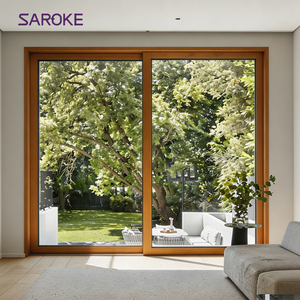
Luxury Design Energy Efficient Tempered Glass Aluminum Clad Wooden Sliding Patio Doors For Villa
Inquire Now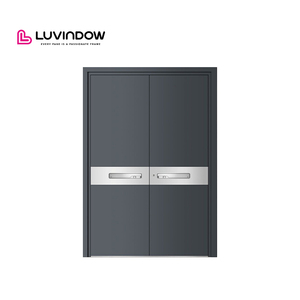
Premium Luxury Aluminum Alloy Villa Main Entrance Doors Fire Prevention Soundproof Modern Design Exterior
Inquire Now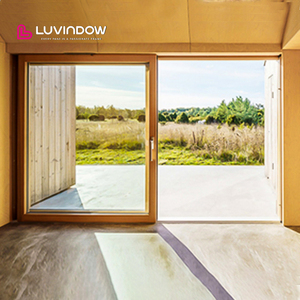
Luvindow Australia's Modern Double Glazed Sliding Wooden Doors French Aluminium Clad Wood Entry Glass Patio Sliding Doors Hotels
Inquire Now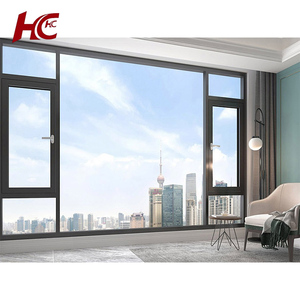
Custom Hurricane Impact Soundproof Aluminium Window House Villa Hotel Modern Black Aluminum Glass Sound Proof Casement Windows
Inquire Now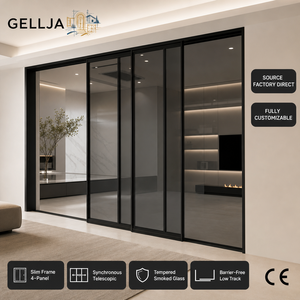
Modern Design Sliding Patio Door System Exterior Flush Aluminum Alloy Double Glazing Tempered Glass Waterproof Kitchen Door
Inquire Now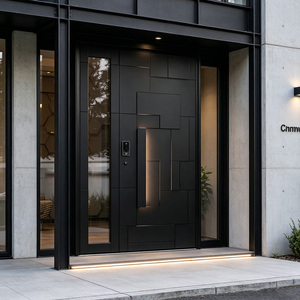
Cast Aluminum Single Security Door Custom Panel Design with Multi Point Lock and Zinc Alloy Hardware for Residential Use
Inquire Now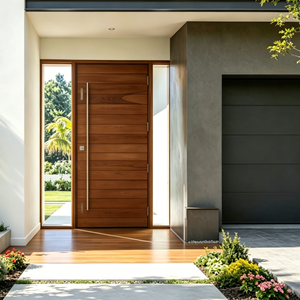
External Swing Door Villa House Exterior Custom Double Glazed Glass Aluminum Wooden Main Entrance Front Entry Secure Apartment
Inquire Now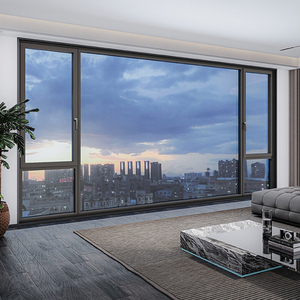
Custom Large Picture Windows For Modern Villas And Large Projects, Floor-to-Ceiling Aluminum Frames, Double Or Triple Glazing
Inquire NowWhy International Buyers Partner With SAGA Doors & Windows
Operating from our modern manufacturing base in Fujian, China, we bridge advanced extrusion metallurgy with rigorous overseas fenestration compliance.
Audited Certification Compliance
Fully compliant with AS2047:2014 & AS1288:2021 under AGWA accreditation, New Zealand NZS4211:2008, North American NAFS standards, and Florida Miami-Dade high-velocity hurricane impact protocols (TAS 201/202/203).
Thermal Break Engineering
Integrated continuous polyamide PA66 GF25 thermal isolation barriers effectively lower system U-factors down to 1.2 W/m²K, eliminating thermal bridging and minimizing condensation risk across extreme climates.
Precision CNC Fabrication
Utilizing high-precision multi-axis CNC machining, corner crimping technology, and automated structural silicone application to ensure dimensional tolerances within ±0.5mm across massive floor-to-ceiling openings.
Streamlined Lead Times
Standardized manufacturing protocols allow reliable production turnarounds of 35 to 50 days, backed by direct sea freight logistics out of Fuzhou and Xiamen deep-water ports for damage-free transit.
Full Project Shop Drawings
Every commercial order is accompanied by dedicated structural section calculations, elevation BIM files, CAD shop drawings, and installation detailing tailored to local building codes.
Heavy-Duty Hardware Integration
Equipped with premium German and international hardware systems (ROTO, Siegenia, Kinlong) engineered for panel weights exceeding 300kg with effortless, quiet rolling operation.
White Paper: Industry Benchmarks for Chinese Aluminium Sliding Folding Doors Manufacturing
The global demand for high-performance architectural joinery has positioned China as the world's leading hub for advanced aluminium extrusion, surface finishing, and fenestration engineering. For developers, commercial builders, architects, and B2B importers, navigating the landscape of Top China Aluminium Sliding Folding Doors Manufacturers & Factories requires a technical evaluation that goes beyond mere unit pricing. To achieve long-term structural integrity, thermal efficiency, and code compliance, buyers must examine alloy chemistry, thermal break design, roller hardware mechanics, structural silicone bonding, and international testing verifications.
Aluminium sliding folding doors (commonly referred to as bifold doors or concertina doors) represent one of the most mechanically demanding product categories in architectural fenestration. Unlike fixed picture windows or standard side-hung casements, folding door assemblies operate under continuous dynamic dead loads, wind pressure vectors, and thermal expansion cycles. This white paper delivers a comprehensive technical breakdown of manufacturing standards, procurement strategies, and technology evolution trends driving top-tier Chinese manufacturers today.
1. Technical Evolution & Metallurgy in Modern Bifold Engineering
The core structural backbone of any high-end sliding folding door lies in its extruded aluminium profile system. Leading factories in Fujian and Guangdong utilize primary billet 6063-T5 or 6063-T6 architectural aluminium alloy, characterized by high tensile strength (>205 MPa), superior corrosion resistance, and excellent anodizing or powder-coating receptivity. Cheap alternative suppliers frequently blend post-consumer scrap aluminium, introducing impurities that compromise structural yield strength and accelerate intergranular corrosion under coastal marine exposures.
1.1 Thermal Isolation & Polyamide Strip Architecture
Energy efficiency standards such as Australia’s NCC 2022, New Zealand’s H1 Energy Code, and North America’s NAFS performance ratings mandate low total system U-factors. Uninsulated aluminium profiles act as thermal bridges, readily conducting heat and causing severe internal surface condensation. Modern Chinese manufacturing leaders address this through thermally broken extrusion designs incorporating PA66 GF25 (Polyamide 66 reinforced with 25% glass fiber) thermal barrier strips.
| Profile Profile System Type | Typical Profile Depth | Thermal Transmittance (Uf) | Acoustic Rating (Rw) | Recommended Project Application |
|---|---|---|---|---|
| Non-Thermal Aluminium | 50mm - 60mm | 5.8 - 6.5 W/m²K | 25 - 28 dB | Interior partitions, mild tropical regions |
| Standard Thermal Break (14.8mm PA66) | 70mm - 75mm | 2.8 - 3.4 W/m²K | 32 - 36 dB | Standard residential & light commercial |
| High-Performance Thermal Break (24mm+ PA66) | 80mm - 90mm | 1.4 - 2.0 W/m²K | 38 - 42 dB | Cold climates, luxury villas, strict energy codes |
| Aluminium-Timber Composite | 90mm - 110mm | 1.1 - 1.5 W/m²K | 40 - 45 dB | High-end residential, passive house standards |
1.2 Glazing Technology & Acoustic Engineering
A sliding folding door's thermal and acoustic envelope is heavily governed by its glass make-up. Top factories support custom insulating glass units (IGUs) incorporating double or triple glazing with Low-Emissivity (Low-E) coatings, warm-edge composite spacers, and 90%+ Argon gas fills. For acoustic isolation along busy urban corridors or airports, laminated glass with Acoustic Interlayers (such as Vanceva or PVB acoustic films) effectively dampens sound frequencies, bringing noise reduction levels beyond 40 decibels.
2. Mechanical Hardware Dynamics & Structural Load Management
The failure of sliding folding doors in field applications is almost exclusively linked to inferior roller carriages or undersized track extrusions. Because bifold panels hang suspended or rest on bottom rollers, hardware systems must endure high shear stress and multi-directional deflection.
- Top-Hung vs. Bottom-Rolling Systems: Top-hung systems offer ultra-smooth operation by utilizing overhead structural lintels to carry dead loads, protecting rollers from dirt and debris. However, they require heavy structural headers. Bottom-rolling systems transfer weight directly to the floor substrate, ideal for retrofit projects where overhead structural support is limited.
- Stainless Steel Roller Assembly: Premium manufacturers employ multi-wheeled stainless steel (SUS304 or SUS316 grade) quad-roller carriers equipped with sealed precision bearings. These components undergo rigorous cycle testing exceeding 30,000 continuous opening and closing cycles without mechanical degradation.
- Multi-Point Locking Security: Security is reinforced through continuous stainless steel drive rods, top and bottom shoot-bolts, and anti-lift pin mechanisms that interlock panel-to-panel and panel-to-frame, reaching high resistance levels against forced entry.
3. Global Sourcing Trends & Procurement Forecast (2025–2030)
As international construction standards evolve, commercial buyers are changing how they specify, evaluate, and import custom aluminium fenestration from Chinese factories. Key global trends shaping procurement over the next five years include:
Trend 1: Micro-Slim Sightlines & Ultra-Large Panel Capacities
Architectural design continues to move toward indoor-outdoor seamless integration. Traditional bifold profiles featured bulky vertical mullion sightlines of 140mm to 180mm. Next-generation engineering from top Chinese factories has yielded narrow-frame profiles with interlock sightlines under 100mm, while accommodating individual panel heights up to 4.0 meters and panel weights up to 300kg.
Trend 2: Low-Carbon Aluminium & EPD Traceability
With the European Union introducing the Carbon Border Adjustment Mechanism (CBAM) and global green building certifications (LEED, BREEAM, Green Star) gaining traction, tier-1 Chinese manufacturers are adopting low-carbon primary aluminium smelted using renewable hydropower. Environmental Product Declarations (EPDs) detailing embodied carbon footprints are increasingly becoming mandatory submission documents during B2B tenders.
Trend 3: Extreme Weather & Hurricane Impact Compliance
Coastal zones across North America, the Caribbean, Australia, and the Pacific Rim face intensifying storm events. Sourcing has shifted decisively toward storm-tested systems. High-end factories engineered specialized hurricane impact sliding folding doors featuring heavy-gauge walls (>2.2mm), structural silicone glazing (Dow Corning 983), and laminated impact glass capable of passing Florida's stringent Miami-Dade TAS 201 (Large Missile Impact), TAS 202 (Uniform Static Pressure), and TAS 203 (Cyclic Pressure) testing.
4. Evaluating Chinese Manufacturers: Quality Control & Verification Protocol
Sourcing directly from China offers significant cost efficiency and production scalability, but managing quality risk requires clear verification criteria. Importers and contractors should audit factories against the following four key benchmarks:
- Third-Party Accreditations: Ensure test reports are issued by recognized international testing bodies (such as Intertek, NTA, TUV, or AGWA auditors). Reports must explicitly verify compliance with target market codes: AS2047/AS1288 for Australia, NZS4211 for New Zealand, and NAFS/ASTM for North America.
- Surface Finish Certification: Outdoor durability relies on surface protection. Request proof of architectural powder coatings complying with Qualicoat Class 2 or AAMA 2604/2605 specifications, guaranteeing high resistance against color fading, chalking, and salt spray corrosion for coastal installs.
- Factory Pre-Assembly & Testing: A top-tier facility conducts 100% trial assembly of custom door orders before packaging. This includes checking squareness tolerances, gasket compression uniformity, multi-point lock alignment, and smooth rolling action.
- Export Packaging Standards: Glass products require robust export packaging. Ensure the factory packs completed frames and IGUs in fully enclosed, fumigated plywood crates with foam corner protectors, desiccant bags, and moisture-proof wrapping.
5. Enterprise Profile: SAGA Doors & Windows Manufacturing Capabilities
Located in the Tieling Technical and Economic Development Zone, Minhou County, Fuzhou, Fujian, China, SAGA Aluminum Doors & Windows Co., Ltd. (ROPO) stands as a premier factory-direct manufacturer specializing in custom aluminium, uPVC, and aluminium-timber composite window and door systems. With over 16 years of dedicated export experience, SAGA has supplied landmark residential, commercial, and hospitality projects across more than 25 countries and regions.
SAGA operates a complete manufacturing ecosystem equipped with automated CNC cutting, corner crimping, double-glazing lines, and quality control labs. Logistics are handled directly through nearby Fuzhou and Xiamen deep-water container ports, providing direct, efficient shipping routes worldwide. Every custom order is supported by complete technical engineering—from preliminary shop drawings and CAD structural details to step-by-step installation guides.
Frequently Asked B2B Procurement Questions
Clear technical and commercial answers to guide your window and door procurement workflow.
Which buyer types does SAGA supply custom window and door systems to?
We supply B2B wholesalers, dealers, volume builders, general contractors, commercial developers, architects, and private luxury home builders. Each project receives custom engineering drawings and structural specs tailored to local building codes.
What is the typical production lead time for customized folding door orders?
Standard factory manufacturing lead time is 35 to 50 days following shop drawing sign-off and order deposit confirmation. Transit time varies depending on the destination port (e.g., 14-20 days to Australia/New Zealand, 25-35 days to US West/East Coasts).
Do SAGA windows and doors comply with Australian and New Zealand Standards?
Yes. Our product lines undergo annual audits under the AGWA compliance program, certifying adherence to AS2047:2014, AS1288:2021, and NCC 2022. For New Zealand, our certification verifies compliance with NZS4211:2008 across structural, moisture, and thermal clauses (B1, B2, E2, F2, G4, G7, H1).
Can SAGA provide physical corner or full window samples before mass production?
Yes. We supply standard-size window samples and profile corner section kits for quality, finish, and hardware evaluation. Profile corner samples are provided free of charge, with ocean or express freight covered by the buyer.
What technical and engineering documentation is included with orders?
Every commercial quote includes full CAD elevation drawings, cross-sectional connection details, installation flashing guides, glass calculations, and structural wind-load compliance reports for certifier approval prior to manufacturing.
Which deep-water ports are used for ocean shipping and export container loading?
All international orders are loaded into full container loads (20GP, 40GP, 40HQ) or LCL crates directly at our factory site and shipped out of Fuzhou or Xiamen ports in Fujian Province, China.
What international payment methods and commercial terms are accepted?
We accept T/T (Telegraphic Transfer) bank transfers and secure Alibaba Trade Assurance. Standard commercial terms include FOB, CIF, CFR, and DDP depending on project requirements.
What custom frame finish and color options are available?
We offer extensive surface treatments including architectural powder coating (RAL color palette, Interpon, AkzoNobel), fluorocarbon (PVDF) coatings for coastal regions, marine-grade anodizing (silver, bronze, black), and realistic textured woodgrain foils.
Ready to Spec Your Project with SAGA Engineers?
Send your project window schedules, architectural elevations, or structural requirements. Our technical sales team will deliver shop drawings and detailed factory-direct pricing within 24 hours.
Inquire Now