High-Performance Aluminum Kitchen Windows & Architectural Joinery
Direct from China's leading fenestration OEM/ODM manufacturer. Engineered for extreme wind load, air tightness, thermal performance, and contemporary kitchen design.
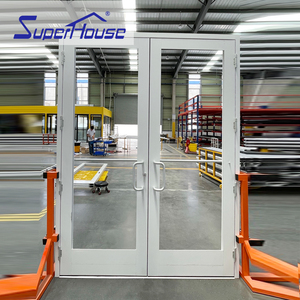
For Storefront Front Glaze White Swing Entry Commercial Impact NOA GLASS Aluminium Double Door Exterior Bedroom School
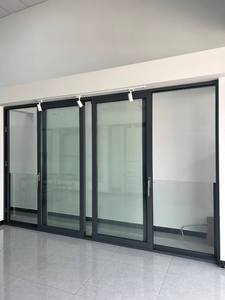
Modern Aluminum Glass Fireproof Double Entry Door Exit Design Finished for Hotel Commercial Warehouse School Interior Use
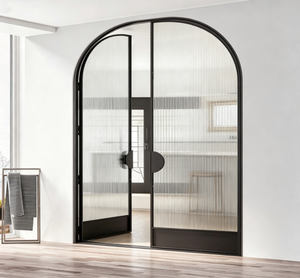
Modern Indoor Aluminum Alloy Glass Door, Waterproof and Soundproof, Suitable for Home and Office Use
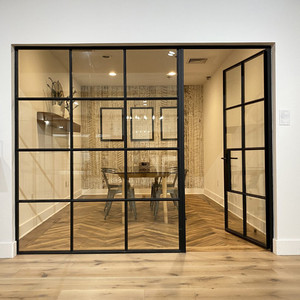
China Supplier Customized Size Metal Framed French Wrought Iron Indoor Walls Divider Aluminium Glass Doors
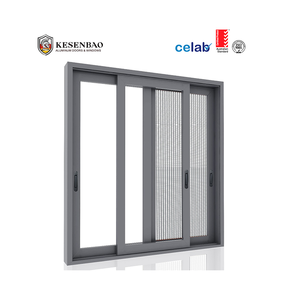
2026 AS2047 CE NFRC Wholesale Double Glazed Waterproof Glass Aluminum Sliding Windows with Fly Screens
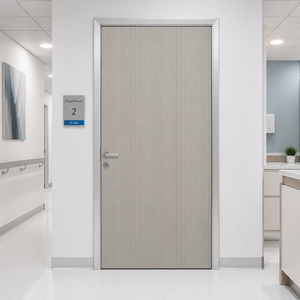
Custom Modern All Aluminum Fireproof Door Fire Rated Interior Exterior Entrance Metal Door for Residential Building
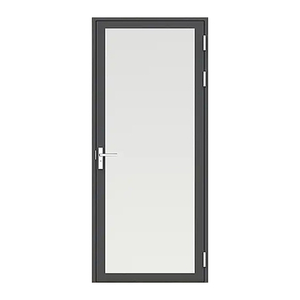
Aluminium Profile Slim Door Frame Wardrobe Customized Doors for Kitchen Bathroom Usage
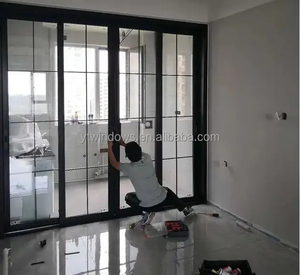
Newest Design Sliding Back Doors 5 Tracks Aluminium Sliding Door Double Tempered Glass Sliding Door Latest Main Gate Designs
Engineering Standards for Sourcing Kitchen Windows from China
An authoritative guide for architects, developers, procurement managers, and window wholesalers on evaluating structural integrity, thermal break technology, and hardware specs.
Information Gain Key Takeaway: Modern kitchen fenestration requires a dual balance—resisting internal thermal moisture, oil vapor, and frequent operational cycles while maintaining structural resistance to severe exterior wind pressure ($N_4 / N_6$ standards) and acoustic intrusion.
1. Extrusion Metallurgy: 6063-T5 vs. 6063-T6 Architectural Aluminum Alloys
When procuring custom kitchen windows from Chinese suppliers, profile alloy chemistry dictates long-term deflection limits and frame longevity. Top-tier factories utilize prime-ingot 6063-T5 or 6063-T6 architectural grade aluminum extrusions with profile wall thicknesses ranging strictly between 1.4mm and 2.0mm for residential windows, expanding up to 3.0mm for heavy-duty commercial storefronts and bi-fold kitchen servery systems.
Compared to recycled scrap alloy, virgin 6063-T5 alloy offers an ultimate tensile strength of $\ge 180\text{ MPa}$ and a yield strength of $\ge 110\text{ MPa}$. This structural integrity guarantees that kitchen windows—especially oversized awning or gas-strut pass-through designs—retain structural rigidity without frame sagging or hardware misalignment over decades of daily use.
2. Thermal Break Mechanics & Condensation Control in Kitchen Environments
Kitchens produce elevated indoor humidity and temperature fluctuations from cooking apparatus. Non-thermally broken frames act as thermal bridges, transferring exterior cold/heat and promoting interior frame sweating (condensation), which leads to mold proliferation around kitchen countertops.
High-end China manufacturing integrates Polyamide PA66-GF25 (25% Glass Fiber Reinforced) thermal barrier strips. These structural nylon strips decouple the exterior aluminum profile from the interior extrusion, dramatically reducing thermal conductivity ($K \le 0.3\text{ W/m}\cdot\text{K}$). Paired with argon-filled Insulated Glass Units (IGUs) and Low-E coatings, systemic U-values can drop to 1.3 - 1.8 W/m²K (conforming to NCC 2022 H1, Title 24, and Energy Star requirements).
| Performance Parameter | Standard Specification | High-Performance Kitchen Spec | Compliance Standards Tested |
|---|---|---|---|
| Profile Extrusion | 1.4mm 6063-T5 Aluminum | 2.0mm Thermally Broken 6063-T6 | GB/T 5237, ASTM B221 |
| Thermal Insulation | Standard Aluminum (U = 4.5) | PA66GF25 Strip (U ≤ 1.4 W/m²K) | AS2047, NFRC, NZS4211 |
| Glass Configuration | 5mm Single / 5+6A+5 Double | 5mm Low-E + 12Ar + 5mm Toughened | AS1288, ANSI Z97.1, EN12150 |
| Surface Treatment | Standard Powder Coating | AAMA 2605 Fluorocarbon (PVDF) | AAMA 2604/2605, Qualicoat |
| Water Penetration | 300 Pa Rating | 450 Pa - 600 Pa High-Water Sill | AS2047 (Pass), NAFS (CW-PG) |
| Acoustic Rating | Rw 28 dB | Rw 38 - 42 dB (Double Acoustic Laminated) | ISO 717-1, ASTM E413 |
3. Surface Finishing Standards: Salt-Spray & Cooking Vapor Resistance
Kitchen window sills and frames are routinely exposed to acidic cooking fumes, elevated steam, grease, and household detergents. External surfaces in coastal installations face atmospheric chloride attack. SAGA specifies advanced surface treatments exceeding international standards:
- AAMA 2604 Powder Coating: AkzoNobel or PPG Interpon architectural powders engineered for 5-year Florida weathering compliance. Resistant to chalking, color fading, and chemical staining.
- AAMA 2605 PVDF (Fluorocarbon) Finish: 70% Kynar 500 / Hylar 5000 resin coating providing a 10-to-20-year weatherability threshold, capable of enduring 3,000 hours of continuous salt spray testing without film blistering or delamination.
- Anodized Finishes: Class I (25 micron) anodic oxidation film offering superior hardness and metallic aesthetics for ultra-modern kitchen design profiles.
Future Procurement Trends in Kitchen Fenestration (2026–2030)
Discover how shifting residential design preferences and energy mandates are shaping global factory orders.
Gas-Strut Kitchen Servery Systems
The boundary between indoor kitchens and outdoor entertainment decks is blurring. B2B buyers are ordering gas-strut awning windows that swing upward 90 degrees, opening counter space into a seamless bar top with zero bottom track obstructions.
Narrow Sightline & Concealed Frames
Architects demand ultra-slim frame profiles (interlock widths under 30mm) to maximize daylighting in kitchen spaces. Chinese factories use structural silicone glazing (SSG) techniques to achieve frameless exterior visual profiles.
Motorized & Smart Screen Integration
Future-ready window systems integrate motorized chain winders linked to home automation networks (Tuya/Zigbee) alongside integrated retractable flyscreens that protect against insects when the servery window is locked open.
Why Partner with SAGA Aluminum Doors & Windows
16 Years of Dedicated OEM/ODM Manufacturing for Global Wholesalers, Developers, and Architects.
AGWA & International Audits
Audited annually under the AGWA program for Australian standard compliance (AS2047:2014, AS1288:2021, NCC 2022). Our certificates cover New Zealand Code (NZS4211:2008), NAFS for North America, and Miami-Dade TAS 201/202/203 for hurricane impact resistance.
Complete BIM & CAD Support
Our in-house engineering studio produces comprehensive shop drawings, section profiles, elevation schedules, and installation anchorage guides prior to order sign-off, ensuring seamless project execution on site.
Dual Port Shipping Logistics
Situated in the Minhou Technical Development Zone, Fuzhou, our factory leverages direct access to both Fuzhou Port and Xiamen Port for cost-optimized sea freight, container loading, and specialized protective steel-crate packaging.
Frequently Asked Questions for B2B Importers & Builders
Clear, direct answers to common questions about customization, lead times, warranties, and compliance.
Which international building codes and certifications do your kitchen windows comply with?
SAGA aluminum windows are independently audited and certified under Australian standard AS2047:2014 & AS1288:2021 (AGWA accredited), New Zealand standard NZS4211:2008, North American NAFS (AAMA/WDMA/CSA), and Florida Miami-Dade High-Velocity Hurricane Zone (TAS 201/202/203) impact protocols.
What is your standard production lead time for customized container orders?
Manufacturing typical custom windows and doors takes approximately 35 to 50 days following final CAD shop drawing approval and deposit receipt. Expedited schedules can be coordinated for commercial project milestones.
How do you ensure frame color consistency across large multi-phase development orders?
We utilize licensed AkzoNobel or PPG architectural powders applied through fully automated vertical powder-coating lines. Spectrophotometer digital readings are logged per batch to ensure color deviation stays below $\Delta E < 0.5$.
Can SAGA supply physical window samples before bulk production?
Yes. We regularly assemble standard or custom corner-section sample units demonstrating extrusion profiles, thermal break construction, glass makeup, and hardware hardware options (e.g., ROTO, Siegenia, Kinlong). Sample frames are free; buyers manage freight costs.
What hardware brands are fitted on your aluminum kitchen windows?
We offer top-grade hardware brands including German ROTO, Siegenia-Aubi, Hoppe, and heavy-duty Chinese Kinlong or CMECH multi-point locking systems, ensuring 50,000+ cycle test reliability and smooth operational feel.
How are glass units protected against breakage during ocean transportation?
All units are wrapped in 80-micron protective film, corner-shielded with high-density EPDM foam, and packed inside fully enclosed fumigated plywood or steel A-frame crates designed for forklift unloading at site.
What are the trade payment terms accepted by SAGA?
We accept standard T/T (Telegraphic Transfer with 30% deposit, 70% balance prior to container loading) and Alibaba Trade Assurance for full payment security.
Can gas-strut kitchen pass-through windows achieve complete water tightness?
Yes. SAGA gas-strut windows feature dual continuous EPDM bulb gaskets around the perimeter frame and a stepped bottom drain sill with anti-backflow caps, tested to withstand over 450 Pa of static water pressure.
Ready to Source High-Performance Aluminum Kitchen Windows?
Send your project window schedules, CAD plans, or tender specifications directly to our engineering office. Get comprehensive factory-direct pricing within 24 hours.