Top China Aluminum Pocket Door Manufacturers & Suppliers
Global B2B Sourcing Guide & Technical Engineering Whitepaper: Architectural Cavity Systems, Thermal Break Standards (AS2047, NZS4211, NAFS, Miami-Dade), and Manufacturing Innovations for Commercial & Luxury Residential Projects.
Factory-Direct Catalog
Featured Architectural Aluminum Pocket Door Systems
Precision-engineered sliding pocket doors, hurricane-impact stacker configurations, and ultra-slim frame solutions customized for global architectural standards.
Modern Slim Profile
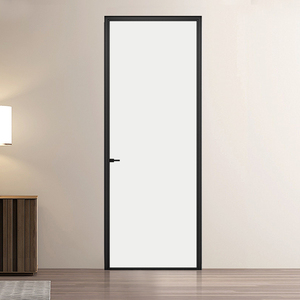
DERCHI Modern Design Villa Aluminum Pocket Door Frosted Glass Slim Frame Space Saving Swing Door for Washroom
Application: Villa Interior / Washroom
Frame: Ultra-Slim 6063-T5 Aluminum
Glazing: Tempered Frosted Privacy Glass
Hurricane Impact & NFRC
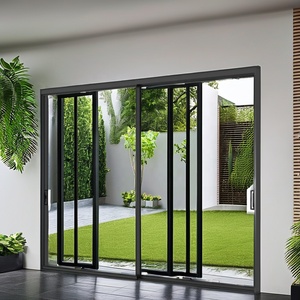
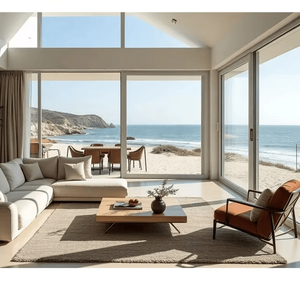
Zekin Double Glass Pocket Sliding Door NFRC House Exterior Thermal Break Aluminum Profiles Hurricane Impact Patio Living Room
Application: Exterior Patio / Living Room
Feature: Thermal Break & NFRC Certified
Protection: Heavy-Duty Hurricane Impact
Prefab Barn & Screen
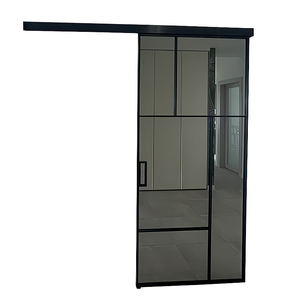
Postmodern Aluminum Prefabricated Barn Sliding Pocket Doors and Windows with Fiberglass Screen Netting and Glass Doors
Application: Residential / Commercial Barn
Screen: Integrated Fiberglass Flyscreen
Mechanism: Concealed Overhead Roller
Commercial Bestseller
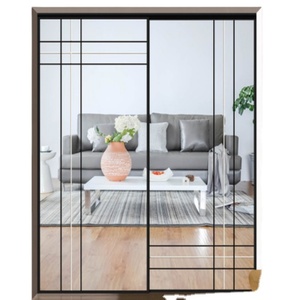
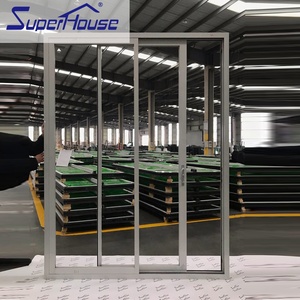
Best-selling Aluminium Alloy Double Glass Interior Sliding Pocket Doors Sliding Doors Supplier
Application: Office / Hospitality Interior
Glass: Double Tempered Acoustic Glass
Operation: Soft-Closing Hydraulic System
Miami-Dade NOA Approved
Caribbean Islands Standard Sliding Door Miami-dade NOA Approval Customized Sliding Stacker Patio Bacony Door Pocket Door
Standard: TAS 201 / 202 / 203 Impact
Application: Caribbean Coastal Balcony
Configuration: Multi-Track Stacker Pocket
Soundproof & Insulated
BOCHARM Modern Villa Soundproof Aluminum Thermal Break Insulated Double Tempered Glass Pocket Stack Doors Track Living Room
Acoustics: Up to STC 42dB Isolation
Thermal: Technoform PA66 Strip
Track: Flush Bottom Trackless Guide
AS2047 & AS1288 Audited
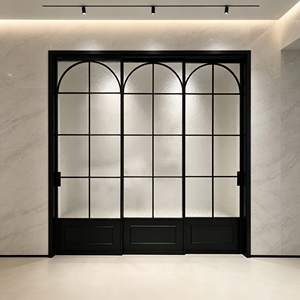
AS2047 Australian Customized Aluminium Pocket Glass Sliding Door Concealed Pocket Door Trackless Sliding Hidden Sliding Door
Compliance: AGWA AS2047 / NCC 2022
Design: Concealed Cavity Hidden Door
Hardware: Heavy Stainless Roller Track
Heavy-Duty Architectural
Deioux Custom Aluminum Casement Door Tempered Insulated Glass Soundproof Waterproof Hinged Door For Villa Hotel Commercial
Application: Villa / Hotel / Commercial
Sealing: EPDM Triple Weather Gaskets
Glass: Low-E Double Insulated Glass
Manufacturing Credibility
SAGA Doors & Windows Industrial Capacity
16+
Years Manufacturing Excellence
25+
Export Destination Countries
10-Yr
Comprehensive System Warranty
100%
Pre-Shipment Factory QC Audit
1. The Strategic Advantage of Sourcing Aluminum Pocket Doors from China
Architectural aluminum pocket doors have transformed modern spatial design by providing an uninterrupted transition between indoor living environments and outdoor landscapes or adjoining rooms. Unlike traditional hinged swing doors or surface-mounted sliding barn doors, pocket doors disappear completely inside a built-in wall cavity when fully opened. For international developers, architects, and volume importers, sourcing custom aluminum pocket doors directly from top China manufacturers offers an unparalleled combination of advanced structural engineering, cost efficiency, and rigorous international code compliance.
Leading Chinese manufacturers like SAGA Aluminum Doors & Windows Co., Ltd. (operating state-of-the-art facilities in Minhou County, Fuzhou, with direct logistics through Fuzhou and Xiamen ports) have invested decades into mastering aluminum profile extrusion, thermal break isolation, multi-layer surface treatment, and precision hardware integration. By combining 6063-T5 and T6 structural aluminum alloys with world-class surface finishing—such as AkzoNobel fluorocarbon (PVDF) powder coatings and anodized architectural finishes—Chinese suppliers deliver pocket doors engineered to withstand severe weather exposures, coastal corrosion, and extreme structural wind loads.
Information Gain Insight: Modern architectural specs require pocket doors to meet strict structural deflection limits ($L/175$ or $L/240$) under positive and negative wind pressures while maintaining air infiltration rates below $0.5 \text{ L/s}\cdot\text{m}^2$. Top Chinese suppliers incorporate CNC-machined structural corner cleats and reinforced steel cavity headers to eliminate sagging in openings up to 6 meters wide.
Why B2B Procurement Teams Choose SAGA Factory Direct
Navigating global building regulations requires verifiable engineering credentials. SAGA Doors & Windows provides overseas buyers with a seamless supply chain backed by rigorous third-party certifications:
Annual independent AGWA audits for Australian National Construction Code (NCC 2022) compliance, verifying water resistance, air infiltration, and safety glass performance.
Structural load deflection, forced-entry resistance, air leakage, and thermal transmittance test reports compliant with US and Canadian building standards.
Certified to TAS 201-94, TAS 202-94, and TAS 203-94 large missile impact and cyclic wind load standards for Florida and Caribbean storm zones.
2. Technological Innovations in Architectural Aluminum Pocket Doors
Traditional pocket door systems historically suffered from operational issues, including track jamming, air drafts, moisture penetration, and poor acoustic dampening. China’s premier engineering factories have solved these technical bottlenecks through mechanical structural redesigns, precision thermal barriers, and advanced sealing geometries.
A. Concealed Pocket Cavity Engineering & Flush Tracks
Modern luxury residential and commercial developments demand seamless floor transitions. SAGA’s engineered pocket systems utilize heavy-duty extruded aluminum tracks embedded flush into the finished floor or elevated via subsurface drainage channels. The overhead track mechanism is supported by heavy-duty stainless steel SUS304 carriage rollers featuring sealed ball bearings and nylon-wrapped outer wheels. This system effortlessly supports individual panel weights up to 400 kg while providing ultra-smooth, silent operation (<25 dB noise signature).
B. Thermal Break Polyamide Insulation (PA66-GF25)
For exterior pocket door applications, thermal insulation is critical to prevent condensation and minimize thermal bridging. SAGA incorporates precision-extruded Technoform Polyamide PA66-GF25 (25% glass-fiber reinforced) thermal break strips between the interior and exterior aluminum profiles. Combined with Low-Emissivity (Low-E) double or triple insulated glass units filled with 90%+ Argon gas and warm-edge Swisspacer technology, overall system U-values drop to as low as 1.2 W/m²K.
C. Acoustic Isolation & Multi-Point Weather Gaskets
Acoustic privacy is paramount in luxury residential master suites, hotel suites, and executive boardrooms. By implementing multi-stage EPDM (Ethylene Propylene Diene Monomer) rubber gaskets around the perimeter of the pocket frame and utilizing dual-barrier acoustic interlocking stiles, SAGA aluminum pocket doors achieve sound transmission class ratings up to STC 42 dB.
Technical Specification Matrix: Pocket Door System Configurations
| Performance Criteria |
Slim-Frame Interior Pocket |
Thermally Broken Exterior Pocket |
Hurricane Impact Heavy Pocket |
| Profile Material |
6063-T5 Architectural Aluminum |
6063-T6 Thermally Broken Aluminum |
Reinforced Heavy-Wall 6063-T6 Aluminum |
| Wall Thickness |
1.4mm – 2.0mm |
2.0mm – 2.5mm |
3.0mm Structural Reinforcement |
| Glass Assembly |
8mm / 10mm Monolithic Tempered |
6mm + 12Ar + 6mm Low-E Double Glazed |
6mm Temp + 1.52mm SGP/PVB + 6mm Temp |
| Max Panel Height |
3,000 mm |
3,500 mm |
4,000 mm |
| Thermal Transmittance (U-Value) |
N/A (Interior Space Divider) |
1.2 – 1.8 W/m²K |
1.5 – 2.2 W/m²K |
| Water Tightness |
N/A |
450 Pa – 600 Pa (Sub-Sill Drain) |
750 Pa (Miami-Dade TAS 202) |
| Acoustic Rating (STC) |
STC 32 dB – 36 dB |
STC 38 dB – 42 dB |
STC 40 dB – 45 dB |
3. Future Sourcing & Procurement Trends in Aluminum Pocket Doors (2025–2030)
As global architectural design shifts toward zero-energy buildings, biophilic spaces, and intelligent smart-home automation, the procurement requirements for aluminum pocket doors are evolving rapidly. B2B buyers must anticipate key technological shifts to maintain a competitive advantage in their regional markets.
Demand for sightlines under 20mm has surged. Advanced aluminum extrusions engineered with high moment of inertia ($I_x$) allow maximum daylighting without compromising structural rigidity against wind forces.
Magnetic levitation (Maglev) motorized pocket tracks are replacing mechanical chain drives. They provide whisper-quiet auto-opening, smartphone IoT integration, safety sensors, and push-to-open touch activation.
Procurement briefs increasingly demand factory-integrated insect mesh screens and motorized roller blinds that slide into hidden parallel pocket cavities alongside the glass panels.
4. SAGA’s 7-Step Quality Control & B2B Fulfillment Protocol
To eliminate risk for overseas wholesalers, builders, and developers, SAGA Doors & Windows operates under a transparent 7-step production and quality control framework. Every order undergoes rigid pre-assembly testing before export container loading.
Step 01
Architectural Review
Engineering review of architectural CAD/BIM drawings, wind pressure calculations, and code specs.
Step 02
Sample Evaluation
Verification of corner section cutaways, powder-coat color swatches, and hardware operational samples.
Step 03
Shop Drawing Sign-Off
Full-scale CAD detail drawings, section profiles, and anchor points approved by client certifiers.
Step 04
CNC Precision Machining
Computer-controlled double-head cutting, slot milling, and crimping within <0.5mm tolerances.
Step 05
Pre-Shipment Test Mock-Up
100% pre-assembly in factory rig to check panel smooth slide, alignment, locking, and weather seals.
Step 06
Crated Export Logistics
Fully enclosed steel-reinforced wooden crate packing with corner guards and moisture barriers.
Step 07
After-Sales Engineering Support
Virtual installation video guidance, spare parts availability, and 10-year comprehensive warranty backup.
5. Comprehensive B2B Procurement FAQ: Answers from Chief Engineers
Direct technical answers addressing common engineering and sourcing questions raised by international importers, general contractors, and specifiers.
What wall cavity width and frame depth are required for aluminum pocket doors?
The total wall cavity width depends on the panel configuration (single panel, bi-parting, or multi-track stacker). For a standard single-track glass pocket door, the minimum pocket cavity width requires 100mm to 120mm of clear internal space inside the stud wall. For double-glazed or thermally broken systems, we recommend a 150mm stud cavity. Our engineering team provides detailed CAD section drawings for your framers prior to production.
How do exterior aluminum pocket doors manage rainwater drainage and wind-driven rain?
Exterior pocket doors require integrated sub-sill drainage channels with non-return check valves. SAGA’s exterior systems utilize stepped sill extrusions that channel water away from the pocket cavity toward external weep holes. Additionally, continuous EPDM brush and rubber seal gaskets enclose the pocket mouth when panels are fully extended, preventing water infiltration up to 600 Pa test pressure under AS2047 and NAFS standards.
Do SAGA aluminum pocket doors comply with Australian (AS2047) and New Zealand (NZS4211) codes?
Yes. SAGA Aluminum Doors & Windows is audited under the Australian Glass and Window Association (AGWA) compliance program. Our pocket doors are tested for structural deflection (AS2047:2014), glass safety (AS1288:2021), and compliance with NCC 2022. For New Zealand, our test certificates cover NZS4211:2008 across clauses B1, B2, E2, F2, G4, G7, and H1 energy efficiency requirements.
What is the standard production lead time for custom aluminum pocket door orders?
Typical factory production lead time is 35 to 50 calendar days following the final approval of CAD shop drawings and hardware specifications. Ocean freight transit time varies by destination port (e.g., 14–20 days to Australia/New Zealand, 22–35 days to North American West/East coasts, 30–40 days to Caribbean ports).
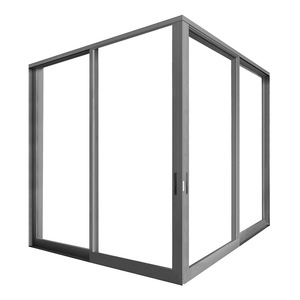
Can SAGA supply physical window and door corner samples for quality testing?
Yes. We provide standard-size corner cross-section samples free of charge so architects, certifiers, and project owners can inspect profile wall thickness, thermal break insulation strips, powder coating surface quality, and hardware fitment. The purchasing party only covers courier freight charges.
What powder coating and surface finishes are available for harsh coastal environments?
For coastal locations subject to salt spray and high UV radiation, we offer architectural-grade AkzoNobel or PPG Interpon fluorocarbon (PVDF) powder coatings certified to AAMA 2605 specifications, backed by a 10 to 20-year warranty. Standard RAL colors, anodized matte finishes (15–25 microns), and realistic woodgrain heat-transfer finishes are also fully customizable.
What loading ports and trade terms are supported?
Shipments are dispatched directly from Fuzhou Port or Xiamen Port in Fujian Province, China. We support flexible international commercial terms including FOB, CIF, CFR, DDP (Delivered Duty Paid), and accept payments via T/T bank transfer or Alibaba Trade Assurance protection.
Request a Customized Technical Proposal & Factory Quote
Planning a luxury residential build, commercial development, or looking to expand your regional window and door distribution network? Send us your project drawings or window schedule today. Our engineering team will return complete shop drawings, structural wind load analysis, and competitive factory-direct pricing within 24 hours.