1. The Architectural Evolution of Custom Aluminium Windows & Doors Manufacturing
In modern commercial construction and high-end residential architecture, fenestration is no longer treated merely as a physical building closure. Windows and doors have morphed into high-performance structural envelope components responsible for building decarbonization, structural resistance against severe climatic events, acoustic isolation, and aesthetic identity. Selecting the right aluminium window manufacturer and supplier requires a technical audit of extrusion engineering, thermal break technology, surface finishing protocols, and international building code certifications.
Primary aluminium extrusions utilize architectural-grade 6063-T5 or 6063-T6 alloy profile systems. Compared to vinyl (uPVC) or timber joinery, extruded aluminium provides an unmatched strength-to-weight ratio. This structural rigidity allows architects and facade engineers to specify expansive glass units with minimal frame sightlines, maximizing natural daylight (Daylight Factor DF) without sacrificing wind pressure resistance or frame deflection thresholds under heavy structural loads.
Information Gain Insight: Advanced fenestration engineering incorporates Polyamide (PA66 GF25) thermal breaks between inner and outer extruded aluminium profiles. This structural thermal barrier reduces the overall window frame U-factor by up to 65%, effectively preventing thermal bridging and surface condensation in extreme heating or cooling zones.
2. Enterprise Engineering Advantage & Technical Manufacturing Infrastructure
SAGA Aluminum Doors & Windows Co., Ltd. operates state-of-the-art precision manufacturing facilities engineered specifically for export-grade architectural production. With over 16 years of dedicated export experience to Australia, New Zealand, North America, the United Kingdom, and the Caribbean, our manufacturing protocols are structured around stringent international compliance frameworks.
AGWA & AS2047 Accredited
Full compliance with Australian Standards AS2047:2014, AS1288:2021, and NCC 2022 building regulations audited under independent testing programs.
Miami-Dade Hurricane Tested
Certified impact-resistant systems tested under Florida Miami-Dade TAS 201-94, TAS 202-94, and TAS 203-94 cyclic wind pressure standards.
NAFS & NZS4211 Certified
Meeting North American Fenestration Standard (NAFS) air/water structural parameters and New Zealand NZS4211:2008 performance mandates.
Our plant incorporates automated multi-axis CNC machining centers, hydraulic corner crimping systems, and automated double-seal insulating glass unit (IGU) assembly lines. By maintaining complete control over CAD shop drawing generation, extrusion cutting tolerances (within ±0.5mm), corner joint reinforcement, and hardware assembly, we guarantee zero-defect factory output on every project container.
3. Technical Selection Matrix: Evaluating Aluminium Fenestration Systems
To assist architects, main contractors, and wholesale importers in optimizing project specifications, the table below outlines the core engineering parameters comparing traditional aluminium systems, thermally broken aluminium profiles, and high-performance composite configurations.
| Performance Specification | Standard Non-Thermal Aluminium | Thermally Broken Aluminium (PA66) | Hurricane Impact Aluminium | Aluminium-Timber Composite |
|---|---|---|---|---|
| U-Factor (W/m²K Range) | 3.8 – 5.2 | 1.2 – 2.2 | 1.8 – 2.6 | 1.0 – 1.6 |
| Acoustic Rating (STC / Rw) | 28 – 34 dB | 35 – 42 dB | 38 – 45 dB | 38 – 44 dB |
| Structural Wind Load (Pa) | Up to 2500 Pa | Up to 4500 Pa | Up to 9000 Pa (TAS 202) | Up to 3500 Pa |
| Max Frame Height Capability | 3.0 Meters | 3.5 Meters | 4.0+ Meters | 3.2 Meters |
| Corrosion Resistance (AAMA) | AAMA 2603 / 2604 | AAMA 2604 / 2605 Fluorocarbon | AAMA 2605 Marine Grade | AAMA 2604 External |
| Primary Application Target | Mild Climates / Interior | Energy-Efficient Commercial/Resi | Coastal & Severe Weather Zones | Luxury Residential / Villas |
4. Future B2B Procurement Trends in Architectural Aluminium Systems (2025–2030)
As global building energy codes become increasingly strict—such as Net-Zero Energy Buildings (NZEB), Passive House Standards (PHI), and Australia's NCC 7-Star energy ratings—the procurement criteria for commercial buyers are shifting rapidly. Commercial distributors, developers, and trade buyers should consider four critical trends defining the future of aluminium fenestration manufacturing:
A. Decarbonization and Low-Carbon Recycled Extrusions
Primary aluminium production is traditionally energy-intensive. Top-tier manufacturers are adopting hydro-powered smelting and recycled post-consumer scrap billets to produce low-carbon extrusions containing less than 4.0 kg CO2e per kg of aluminium. Procurement tenders increasingly penalize high embodied-carbon materials, making sustainable sourcing a key competitive advantage.
B. Next-Generation Glazing: Vacuum Insulated Glass (VIG) & Low-E Coatings
While standard argon-filled double glazing achieves U-values around 1.4 W/m²K, the commercial adoption of Vacuum Insulated Glass (VIG) brings total unit U-values below 0.6 W/m²K within a ultra-thin 8.3mm profile glass unit. Combined with double-laminated Low-E coatings, these systems deliver supreme thermal insulation while drastically reducing overall structural dead-load on multi-story building frames.
C. Ultra-Slim Sightline Minimalist Sliding Systems
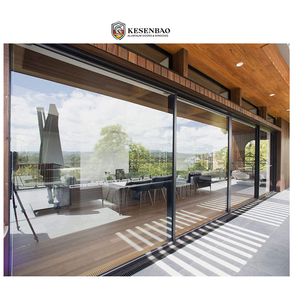
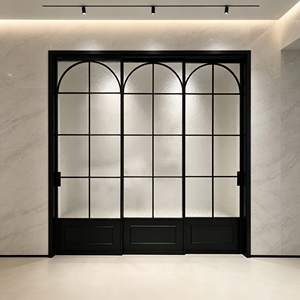
Architectural demand continues to favor invisible structural frame profiles where the aluminium interlocking mullion sightline is reduced to 20mm–25mm. Achieving these extreme sightlines requires concealed heavy-duty stainless steel tracks, motor-driven automated sliding actuators, and structural silicon bonding (Structural Glazing SG) directly transferring wind loads to the tempered glass core.
D. Modular Prefabricated Joinery and Sub-Frame Systems
To mitigate rising job-site labor costs across Western markets, buyers are requesting factory-assembled sub-frames with integrated flashing fins, weather membranes, and acoustic perimeter buffers. Factory-tested modular joinery guarantees fast, plug-and-play installation on site, eliminating waterproofing failures caused by field-assembly mistakes.
5. Quality Assurance Protocol: The 7-Step Precision Manufacturing Pipeline
Ensuring absolute consistency across multi-container shipments requires a rigorous internal quality control framework. SAGA implements a 7-step quality control protocol before any product leaves the manufacturing facility:
1. Profile Spectrometry
Chemical composition analysis of raw aluminium billets to verify 6063-T5/T6 alloy purity, wall thickness tolerances, and tensile yield strength.
2. Polyamide Shear Testing
Mechanical push-pull shear stress testing on thermal break extrusions to verify PA66 GF25 structural bond integrity.
3. CNC Machining Precision
Automated milling of drainage slots, lock hardware prep, and hinge mounting points executed within ±0.2mm precision.
4. Corner Crimping Test
Corner joinery reinforced with cast aluminium corner cleats, epoxy resin injection, and hydraulic 90-degree corner crimping force tests.
5. Glass Unit Inspection
Automated optical scanning of IGUs to verify zero dust particles inside argon gas cavity, Low-E coating positioning, and edge seal continuity.
6. Water & Air Chamber Test
Random batch sampling subjected to pressurized air infiltration (AS4420.2) and static water penetration resistance up to 600 Pa.
6. Enterprise Procurement FAQ: Answering B2B Importer Intent
Which types of international buyers does SAGA supply custom aluminium joinery to?
We supply architectural wholesale distributors, window and door dealers, general contractors, multi-family developers, and commercial facade installers. Each order is backed by tailored CAD shop drawings, section details, structural engineering reports, and installation guides engineered for local building code compliance.
What is the standard production lead time for custom aluminium orders?
Standard factory production time is 35 to 50 days upon final shop drawing approval and deposit receipt. Lead times may vary slightly based on specialized powder coat colors (such as custom RAL shades), heavy-duty hurricane glass lamination cycles, or complex curved window geometries.
Do SAGA aluminium windows comply with Australian (AS2047) and New Zealand (NZS4211) codes?
Yes. Our aluminium systems are fully tested and certified under the Australian Glass and Window Association (AGWA) compliance audit program for AS2047:2014, AS1288:2021, and NCC 2022. For New Zealand, our products comply with NZS4211:2008 and meet NZ Building Code clauses B1 (Structure), B2 (Durability), E2 (External Moisture), F2, G4, G7, and H1 (Energy Efficiency).
Can you provide physical product samples for technical review prior to bulk production?
Yes. We supply full-corner sample cutaways showing thermal break construction, profile wall thickness, seal gaskets, and hardware integration, or full standard-size sample windows for lab testing. Standard sample corner sections are free of charge, with express air freight covered by the buyer.
What surface finish options are available for coastal or high-corrosion environments?
For coastal applications located within 1 km of saltwater, we recommend AkzoNobel Interpon D2000/D3000 series fluorocarbon (PVDF) coatings complying with AAMA 2605 specifications, or anodized finishes exceeding 25 microns (AA25), providing up to 25 years of color retention and salt-spray resistance.
How are products packed to prevent shipping damage during ocean container transport?
All frames and glass units are wrapped in protective scratch-proof film, corner-protected with heavy-duty foam, separated by rubber cork pads, and packed inside fully enclosed IPPC-certified fumigated plywood crates or steel A-frames designed for fork-lift unloading on site.
What payment terms and trade protections are supported?
We support standard international trade terms including T/T (Telegraphic Transfer), irrevocable Letter of Credit (L/C at sight), and Alibaba Trade Assurance to guarantee payment security and order fulfillment milestone tracking.
7. Strategic Sourcing Summary & Engineering Support
Partnering with a reliable, certified aluminium window manufacturer eliminates compliance risk, reduces structural defects, and delivers consistent lead-time predictability for your construction projects. SAGA's dedicated engineering team provides end-to-end technical consultation—from structural wind-load calculation to architectural CAD shop drawing approval.
Whether you are importing container loads for wholesale distribution or specifying a high-performance curtain wall and residential door package for an upcoming development, our engineering team is ready to review your project schedule.