Engineered Aluminium & uPVC Window & Door Solutions
Explore high-specification sliding, casement, tilt-and-turn, and hurricane-impact joinery systems manufactured to global building standards (AS2047, NZS4211, NAFS, Miami-Dade TAS 201-203).
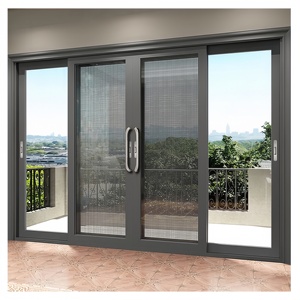
Customized Thick Aluminium Frame China Modern Sliding Patio Door Villa Outdoor Tempered Glass Aluminum Sliding Doors
Send an Inquiry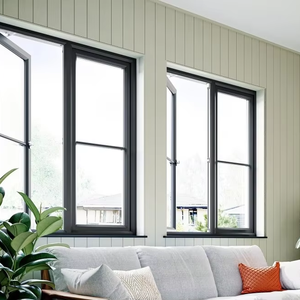
Prima High End Powder Coated Anthracite Grey Aluminium Casement Window for Modern Luxury Home
Send an Inquiry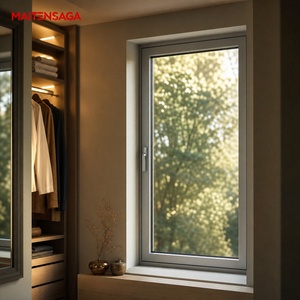
Custom Aluminum Tilt and Turn Window Soundproof Thermal Break Frame Double Glazed for Apartment Building Project
Send an Inquiry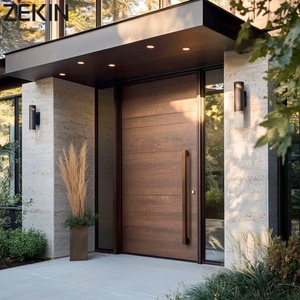
ZEKIN Modern American Design House Heat Insulation Fire Prevention Luxury Entrance Pivot Door House Front Entry Doors
Send an Inquiry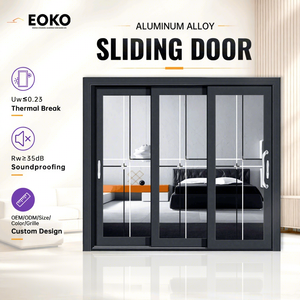
EOKO Thermal Break Aluminum Sliding Patio Door U-Value 1.2W/m²K Energy Efficient Glass Sliding Door With Screen
Send an Inquiry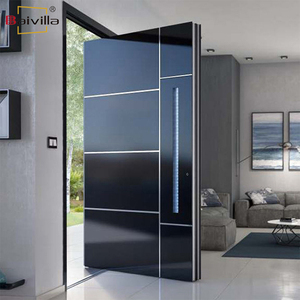
Luxury Smart Multi Lock Entrance Door Aluminum Single Front Entry Anti Theft Exterior Security Doors Pivot Front Door
Send an Inquiry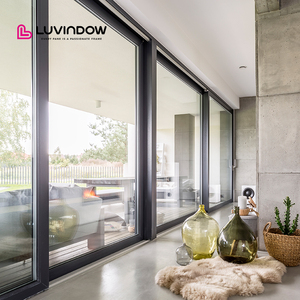
Luvindow Hurricane Impact Thermal Break Exterior Patio Aluminium Sliding Doors With Argon Low E Tempered Glass
Send an Inquiry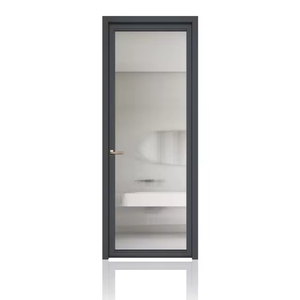
Modern Aluminum Bathroom Doors Stylish Swing & Sliding Designs with Pre-finished Surface Treatment
Send an InquirySourcing High-Performance Aluminium Shed Windows: Technical Benchmarks
Evaluating Profile Alloys, Structural Wind Deflection, Thermal Barrier Integrity, and Water Penetration Ratings for Modern Industrial, Commercial, and Luxury Shed Structures.
Understanding Semantic Search & Quality Guidelines in Fenestration Sourcing
In accordance with Google’s Search Quality Rater Guidelines (E-E-A-T) and modern semantic intent mining, international buyers seeking top trusted aluminium shed windows manufacturers require technical clarity beyond superficial sales copy. Whether outfitting an industrial storage facility, a modern residential garden studio, a agricultural shed, or an off-grid workshop, fenestration units must meet rigorous structural, mechanical, and thermal metrics to protect interior assets and ensure regulatory approval.
1. Metallurgy & Extrusion Alloy Standards: 6063-T5 vs. 6063-T6
The foundation of any high-durability aluminium shed window lies in the structural integrity of the raw profile alloy. Premium manufacturers utilize primary-grade 6063-T5 or 6063-T6 architectural aluminium extrusions. Alloy 6063 provides superior tensile strength, excellent corrosion resistance, and exceptional surface finish qualities critical for anodizing and architectural powder coating.
- 6063-T5 Temper: Cooled from an elevated temperature shaping process and artificially aged. Yields optimal tensile yield strength (~145 MPa) while preserving flexural ductility necessary for intricate profile geometries and shed window frame crimping.
- 6063-T6 Temper: Solution heat-treated and artificially aged, producing higher ultimate tensile strength (~205 MPa). Recommended for high-wind exposure zones, large shed window spans, and hurricane-prone coastal regions requiring structural rigidity under dynamic wind loads.
2. Thermal Barrier Technology: Polyamide PA66-GF25 Breaks
Uninsulated aluminium profiles act as direct thermal bridges, leading to severe condensation, interior moisture accumulation, and elevated energy loss inside temperature-controlled sheds. Top manufacturers integrate continuous PA66-GF25 (Polyamide 66 reinforced with 25% glass fiber) thermal break strips into the window profile frame.
Polyamide thermal breaks isolate the exterior aluminium extrusions from the interior frames. Because PA66-GF25 exhibits a coefficient of thermal expansion nearly identical to architectural aluminium, the composite frame resists structural delamination caused by severe thermal cycling (from -30°C winter nights to +60°C sun-exposed summer afternoons).
| Performance Characteristic | Standard Non-Thermal Aluminium Shed Window | SAGA Thermally Broken Aluminium Shed Window | uPVC Multi-Chamber Utility Window |
|---|---|---|---|
| Thermal Transmittance (U-Value) | 5.2 - 5.8 W/m²K | 1.2 - 1.8 W/m²K (With Low-E IGU) | 1.1 - 1.5 W/m²K |
| Water Penetration Resistance | 150 Pa - 300 Pa | 450 Pa - 700 Pa (AS2047 High Rating) | 300 Pa - 450 Pa |
| Structural Wind Load (Ultimate) | 1500 Pa (N2/N3 Class) | 3000 Pa - 4500 Pa (Cyclonic / N6 / NAFS AW) | 2000 Pa - 3000 Pa |
| Frame Longevity & UV Stability | 25+ Years (Anodized/PVDF) | 30+ Years (Architectural Powder Coat/PVDF) | 15-20 Years (Varies by UV exposure) |
| Acoustic Isolation (Rw) | 22 dB - 26 dB (Single Glazed) | 35 dB - 42 dB (Double Glazed Laminated) | 32 dB - 38 dB (Double Glazed) |
Engineering Insight: Condensation Prevention in Shed Structures
Uncontrolled humidity inside metal sheds damages machinery, organic inventory, and interior timber frames. Utilizing thermally broken aluminium shed windows paired with argon-filled Low-E double glazing elevates interior glass surface temperatures above the dew point, preventing destructive internal moisture run-off.
3. Glazing Engineering: Safety, Thermal, and Acoustic Specifications
Window performance is inextricably bound to glass configuration. Standard shed windows often fail due to cheap single-pane annealed glass. Professional B2B procurement specifications demand compliance with international safety codes such as AS1288:2021 (Australia), ANSI Z97.1 (USA), and EN 12600 (Europe).
- Double Glazed Insulated Glass Units (IGU): 4mm Tempered + 12A Argon + 4mm Low-E Tempered glass configurations significantly reduce solar heat gain coefficients (SHGC) while maintaining daylight transference.
- Hurricane Impact Laminated Glass: Comprising SentryGlas® (SGP) or PVB interlayers bonded between dual heat-strengthened glass sheets. Engineered to pass Miami-Dade TAS 201 (Large Missile Impact) and TAS 203 (Cyclic Wind Pressure) testing for high-velocity hurricane zones (HVHZ).
- Warm Edge Spacers: Replacing traditional metallic aluminium spacers with composite stainless steel/polypropylene warm-edge spacers reduces perimeter thermal conductivity, minimizing edge-seal failure and seal fogging over a 20-year operational life.
Future Procurement Trends for Aluminium Shed Windows (2025–2030)
How Global Sourcing Managers, Commercial Developers, and Modular Shed Fabricators Are Adapting to Evolving Building Energy Codes and Supply Chain Dynamics.
1. Prefabrication & Modular Integration
Modern shed construction is rapidly shifting toward off-site prefabrication and flat-pack kit structures. Sourcing managers require shed window manufacturers to deliver precise factory-installed mounting flanges (nailing fins, timber reveal blocks, or sub-head/sub-sill channels). This ensures direct drop-in installation on automated panel production lines, slashing on-site labor overheads by up to 60%.
2. Ultra-Low U-Value & Net-Zero Codes
Building energy standards such as the NCC 2022 in Australia and updated ASHRAE 90.1 standards in North America are extending stringent U-value mandates to commercial sheds, accessory dwelling units (ADUs), and farm structures. Future procurement favors manufacturers capable of supplying triple-glazed, krypton-filled, thermally broken systems achieving U-values ≤ 1.0 W/m²K.
3. Decarbonized Low-Carbon Aluminium
Scope 3 carbon reporting is driving institutional buyers to mandate low-carbon recycled aluminium billets (produced via hydropower rather than coal-fired smelting). Sourcing windows manufactured with certified recycled aluminium content reduces embedded carbon by up to 70%, aligning commercial projects with ESG investment criteria.
Emerging Technology Trends in Shed Fenestration Systems
From Smart Ventilation Actuators to Advanced Surface Finishes: What Leading Manufacturers Are Implementing.
C5-M Super Durable Surface Finishes
Industrial shed windows deployed in severe marine environments or chemical processing environments suffer accelerated pitting corrosion. Leading manufacturers are standardizing on Fluoropolymer PVDF (Polyvinylidene Fluoride) coatings and AAMA 2605 compliant powder coatings. These surface treatments withstand over 4,000 hours of continuous salt spray testing (ASTM B117), guaranteeing color retention and chalk resistance for over 25 years.
Motorized & Sensor-Integrated Actuation
High-level shed clerestory windows and elevated ventilation awnings are increasingly integrated into automated Building Management Systems (BMS). Electric chain winders connected to rain, wind, and interior CO2 sensors allow automated opening and closing cycles. This passive cooling technology maintains stable indoor humidity and air quality without relying heavily on HVAC energy consumption.
Integrated Security Louvers & Flyscreen Tracks
Modern shed fenestration requires multifunctional integration. Dual-track extrusions combining heavy-duty security grilles (304/316 stainless steel mesh capable of passing Knife Shear and Dynamic Impact testing) alongside retractable insect screening give commercial shed operators secure, night-time ventilation without security compromise.
Ultra-Slim Sightlines & Architectural Aesthetics
As sheds evolve into modern residential studios, executive home offices, and luxury car showrooms, aesthetic demand has pivoted toward minimalist structural framing. Utilizing high-moment of inertia mullions allows narrow sightline frames (down to 38mm interlock widths) while accommodating large-format glass panes weighing up to 250 kg.
Why Partner with SAGA Aluminum Doors & Windows Co., Ltd.
A Trusted Direct-Factory Manufacturer Delivering Fully Accredited Architectural Joinery Systems to Over 25 Countries Worldwide.
With over 16 years of dedicated manufacturing experience, SAGA Aluminum Doors & Windows Co., Ltd. operates state-of-the-art CNC machining centers, automated corner-crimping lines, and strict internal quality assurance laboratories. We eliminate intermediate trading markups by supplying direct from our factory zone in Fuzhou/Xiamen, China, ensuring complete technical integrity and cost competitive advantages for global B2B procurement partners.
1. Audited International Accreditation
Our window and door lines undergo rigorous annual third-party auditing under the AGWA (Australian Glass and Window Association) compliance program. Certified to AS2047:2014, AS1288:2021, and NCC 2022. Furthermore, our certifications include NZS4211:2008 (New Zealand Building Code), North American NAFS standards, and Miami-Dade County (TAS 201/202/203) impact approval.
2. Comprehensive Technical Support
Every OEM/ODM order includes complete engineering support. Our dedicated architectural team prepares detailed CAD shop drawings, elevation schedules, section profiles, structural wind calculation reports, and step-by-step installation flashing details to streamline local certifier and council approvals before production commences.
3. Export Logistics & Protective Crate Packing
Shipping fenestration products cross-continental demands rigorous packing standard operating procedures. SAGA units are protected with peelable protective film, foam corner guards, moisture-resistant shrink wraps, and fully enclosed IPPC ISPM-15 fumigated plywood crates loaded directly at Fuzhou or Xiamen deepwater ports.
Frequently Asked Questions (FAQ) for Global Buyers
Essential Commercial, Technical, and Logistics Answers for Importers, Wholesalers, Builders, and Architects.
Q: Which buyer categories does SAGA custom manufacture for?
We manufacture customized window and door solutions for volume wholesalers, regional distributors, commercial shed builders, property developers, framing contractors, architects, and custom home builders. Each project package is tailored with specialized engineering shop drawings and material schedules tailored to the buyer's operational workflow.
Q: What is the typical factory production lead time for customized aluminium shed windows?
Standard factory production lead time is approximately 35 to 50 calendar days following the final sign-off of CAD shop drawings and initial deposit confirmation. Ocean freight transit times vary depending on the destination sea port (e.g., 14-20 days to Australian main ports; 25-35 days to North American West/East coasts).
Q: Does SAGA provide physical sample units for quality evaluation?
Yes. We supply standard-size window corner sample cutaways or full-scale standard sample units for quality verification, corner crimp inspection, hardware tactile evaluation, and finish testing. Sample units are provided free of charge, with express air freight costs covered by the prospective buyer.
Q: How do SAGA aluminium shed windows ensure compliance with Australian AS2047 and New Zealand NZS4211 standards?
Our window systems undergo strict physical laboratory testing measuring air infiltration (AS4420.2 / NZS4211), static water penetration resistance (AS4420.5), ultimate strength deflection (AS4420.2), and repeated operation hardware endurance. Our AGWA certification audited documentation ensures seamless certification by local Australian building certifiers and New Zealand Council Building Consent Authorities (BCA).
Q: What shipping ports are used, and what payment terms are accepted?
All orders are directly loaded and shipped from Fuzhou Port or Xiamen Port in Fujian Province, China. We support flexible international commercial payment terms, including T/T (Telegraphic Transfer) bank transfer and Alibaba Trade Assurance for comprehensive buyer protection.
Q: What surface finishes and custom RAL color options are available?
We offer an extensive range of architectural surface treatments, including classic architectural powder coating (RAL color palette, AkzoNobel, and Dulux color ranges), anodized finishes (15 to 25 microns), electro-phobic coatings, and realistic timber-grain heat-transfer woodgrain foils. Custom dual-color profiles (different interior and exterior frame finishes) are available across all thermally broken series.
Ready to Elevate Your Shed Window Sourcing?
Partner with an audited, engineering-led aluminium fenestration manufacturer. Contact our technical engineering sales team today to request instant CAD shop drawings, factory pricing schedules, and accredited test reports for your upcoming project.