Factory-Direct Aluminium & Alu-Wood Windows Showcase
Precision-engineered custom window and door systems compliant with AS2047, NZS4211, NAFS, and Miami-Dade structural hurricane standards.
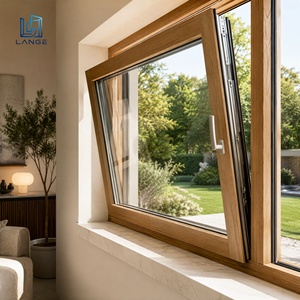
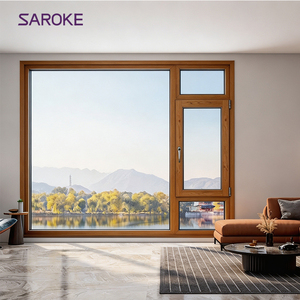
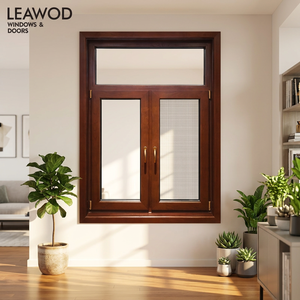
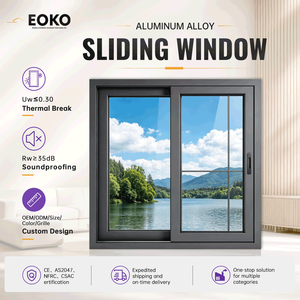
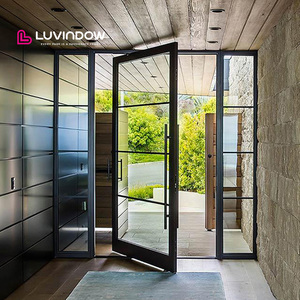
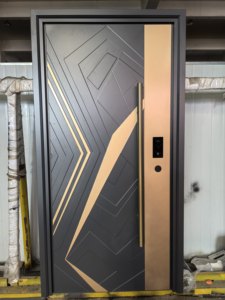
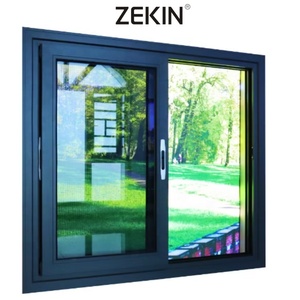
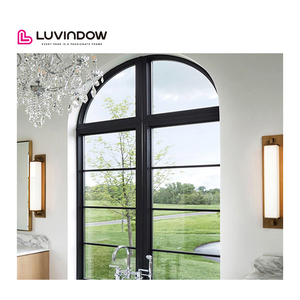
1. Technical Foundations of Aluminium Wood Finish Fenestration Systems
Modern architectural fenestration demands a seamless synthesis of natural biophilic aesthetics and extreme mechanical durability. Aluminium wood finish windows (incorporating both heat-transfer woodgrain powder coatings and structural aluminium-timber composite systems) have emerged as the gold standard for luxury residential developments, commercial high-rises, and eco-certified green buildings. By coupling high-grade extruded aluminium alloy frames (typically 6063-T5 or 6063-T6 temper) with advanced woodgrain sublimation processes or interior solid timber facings, manufacturers bridge the gap between warm interior design and low-maintenance exterior resilience.
From an engineering perspective, raw timber frames present severe long-term maintenance vulnerabilities—including hygroscopic swelling, biological degradation, UV splitting, and ongoing repainting requirements. Conversely, untreated metallic finishes often lack the organic texture specified in luxury residential architecture. Wood finish aluminium technology addresses these constraints through multi-stage surface passivations and high-durability polymer coatings engineered to withstand coastal salt spray, thermal expansion cycling, and extreme UV exposure without fading or delamination.
Technical Insight: SAGA's wood finish systems utilize Italian heat-transfer sublimation film combined with AAMA 2604/2605 compliant super-durable polyurethane powder bases. This setup guarantees color retention ($\Delta E < 5$) and gloss retention across a 10-to-15-year operational lifecycle, even under high-UV solar conditions.
Material Chemistry: Sublimation vs. Clad Systems
B2B importers, architects, and structural certifiers must distinguish between two primary technical classifications within the "Aluminium Wood Finish" category:
Woodgrain Sublimation Aluminium
Full monolithic aluminium extrusion treated via electrostatic powder coating followed by vacuum heat transfer. A textured polyurethane layer mimics wood grain tactile depth (e.g., Oak, Walnut, Teak) while maintaining 100% fire resistance (A1 rating), non-combustibility, and light frame profiles.
Aluminium-Clad Timber (Alu-Wood)
A composite dual-frame design pairing an interior solid timber frame (Oak, Pine, Meranti, or Teak) with an exterior extruded aluminium protective cladding. Clips isolate the timber from metallic condensation, creating an ultra-high thermal resistance layer ($U_w \le 1.0 \text{ W/m}^2\text{K}$).
Thermally Broken Sublimated Profiles
Interconnected dual extrusions joined by Polyamide (PA66-GF25) thermal barrier strips. The outer and inner aluminum profiles receive independent wood finish sublimations, offering interior timber elegance alongside exterior storm defense.
2. Structural Engineering & Comparative Material Science
When selecting architectural fenestration for major development projects, project engineers must evaluate performance across thermal transmittance ($U$-factor), Solar Heat Gain Coefficient (SHGC), structural wind load capacity (Pa), and acoustic attenuation ($R_w$). Below is an empirical performance comparison illustrating how different frame configurations perform under standard laboratory testing protocols (such as ASTM E283/E330/E331, AS2047, and EN 14351-1).
| Performance Metrics | Woodgrain Sublimation Aluminium | Aluminium-Clad Solid Wood | Standard Powder Coated Aluminium | Solid Natural Timber |
|---|---|---|---|---|
| Thermal Transmittance ($U_w$) | 1.4 – 1.8 $\text{W/m}^2\text{K}$ (Thermal Break) | 0.8 – 1.2 $\text{W/m}^2\text{K}$ (Passive Standard) | 1.6 – 2.2 $\text{W/m}^2\text{K}$ (Thermal Break) | 1.2 – 1.6 $\text{W/m}^2\text{K}$ |
| Weather & Salt Spray (ASTM B117) | Exceeds 3,000 Hours (No Blistering) | Exceeds 3,000 Hours (Exterior Al-Clad) | Exceeds 2,000 Hours | Fails (< 500 Hours without paint) |
| Bushfire Rating (AS3959) | BAL-40 / BAL-FZ Compliant | BAL-29 (Exterior Metal Shielded) | BAL-40 Compliant | BAL-12.5 to BAL-19 Max |
| Structural Wind Load (Pa) | Up to 4,500 Pa (HVHZ Capable) | Up to 3,000 Pa | Up to 4,500 Pa | 1,500 – 2,200 Pa |
| Maintenance Cycle | Zero Refinishing (Wipe Clean) | Periodic Interior Timber Polish | Zero Refinishing | High (2-3 Year Sanding/Varnish) |
| Lifespan Expectancy | 30 – 50 Years | 35 – 50 Years | 30 – 50 Years | 15 – 25 Years |
Thermal Isolation Physics: Polyamide PA66-GF25 Strips
Aluminum is an inherently conductive material ($\lambda \approx 160 \text{ W/m}\cdot\text{K}$). To mitigate heat bridge effects across building envelopes, SAGA incorporates Polyamide PA66 reinforced with 25% glass fiber (PA66-GF25) within all thermal break profiles. Glass fiber reinforcement ensures that the thermal break strip shares the exact thermal expansion coefficient ($\alpha = 2.3 \times 10^{-5}/\text{K}$) as the surrounding aluminum extrusions. This structural parity prevents frame shear failure, joint loosening, or air seal degradation under extreme ambient thermal shifts ranging from $-30^\circ\text{C}$ winter conditions to $+50^\circ\text{C}$ summer surface heating.
Furthermore, when integrated with double or triple Insulated Glass Units (IGUs) featuring Warm-Edge spacer bars (such as Technoform or Swisspacer), Low-Emissivity (Low-E) coatings (e.g., Sunguard or Solarban series), and Argon gas fills (90%+ concentration), overall window thermal resistance easily meets stringent international standards, including Australia's NCC 2022 Section J, Energy Star North America, and New Zealand's updated H1 Clause building directives.
3. Global Procurement Trends & Future Industry Outlook (2026–2035)
As commercial builders, international importers, and architectural specifiers project their supply chain requirements over the coming decade, key macro trends are reshaping the global fenestration procurement landscape. Sourcing managers are shifting focus from pure unit-cost purchasing to lifecycle value, carbon compliance, and integrated hardware reliability.
1. Decarbonized Circular Aluminium
With global ESG policies requiring Environmental Product Declarations (EPDs), demand for low-carbon primary aluminum billets (produced via hydropower) and post-consumer recycled aluminum is expanding rapidly. Leading manufacturers are reducing embodied carbon footprints to below $4.0 \text{ kg CO}_2\text{e per kg}$ of finished extrusion.
2. High-Velocity Hurricane Defense
Climate instability is accelerating adoption of hurricane impact-tested fenestration beyond Florida and the Caribbean into broader coastal regions. Systems tested to Miami-Dade TAS 201 (Large Missile Impact), TAS 202 (Uniform Static Pressure), and TAS 203 (Cyclic Pressure) are becoming standard project specifications.
3. Ultra-Slim Flush Sightlines
Modern residential architecture demands maximum daylight harvesting with structural frames concealed within wall cavities. Minimalist sliding doors, concealed hinge tilt-and-turn casements, and structural silicone glazed (SSG) curtain walls represent the fastest-growing market segments.
Supply Chain Optimization: Direct Factory Sourcing vs. Local Distributorships
High-volume developers and regional window wholesalers are increasingly bypassing middle-tier importers in favor of direct manufacturer partnerships. Direct sourcing from qualified tier-1 factories provides three decisive operational advantages:
- Full Customization Control: Direct mill access enables custom extrusion die creation, bespoke color-matching (RAL powder swatches, anodic finishes, and custom timber species sublimations), and tailored glass configurations (e.g., acoustic laminates, bullet-resistant layers, or privacy smart glass).
- Cost Reduction: Eliminating distributor markups typically yields 25% to 40% cost savings on unit prices, offsetting ocean freight costs and enabling higher specification glazing budgets.
- Rigorous QA Auditing: Importers gain direct visibility into raw material mill certificates, glass factory batch testing, EPDM rubber compression set reports, and cycle testing logs (e.g., 20,000-cycle hardware endurance testing).
4. Enterprise Manufacturing Excellence & Compliance Engineering
SAGA Aluminum Doors & Windows Co., Ltd. (operating from a state-of-the-art production complex in the Tieling Technical and Economic Development Zone, Fuzhou, Fujian) stands as an accredited manufacturing benchmark for international fenestration export. With over 16 years of specialized engineering experience and export channels spanning 25+ countries, SAGA operates as a primary OEM/ODM partner for global builders, architectural firms, and wholesale window networks.
AGWA Accredited (Australia)
Audited annually under the Australian Glass and Window Association (AGWA) compliance framework. Certified to AS2047:2014 (Windows in buildings), AS1288:2021 (Glass in buildings), and National Construction Code (NCC 2022) requirements.
New Zealand Code Certified
Fully compliant with NZS4211:2008 (Specification for performance of windows). Documented compliance across NZBC clauses B1 (Structure), B2 (Durability), E2 (External Moisture), F2, G4, G7, and H1 (Energy Efficiency).
NAFS & Miami-Dade (Americas)
Tested under the North American Fenestration Standard (NAFS) for structural deflection, air infiltration, and water resistance. Certified for Florida HVHZ deployment via Miami-Dade TAS 201, 202, and 203 impact testing protocols.
End-to-End Quality Control & Advanced Processing Automation
SAGA's production ecosystem integrates computerized double-head precision cutting saws, 5-axis CNC machining centers for hardware milling, corner crimping equipment with dual-component structural adhesives, and automated IGU insulating glass lines with dual-sealed structural silicone (Dow Corning / Tremco). Surface finishing is executed via a 4-stage chromate-free conversion pretreatment line before entering vacuum sublimation baking chambers, guaranteeing deep woodgrain film penetration into the powder matrix.
Every export shipment undergoes 100% pre-delivery assembly verification—checking dimensional tolerances ($\pm 1.0\text{ mm}$ limit), diagonal alignment, corner seam tightness, EPDM gasket continuity, and hardware locking action—before loading into heavy-duty reinforced steel-banded plywood crates dispatched from Fuzhou or Xiamen ports.
5. Comprehensive B2B Sourcing & Technical FAQ
Answers to crucial technical, logistical, and compliance questions frequently raised by international importers, builders, and certifiers.