Featured Industrial & Architectural Basement Windows
Precision-engineered aluminum fenestration systems tailored for commercial projects, high-density residential developments, and custom architectural builds.
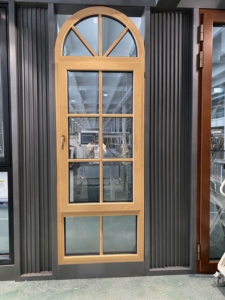
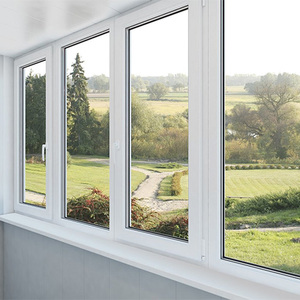
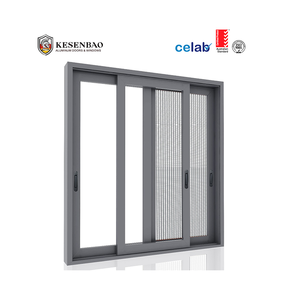
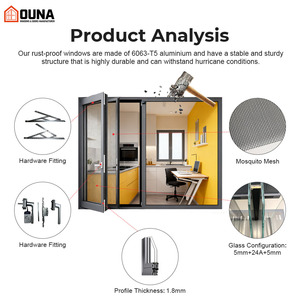
Structural Fenestration Specifications for Subterranean & Grade-Level Enclosures
Specifying fenestration systems for sub-grade applications—such as subterranean living quarters, commercial parking structures, and garden-level apartment conversions—demands a rigorous approach to materials engineering. Basement windows face localized hydrostatic pressure, high subterranean humidity, restricted natural light access, and strict emergency egress building codes. While legacy builders relied heavily on timber frames or vinyl (uPVC) hoppers, contemporary commercial and residential developments predominantly mandate high-tensile extruded 6063-T6 aluminum profiles.
Aluminum profiles offer unmatched dimensional stability under differential earth loading and subterranean temperature shifts. Unlike vinyl, which degrades and warps under ground-level thermal movement, precision-milled aluminum windows retain absolute frame squareness, eliminating water leakage and air infiltration over decades of service.
Critical Technical Requirements for Aluminum Basement Glazing
- Structural Hydrostatic Seal Integrity: Subterranean windows must withstand localized surface runoff and elevated water tables. Integrated continuous EPDM gasket compression seals, combined with internal pressure-equalized drainage sub-frames, prevent water back-up even during extreme storm surges.
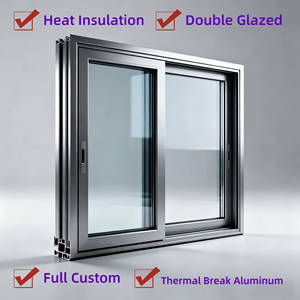
- Polyamide Thermal Barriers (PA66GF25): Uninsulated metal frames act as thermal bridges, inducing indoor condensation that breeds sub-grade mold. SAGA incorporates 24mm to 34mm glass-fiber reinforced polyamide thermal break strips, maintaining frame U-factors below 1.4 W/m²K.
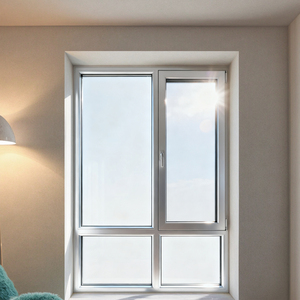
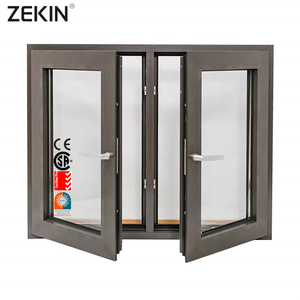
- International Egress Compliance (IRC R310): Subterranean habitable spaces mandate emergency escape opening sizes. Specialized egress casement and tilt-turn aluminum configurations guarantee a clear net opening exceeding 5.7 sq. ft. (0.53 m²), with clear opening dimensions surpassing 24 inches in height and 20 inches in width.
- Enhanced Subgrade Security Architecture: Basement points of entry represent primary targets for forced entry. SAGA integrates multi-point mushroom-head locking mechanisms, anti-pry hinge locks, and laminated safety glass (P2A to P4A security ratings).
Aluminum Profile Technical Performance Benchmarks
Compare the engineering metrics across our high-performance basement window lines to select the precise specification for your regional building codes.
| Specification Metric | Standard Aluminum Hopper | Thermally Broken Casement / Tilt-Turn | Hurricane Impact Subterranean Window |
|---|---|---|---|
| Profile Alloy & Temper | 6063-T5 (1.4mm wall thickness) | 6063-T6 Structural (1.8mm – 2.0mm) | 6063-T6 Heavy-Duty (2.2mm – 3.0mm) |
| Thermal Insulation (U-Factor) | 2.2 – 2.8 W/m²K | 1.1 – 1.5 W/m²K (Argon Filled) | 1.3 – 1.7 W/m²K |
| Water Penetration Resistance | 300 Pa (AS2047 / NAFS) | 450 Pa – 600 Pa High-Pressure | 700 Pa – 900 Pa (TAS 202 Compliance) |
| Acoustic Rating (STC / OITC) | STC 28 - 32 dB | STC 38 - 45 dB (Soundproof IGU) | STC 40 - 48 dB (Laminated PVB) |
| Structural Load Capacity | DP30 / 1500 Pa | DP50 – DP70 / 3500 Pa | DP90 / 4500+ Pa (Miami-Dade Approved) |
| Surface Coating Finish | Standard Powder Coating | PVDF Fluorocarbon (AAMA 2605) | Marine-Grade Anodized / PVDF |
Future Sourcing & Procurement Trends in Basement Fenestration (2026–2030)
As global building envelope codes tighten, commercial procurement teams must anticipate shifts in energy performance, smart integration, and decarbonized supply chains.
1. Near-Zero Energy Buildings (NZEB) & Ultra-Low U-Values
Future architectural specifications in North America and Northern Europe will demand subterranean window U-values below 0.8 W/m²K. Direct factory procurement is shifting toward triple-glazed Low-E IGUs filled with Krypton gas, coupled with multi-chamber thermal breaks to mitigate subterranean thermal sink losses.
2. Smart Environmental Sensors & Automated Egress
Commercial basement developments are rapidly integrating motorized linear actuators connected to building management systems (BMS). Next-generation aluminum basement windows automatically actuate based on indoor air quality (CO2/VOC levels), subgrade humidity thresholds, and optical rain/flood detection sensors.
3. Low-Carbon Recycled Aluminum Extrusions
Global developers are enforcing Environmental Product Declarations (EPDs). SAGA leads the market by utilizing primary aluminum smelted via renewable hydropower alongside up to 75% recycled scrap content, reducing embodied carbon footprints by up to 60% while matching virgin material yield strength.
Technological Innovations Driving Modern Basement Fenestration
Discover how factory-level automation and material science advances are eliminating traditional basement window failure points.
Automated Corner Crimping & Injection Sealing
SAGA utilizes CNC-controlled 45-degree mechanical corner crimping equipped with dual-component structural glue injection. This guarantees structural frame joints remain permanently leak-proof under shear stress and thermal movement.
Multi-Chamber Water-Redirection Sub-Sills
Eliminating static water accumulation, our engineered sill profiles feature concealed downward-sloped weep holes equipped with dynamic gravity check-valves. Wind driven rain cannot blow back inside, while internal condensation drains freely outward.
Micro-Mesh Integrated Stainless Steel Screens
Basement openings require ventilation without admitting pests or debris. SAGA integrates 304 marine-grade stainless steel security screens (0.8mm wire thickness) flush-fitted into the aluminum outer frame, offering pest protection and burglar resistance.
SAGA Aluminum Doors & Windows Co., Ltd. — Your Strategic OEM/ODM Partner
With over 16 years of specialized manufacturing experience, SAGA operates as a premier factory-direct manufacturer supplying custom aluminum, uPVC, and aluminum-timber window systems across North America, Australia, New Zealand, Europe, and the Caribbean. Operating out of our state-of-the-art facility in Minhou County, Fuzhou, Fujian, China, we streamline global supply chains for developers, architects, general contractors, and hardware dealers.
Third-Party Audited Quality
Audited under the AGWA program for AS2047:2014, AS1288:2021, and NCC 2022. Fully compliant with North American NAFS standards and Florida Miami-Dade TAS 201/202/203 impact tests.
Engineering & BIM CAD Support
Every order includes fully custom shop drawings, structural section details, and wind-load calculation reports prepared by our in-house fenestration engineers prior to extrusion cutting.
Export Shipping Logistics
Direct export container loading via Fuzhou or Xiamen ports. Heavy-duty steel-framed crate packaging ensures zero glass distortion or frame scratch risks during transoceanic shipping.
Frequently Asked Questions for B2B Procurement & Engineering
Detailed technical answers addressing procurement friction, custom engineering, building compliance, and logistics.
What are the key advantages of selecting thermal break aluminum over uPVC for basement egress windows?
Aluminum profiles provide vastly superior tensile strength, allowing for slimmest sightlines and maximized daylighting—which is crucial in low-light basement environments. Aluminum does not expand, contract, or discolor under fluctuating subterranean moisture and soil temperatures. Furthermore, SAGA's polyamide thermal breaks deliver thermal performance matching top-tier uPVC systems while supporting heavy triple-glazed security IGUs that uPVC frames cannot structurally support without sagging.
How does SAGA guarantee water tightness on subterranean windows installed in high water table regions?
We utilize a multi-barrier defense system: continuous EPDM rubber weatherstripping, corner-sealed structural corner blocks, pressure-equalized internal chambers, and sloped exterior sub-sills with anti-backflow gravity valves. Tested up to 600 Pa under static water pressure (simulating hurricane-force rain), our windows ensure zero moisture ingress behind basement wall linings.
Can SAGA manufacture custom basement windows to meet specific local building code egress dimensions?
Yes. Every single unit is manufactured to bespoke millimeter-level site measurements. For egress compliance (such as North American IRC Section R310 or Australian NCC egress standards), our engineering team prepares shop drawings verifying that the net clear opening area, clear opening height, and clear opening width exceed code thresholds before production starts.
What is the standard production lead time and typical shipping schedule for B2B engineering orders?
Standard manufacturing lead time is 35 to 50 calendar days after shop drawing sign-off and deposit receipt. Ocean freight timelines vary by destination: 14 to 20 days to Australian/New Zealand ports, and 22 to 35 days to North American west/east coast ports. Expedited sample production is available within 15 days.
Are SAGA aluminum basement windows tested for acoustic isolation in high-noise urban developments?
Yes. For urban subterranean residential conversions adjacent to roadways or railways, we specify asymmetrical double or triple glazing (e.g., 6mm toughened + 12Argon + 8.76mm acoustic laminated glass). Combined with dual EPDM compression seals, our systems achieve acoustic isolation ratings up to STC 45 dB.
What surface finishes are recommended for basement environments exposed to high ground moisture or coastal salinity?
For high-moisture subterranean walls or coastal locations within 1km of saltwater, we recommend our PVDF (Fluorocarbon) 3-coat coating system meeting AAMA 2605 standards, or anodized finishes with a film thickness ≥ 25 microns. These treatments offer extreme resistance to chalking, salt spray corrosion, and chemical oxidation.
What documentation and testing certificates are provided with major commercial project shipments?
Every shipment is accompanied by comprehensive quality compliance documentation, including physical test reports for AS2047, NAFS, or NZS4211, glass mill test certificates (AS1288/SGCC compliance), material warranty certificate (10 years), and detailed step-by-step installation guides.
How does SAGA handle sample evaluation for new global wholesale buyers or architects?
We supply standard-size window corner cutaway samples or complete mini sample units for technical evaluation. Sample units are free of charge, with the buyer covering air express freight. Sample freight fees are fully credited back upon placement of the first commercial container order.
Partner with China's Leading Architectural Window Manufacturer
Need engineered aluminum basement windows or custom fenestration schedules for your upcoming construction project? Contact our structural engineers today for immediate drawing reviews and competitive factory-direct pricing.
Get a Quote