Featured Export Architectural Joinery Systems
Precision-engineered fenestration solutions tested to Australian, New Zealand, North American, and Hurricane Impact standards for commercial and luxury residential projects.
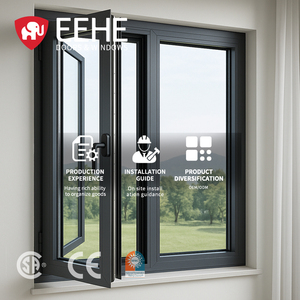
EEHE Modern Arched Thermal Insulation Casement Windows Aluminum NFRC Certified Double Glazed Soundproof Swing Windows For Villa
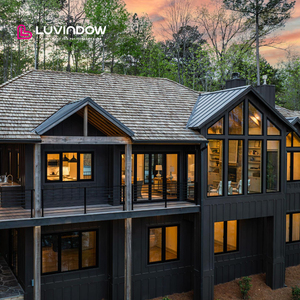
Modern Energy Efficient Aluminum Alloy Kitchen Bedroom Villa Arch Window Double Glazed Heat Insulated Soundproof Waterproof
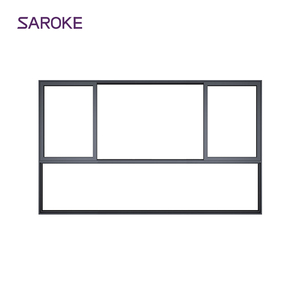
High Performance Pressure-Sealed Aluminum Sliding Window with Integrated Stainless Steel Mosquito Mesh Sliding Window
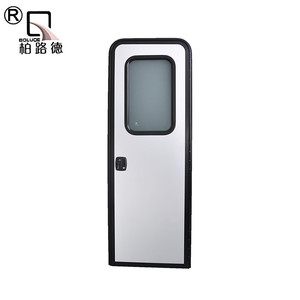
Aluminum Alloy RV Side Entry Door with Fly Screen & Window, Waterproof Camper Van Caravan Trailer Door Accessories
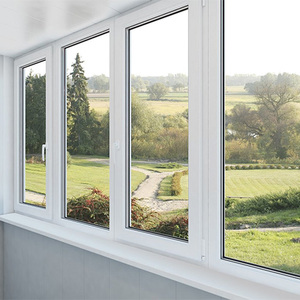
Hurricane Impact Casement House Windows Aluminum Alloy Casement Window Aluminum Bar For Window And Door For House
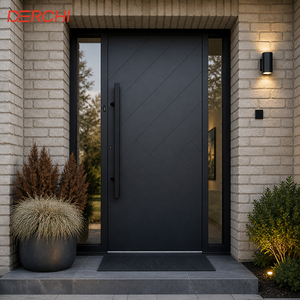
Aluminum Entrance Door Soundproof Thermal Break Aluminum Front Door Exterior Security Door Custom
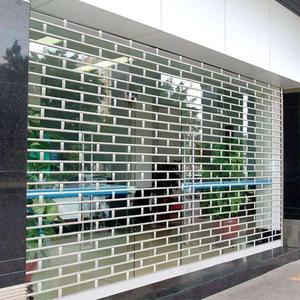
Modern Aluminum Frame Crystal Folding Door Custom Telescopic Transparent PC Sliding Door Collapsible Clear Crystal Door for Mall
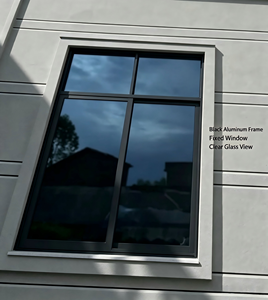
Modern Heavy Duty Aluminum Sliding Window Storm Proof Cyclone Resistant High Water Tightness Coastal Villa Resort Project
Structural Mechanics & Physics of Custom Aluminum Bay Windows
An in-depth technical analysis for facade consultants, structural engineers, developers, and global fenestration buyers evaluating high-performance bay window systems.
1. Corner Mullion Structural Mechanics
The structural backbone of any cantilevered or projecting bay window rests in its structural corner coupling mullions. Unlike flat casement windows, bay windows transmit vertical dead loads from head and seat boards alongside lateral wind forces to the corner joints. SAGA engineers extruded 6063-T6 alloy variable-angle variable-load structural mullions reinforced with internal structural steel or heavy-wall aluminum sleeves.
Calculating the Moment of Inertia ($I_x$, $I_y$) ensures structural deflection does not exceed $L/175$ or $L/240$ under extreme ultimate limit state wind pressures ($V_{50}$ wind speeds up to 250 km/h).
2. Alloy Selection & Profile Geometry
SAGA utilizes primary aluminum billets conforming to 6063-T5 and T6 heat treatment specifications. Main structural wall thicknesses range from 1.6mm for standard residential openings up to 3.0mm heavy-duty structural profiles for multi-story bay projections.
Surface protection involves AAMA 2605 compliant Fluorocarbon (PVDF) 3-coat spraying or Qualicoat Class 2 architectural powder coatings engineered to withstand coastal salt-spray environments exceeding 3,000 hours in ASTM B117 salt fog test chambers.
3. Thermal Break & Glazing Physics
To conquer the "thermal bridge" risk inherent in metallic frame projections exposed to three outdoor sides, SAGA integrates precision Technoperform Polyamide PA66 GF25 (25% glass fiber reinforced) structural thermal insulation strips.
Paired with double or triple insulated glass units (IGUs) incorporating Low-Emissivity (Low-E) coatings, Argon gas filling (90%+ purity), and warm-edge composite spacers, system U-values are reduced to as low as $U_w \le 1.1\text{ W/m}^2\text{K}$ (0.19 BTU/h·ft²·°F), preventing condensation while maximizing passive solar efficiency.
Future Procurement Trends in Architectural Aluminum Windows (2025–2030)
Key technological transitions transforming global window procurement for builders, importers, and master architects.
1. Net-Zero & Passive House Mandatory Compliance
Strict updates to global building codes—such as the Australian NCC 2022 7-Star NatHERS energy rating, New Zealand H1 Building Code insulation standards, and North American IECC energy mandates—are forcing a shift from non-thermal aluminum to advanced polyamide thermally broken aluminum systems.
Procurement strategies now prioritize certified window assemblies with verified NFRC, AGWA, and Passive House Institute thermal test reports to prevent compliance bottlenecks at final site certification.
2. Extreme Weather Resilience & Hurricane Impact Ratings
Global climate shifts have led to increased storm intensity in coastal regions worldwide. B2B window buyers across North America, Australia, and the Caribbean are increasingly specifying Hurricane Impact rated aluminum windows, even in traditional non-cyclonic zones.
Future-proof procurement demands laminated safety glass configurations (PVB or SGP interlayers) certified under Miami-Dade TAS 201/202/203 or North American NAFS standards to withstand missile impact force and cyclic pressure loading.
3. Smart Automation & Integrated Solar Shading
Modern architectural projects are moving beyond static windows. The market is accelerating toward motorized hidden chain winders, smart home sensor-driven micro-ventilation, and dual-glazed units with integrated motorized blinds (smart louvers inside IGUs).
Factories capable of embedding concealed electrical conduits, magnetic actuators, and smart glass solutions directly during manufacturing are replacing conventional joinery workshops.
4. Supply Chain Consolidation & Low-Carbon Aluminum
Importers and volume developers are reducing supplier complexity by sourcing complete envelope solutions—windows, exterior doors, glass balustrades, and sunshades—from a single factory partner.
Furthermore, Environmental Product Declarations (EPDs) and low-carbon recycled aluminum billets are quickly becoming non-negotiable criteria for international commercial tenders and green building projects (LEED, Green Star).
Why Global Developers & Wholesalers Partner with SAGA
Original equipment manufacturer (OEM) capabilities backed by 16 years of dedicated export craftsmanship and international laboratory accreditations.
16+ Years Export Competency
With products exported to over 25 countries—including Australia, New Zealand, the United States, Canada, and the Caribbean—SAGA understands local building codes, custom duty clearance, and destination port logistics inside out.
Precision CNC Engineering
Our Fuzhou manufacturing center operates multi-axis automated CNC machining centers, automated double-head cutting saws, and hydraulic corner-crimping machines. We maintain tolerances down to ±0.5mm on complex bay angle frame fabrications.
Pre-Shipment Mock-Up Assembly
Every custom bay window unit undergoes 100% pre-shipment structural factory assembly. We verify corner angle alignment, hardware operation, glass seal integrity, and water drainage channels prior to crate packing.
Fuzhou & Xiamen Port Logistics
Strategically located in Fujian, China, our orders ship directly out of Fuzhou or Xiamen deep-water container ports. Products are packed in fully enclosed, fumigated ISPM-15 wooden crates with protective corner guards and moisture-proof wrapping.
BIM & CAD Engineering Drawings
Our in-house design office produces detailed shop drawings, section profiles, and installation fixing details for architectural approval, certifier submission, and local building council compliance review.
Tier-1 Hardware Supply Partners
We partner with premier global hardware manufacturers—including ROTO, Siegenia-Aubi, Kinlong, and Hopo—to ensure smooth multipoint locking operation, high load bearing hinges, and durable operation over decades.
Global Fenestration Testing & Standard Certification Map
A comprehensive guide to regulatory window standards verified by SAGA's independent laboratory test reports.
| Target Region / Market | Mandatory Standards | Key Testing Parameters Verified | SAGA Engineering Compliance |
|---|---|---|---|
| Australia | AS2047:2014 AS1288:2021 NCC 2022 | Air infiltration, Water penetration resistance (up to 600Pa), Ultimate strength wind pressure (up to 4500Pa), Safety glazing. | AGWA audited annual plant certification; NATA-accredited test reports for all core profiles. |
| New Zealand | NZS4211:2008 NZ Building Code | B1 Structure, B2 Durability, E2 External Moisture, F2 Hazardous Materials, G4/G7, H1 Energy Efficiency. | Full compliance covering high-wind weather zones and low U-value thermal requirements. |
| USA & Canada | NAFS / AAMA / WDMA NFRC Certified | Uniform structural load, air leakage, water resistance, forced entry resistance, thermal transmittance (U-factor & SHGC). | Tested for CW and AW commercial window performance classes. |
| Florida & Caribbean | Miami-Dade TAS 201/202/203 | Large & small missile impact resistance, structural air pressure, cyclic wind pressure loading (up to ±100 PSF). | Heavy-duty impact aluminum casement and bay frames with SGP laminated glass options. |
B2B Procurement & Technical Engineering FAQ
Direct answers from SAGA's technical team addressing key buyer inquiries regarding custom aluminum bay windows, production timelines, and logistics.
How does SAGA ensure structural deflection compliance on wide bay window openings?
We perform structural calculations based on your project's local design wind pressure ($p$) and opening height ($L$). For wide bay spans, we incorporate internal heavy-duty aluminum or galvanized steel reinforcement channels inside the 30°, 45°, or 90° corner mullion couplers. This ensures structural deflection remains within strict limits ($L/175$ or $L/240$), preventing glass binding or seal failure under severe storm conditions.
Which buyer categories does SAGA primarily supply to?
We supply directly to commercial builders, residential developers, window wholesalers and distributors, facade contractors, master architects, and luxury custom home buyers. Each customer role receives tailored services—ranging from wholesale profile systems and labeled flat-pack crating to detailed shop drawing engineering for certifier approvals.
What is the standard production lead time for custom aluminum bay windows?
Standard production lead time is 35 to 50 calendar days following official shop drawing sign-off and deposit receipt. Lead times may vary slightly based on custom powder coating colors, specialized high-performance glass units (e.g., Triple Low-E or SGP Hurricane Impact), or large project order quantities.
Can SAGA supply window samples for quality and performance evaluation?
Yes. We regularly supply standard sample corner cuts or full-scale sample window units for quality evaluation, architect approval, or physical laboratory testing. Standard samples are provided free of charge, with express air freight covered by the buyer.
What surface finishes and powder coating options are available?
We offer an extensive range of architectural surface treatments, including Qualicoat Class 2 architectural powder coatings, AAMA 2605 PVDF Fluorocarbon coatings (for harsh marine environments), Anodized finishes (15 to 25 microns), and realistic heat-transfer woodgrain finishes. Popular standard colors include Architectural Matt Black, Satin White, Monument Grey, and Anodized Silver.
How are bay windows packaged to prevent ocean freight transit damage?
Bay window assemblies are pre-fitted in our factory, inspected, and then packed using multi-layer protective foam, heavy-duty corner guards, shrink wrap, and fully enclosed ISPM-15 compliant fumigated wooden crates. Crates are engineered with bottom fork slots for safe container loading and site offloading.
Where are your ports of loading, and what trade terms do you offer?
All shipments load directly from Fuzhou Port or Xiamen Port in Fujian Province, China. We support FOB, CIF, CFR, DDP, and DDU trade terms. Accepted payment methods include T/T bank transfers and Alibaba Trade Assurance for complete buyer protection.
What technical documentation is delivered with an order?
Every order is delivered with a complete documentation package, including CAD shop drawings, section profiles, structural calculation reports, material test certificates (MTC), glass performance datasheets, installation guides, and a written 10-year factory warranty.
Ready to Spec Your Aluminum Bay Window Project?
Connect directly with SAGA's facade engineering team for shop drawing review, thermal calculations, and direct factory pricing.