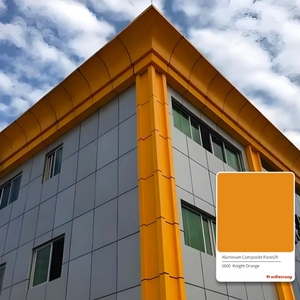
High Quality Anti-Static ACP Decorative Bathroom Doors Modern Design Building Construction Materials Aluminium Composite Panel
Contact Us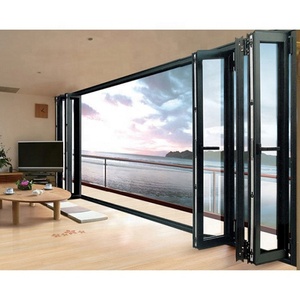
20 Year Warranty Wholesale Exterior Patio Black Folding Aluminum Frame Glass Stack Bifold Door in China
Contact Us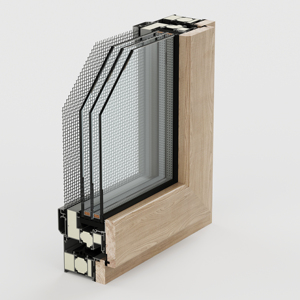
LEAWOD Wood-aluminum Composite Smart Window & Architectural Systems
Contact Us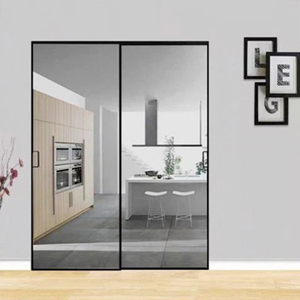
Trackless Aluminum Alloy Mosquito Net Sliding Glass Door System for Exterior Balcony Kitchen Patio Applications
Contact Us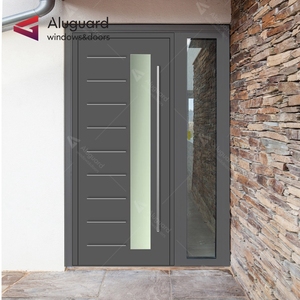
Luxury Minimalist Style Villa Exterior Home Entrance Main Door Aluminium Pivot Fibreglass Entry Door
Contact Us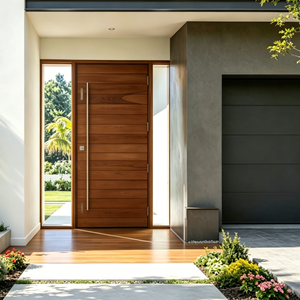
External Swing Door Villa House Exterior Custom Double Glazed Glass Aluminum Wooden Main Entrance Front Entry Secure Apartment
Contact Us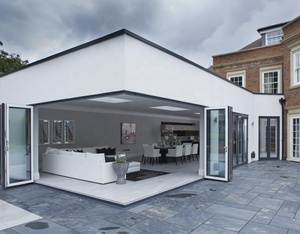
Aluminum Patio/balcony Double Glass Exterior Accordion Folding Door System
Contact Us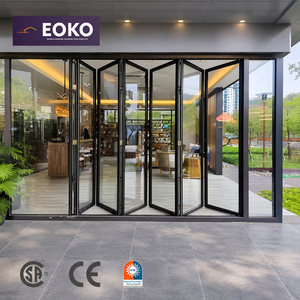
EOKO CE Energy Star Certified Thermal Break Aluminum Bi-fold Door for Commercial Shopfront Folding Glass Patio Doors
Contact UsExecutive Industry Analysis: The Evolution of Aluminum Bulkhead Enclosures
In modern commercial, industrial, and high-end residential architecture, the perimeter envelope requires specialized access points capable of withstanding extreme environmental loads while providing rapid ingress and egress. Heavy-duty aluminum bulkhead doors—often serving as basement access covers, cellar hatches, utility vaults, and exterior storm protection assemblies—represent a critical sub-segment of the building envelope sector. As structural standards become increasingly rigorous under global mandates like the National Construction Code (NCC 2022), North American Fenestration Standard (NAFS), and Miami-Dade High-Velocity Hurricane Zone (HVHZ) protocols, selecting top trusted aluminum bulkhead doors manufacturers has evolved from a basic material sourcing exercise into a high-stakes engineering compliance decision.
Unlike traditional mild steel hatch covers that suffer from rapid oxidative degradation and high field maintenance costs, engineered extruded aluminum profiles (primarily alloy grades 6063-T6 and 6061-T6) offer superior strength-to-weight ratios, intrinsic galvanic corrosion resistance, and exceptional thermal performance when integrated with polyamide thermal breaks. Modern bulkheads must resist uniform static pressure, cyclic wind loadings, dynamic impact, and hydrostatic head pressure without compromising water tightness or perimeter seal integrity.
Technical Authority Insight: According to ISO 9227 accelerated corrosion testing, high-grade architectural anodized or powder-coated aluminum assemblies demonstrate up to 4x longer operational life in severe coastal environments compared to painted carbon steel alternatives, while reducing structural dead weight by as much as 45%.
Enterprise Capabilities & Manufacturing Standards
SAGA Aluminum Doors & Windows Co., Ltd. stands at the forefront of precision architectural extrusion and automated joinery fabrication. Operating out of our advanced manufacturing plant in the Tieling Technical and Economic Development Zone, Fuzhou, Fujian, SAGA provides direct factory manufacturing of custom aluminum, uPVC, and aluminum-timber hybrid doors and structural fenestration systems. With 16 years of specialized export experience across 25+ global regions—including Australia, New Zealand, North America, and the Caribbean—our enterprise combines rigorous engineering verification with lean production workflows.
AGWA & AS2047 Accredited
Audited under the Australian Glass and Window Association (AGWA) compliance scheme. Products pass rigorous testing for AS2047:2014, AS1288:2021, and NCC 2022 thermal energy mandates.
Miami-Dade TAS Certification
Verified performance under Florida Building Code requirements including TAS 201-94 (Large Missile Impact), TAS 202-94 (Static Pressure), and TAS 203-94 (Cyclic Wind Pressure Loading).
NAFS & NZS4211 Compliance
Engineered to satisfy North American Fenestration Standard structural deflection criteria and New Zealand NZS4211:2008 clauses for air permeability, water penetration, and overall frame durability.
Technical Engineering: Material Metallurgy & Water Seal Dynamics
Understanding the operational mechanics of commercial and structural aluminum bulkhead doors requires evaluating alloy composition, profile wall thickness, perimeter frame geometry, and elastomeric gasket design. Marine-grade and heavy-traffic bulkheads demand meticulous structural sizing to prevent permanent deflection during heavy hydrostatic load conditions or accidental live load impacts.
Aluminum Alloy Comparison for Structural Bulkheads & Fenestration
| Alloy & Temper | Yield Strength (MPa) | Ultimate Strength (MPa) | Corrosion Resistance | Primary Architectural Application |
|---|---|---|---|---|
| 6063-T6 Aluminum | 170 - 210 | 205 - 245 | High (Atmospheric) | Extruded door frames, thermal break profiles, architectural trim |
| 6061-T6 Aluminum | 240 - 276 | 290 - 310 | Very High (Industrial) | Heavy structural bulkhead covers, load-bearing cellar door leafing |
| 5083-H116 Aluminum | 215 - 280 | 305 - 380 | Exceptional (Marine Grade) | Submerged bulkheads, coastal docks, chemical processing access hatches |
| Alloy 6060-T5 | 120 - 160 | 160 - 200 | Moderate to High | Light-duty secondary residential framing and interior access covers |
To maintain atmospheric and watertight integrity, SAGA bulkhead and specialty door assemblies feature continuous multi-channel EPDM (Ethylene Propylene Diene Monomer) double-durometer bulb seals. Compression latching mechanisms apply calculated uniform perimeter clamping force. This compression counterbalances positive wind pressures up to 4500 Pa (equivalent to Category 5 hurricane stress) and prevents water migration across step-down sills during heavy precipitation.
Future Procurement & Global Manufacturing Trends (2025–2030)
As commercial developers, structural contractors, and municipal procurers upgrade building envelopes to align with net-zero operational carbon goals and severe climate resilience guidelines, several strategic trends are reshaping the global procurement landscape for aluminum door and window systems:
1. Integration of Thermal Breaks & Aerogel Insulation
Historically, uninsulated metal access doors served as severe thermal bridges in basement structures. Modern specifications increasingly mandate low thermal transmittance U-factors (< 1.6 W/m²K). Utilizing technoform polyamide structural insulation strips and aerogel-infused core panels reduces thermal conduction between cold subterranean spaces and conditioned interior zones.
2. Automated Gas-Strut & Smart Hydraulic Actuation
Occupational health and safety guidelines demand lower manual lifting effort for heavy horizontal and angled bulkhead leaves. Factories are integrating dual stainless steel gas struts, linear electric actuators, and smart building management system (BMS) interface options for automated touchless operation and emergency flood sensing.
3. Circular Economy & Low-Carbon Billets
Leading OEM factories are shifting towards primary smelting utilizing hydro-powered electricity and post-consumer recycled aluminum billets (exceeding 75% recycled content). This lowers the embodied carbon footprint of architectural joinery products from 18 kg CO2e/kg down to under 4.0 kg CO2e/kg of finished aluminum extrusions.
4. Advanced Surface Treatments & AAMA 2605 Compliance
Fluoropolymer PVDF coatings and super-durable thermosetting powder coats conforming to AAMA 2605 specifications are replacing standard paints. These advanced finishes ensure color retention, gloss retention, and chalking resistance under intense solar UV exposure for 20+ years.
B2B Procurement & Engineering FAQ
Answers to critical technical, operational, and commercial questions asked by wholesalers, general contractors, certifiers, and architectural specifiers.
Factory Verification Criteria for International Buyers
When performing vendor audits or reviewing OEM tenders for custom structural doors and architectural glass assemblies, procurement managers should evaluate factories against five core quality assurance pillars:
1. Profile Thickness Tolerances
Verify that load-bearing extrusions adhere to EN 12020-2 / GB 5237 class tolerances, ensuring structural wall thickness does not fall below minimum design criteria under structural wind load pressure.
2. Hardware & Fastener Metallurgy
Insist on Grade 316 stainless steel security hinges, latch assemblies, and internal fixings to eliminate bi-metallic corrosion risk when joined to aluminum profiles.
3. Automated Glass Unit Glazing
Ensure insulating glass units (IGU) feature automated dual-seal robot application (butyl primary seal, structural silicone secondary seal) with integrated desiccant matrix spacers to eliminate internal condensation.
4. Full Factory Pre-Assembly
Require 100% dry-fit pre-assembly testing at the factory floor before crate packing to verify hardware alignment, seal compression, and squareness tolerance (within ±1.0 mm).
Request a Custom Technical Proposal & Factory Direct Quote
Partner with a certified aluminum door and window manufacturer. Send us your architectural schedules, wind load requirements, or project plans for immediate review by our engineering team.
Contact Us