Featured Aluminium Doors & Window Systems for Tokyo Importers
Custom manufactured to JIS, AS2047, and international fenestration standards with integrated high-durability mesh and security hardware.
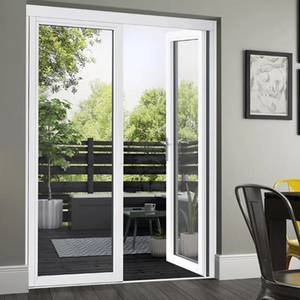
- High-tensile windproof alloy frame
- Multi-point security locking mechanism
- Weatherproof EPDM perimeter sealing
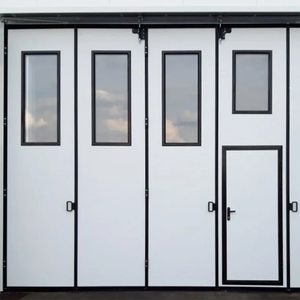
- Ultra-slim sightline aluminium profiles
- Heavy-duty bottom roller track system
- Double glazed acoustic insulation
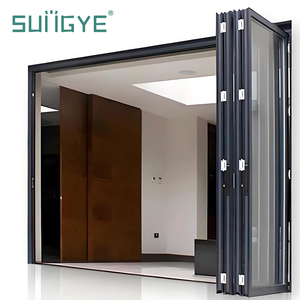
- Thermal break aluminium technology
- Integrated invisible flyscreen net option
- Soundproof acoustic barrier (Rw 38dB)
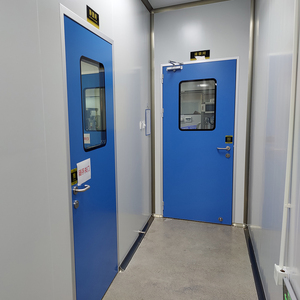
- Flush surface anti-bacterial coating
- High-pressure airtight rubber gaskets
- Minimalist double glass sight window
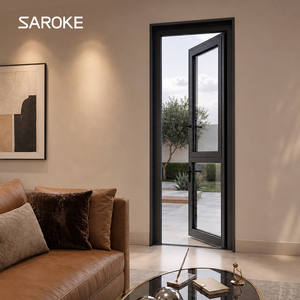
- Polyamide PA66 thermal barrier strip
- High wind pressure resistance structure
- Electrostatic powder-coated finish
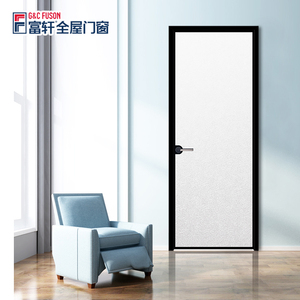
- Heavy-duty friction hinges
- Sub-frame water drainage channel
- Custom woodgrain or anodized colors
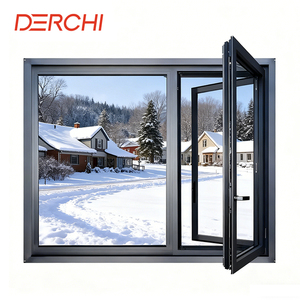
- Low-E argon-filled insulated glass
- Impact-resistant laminated safety glazing
- Extreme climate heat insulation (SHGC 0.22)
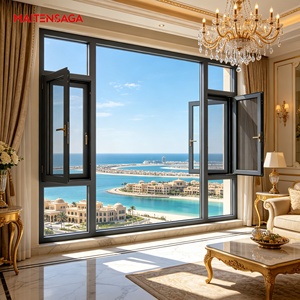
- Realistic Japanese oak woodgrain coat
- Stainless 304 security screen mesh
- Dual-action tilt and turn capability
Architectural Fenestration Benchmark for the Greater Tokyo Metropolitan Area
The Tokyo architectural landscape presents a unique convergence of hyper-dense urban footprints, stringent seismic safety protocols, high-frequency West Pacific typhoon threats, and an evolving demand for net Zero Energy Houses (ZEH). For Japanese general contractors, real estate developers, and building material wholesalers across Kanto (including Tokyo, Kanagawa, Chiba, and Saitama), selecting an OEM/ODM Aluminium Sliding Net Door Manufacturer requires an in-depth evaluation of profile alloy tempering, insect screening mesh integrity (*Ami-do*), hardware cycle testing, and thermal break engineering.
Traditional domestic Japanese sliding doors often compromise between lightweight manual operation and heavy-duty security. SAGA's specialized direct-factory manufacturing framework bridges this gap by engineering custom T66-tempered 6063-T5 aluminium sliding net doors. These systems seamlessly integrate heavy-duty 304/316 marine-grade stainless steel wire mesh or ultra-fine high-visibility polymer nets into multi-track thermal break frames. This technical whitepaper delivers complete structural performance data, regulatory compliance mappings, and procurement guides tailored specifically for architectural projects within Tokyo.
Specialized Product Engineering: Profile Alloys, Net Technology & Hardware Integration
An integrated sliding net door system (*Ami-do integrated fenestration*) must simultaneously function as an insect barrier, a security envelope, a thermal insulator, and an acoustically dampened partition. SAGA's manufacturing line achieves this multi-variable performance through four core engineering pillars:
6063-T5 / T6 Extrusion Profiles
Extruded with 2.0mm to 3.0mm structural wall thicknesses. Anodized or fluorocarbon (PVDF) surface treatments resist coastal salt-spray oxidation in Tokyo Bay zones (Odaiba, Shinagawa, Toyosu).
High-Tensile Security Net Mesh
Options range from 0.8mm 304/316 stainless steel woven mesh (knife-shear and impact resistant) to 20-mesh high-density PET woven insect net for maximum airflow and optical clarity.
Polyamide PA66 Thermal Break
24mm to 34mm PA66GF25 thermal barrier strips eliminate thermal bridging between indoor and outdoor aluminum extrusions, complying with Tokyo Energy Conservation Directives.
Furthermore, track hardware utilizes dual-tandem stainless steel rollers fitted with sealed Japanese bearings, delivering ultra-smooth gliding force (<15 Newtons) even on wide-span panels up to 3.2 meters in height. Silent dampening buffers prevent frame bounce during sudden pressure fluctuations caused by passing high-speed trains or strong winds.
Performance Metrics: SAGA Custom Systems vs. Market Standard
To assist Tokyo architectural specifiers in structural calculations, the table below provides certified laboratory benchmark metrics comparing SAGA Heavy-Duty Sliding Net Doors against conventional regional offerings:
| Performance Specification | SAGA Custom Thermal Net Door | Standard Domestic Japanese Screen Door | Test Standard / Regulatory Compliance |
|---|---|---|---|
| Wind Pressure Resistance | Up to 3,600 Pa (S-6 Grade) | 1,200 – 1,600 Pa (S-3 Grade) | JIS A 4706 / AS2047:2014 Annex A |
| Water Tightness | 500 Pa (W-5 Grade) | 150 – 250 Pa (W-2 Grade) | JIS A 4706 / ASTM E331 |
| Air Infiltration Rate | < 0.5 m³/(h·m²) (A-4 Grade) | 1.5 – 2.0 m³/(h·m²) (A-2 Grade) | JIS A 4706 / ISO 6613 |
| Acoustic Attenuation (Rw) | 36 dB – 42 dB (Double Glazed + Net) | 18 dB – 24 dB (Single Glazed) | ISO 10140-2 / JIS A 1416 |
| Mesh Impact Resistance | > 500 Joules (0.8mm Stainless Mesh) | < 50 Joules (Nylon Net) | AS5039 Security Testing / GB 30033 |
| Thermal Transmittance (U-Value) | 1.4 – 1.8 W/m²K | 2.8 – 3.5 W/m²K | ISO 10077-2 / ZEH Criteria |
*Note: Technical test reports from accredited independent laboratories (AGWA/Intertek) are supplied with all project shop drawings.
Architectural Application Scenarios Across Greater Tokyo
Different municipalities within Tokyo present distinct micro-environmental demands. SAGA custom-manufactures sliding net doors tailored to specific structural typologies:
1. Urban Micro-Apartments & Condominiums (Shinjuku, Shibuya, Minato-ku)
In high-density mid-rise residential buildings where space footprint is critical, zero-threshold flush-track sliding net doors permit seamless transition to narrow balconies. Integrated pocket-sliding mechanisms allow insect screens to fully retract inside frame cavities, preserving 100% clear opening widths.
2. Modern Suburban Villas (Setagaya, Den-en-chofu, Musashino)
Luxury residential homes demand wide panoramic openings overlooking Japanese gardens. SAGA’s motorized or manual multi-panel lift-and-slide systems accommodate glass dimensions up to 3 meters per panel, paired with heavy-duty stainless steel security nets that function as anti-burglary barriers without visual obstruction.
3. Tokyo Bay Coastal High-Rises (Odaiba, Koto-ku, Shinagawa)
Structures situated along Tokyo Bay face harsh salt spray and violent seasonal typhoons. SAGA applies 50-micron PVDF fluorocarbon coatings to corrosion-resistant aluminium profiles, accompanied by heavy-duty wind locks that prevent screen panels from blowing off track during wind gusts up to 60 m/s.
4. ZEH Energy Retrofits & Suburban Renovations (Hachioji, Machida)
For existing residential housing stocks transitioning toward Zero Energy House (ZEH) standards under Ministry of Land, Infrastructure, Transport and Tourism (MLIT) guidelines, our retrofit thermal-break sliding net doors insert cleanly into legacy rough openings, dramatically reducing winter heating loads.
Tokyo Architectural Trends & Regulatory Directives (2025–2030)
The Tokyo fenestration market is undergoing a structural transition driven by modern sustainability laws, changing demographic preferences, and post-pandemic living standards:
1. Shoji Metamorphosis into Modern Aluminium-Timber Profiles: Traditional Japanese interior design relies on sliding screens (*Shoji* and *Fusuma*) to divide living spaces. Modern Tokyo architects are modernizing this heritage by specifying ultra-slim aluminium sliding net doors with interior real-wood veneer finishes (Japanese Cypress/Oak) and exterior weather-resistant powder coating.
2. Mandatory Energy Efficiency Performance (MLIT 2025 Mandate): Starting in 2025, Japan's Ministry of Land, Infrastructure, Transport and Tourism mandates energy code compliance for all new residential buildings. Single-pane sliding doors with basic nylon netting are being rapidly phased out in favor of double-glazed thermal break sliding net doors capable of achieving U-values below 1.8 W/m²K.
3. Urban Noise Mitigation Along Transit Corridors: Residential developments built adjacent to Yamanote, Chuo, or Shinkansen rail tracks require acoustic insulation performance exceeding 35 dB. SAGA integrates multi-layer EPDM compression seals and heavy laminated acoustic glass alongside fine netting to block urban environmental noise without sacrificing natural ventilation.
Why Tokyo Importers & Contractors Partner with SAGA
As a direct-factory manufacturer backed by 16+ years of specialized export experience, SAGA Aluminum Doors & Windows Co., Ltd. operates state-of-the-art production facilities spanning CNC automated milling, corner crimping, and automated insulating glass lines in Fujian, China.
CAD/BIM Engineering Support
Every order receives project-specific shop drawings, section profiles, elevation schedules, and installation anchorage details prepared by our technical engineering team prior to production.
Rigorous Pre-Shipment Inspection
100% of manufactured frames undergo full mock-up assembly in factory rigs to check dimensional tolerances (±1mm), track smoothness, water channel clearance, and mesh tensioning before crating.
FCL Container Logistics to Tokyo Port
Direct ocean shipments loaded into custom steel-reinforced plywood crates from Fuzhou or Xiamen ports straight to Port of Tokyo (Aomi/Ohi Terminal) or Yokohama Port, with protective corner padding.