Precision Aluminum Folding Window & Door Systems
Engineered to withstand coastal typhoons, seismic movements, and strict ZEH thermal envelope requirements across the Osaka metropolitan area.
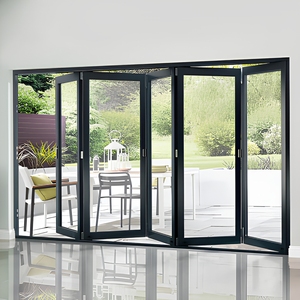
Aluminum Folding Patio Doors Folding Glass System for Seamless Indoor Outdoor Modern Home Design Aluminum Bi Folding Doors
Get a Quote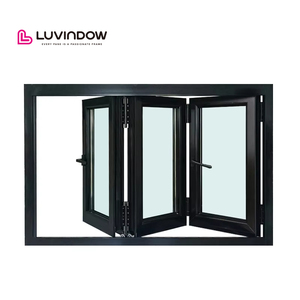
Customized Size Made in China Factory Aluminum Folding Window
Get a Quote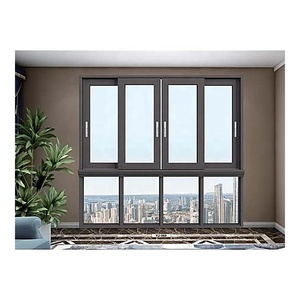
Customization Large Aluminum Sliding Window Stainless Steel Mesh Double Glazed Tempered Hurricane Impact Resistant Window
Get a Quote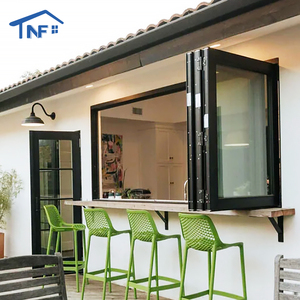
High Quality Aluminum Folding Windows Kitchen Double Glazed Modern Garden Kitchen Bifold Window
Get a Quote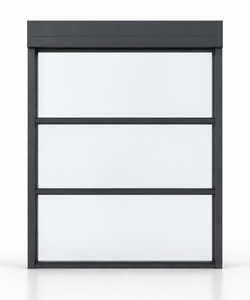
Modern Aluminum Alloy Sliding Window Vertical Opening Folding Screen Roller Blind Lifetime Warranty for Living Room Insect
Get a Quote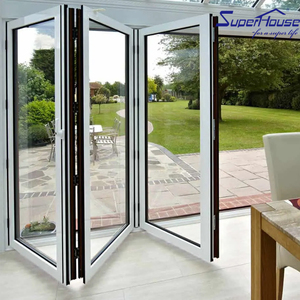
Foldable Sliding Glass Doors Aluminum Alloy Modern Passive House Windows Movable Bi FoldFrameless Folding Door
Get a Quote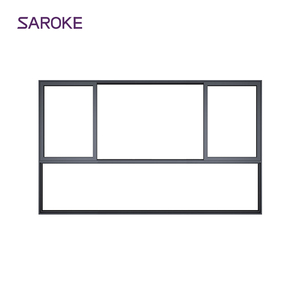
High Performance Pressure-Sealed Aluminum Sliding Window with Integrated Stainless Steel Mosquito Mesh Sliding Window
Get a Quote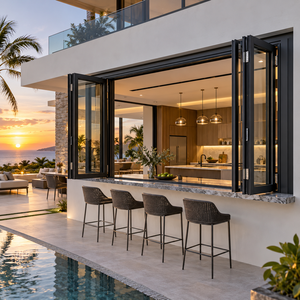
Structural Fold-Up Aluminum Folding Windows With Soundproof Double Glazing For Space-Saving Balcony Terraces
Get a QuoteNavigating Fenestration Procurement in Osaka’s Architectural Sector
A deep-dive technical evaluation for real estate developers, general contractors (Zenken), architectural firms, and wholesale importers operating across the Kansai Region.
The urban architecture of Osaka—ranging from modern high-rise commercial developments in Umeda and Namba to luxury residential redevelopments along Osaka Bay and historic Machiya modernizations in Kita-ku—demands a sophisticated balance of fenestration design. Unlike standard domestic window installations, specifying aluminum folding windows and bi-fold glass wall systems in Osaka requires rigorous engineering compliance with Japanese Building Standard Law (BSL), extreme seismic movement allowances (Nankai Trough mitigation protocols), and high wind pressure ratings associated with Kansai’s seasonal typhoon corridor.
As global builders and Japanese contractors increasingly turn to direct factory manufacturing partnerships to streamline supply chain costs while securing custom architectural profiles, selecting the right factory partner becomes a pivotal decision. This white paper breaks down the technical benchmark criteria, local application scenarios, regulatory requirements, and direct factory capabilities of leading suppliers serving the Osaka market.
Architectural Application Scenarios Across Osaka & Kansai
Tailored structural and thermal fenestration engineering suited to specific microclimates and urban typologies.
1. Osaka Bay Coastal & Yumeshima Island Developments
Projects constructed along the waterfront of Osaka Bay, including residential complexes and commercial pavilions on Yumeshima Island, face extreme wind loads and highly corrosive salt-laden maritime air.
Engineering Directives:
- Wind Resistance: Tested up to 3000 Pa static wind pressure (JIS Grade S-6 to S-7).
- Surface Coating: 25-micron Fluorocarbon (PVDF) powder coating or anodized finishes surviving 3000+ hours of neutral salt spray testing (ISO 9227).
- Hardware: 316 Marine-Grade stainless steel hinges, rollers, and multi-point locking rods to resist salt pitting.
2. High-Density Urban Residential & Machiya Modernization
In dense urban districts such as Chuo-ku and Nishi-ku, spatial footprint optimization is paramount. Transforming narrow traditional layouts or modern penthouse balconies requires zero-threshold folding systems.
Engineering Directives:
- Space Utilization: Bi-fold panels stack neatly to achieve a 95% unobstructed opening width.
- Acoustic Isolation: Double-glazed acoustic laminate glass achieving Sound Insulation Grade T-2/T-3 (STC 38–42 dB reduction).
- Flush sills: ADA-compliant recessed sills with integrated sub-floor drainage channels to prevent interior water pooling.
3. Commercial Hospitality & Restaurant Storefronts in Dotonbori/Namba
High-traffic commercial venues require heavy-duty folding glass wall systems that open seamlessly during mild seasons and seal tightly against urban noise and ambient temperature shifts.
Engineering Directives:
- Heavy-Cycle Durability: Heavy-duty top-hung carrier bogies tested for 100,000+ continuous operation cycles without alignment drift.
- Safety Glazing: Fully tempered or heat-strengthened laminated safety glass complying with Japanese safety standards.
- Security: Integrated multi-point shoot-bolt locking mechanisms resisting forced entry attempts.
4. Suburban ZEH (Net Zero Energy House) Villa Projects
Residential homes built under Japan's ZEH initiative in suburban Osaka (e.g., Minoo, Suita) require windows with ultra-low thermal transmittance to minimize HVAC power consumption.
Engineering Directives:
- Thermal Break Technology: Multi-chamber Polyamide 66 with 25% Glass Fiber (PA66-GF25) structural insulation strips.
- Advanced Glazing: Triple-pane Low-E glass units filled with 90%+ Argon gas, featuring warm-edge composite spacers.
- Thermal Rating: Overall window $U$-value $\le 1.1 \, \text{W/(m}^2\cdot\text{K)}$.
Emerging Fenestration Trends in the Kansai Region
Three key technology drives shaping window specifications for Osaka developers through 2030.
1. Accelerated Adoption of ZEH & ZEB Mandates
Japan’s Ministry of Land, Infrastructure, Transport and Tourism (MLIT) has set strict carbon-neutrality targets. By 2030, all newly constructed residential units must comply with ZEH energy standards. Aluminum folding windows—traditionally viewed as thermally vulnerable due to extensive frame perimeter length—are now engineered with multi-chamber thermal breaks and triple Low-E glazing, turning expansive bi-folds into energy-efficient building envelope assets.
2. Seismic Drift & Flexible Joint Integration
With Osaka situated in an active seismic zone, modern fenestration engineering emphasizes dynamic structural displacement tolerance. Advanced folding window frames now feature dynamic EPDM dual-durometer seals and floating roller tracks capable of absorbing lateral story drift ($1/150$ shear angle) without glass pinching, frame buckling, or seal rupture during Class 6+ Shindo seismic events.
3. Slim-Sightline Architectural Aesthetics
Contemporary Japanese residential architecture prioritizes clean lines and maximal daylight penetration. The market is shifting away from bulky, traditional sliding profiles toward ultra-slim aluminum folding windows. Aluminum extrusion alloys like 6063-T6 allow frame profile depths to be reduced down to 55mm while maintaining structural moment of inertia for span heights over 3.0 meters.
Engineering Standard Cross-Reference: Global vs. JIS A 4702
How SAGA factory export certifications map directly to Japanese Building Standard Law requirements for Osaka projects.
| Performance Metric | Japanese Standard (JIS A 4702) | Global Equivalents (AS2047 / NAFS / Miami-Dade) | SAGA Aluminum Folding Window Performance Level |
|---|---|---|---|
| Wind Pressure Resistance | Grade S-5 (2000 Pa) to Grade S-7 (3000 Pa) | AS2047: Ultimate Limit State > 3000 Pa Miami-Dade: TAS 202 (> 3500 Pa) |
3200 Pa (Exceeds JIS Grade S-7) Engineered for high-wind typhoon zones. |
| Water Tightness | Grade W-4 (350 Pa) to Grade W-5 (500 Pa) | AS2047: Water Penetration > 450 Pa NAFS: DP Level 50+ |
600 Pa Pressure Seal Features concealed cascade drainage channels. |
| Air Infiltration (Tightness) | Grade A-4 ($2 \, \text{m}^3/(\text{h}\cdot\text{m}^2)$ at 10 Pa) | AS2047: Air Infiltration < 1.0 L/s·m² ASTM E283 Compliance |
Grade A-4 Equivalent Continuous dual-durometer EPDM gaskets. |
| Thermal Transmittance ($U$-value) | JIS H-5 Tier ($U \le 2.33$) to ZEH Tier ($U \le 1.5$) | NCC 2022 H1 Compliance NFRC Certified Glass Units |
1.1 – 1.4 W/(m²·K) PA66-GF25 Polyamide Thermal Break system. |
| Acoustic Insulation | Grade T-2 (30 dB) to Grade T-3 (35 dB) | ISO 10140 Sound Reduction Index (STC) | STC 38 – 42 dB Reduction Configured with acoustic PVB interlayers. |
Why Direct Procurement from SAGA Benefits Osaka Buyers
16+ years of specialized manufacturing precision delivering audited compliance, custom engineering, and seamless Kansai logistics.
1. Precision CNC Processing & Automated Assembly
SAGA operates a state-of-the-art 50,000 m² factory equipped with 5-axis German CNC machining centers. Profiles are cut, milled, and corner-crimped with tolerances under 0.2mm. Every folding window unit undergoes full factory pre-assembly and hydrostatic seal testing prior to crating.
2. Audited Global Testing Credentials
Products are backed by independent third-party laboratory audits, including AGWA (AS2047/AS1288), New Zealand NZS4211, North American NAFS, and Miami-Dade TAS 201–203 impact certifications. This comprehensive data portfolio streamlines approval workflows with Japanese certifiers and structural engineers.
3. Complete Architectural Customization
From custom anodized bronze finishes matching traditional Japanese woodwork to heavy-duty bottom-rolling stainless steel hardware systems, SAGA provides detailed CAD shop drawings and BIM Level 2 models for exact site integration before production begins.
4. Optimized Ocean Logistics to Osaka Port (Nanko Terminal)
Orders are shipped directly from Fuzhou or Xiamen ports to Osaka Port with specialized sea-worthy steel-framed plywood crate packaging. Moisture-barrier shrink wraps and edge protectors eliminate transit vibration damage and salt-air exposure during shipping.
Formula Reference for Osaka Structural & Thermal Engineering
When specifying large-span aluminum folding windows in high-exposure Osaka locations, structural engineers use the following foundational equations:
Frequently Asked Questions by Osaka Developers & Contractors
Direct answers regarding import logistics, structural calculations, custom finishes, and warranty coverage.
Do your aluminum folding windows meet the requirements of Japan's Building Standard Law (BSL)?
Yes. SAGA aluminum folding windows are engineered using high-tensile 6063-T6 aluminum alloys and tested to withstand wind pressures up to 3200 Pa and water penetration up to 600 Pa. We provide full mill test certificates, structural deflection reports, and glass performance specifications that line up directly with JIS A 4702 performance tiers required by Japanese certifiers.
What lead time is required from order confirmation to arrival at Osaka Port?
Factory production typically requires 35 to 50 days following final sign-off of CAD shop drawings. Direct ocean freight from Fuzhou or Xiamen port to Osaka Port (Nanko Terminal) takes approximately 4 to 7 days, resulting in a predictable overall project timeline of 6 to 8 weeks.
How do you prevent water leakage during Kansai typhoon driving rains?
Our folding window systems feature a multi-stage seal matrix incorporating dual-durometer continuous EPDM gaskets, internal corner vulcanized joints, and concealed stepped drainage sub-frames. The sill profile includes a pressure-equalized drainage chamber with one-way check valves that allow trapped water to escape rapidly while blocking wind-driven backup.
Can your factory accommodate custom powder-coating colors matching regional Japanese architectural palettes?
Absolutely. We utilize premium AkzoNobel and PPG architectural powder coatings available in any RAL color, custom matte anodized bronze/black, or realistic woodgrain thermal sublimation finishes that match Japanese cedar (Sugi) and cypress (Hinoki) aesthetics while retaining aluminum's zero-maintenance durability.
What structural support is needed for top-hung vs. bottom-rolling bi-fold configurations?
Top-hung folding systems require a dedicated structural lintel (steel I-beam or reinforced concrete header) engineered to support the full dead load of the glass panels (up to 100 kg per sash). For projects where top header loading is structurally constrained, we recommend our heavy-duty bottom-rolling system, which transfers 90% of the weight to the floor track.
Can samples be provided for review by Japanese general contractors (Zenken) or architects?
Yes. We regularly supply sample corner sections showing profile thermal breaks, gasket seals, anodizing thickness, and hardware operating mechanisms, as well as full-scale prototype window units for structural evaluation. Sample frames are provided free of charge, with shipping arranged via international express.
What glass combinations are recommended for Osaka's humid summers and cold winters?
For optimal ZEH-compliant thermal performance, we recommend 6mm Low-E Tempered + 12mm Argon Gas Space + 6mm Clear Tempered double glazing ($U \le 1.4 \, \text{W/m}^2\text{K}$). For urban sound control in entertainment districts like Namba, incorporating a 6.38mm acoustic PVB laminated glass pane achieves up to 40 dB sound reduction.
What warranty coverage is included with SAGA custom fenestration orders?
All SAGA aluminum folding windows are backed by a 10-Year Factory Warranty covering structural aluminum extrusion integrity, powder coating adhesion against peeling/cracking, and insulated glass unit seals against internal condensation. Hardware mechanisms carry a 5-to-10 year operational warranty based on the brand selected (e.g., ROTO, Siegenia, Kinlong).
Accelerate Your Osaka Construction Project
Consult with our structural engineers today for CAD shop drawing generation, technical compliance validation, or a factory-direct wholesale quotation.